
14 Afrohemian Living Room Ideas for a Warm, Soulful Home
Afrohemian style — the meeting point of African heritage craft and relaxed bohemian layering — has become one of the most searched interior trends of 2026, and these afrohemian living room ideas explain why. Think hand-loomed mudcloth from Mali, raffia kuba cloth from the Congo, rattan, warm terracotta, and rooms that feel collected over years rather than decorated in a weekend. This guide focuses on real pieces with real names, what each one costs, where to place it, and how to style it for fall 2026 — so your living room feels warm, soulful, and genuinely personal.
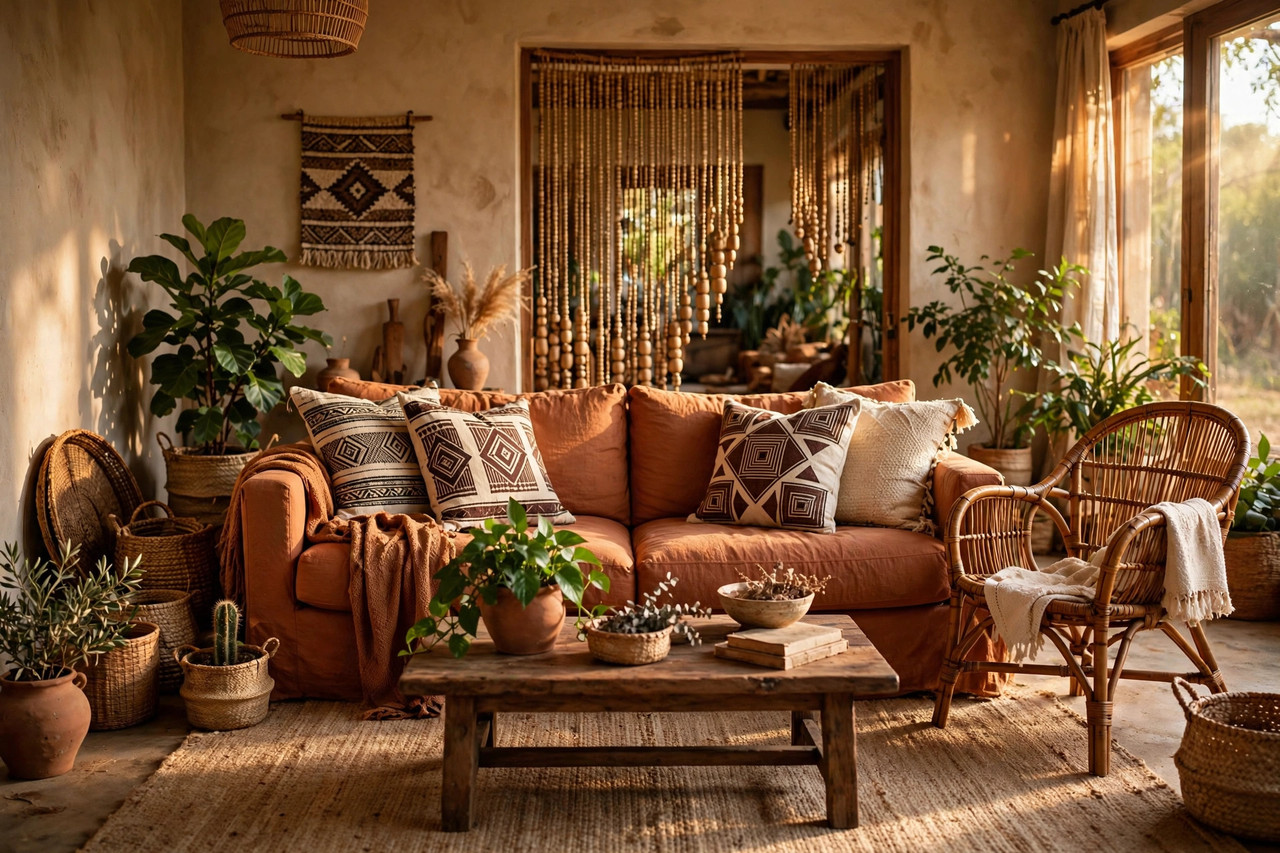
1. Anchor the room with a rust or terracotta sofa
Cost: $600–$1,400 for a new linen sofa; $0 if you slipcover. A low-slung sofa in burnt rust or terracotta linen is the classic afrohemian anchor — the color echoes West African laterite soil and gives every textile you layer on top something warm to sit against. Place it facing the room's best light rather than flat against the longest wall, and keep its shape simple: clean lines let the patterns do the talking. If a new sofa is out of budget, a rust linen slipcover over your existing couch gets you 80% of the effect for under $150. Designers consistently point to this warm, grounded base as the non-negotiable starting point — Apartment Therapy's afrohemian decor guide notes that the style's textiles only read correctly against warm neutrals, never stark white.
2. Layer mudcloth pillows — and know what mudcloth is
Cost: $25–$60 per authentic pillow cover. Mudcloth (bogolanfini) is handwoven Malian cotton dyed with fermented mud, patterned with geometric lines and dots that traditionally tell stories. Pile three to five mudcloth pillows in black-and-cream on your sofa, mixing one large 22-inch square with smaller lumbar shapes — the graphic geometry is what designers call the instant "afrohemian signal." Buy from artisan-direct sellers or Black-owned textile shops rather than mass-market copies; authentic pieces have slight irregularities in the weave that read as soul, not defect. One mudcloth pillow against a solid rust cushion looks intentional; five identical ones look like a showroom.
3. Drape a kuba cloth throw over the sofa arm
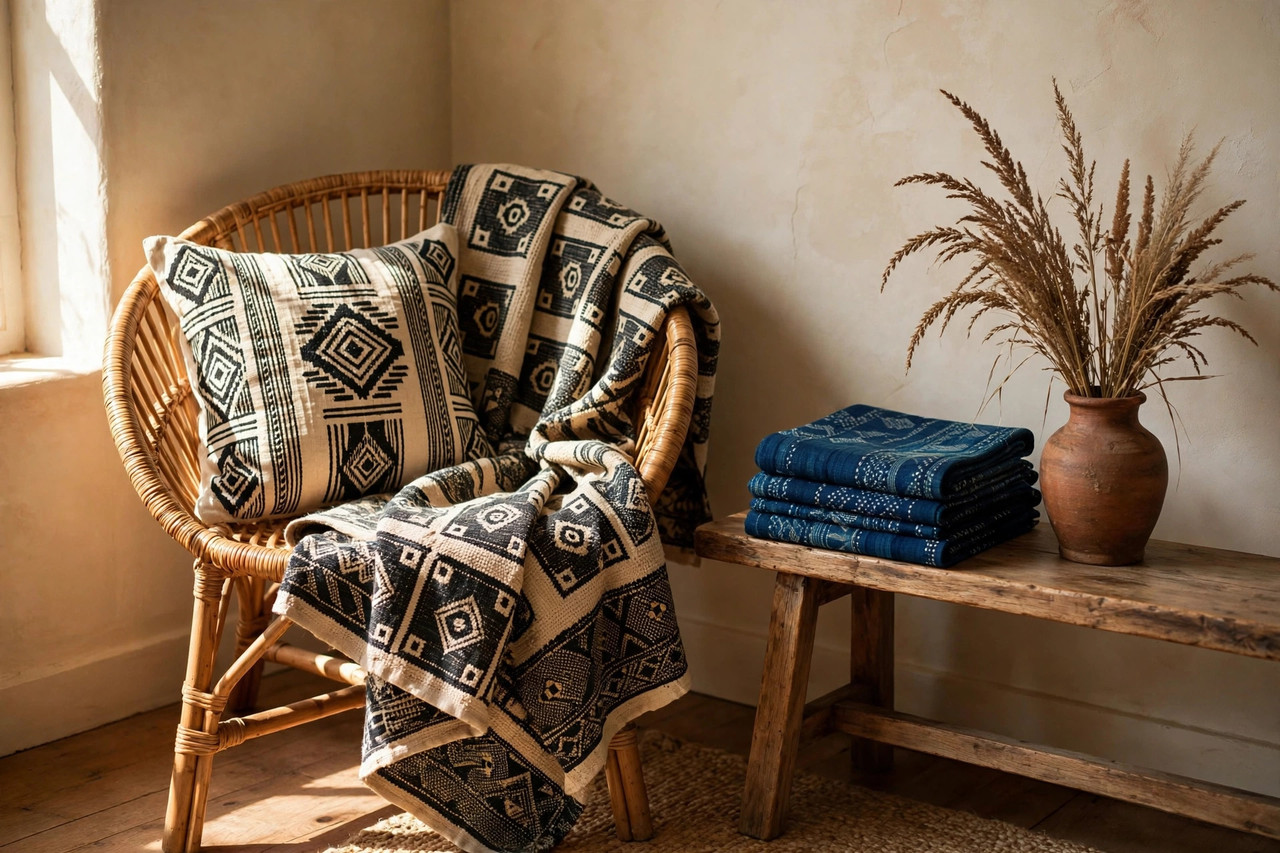
Cost: $70–$180 for authentic raffia kuba cloth. Kuba cloth is the royal raffia textile of the Kuba people of the Democratic Republic of Congo — patchworked geometric panels in earthy browns, blacks, and creams with an unmistakable appliqué texture. Fold it lengthwise and drape it over one sofa arm or the back of your rattan chair rather than spreading it flat; the folds catch light and show off the raised stitching. This single piece adds more cultural depth than any print from a big-box store, because the pattern carries real heritage. Look for vintage pieces on artisan marketplaces — older cloths have a softness and patina new ones can't fake.
4. Hang adire indigo at the window
Cost: $40–$120 per panel. Adire is Nigerian indigo-dyed cloth made with resist-dye patterns — deep blue-black fabric with white geometric motifs that cools down an otherwise warm room beautifully. Use two adire panels as curtain panels on a simple black rod, or hang one large piece as a wall textile behind the sofa. The indigo gives the eye somewhere to rest between all the rust and cream, and in fall's lower light the blue deepens into something almost midnight. Pair it with natural linen sheers underneath so the room still gets daylight; heavy adire alone can darken a north-facing room too much.
5. Add a rattan accent chair as your reading corner
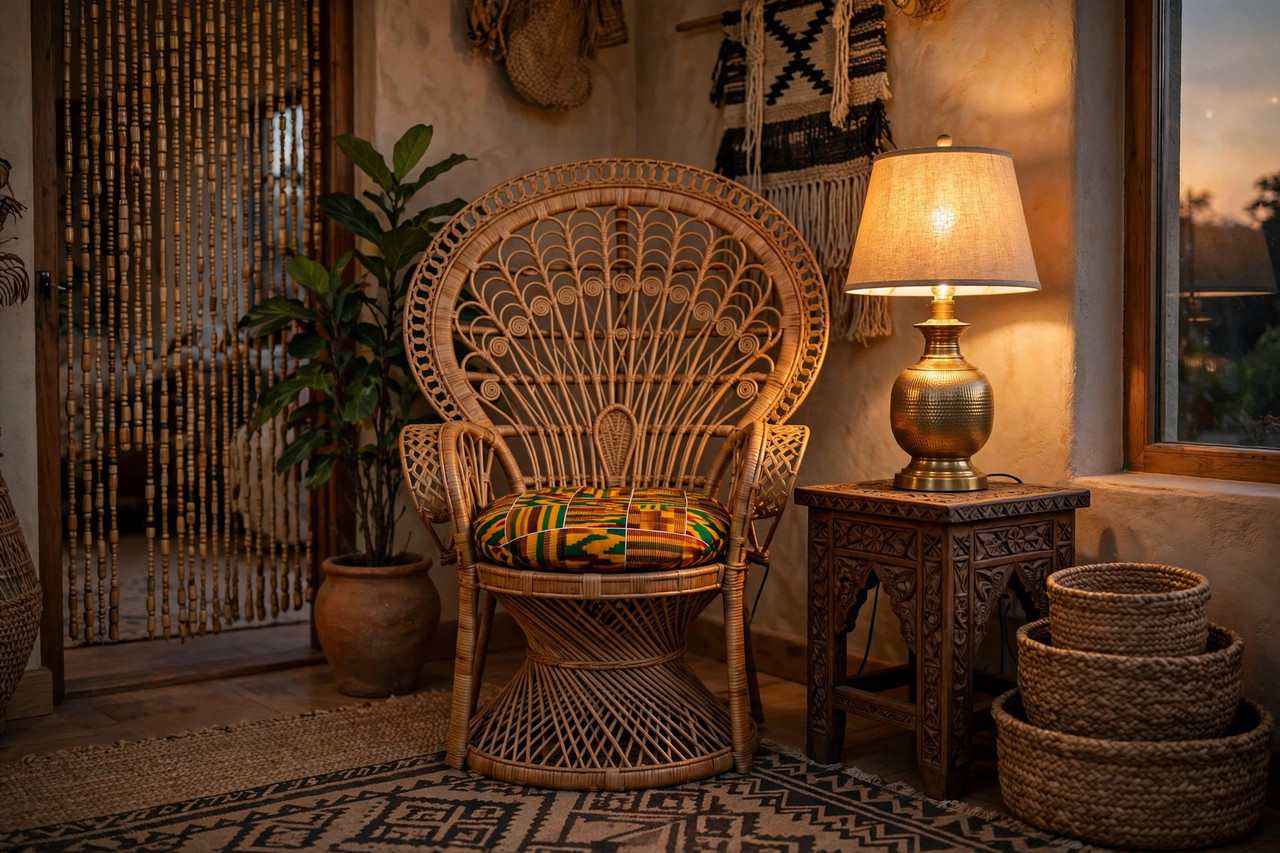
Cost: $150–$400. The peacock or fan-back rattan chair is the silhouette most people picture when they hear "afrohemian" — airy, sculptural, and warm. Tuck one into a corner with a small carved side table and a warm lamp behind it at a 45-degree angle, and you have an instant reading nook that photographs beautifully. Top the chair with one patterned cushion (kente-inspired or mudcloth) rather than a full seat pad, so the rattan weave stays visible. Rattan reads light and breathable, which keeps a textile-heavy room from feeling stuffy — that balance of heavy pattern and airy frame is the whole trick.
6. Hang bamboo beaded curtains in the doorway
Cost: $20–$50 per doorway. Bamboo beaded curtains are having a real moment — searches are up sharply this year — and in an afrohemian living room they do three jobs: they soften a hard doorway, add gentle movement and sound, and filter light into warm stripes. Hang one in the doorway between your living room and hallway, or use it to partially screen a home-office corner. Choose natural bamboo tones over painted colors to stay in the earthy palette, and trim the bottom so it clears the floor by an inch — dragging beads fray and look tired within months. It is a $30 change with outsized atmosphere.
7. Layer rugs: jute base, patterned top
Cost: $80–$250 total. Start with a large flat-weave jute rug that extends under the front legs of the sofa and chairs — this is your neutral foundation. Then layer a smaller patterned rug on top at a slight angle: a vintage-style kilim, a mudcloth-patterned flatweave, or a faded tribal print in rust and charcoal. The layered look is pure collected-over-time energy, and it lets you introduce bold pattern without committing a whole room to it. Keep the top rug to about two-thirds the size of the base so the jute border frames it like a mat frames art.
8. Use woven baskets for storage and wall art
Cost: $15–$60 each. Seagrass, elephant grass, and sisal baskets are afrohemian workhorses: a large lidded basket beside the sofa swallows throws and remotes, while a cluster of flat woven wall baskets becomes art above the mantel or console. Group wall baskets in odd numbers — five or seven — mixing sizes and keeping the palette to natural, black, and one rust accent. Hang the largest one slightly off-center; perfect symmetry kills the organic feel. For more surface-styling ideas that cost nothing, see our no-cost fall living room refresh.
9. Bring in terracotta and handmade ceramics
Cost: $10–$45 per piece. Handmade clay vessels — terracotta vases, blackened clay pots, rough stoneware bowls — ground the room in earth. Place one large floor vase (24 inches or taller) in the empty corner beside the bookshelf, and group two or three smaller pieces on the coffee table in a tight triangle. Fill the tall vase with dried pampas grass or bare branches for fall; leave the small ones empty, because handmade ceramics are beautiful as pure objects. Slightly uneven, thumb-marked pieces beat perfect factory glaze every time in this style.
10. Warm it up with brass accents
Cost: $12–$50 per piece. A little aged brass — a small side-table lamp, a set of candlesticks, a round mirror with a thin brass frame — adds the glint that keeps earthy rooms from going flat. Brass pairs naturally with mudcloth's black-and-cream geometry and with terracotta's orange; together they read as sunset tones. Keep the brass brushed or antiqued rather than mirror-polished, which looks too formal against rattan and jute. Three small brass moments per room is plenty — a lamp, a tray, a candle holder — and then stop.
11. Add big leafy plants in clay pots
Cost: $20–$70 per plant. A fiddle-leaf fig, bird of paradise, or a cluster of snake plants in unglazed clay pots brings the living green this style needs — African-inspired interiors always have a strong plant presence. Put the tallest plant in the darkest corner you just lit with a lamp (plants and lamplight together erase dead zones), and keep pots in clay, woven seagrass, or black ceramic to stay on palette. In fall, swap one leafy plant for a tall vase of dried grasses to echo the season without buying themed decor. Water on a schedule; a drooping plant undoes the whole lush effect.
12. Light it warm and low
Cost: $30–$120. Afrohemian rooms glow — they don't glare. Swap any cool-white bulbs for 2700K warm bulbs, add a rattan or woven pendant over the seating area, and put your floor lamp on a dimmer so evenings drop to candlelight levels. Place one small lamp on the bookshelf and one on the console rather than relying on a single overhead light; pools of warm light at different heights make textiles look richer and the room feel larger. In October, when it gets dark by 6 p.m., this layered warm lighting is what makes the room feel like fall.
13. Build a collected gallery wall
Cost: $40–$150 for frames and prints. Mix framed African textile fragments, black-and-white travel photography, one small abstract in rust and ochre, and a carved wooden mask or wall hanging if you have one from travels or artisan markets. Keep frames simple — thin black or natural wood — and hang the arrangement salon-style with 2-inch gaps, starting from the center piece outward. The wall should read as a personal collection, not a matching set; if every frame matches, remove one and replace it with something odd. Hang the center of the arrangement at 57 inches, gallery standard.
14. Style it for fall 2026: harvest tones over the base
Cost: $0–$60. Your afrohemian base already speaks fall — now whisper it louder for the season. Swap two pillow covers for burnt orange and deep ochre, drape a chunky rust knit throw over the kuba cloth, and replace one green plant stem with dried wheat or pampas in the tall vase. Add a low wooden bowl of mini pumpkins or pinecones on the coffee table — natural, not Halloween-themed. This is exactly the seasonal layering approach in our cozy fall fireplace mantel decor ideas: a few warm swaps, not a full redecoration, and the room carries you through autumn.
Comments
Post a Comment