
15 Warm & Cozy Fall Bedroom Decor Ideas for a Restful Autumn Retreat
15 Warm & Cozy Fall Bedroom Decor Ideas for a Restful Autumn Retreat
Here is the test a fall bedroom has to pass: does it help you sleep? A living room can get away with looking seasonal. A bedroom cannot. If the new bedding makes you too hot at 2 a.m., if the pretty lamp is too dim to read by and too harsh to wind down under, or if the room is so layered you cannot walk to the bathroom in the dark, the decor has failed at its only real job. So this list starts with sleep, not shopping. Most adults sleep best in a room around 65–68°F, and in fall that number drifts — cold at bedtime, stuffy by morning — unless your bedding is built in layers you can adjust half-asleep. Build the bed as a system first, then solve the room by the problem you actually have: cold, dark, small, or rented.

First, the bedding layer system
1. Swap to flannel or brushed sheets — and know the weight
Sheet fabric changes how a bed feels more than any throw on top of it. Cotton percale is crisp and cool, around 200–300 thread count, and it can feel chilly in October. Brushed flannel, measured by weight rather than thread count at roughly 170 GSM or higher, traps a thin layer of air and feels warm the second you get in — no cold-sheet shock. A queen flannel set runs $35–$60; a good percale set kept for spring runs $40–$70. If you sleep hot, compromise: flannel fitted sheet and pillowcases with a percale flat sheet, so your shoulders stay cooler. Wash flannel in warm, not hot, water and expect some pilling on sets under about $30 — cheap flannel thins within a season. The fuller weight-by-weight breakdown in these fall bedding layer formulas for every bed size is worth checking before you buy a second set in the wrong weight.
2. Choose a fall-weight duvet, not a winter one
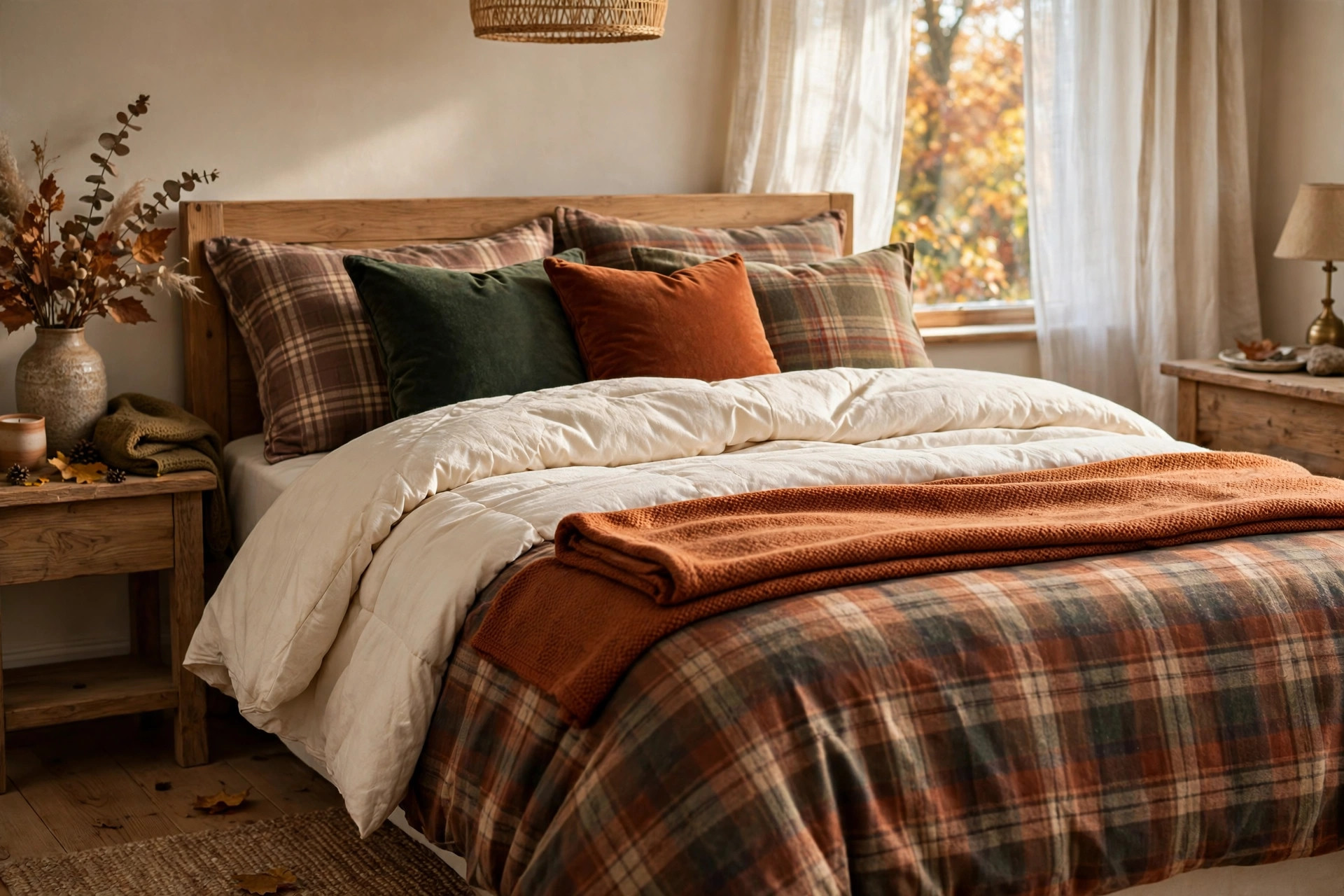
Most people own one duvet that is too warm for nine months of the year. For fall, look for a mid-weight insert: down or down-alternative fill rated around 200–300 GSM, or a tog rating near 7.5–10.5 if the label uses togs. Queen inserts in that range cost $45–$90 for down-alternative and $90–$160 for down. A winter-weight insert (350 GSM and up, 13.5 tog) in a 68°F room is the most common reason people wake up sweating under a "cozy" fall bed. Buy a duvet cover in a warm fall color — clay, chocolate, deep olive, or a small plaid, $35–$65 for a queen cotton set — instead of replacing the insert for color alone. Two small clips or ties inside the cover corners stop the insert bunching, a $5 fix for a nightly annoyance.
3. Fold one throw at the foot — 50 x 60 inches, no more
One throw, folded in thirds lengthwise and laid across the foot of the bed, is the whole decorative layer you need. The standard 50 x 60 inch throw ($20–$40 in cotton, wool-blend, or a chunky knit) covers the foot of a queen without dragging on the floor, and at night it is a real tool: an extra layer over feet, the coldest part of most sleepers, without heating your whole body. That is the honest answer to overheating — layer the feet, not the chest. Keep spare throws out of the bedroom in a hall basket; a pile of three throws on the bed looks styled in a photo and becomes a hot, tangled heap by midnight. Choose a washable throw. Bedding at the foot collects dust and whatever your feet carried in, and a dry-clean-only wool throw will quietly stop being used.
If your problem is a cold room
4. Add a thin blanket layer between sheet and duvet
When the room drops below about 62°F, a single thin cotton or wool blanket ($30–$55, queen) between the flat sheet and duvet adds more usable warmth than a second decorative throw, because it sits inside the sleep system where body heat reaches it. It also gives you a middle setting: duvet kicked off, blanket on, which is exactly the adjustment most fall nights need as the room cools after midnight. Buy it one size honest — a queen blanket on a queen bed, tucked 8–10 inches under the foot — and avoid electric blankets as the default fix unless you know the model, follow its timer settings exactly, and never fold it while it is on. A layered passive bed is safer and works during a power cut.
5. Put a rug where your feet actually land
Cold bedrooms are usually cold at one moment: bare feet hitting the floor at 6 a.m. Fix that spot, not the whole room. A runner or small rug on the side of the bed you get out of — 2 x 6 feet to 3 x 5 feet, $35–$75 in a washable low-pile weave — with a non-slip pad underneath changes the morning more than a large rug centered under the bed, two-thirds of which nobody ever stands on. If two people get out on opposite sides, two matching runners beat one big rug on both cost and laundry. Wool and wool-look rugs feel warmest underfoot; on a cold hard floor, check the total thickness, because a rug plus pad over about 3/4 inch can catch a low-swinging bedroom door.
6. Block the draft before you buy more bedding
If one side of the bed is always cold, look for moving air before you shop. Check the gap under the bedroom door (a draft stopper, $10–$16, or a rolled towel in a pinch) and the window seals on the bed wall. Heavy curtains hung close to the wall — see idea 8 — can cut a window draft noticeably. A small, free test: hold a tissue near the window frame on a windy night; if it flutters, that is your cold spot. Sealing it lets you drop a bedding layer, which helps the partner who sleeps hot. Do not solve a draft with a space heater pointed at the bed. Heaters near bedding and curtains are a fire risk, dry the air badly, and create the hot-cold cycle that ruins sleep.
If your problem is a dark room
7. Switch bedside light to warm 2700K, at the right height
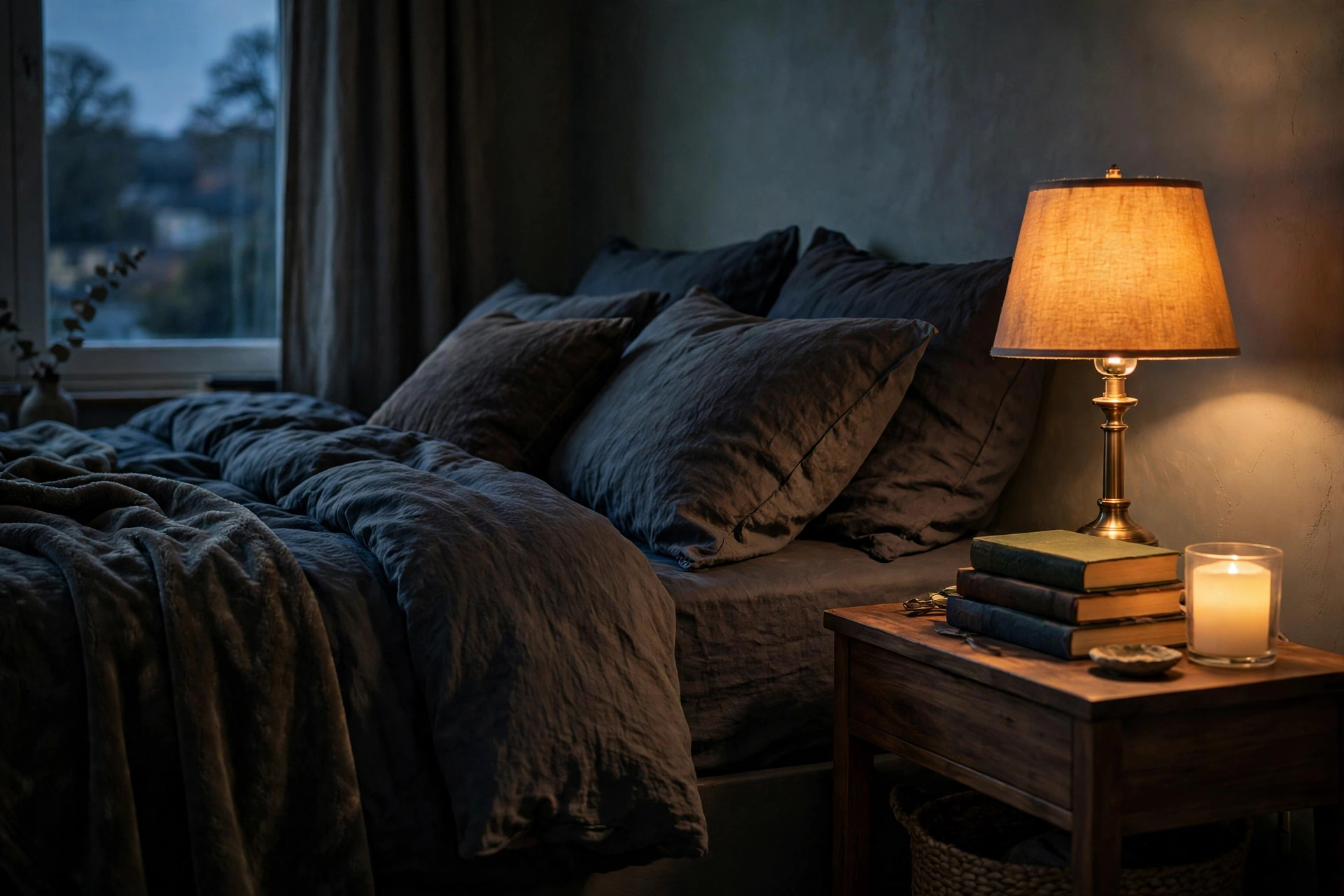
Fall steals your daylight, so bedroom lighting has to do two jobs: bright enough to find clothes at 6:30 a.m., soft enough not to jolt you awake at 10 p.m. Use 2700K warm-white bulbs in bedside lamps ($8–$12 for a multipack) and put the lampshade's bottom roughly at chin height when you sit up in bed — usually a lamp 24–28 inches tall on a 22- to 24-inch nightstand — so light falls on a book, not in your eyes. One dimmable bulb or a lamp with a low setting beats two lamp styles. For a fuller set of layouts that work in tight rooms, these cozy bedroom lighting ideas for small rooms show how to layer one overhead, one bedside, and one low light source without adding a fourth lamp you do not have space for.
8. Add blackout lining behind fall curtains
Warm-colored curtains that let streetlight pour through them solve the look and miss the sleep problem. Hang curtains in rust, chocolate, or heavy plaid ($40–$80 for two 84-inch panels) and add separate blackout liner panels behind them ($20–$35 a pair, clipped or hooked to the same rod). Mount the rod 4–6 inches above the frame and let panels run to the floor or sill, with 6–8 inches of extra width each side so light does not leak around the edges. True blackout makes weekend sleep-ins possible in fall, when sunrise shifts later but street and porch lights do not. Test liners before you commit to a dark color on top: a heavy dark curtain in a north-facing room can make daytime feel like evening, which some people love and others find gloomy by November.
9. Use flameless candles on timers for evening glow
The warm flicker people want from candles belongs in a bedroom without the flame. Real wax flameless candles with timers ($16–$26 for a set of three, in 3-, 4-, and 6-inch heights) on the dresser or nightstand can be set to glow from 8 to 10 p.m. and switch themselves off after you are asleep. That timer is the point: scented candles near bedding are a risk even awake — a pillowcase or throw corner draped near an open flame, or a candle forgotten at midnight, is how bedroom fires start. Keep scent, if you want it, flame-free: a small sachet of cedar or dried lavender in a drawer ($6–$10) scents clothes without scenting the whole room, which matters because strong fragrance in a small bedroom bothers a lot of sleepers by 3 a.m. even when they liked it at bedtime.
If your problem is a small room
10. Use under-bed space for off-season storage — measured first
Small bedrooms do not need more furniture; they need the dead space under the bed to work. Measure the clearance first — most frames give 6–7 inches, platform beds often only 4–5 — then buy low bins or soft bags to fit: low-profile bins about 6 inches high and 28–36 inches long run $12–$20 each. Store summer clothes and the spare spring bedding set there, labeled on the end facing out, so the linen closet can hold only what fall actually uses. Avoid stuffing bins so full the lids bow; you will stop opening them. Leave the area under the middle of the bed empty if your floor is carpeted and airflow is poor — tightly packed storage against a cold exterior wall can trap damp in winter.
11. Go vertical: one tall, narrow piece instead of a wide one
When floor space is gone, the walls are the storage. One tall, narrow bookshelf or ladder shelf, about 18–24 inches wide and 60–72 inches tall ($55–$110), beside the dresser holds books, a basket for chargers, and one fall vignette — a small faux pumpkin and a framed print — without eating the 30 inches of walking space you need around the bed. Anchor any tall piece to the wall with its included strap, especially in a room where you navigate half-asleep. Do not line a small room with shelves on every wall; one vertical piece feels like furnishing, four feel like storage. Keep the top shelf light and mostly empty — a heavy stack overhead beside a bed is both a visual weight and, if it slides, a real one.

12. Scale the bedding down on a small bed
A full or twin bed disappears under queen-sized styling habits. A heavy winter duvet plus two throws plus four decorative pillows on a 54-inch-wide full bed leaves about 30 inches to actually sleep in, and the whole pile ends up on the floor. Scale honestly: one fall-weight duvet, one 50 x 60 inch throw, two sleeping pillows, and at most one 18 x 18 inch accent pillow in a fall color ($14–$22). That accent pillow is where a small bed gets its seasonal color — chocolate brown, rust, or olive — for the least money and laundry. If you are drawn to dark bedding in a small room, balance it with a cream or warm-white duvet cover on top; the bed is half the room, and an all-dark bed in a 10 x 12 foot room can swallow the light you fixed in idea 7.
If your problem is a rental
13. Get warmth without paint: color on the bed and curtains only
Renters cannot paint the wall chocolate brown — and do not need to. Put the fall palette where it is portable: the duvet cover, the curtains, and one rug. Those three textiles cover the largest visible surfaces in the room and leave with you. The bedrooms in these chocolate brown bedroom ideas work as a palette guide here even in a white rental box: pick one deep brown piece (the duvet cover or the rug), keep the rest cream and wood tones, and the room reads warm rather than dark. Avoid peel-and-stick wallpaper on a first rental attempt unless your lease allows it and you have tested a corner — removal damage to paint is a common deposit deduction, and a $50 textile does the same job with zero risk.
14. Fake a headboard with textiles and scale
No headboard makes a rental bed look temporary, which makes the whole room feel unfinished. Fake one for under $60: hang a washable tapestry, a flat-weave blanket, or two curtain panels on a slim rod mounted with removable hooks rated for the weight, sized about 6 inches wider than the bed each side (66–70 inches wide for a queen) and hung so the bottom tucks behind the pillows. Or use a large framed print or a pair of 24 x 36 inch frames above the bed, hung on picture strips rated for the load. Keep anything hung over a bed light and securely fixed — nothing heavy, glass-fronted, or sharp-cornered directly above pillows. This single vertical layer is what lets the rest of a rental bedroom stay simple.
15. Make one reading corner — chair, light, and a place for the book
Finish with the corner that makes a bedroom a retreat rather than a place you only sleep. You need about 30 x 30 inches: a small chair or even a floor cushion with back support ($40–$90 for a compact accent chair, less secondhand), the second bedside lamp moved here or a small warm lamp of its own, and a tiny side table or stool, 14–16 inches across ($20–$35), for a book and a drink. Add one folded throw over the chair arm — the same 50 x 60 inch size, in a color that ties to the bed — and stop. No second vignette, no stack of decor pillows on the chair you then have to move to sit down. Twenty minutes of reading in that chair, under warm light, away from your phone charger, does more for fall sleep than any single purchase on this list. If the corner only fits in the daytime layout, keep it honest: a corner you dismantle nightly will not survive October.
The sleep-first check before you buy anything else
- Temperature: Room near 65–68°F at night? If not, fix drafts and layers before decor.
- Layers: Can you adjust warmth in the dark, in one motion — blanket on or off, throw over feet?
- Light: Warm at night, dark when you sleep, bright enough at the mirror in the morning?
- Floor: Can you walk bed-to-bathroom without stepping on decor, bins, or a pillow pile?
Pass those four and the room is already a fall retreat; the colors are the easy part. Work in the order this list is written — bed, cold, light, space, walls — and you will spend less, because half the problems people shop for turn out to be a draft, a bulb, or a duvet that was simply the wrong weight for the season.


Comments
Post a Comment