
12 Fall Garland Ideas for Mantels, Stairs and Doorways
A bare mantel in October is a missed opportunity, because few decorations change a room as fast or as cheaply as a well-chosen garland. These fall garland ideas cover the three places garland earns its keep, the mantel, the staircase and the doorway, with the part most guides skip: how much garland to actually buy. A garland that is a foot too short looks mean and stretched; one with the right extra length drapes in the soft swags that make a room feel finished. The twelve ideas below mix store-bought and assembled-from-scratch options, in both the classic orange-and-red palette and the calmer cream, sage, rust and brown palette that suits neutral rooms.
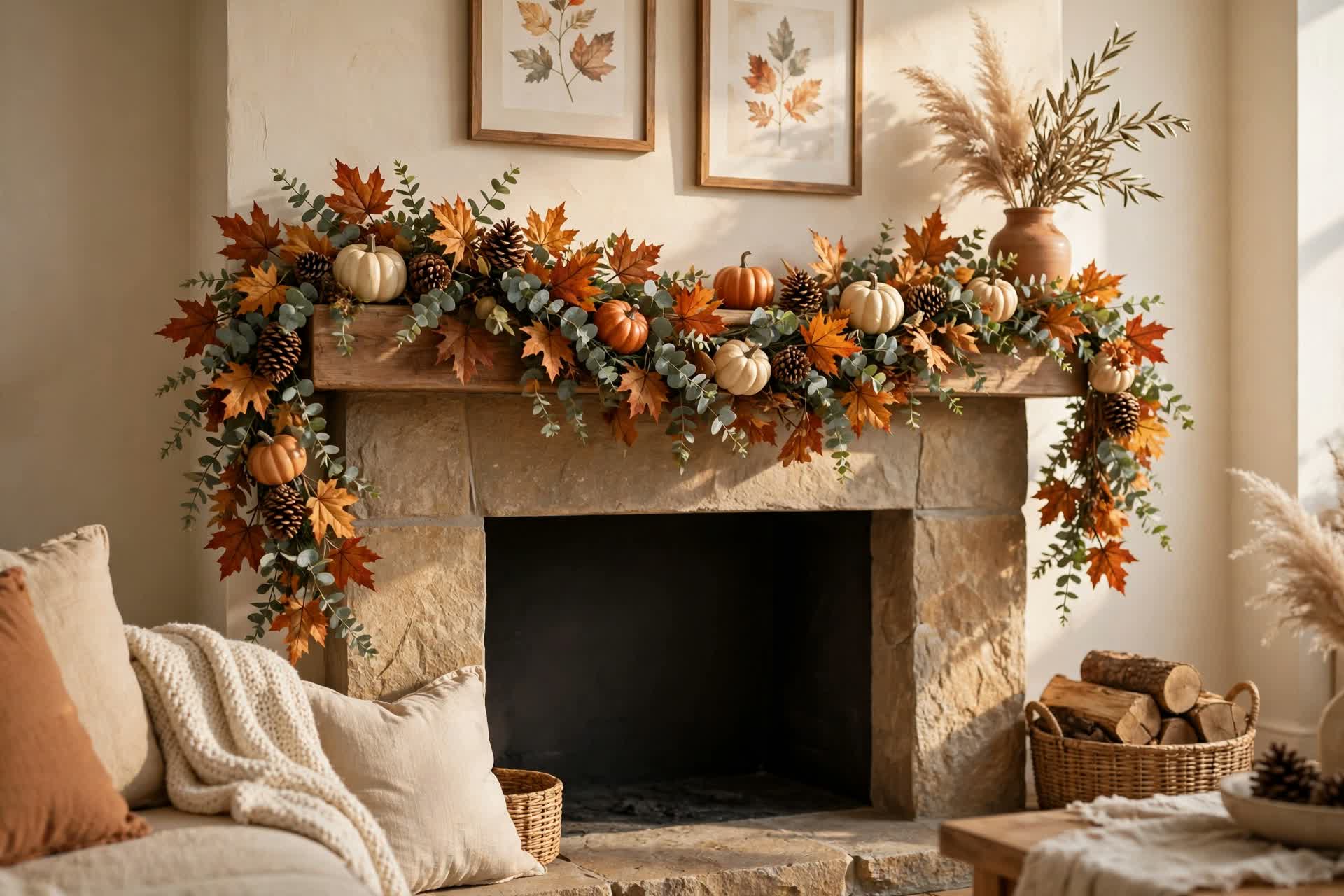
Measure First: How Much Garland Each Spot Actually Needs
Garland length is the decision everything else hangs on, so measure before you shop.
- Mantel: buy 6 to 9 feet for a standard mantel. A typical mantel shelf is 4 to 6 feet wide. A 6-foot garland runs nearly straight with a shallow dip; a 9-foot garland on a 5-foot mantel gives you a deep, generous swag in the middle and ends that can trail down the sides.
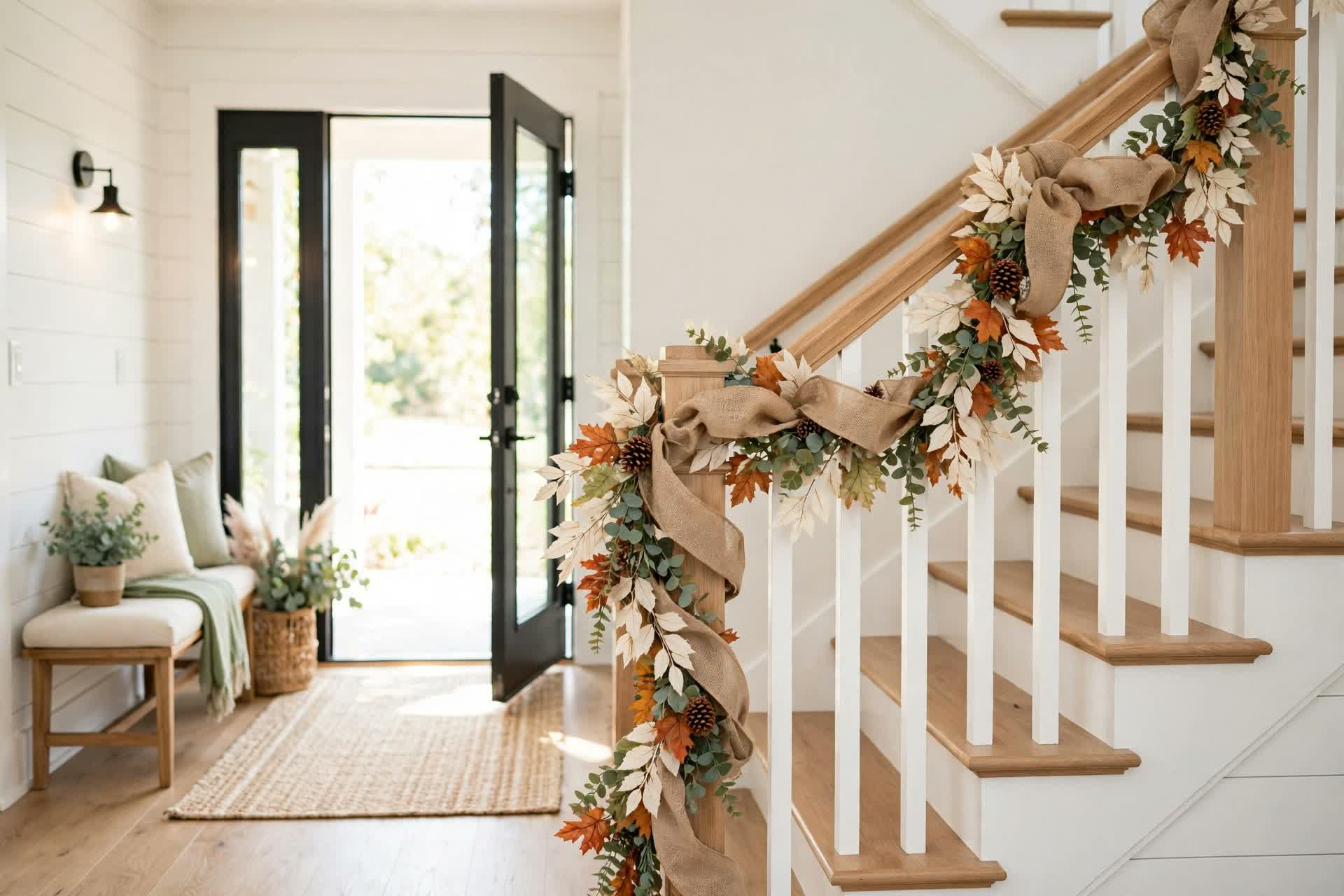
- Staircase: measure the railing, then multiply by about 1.5. Every swag between balusters eats extra length. A 10-foot railing with relaxed swags needs roughly 15 feet of garland; buy two shorter garlands rather than one very long one, because the join is easy to hide at a newel post.
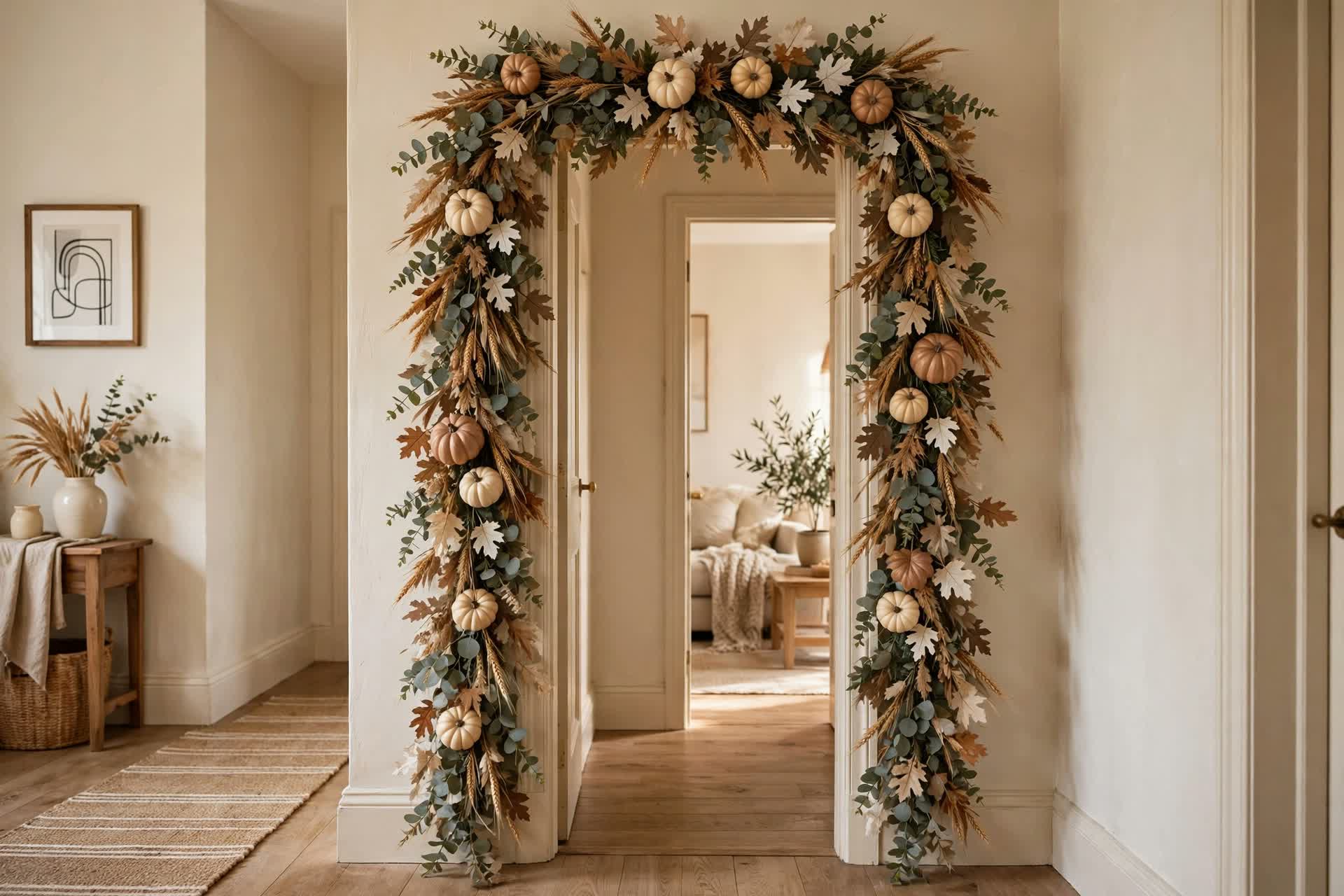
- Doorway: measure up one side, across the top and down the other. A standard interior door needs about 16 to 17 feet to frame all three sides, or about 7 feet for a top-only treatment with short drops at each corner.
For more mantel-specific arrangements and layering photos, The Creative's Hour fall garland ideas is a good visual reference, and Celebrated Nest's roundup of ready-made fall garlands shows what finished lengths look like on real mantels before you commit to a style.
12 Fall Garland Ideas for Mantels, Stairs and Doorways
1. The Classic Mantel Swag: One Deep Drape in the Middle
The arrangement every other idea builds on. Take a 9-foot leaf garland, fix it at both mantel corners, and let the middle fall into one deep swag, about 10 to 14 inches below the shelf at its lowest point. The ends can hang 12 to 18 inches down the sides of the fireplace for a finished frame. Asymmetry is fine and often better: let one side hang a little longer than the other. Anchor with clear adhesive hooks on the mantel top surface, not the front face, so fixings stay invisible and the paint stays undamaged.
2. Layer It in Three Passes: Greenery, Texture, Light
A single garland strand often looks thin because it is doing three jobs at once. Build in layers instead. Pass one is the base greenery, eucalyptus or a plain leaf garland, wired loosely along the full length. Pass two is texture: tuck in pinecones, mini pumpkins, dried orange slices or wheat stems every 12 to 18 inches, twisting a short piece of floral wire around the base stem to hold each piece. Pass three is light: a battery string of warm white fairy lights wound through last, with the battery pack hidden at one end behind a pumpkin or stack of books. Each layer is thin; together they read as one expensive garland.
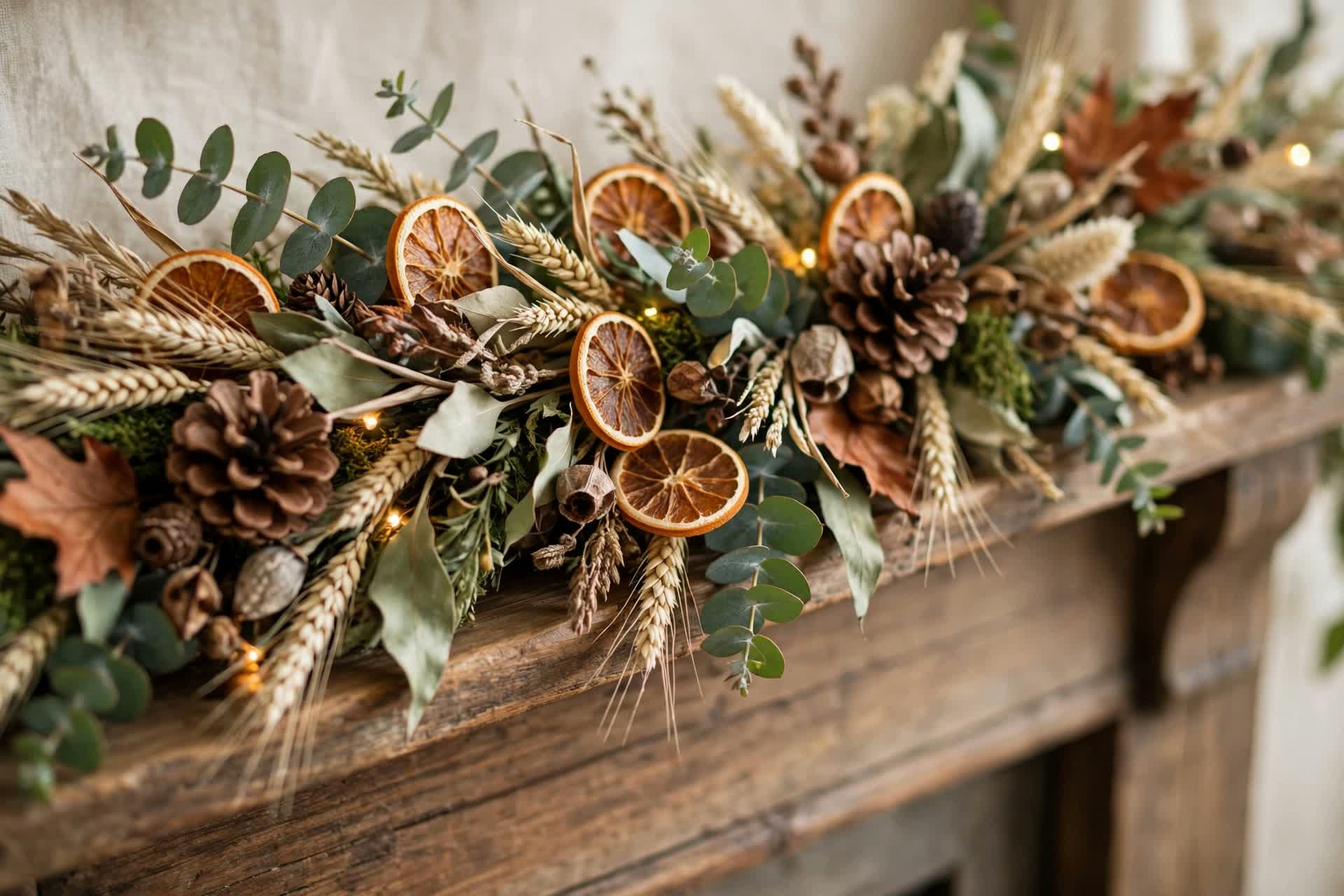
3. Neutral Palette Garland for Calm, Modern Rooms
If your living room is cream, white and wood, a bright orange garland shouts instead of settling. Build or buy in the neutral fall palette instead: cream and ivory leaves, sage eucalyptus, rust accents used sparingly, natural brown pinecones and burlap ribbon. Dried wheat and pampas stems add height without color. The effect reads as texture rather than theme, photographs beautifully, and can stay up from September through late November without tiring the room. This is also the palette that pairs best with the layered textiles in our guide to fall throw blanket styling ideas.
4. Classic Orange and Red Leaf Garland, Done Generously
The traditional palette works when it is abundant. The failure mode is one thin strand of maple leaves stretched tight across a mantel, which looks like an afterthought. Double it: two 6-foot strands twisted together double the leaf density instantly, and mixing two slightly different leaf tones, one orange-led and one red-led, keeps it from looking flat. Fluff every leaf outward before hanging; faux leaves ship compressed and need two minutes of opening by hand.
5. Staircase Swags Tied at Every Newel and Post
On a staircase, rhythm is the whole effect. Drape the garland along the handrail in even swags, each dropping about 8 to 12 inches, and fix it where each swag peaks, at the newel post and every 3 to 4 feet along the rail. Clear cable ties or floral wire hold best; ribbon ties at the fix points turn a practical join into part of the design. Keep garland on top of the handrail or on its outside face, never wrapped around the grip, so the rail stays fully usable. Remember the measuring rule: railing length times about 1.5, or the last swag comes up short.
6. Eucalyptus and Pinecone Garland for a Woodland Feel
Skip leaves entirely for a quieter look. A eucalyptus base, silver-dollar or seeded, in soft sage green, dotted with natural pinecones wired in clusters of two or three, suits mantels in rooms with a lot of wood and stone. Add dried orange slices if you want one warm note; their translucent amber glows when light passes through them near a window or lamp. This combination also stores well, since none of it crushes the way large faux leaves can in a bin.
7. Doorway Framing That Turns a Passage Into a Feature
Framing a doorway with garland makes an ordinary hallway feel deliberate. Run the garland up one side, across the top and down the other, fixing it with clear hooks every 18 to 24 inches so the weight never pulls a long section loose. Top-only framing is the faster version: across the header with 12-inch drops at each corner, like a valance. Skip doors that close frequently, since a swinging door and a hanging garland end will fight daily; open-plan doorways and living room entries work best.
8. Mini Pumpkin and Burlap Garland for Rustic Texture
For a farmhouse-leaning room, thread the rustic materials together: a burlap or twine-based garland carrying mini pumpkins, small pinecones and wooden beads. The pumpkins should be genuinely mini, 2 to 3 inches across; anything larger sags the strand and pulls fixings loose. Space the heavy pieces evenly rather than clustering them, and give a staircase version extra fixings at each pumpkin cluster. This style pairs naturally with the wider autumn mantel arrangements in our cozy fall fireplace mantel decor ideas, where the garland is one layer among candles, wood and woven textures.
9. Dried Orange Slice and Wheat Garland You Make Once
The most satisfying garland on this list costs almost nothing after the first year. Dry orange slices in a low oven (about 200°F / 95°C for 2 to 3 hours, turning once), thread them on twine with bay leaves or small pinecones between, and alternate sections with tied bundles of dried wheat. Hang it where daylight reaches it, on a mantel near a window or a bright doorway, because backlit orange slices are the effect. Make it once, store it flat between sheets of cardboard, and it returns for several seasons. Keep it away from direct fireplace heat; dried materials are for the mantel shelf edge and above, never draped close to an active firebox opening.
10. Table Garland: The Same Ideas at a Smaller Scale
Not every home has a mantel or a staircase, and a table runner garland solves that. A 6-foot garland run down the center of a dining table, kept 6 inches clear of place settings, with the layered treatment from idea two, gives a renter or apartment the full fall effect with zero fixings. The same trick works on a console table, a bookshelf top or a kitchen island edge. Use battery lights only, and keep dried materials away from serving dishes.
11. Asymmetric Mantel Garland for a Modern Edge
Instead of centering the swag, push the weight to one side: garland runs along the mantel top, gathers into a full arrangement at one corner with pumpkins and wheat standing taller there, and trails a short drop down that side only. The empty two-thirds of the mantel gets one low stack of books or a single vase. Asymmetry looks designed rather than decorated, and has a practical bonus: a 6-foot strand does the job a centered treatment needs 9 feet for.
12. Mix Real and Faux So It Survives the Whole Season
The longest-lasting approach blends both. Use a good faux base garland, the structure that has to survive eight to ten weeks, and tuck in real, replaceable accents: fresh eucalyptus stems for the first two weeks, real mini pumpkins (which hold up indoors for a month or more), and dried elements that never wilt. When the fresh pieces fade, swap just those; the base never comes down. At season's end, coil the garland loosely, never fold it sharply, and store it in a labeled bin so next year starts with untangling nothing.
Quick Picks: Match the Garland to the Spot
Mantel and ten minutes? Idea one, a single deep swag from a 9-foot garland, plus idea two's fairy lights. Staircase as the first thing guests see? Idea five, with the 1.5-times measuring rule respected. Neutral room that hates orange? Idea three or six. No mantel, no stairs? Idea ten on the table, or idea seven framing the living room doorway. Making rather than buying? Idea nine, dried orange and wheat.
Garland Mistakes That Make Fall Decor Look Thin
The same five errors appear every autumn: buying the exact width of the mantel with no drape allowance, so the garland hangs in a tight straight line; stretching a staircase garland that was measured without the 1.5-times swag allowance; hanging everything on one fixing at each end so the middle slowly slides down; mixing too many materials in one strand instead of layering greenery, texture and light in passes; and storing garland folded or crushed, so next year's version never fluffs back. Measure with the drape included, layer in three passes, secure with clear hooks or floral wire every few feet, and coil it into a labeled bin at season's end. For more autumn decorating, browse our Seasonal Decor ideas archive.
Start with the mantel and a tape measure: note the shelf width, add half again for the swag, and you already know more than most garland shoppers learn.


Comments
Post a Comment