
12 Small Bathroom Rug Ideas That Stay Dry and Look Plush
The fastest way to make a tiny bathroom feel finished is also the easiest to get wrong. Good small bathroom rug ideas are not really about color first. They are about size, placement, and whether the rug actually dries between showers. Pick a mat that is too small and it looks like a postage stamp. Pick one that is too thick and the door drags, the corners curl, and the whole thing stays damp until it smells. This guide fixes all three problems at once, with real measurements you can check with a tape measure in about two minutes.
Below are 12 ideas that work in real small bathrooms, most of them under 5 by 7 feet or 5 by 8 feet. Each one tells you the size to buy, the material that makes sense for that spot, what it usually costs, and the one mistake to avoid. If you only remember one rule, make it this one: size the rug to the fixture in front of it, not to the whole room.
Before You Shop: The Small Bathroom Rug Sizes That Actually Fit
Most frustration comes from guessing. Stores use words like small, standard, and large, but those words mean different things from brand to brand. Inches do not lie, so start here.
- 17 x 24 inches: the true small size. Best for powder rooms, pedestal sinks, and very tight half-baths where only your feet at the sink need coverage.
- 20 x 32 inches: the most useful size in a small bathroom. It fits in front of most single vanities that are 30 to 36 inches wide, and it works as a step-out mat in front of a tub or shower door.
- 24 x 36 inches: a more generous single mat. Use it when the vanity is wider, the tub is your main landing spot, or you want more warm floor underfoot in winter.
- 2 x 3 feet: a small area-rug size that gives a vanity a proper landing without covering the whole floor. It reads more styled and less like a basic bath mat.
- 20 x 60 inches or 24 x 72 inches: runner sizes. Best along a double vanity, along the side of a tub, or down the middle of a long, narrow bathroom.
- About 20 x 24 inches, U-shaped: the usual contour size that wraps around the base of a toilet.
Two simple checks help more than any chart. First, use the two-thirds rule: if a mat does not span the full vanity or tub, it should still cover about two-thirds of that length. A 40-inch mat in front of a 60-inch tub looks intentional. A 24-inch mat in the same spot looks lost. Second, check your door. Open and close it over the spot where the rug will sit. If your door clearance is tight, you need a low-pile rug under about half an inch thick, or the door will catch and bunch it every single day. For a fuller breakdown of standard dimensions, see the standard bath mat sizes and dimensions guide, which walks through small, standard, large, runner, and contour sizes in detail.
1. Match One Plush Mat to the Width of Your Vanity
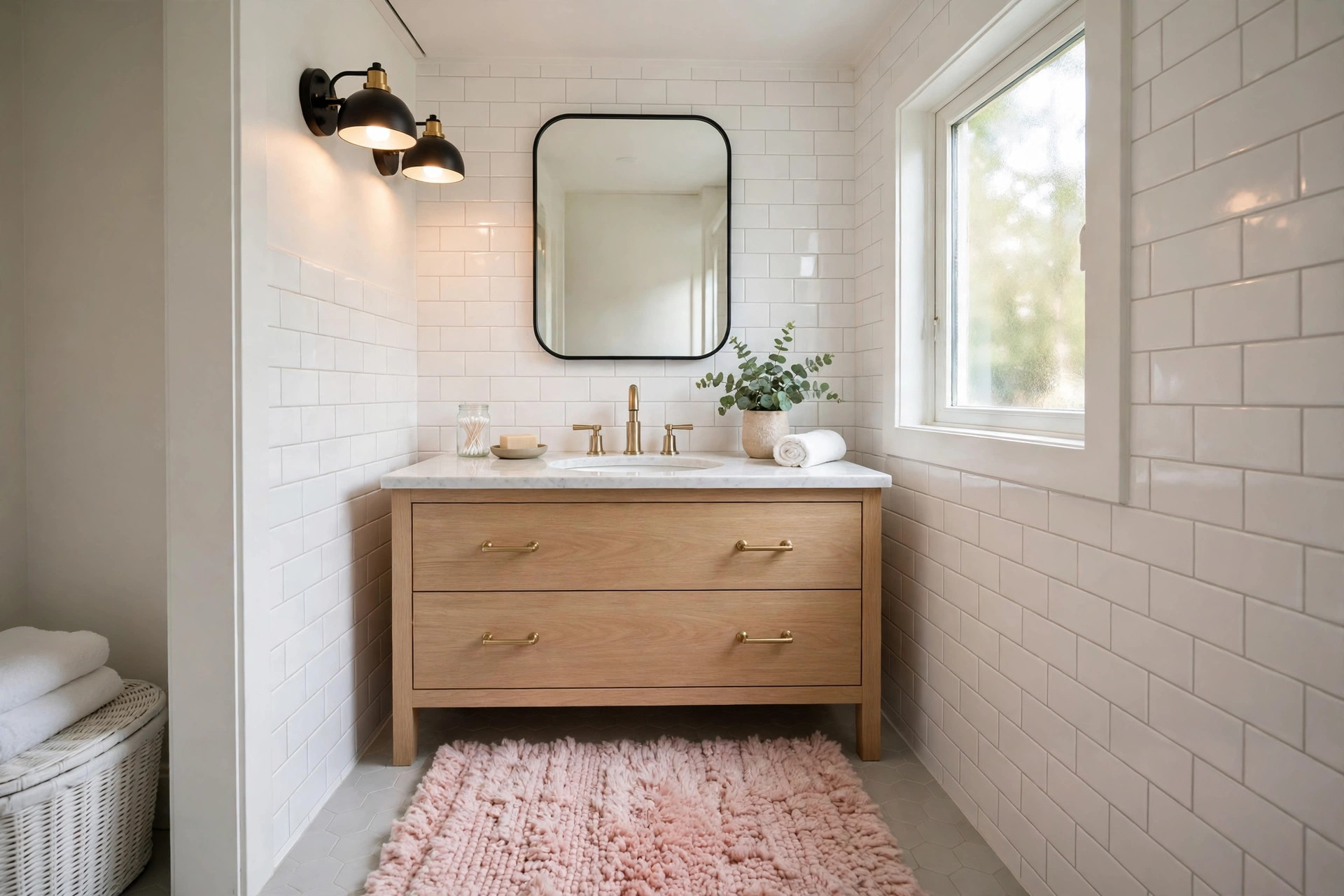
This is the classic move, and it works because it looks balanced. Measure the vanity cabinet itself, not the countertop overhang. If the cabinet is 30 to 36 inches wide, a 20 x 32 inch mat or a 24 x 36 inch mat will span it nicely. Line the rug up with the front of the cabinet and leave two or three inches of bare floor at the toe-kick, so drawers and cabinet doors open without dragging across it.
For this spot, plush is welcome. You are standing still here, brushing your teeth and washing your face, mostly with dry or slightly damp feet. A chenille or microfiber mat feels soft, catches drips from the faucet, and protects tile from the daily splash zone. Expect to pay about $16 to $28 for a good 20 x 32 inch microfiber or chenille mat with a rubber backing.
The mistake to avoid is buying the 17 x 24 inch size for a full vanity just because it was cheaper or came in a cute color. In front of a 36-inch vanity it looks like a doormat that wandered into the wrong room. Save that small size for a pedestal sink, where it is exactly right.
2. In a Tiny Bathroom, Use One Rug and Stop There
If your bathroom is under 5 by 7 feet, one rug almost always beats three. A matching three-piece set sounds tidy in the product photo, but in a real tiny room it chops the floor into little islands. The room feels smaller, there are more edges to curl and trip on, and you now have three damp pieces of fabric to wash instead of one.
Choose the one spot that matters most. For most people that is either in front of the vanity or at the shower step-out, whichever you use with bare wet feet more often. Put a single 20 x 32 inch mat there, in a color close to your floor if you want the room to feel larger, or in a clear contrast color if the room is all white and needs one anchor.
One good washable mat at $20 to $30 will also outlast a cheap three-piece set. If storage is tight, see our bathroom towel storage ideas.
3. Run a Runner Along a Double Vanity Instead of Two Small Mats
Two separate mats in front of a double vanity always look a little restless. They slide in different directions, they never stay equally spaced, and there is a cold gap of tile right in the middle where someone inevitably stands. One long runner fixes all of that and instantly makes the room look calmer and more expensive.
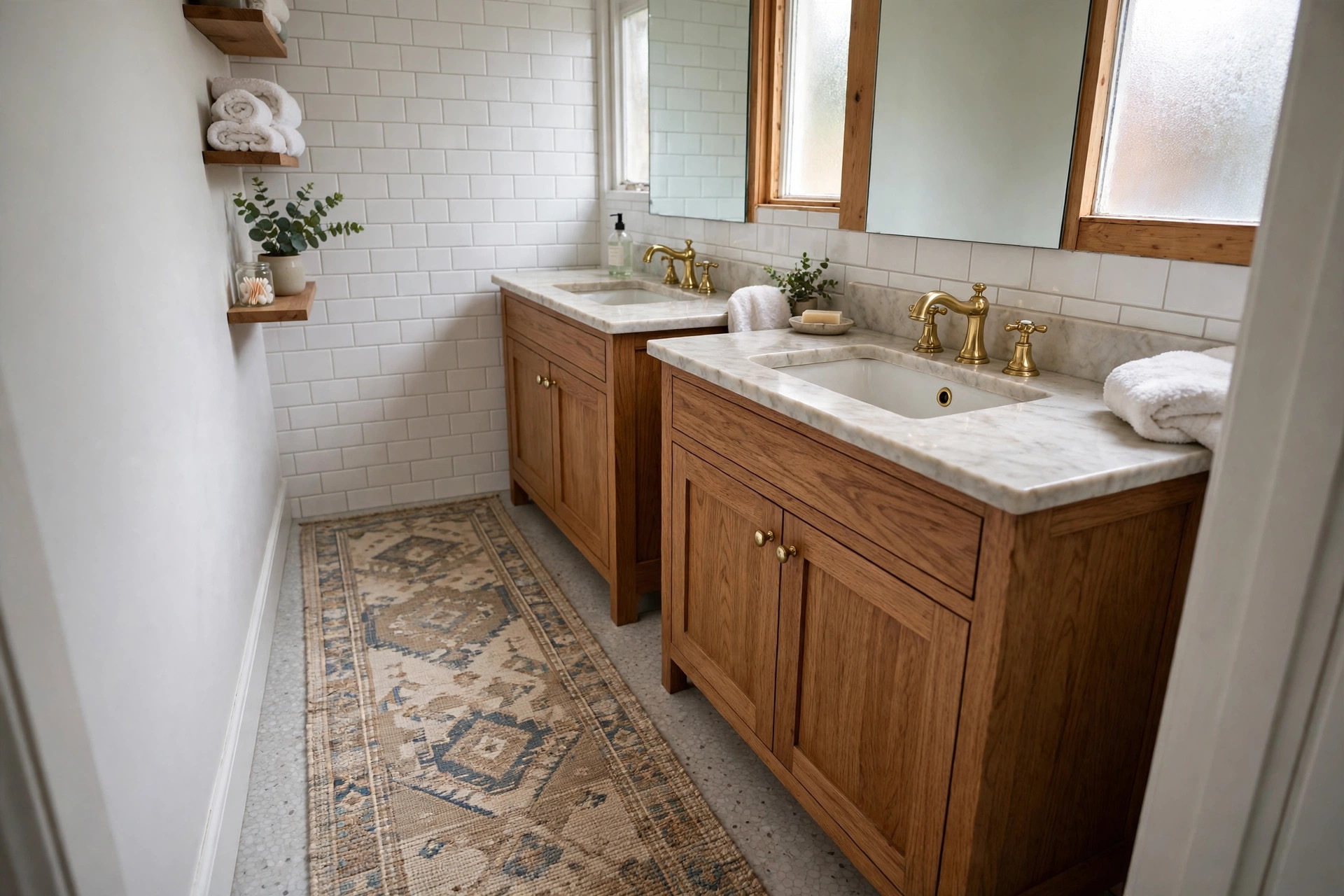
Look for a runner around 20 x 60 inches or 24 x 72 inches, or a washable runner close to 2.5 by 7 feet for a long vanity wall. Leave a few inches of bare floor at each end so the runner does not jam against side walls or cabinet panels, which is what makes ends curl. Flatweave and low-pile runners suit this spot best because cabinet doors swing over them easily and the flat surface hides splashes better than a deep pile does.
4. Put a Fast-Drying Microfiber Mat at the Shower Step-Out
The step-out spot is the wettest square footage in your home. Whatever you place here gets soaked, not sprinkled. That changes the material choice completely. Thick cotton and deep plush foam can feel lovely for ten seconds and then stay damp for the rest of the day, especially in a small bathroom with one small window or a weak fan.
Microfiber earns its place here. A dense microfiber or chenille mat in a 20 x 32 inch or 24 x 36 inch size drinks up the water from your feet quickly and releases it faster than a heavy cotton loop pile does. Many of the best-selling versions cost $14 to $26, are machine washable, and have a rubber backing that keeps the mat planted when you step out with wet feet.
Placement matters as much as fabric. Slide the mat right up to the shower door swing or tub edge with no gap, so the first step lands fully on it. Then build one small habit: after the last shower of the morning, drape the mat over the tub edge or a hook for an hour. That single habit prevents more musty smells than any special detergent. A mat that gets air will stay fresh. A mat left flat on a wet floor will not, no matter what it is made of.
5. Try a Teak Wood Mat When Fabric Never Seems to Dry
Some bathrooms simply stay humid. No window, an interior room, back-to-back showers, kids who flood the floor. If every fabric mat you have owned ended up smelling damp, stop fighting it and remove the fabric from the wettest spot altogether. A teak wood bath mat gives you a dry, warm-feeling surface with nothing soft to stay soggy.
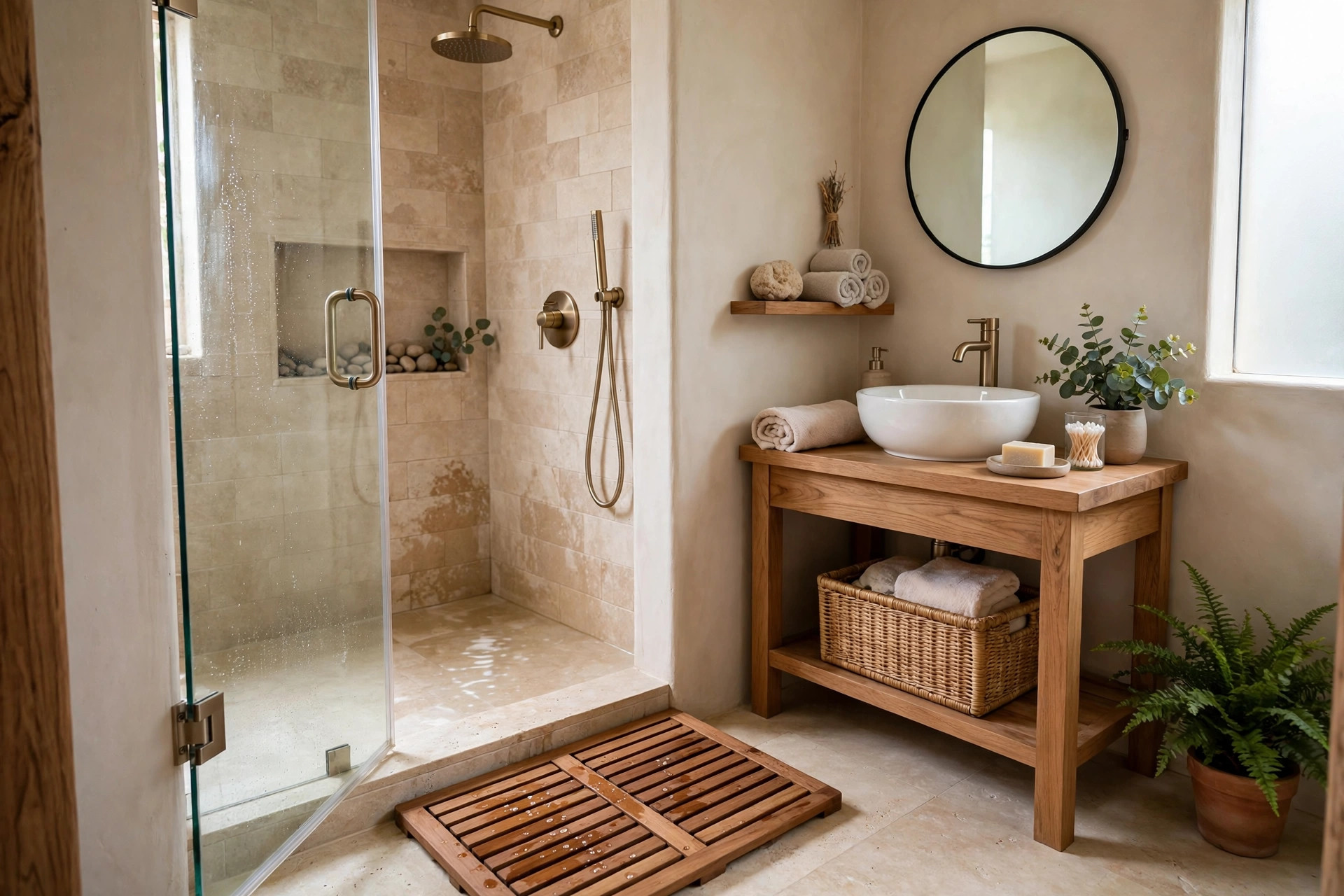
Teak slats let water drain straight through to the floor and evaporate, and the wood is naturally resistant to water damage, which is why it has been used on boats and in spas for years. Most small-bathroom teak mats are around 20 x 30 inches or 24 x 36 inches and cost about $45 to $95. That is more than fabric, but a good one lasts for years with nothing more than a wipe down and occasional air drying.
For more spot-by-spot thinking, this guide to bathroom rug ideas by size, placement, and fabric is worth a read before you buy.
6. Choose a Stone Mat for a Cool, Instant-Dry Landing
Stone bath mats, usually made from diatomaceous earth, look almost too simple to work. You step out of the shower, stand on a slim stone slab for a few seconds, and the footprints fade as the surface pulls in the water and dries. In a very small bathroom, that slim profile is a real advantage. There is no pile to block the door, no fabric to bunch, and nothing to throw in the wash.
Typical sizes run about 23 x 15 inches for a compact mat up to roughly 32 x 20 inches for a wider step-out, with prices around $35 to $70. Care is different from fabric: rinse it now and then, let it dry fully, and lightly sand the surface with the included sheet if absorbency slows down after months of soap and hard water.
Be honest about feel, though. A stone mat is firm and cool, not plush. If you love a soft landing, use the stone mat at the shower where instant drying matters most, and keep a small cushioned rug at the vanity. Do not buy a stone mat expecting a spa cushion. Buy it because your bathroom stays wet and you are tired of laundering mats twice a week.
7. Layer a Small Plush Mat Over a Larger Flatweave Rug
Layering sounds like a big-bathroom luxury, but done with restraint it solves a small-bathroom problem: you want the styled look of an area rug and the absorbency of a bath mat, without one oversized plush rug that takes forever to dry. The trick is to split the jobs between two thin pieces.
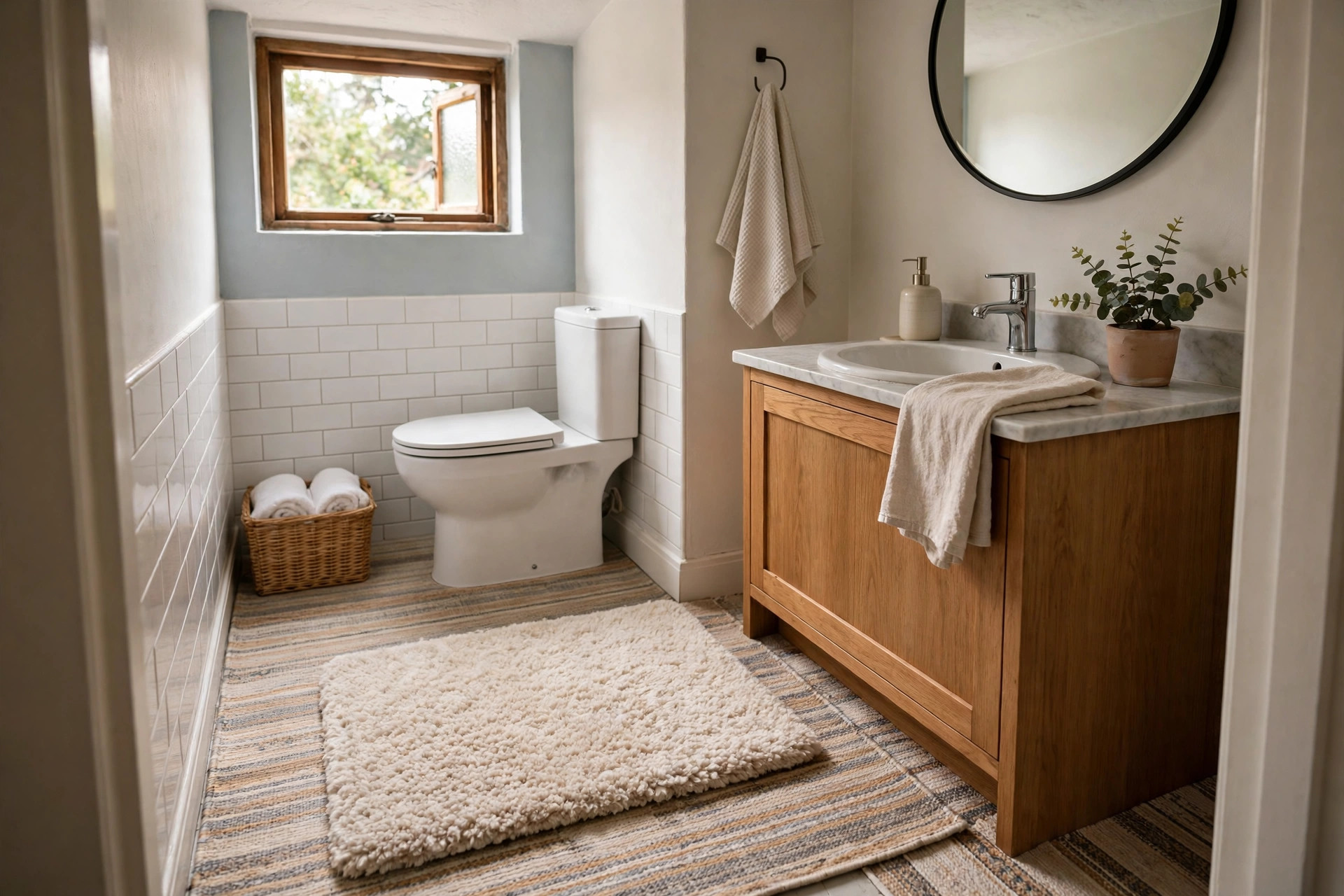
Start with a washable flatweave rug, about 2 x 3 feet, as the base. It brings color, pattern, and that finished look, and its low profile keeps the door happy. Then place a smaller absorbent mat, 17 x 24 inches, on top at the exact wet spot, usually the shower step-out or directly in front of the sink. The top mat does the soaking. The base rug does the decorating.
Because the absorbent piece is small, it washes easily and dries fast, even draped over a towel bar. The flatweave base needs washing far less often. Keep the colors related: a patterned base with a solid top mat in one of the pattern colors looks deliberate, while two competing patterns in a tiny room just look busy. Total cost is usually $30 to $55 for both pieces, less than many single premium rugs.
8. Pick a Low-Pile Washable Rug When the Door Barely Clears the Floor
In older homes and tight remodels, the bathroom door sometimes passes a quarter inch above the tile. Any plush rug becomes a doorstop. You will fight it daily, the edge will fray, and guests will trip on the bunched corner. This is not a style failure. It is a thickness problem, and it has an easy fix.
Choose a low-pile or flatweave washable rug, ideally under half an inch thick including the backing. Modern washable rugs in a 2 x 3 foot size cost about $22 to $45, feel smooth rather than fluffy, and go straight into the machine when toothpaste and hairspray build up. Many have a grippy underside built in, so you do not need a separate pad adding height.
9. Use a Contour Mat Only If It Solves a Real Problem
The U-shaped contour mat around the toilet is the most debated piece in the bathroom. It can be genuinely useful in a cold house with tile floors, in a kids bathroom where aim is a work in progress, or for anyone who stands at a wall-mounted urinal-style setup. A standard contour size is about 20 x 24 inches, and a washable one costs roughly $12 to $22.
10. Buy Cotton When You Wash Often and Want a Natural Feel
Cotton remains a favorite for a reason. It is absorbent, soft in a familiar towel-like way, often reversible, and usually machine washable without special care. A cotton mat in a 20 x 32 inch size typically costs $18 to $32, and a woven cotton rug can bring a relaxed, slightly textured look that suits white, wood, and natural-stone bathrooms beautifully.
Cotton works especially well at the vanity and in powder rooms, where splashes are light. It is also a smart partner to the storage you already have: if you are already rotating towels from a tight space, our ideas for small bathroom linen storage will help you find a dry spot to keep a clean spare mat ready for wash day, which is the small system that keeps cotton stress-free.
11. Treat Non-Slip Backing as a Safety Feature, Not an Extra
A rug that slides on wet tile is not a minor annoyance. It is the one bathroom accessory that can actually hurt someone. Small bathrooms make this worse, because there is less room to catch yourself and more hard edges close by. So treat grip as the first filter, before color, before softness, before price.
Look for a full rubber or latex backing, not just four corner dots. Press the mat down on your floor and push it sideways with your foot while the floor is slightly damp. A good backing resists. If the listing says nothing about backing, assume there is none and plan on a separate non-slip pad, usually $8 to $15, cut an inch smaller than the rug on every side so it stays hidden.
12. Let Color and Pattern Do the Decorating in a Rental-Friendly Way
Here is the joyful part. In a small bathroom where you cannot retile, repaint cabinets, or move a single fixture, the rug is often the largest patch of color you control. A 2 x 3 foot rug is big enough to change the whole mood of the room for under $40, and it leaves with you when you move. No deposit risk, no tools, no weekend project.
A few combinations that reliably work: a pale rug close to the floor color when you want calm and the illusion of more space; a deep navy, forest, or terracotta rug when the room is all white and feels clinical; and a small-scale pattern, thin stripe, or vintage-style motif when your floor is plain and your towels are solid. Small patterns hide splashes, hair, and toothpaste specks far better than a solid light rug, which is a practical gift on busy mornings.
Repeat one color from the rug in a hand towel and stop there. And clear crowded counters first: our bathroom under-sink organization ideas free up the space that lets a good rug be noticed.
A Simple Buying Checklist for Small Bathroom Rugs
Before you pay for anything, run through this short list. It takes a minute and prevents nearly every return.
- Measure the vanity, tub, and door clearance in inches. Write them in your phone.
- Pick the size from the chart above, using the two-thirds rule if you are between sizes.
- Choose the material by wetness: microfiber, teak, or stone for the step-out; cotton, chenille, or flatweave for the vanity.
- Confirm non-slip backing or add a pad to your order at the same time.
- Confirm it is machine washable, and check whether hot drying will damage the backing.
- Check pile height against your door swing if the rug sits anywhere near the door.
- Buy a spare only for the spot that needs frequent washing, usually the toilet or step-out mat.
How to Keep a Small Bathroom Rug Dry and Fresh
Even the best rug fails without a tiny bit of routine. Shake it outside or over the tub twice a week to remove hair and grit that grind down the fibers. Wash it every one to two weeks in a shared bathroom, sooner if it looks flat or holds a smell after drying. Use cool or warm water, skip heavy fabric softener, which coats absorbent fibers and makes them repel water, and air dry whenever the backing allows it.
The Bottom Line
The best small bathroom rug is boring in the right ways. It is the correct number of inches, it grips the floor, it washes without a fuss, and it is dry again by the next morning. Get those four things right and the fun part, the plush feel and the color that makes you smile at the sink, comes almost for free. Start with one spot, measure honestly, and upgrade that single square of floor. You will feel it with your bare feet every day.


Comments
Post a Comment