
13 Small Apartment Fall Entryway Ideas That Welcome You Home
Your front door opens straight into a tight hallway, a corner of the living room, or — in many studios — basically nowhere at all. That does not mean you have to skip the welcome. These small apartment fall entryway ideas work in real square footage: a strip of wall, a few feet of floor, and pieces slim enough that the door still swings open. Every idea below gives you a place to drop keys, park shoes, and hang a coat, plus the warm color and texture that make fall feel like fall — without turning a tiny entry into a storage obstacle course.
Start by measuring before you buy anything. Note the door swing, the clear width of the hall, and the distance to the first doorway or corner. In most small entries, keeping at least 30 inches of clear walking path is the difference between cozy and cramped.
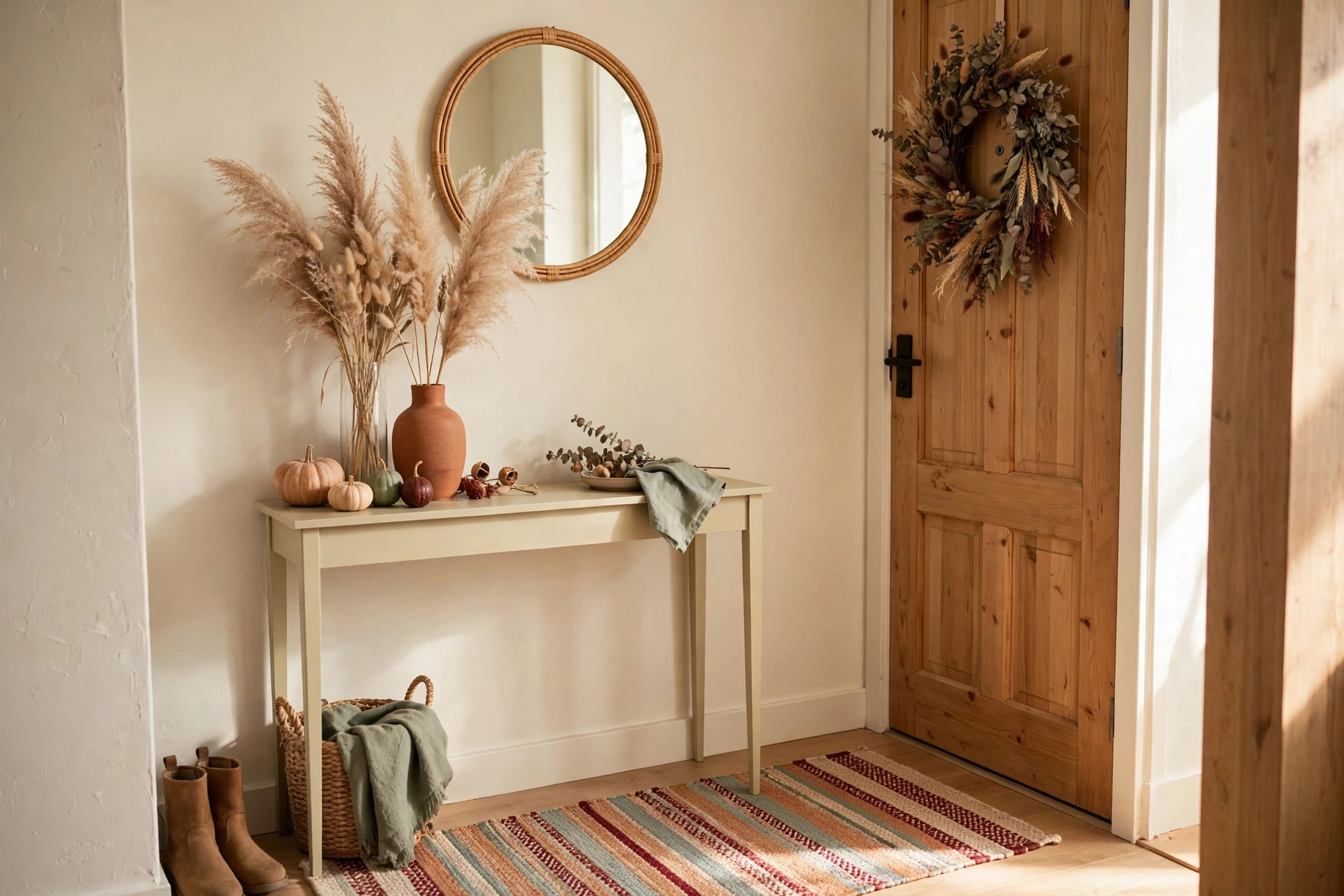
Start With the Layout, Not the Decor
1. Claim a landing strip, even if it is only three feet wide
Every entry, however small, needs three things within arm's reach of the door: a surface for keys and mail, a hook for what you are wearing, and a defined spot for shoes. If those three live in a three-foot stretch of wall, the rest of the apartment stays calmer. Mark the zone with a runner or a washable mat first. The rug is the boundary — it tells everyone, including you, where the entry ends and the living space begins.
2. Choose a console that is genuinely narrow
Standard consoles are often 14 to 16 inches deep, which is too much for a tight hall. Look instead for 10- to 12-inch-deep consoles for hallways under 36 inches wide, and 12- to 14-inch-deep pieces where you have a little more room. A length of 28 to 40 inches suits most apartment walls without crowding a doorway. Wall-mounted floating shelves at 8 to 10 inches deep are the slimmest option of all, and they leave the floor clear for shoes and cleaning.
Leave a small empty patch on the surface on purpose. A console covered edge to edge has nowhere for today's mail, so the mail ends up on the kitchen counter instead.
Storage That Earns Its Footprint
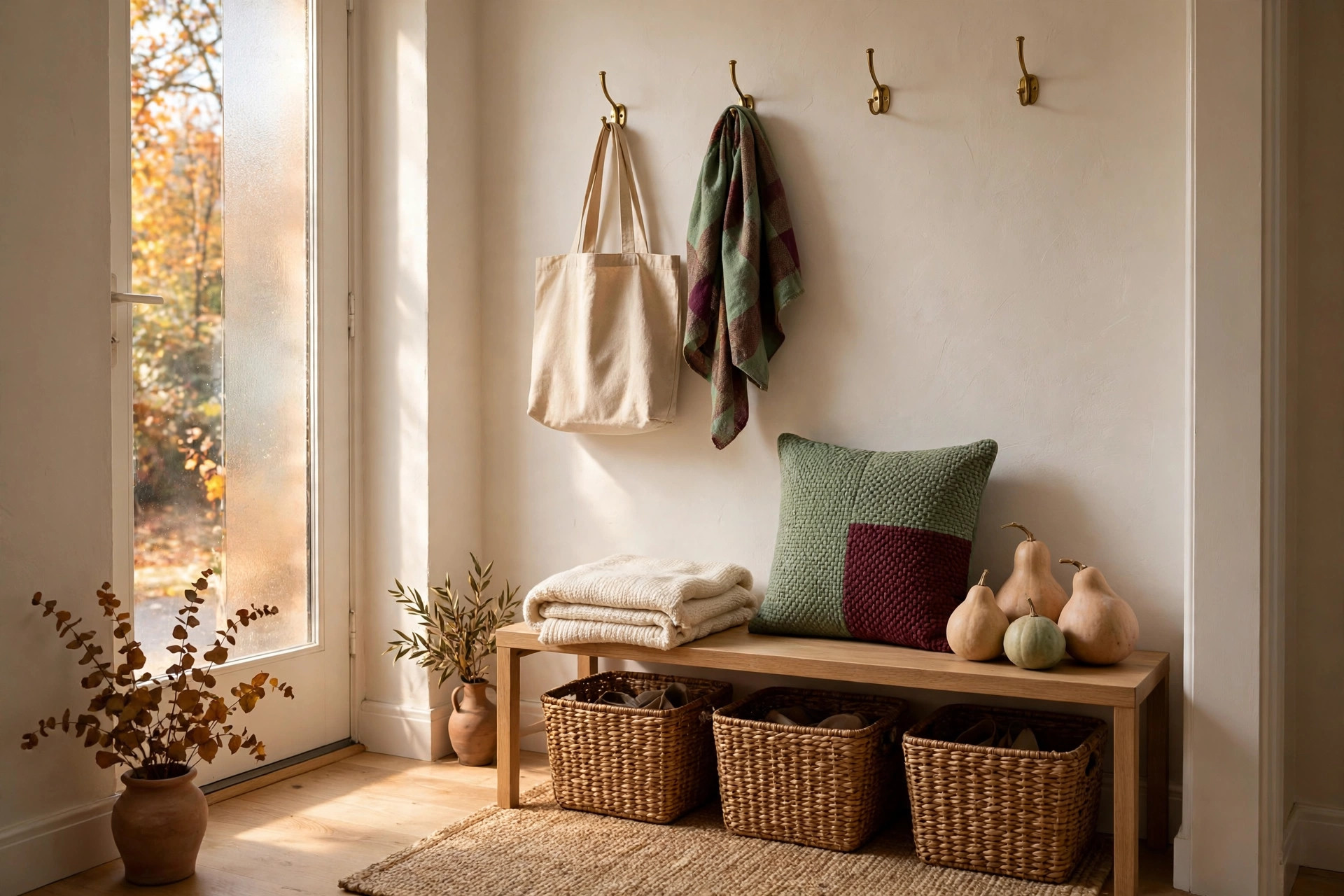
3. Add a slim bench that doubles as shoe storage
A bench gives you somewhere to sit while you put shoes on, and that alone makes a small entry feel finished. Choose one 12 to 14 inches deep and 31 to 39 inches long, with an open shelf or space underneath at least 6 inches high for everyday pairs. Cushion it in a washable cover — fall brings wet leaves and muddy soles. A folded cream throw and one cushion in sage or burgundy add the season without needing a pile of accessories.
4. Hide the shoe pile in baskets, not in a bigger rack
Two low woven baskets under a bench or console hold four to six pairs and look far calmer than an overflowing rack. Keep only the shoes you wear weekly in the entry; the rest belong in a closet. Add a small boot tray in rainy weeks — a rimmed tray 24 to 30 inches wide catches drips and protects wood floors and rental deposits alike. When the tray looks crowded, that is your signal a pair needs to move.
5. Give every person one basket, one hook, and nothing more
Shared entries fail when they try to hold everything for everyone. One basket and one hook per person is a strict but kind limit. Guests get the spare hook you deliberately leave empty. If you live alone, the same rule keeps the entry from slowly becoming a second closet.
Walls Do the Heavy Lifting
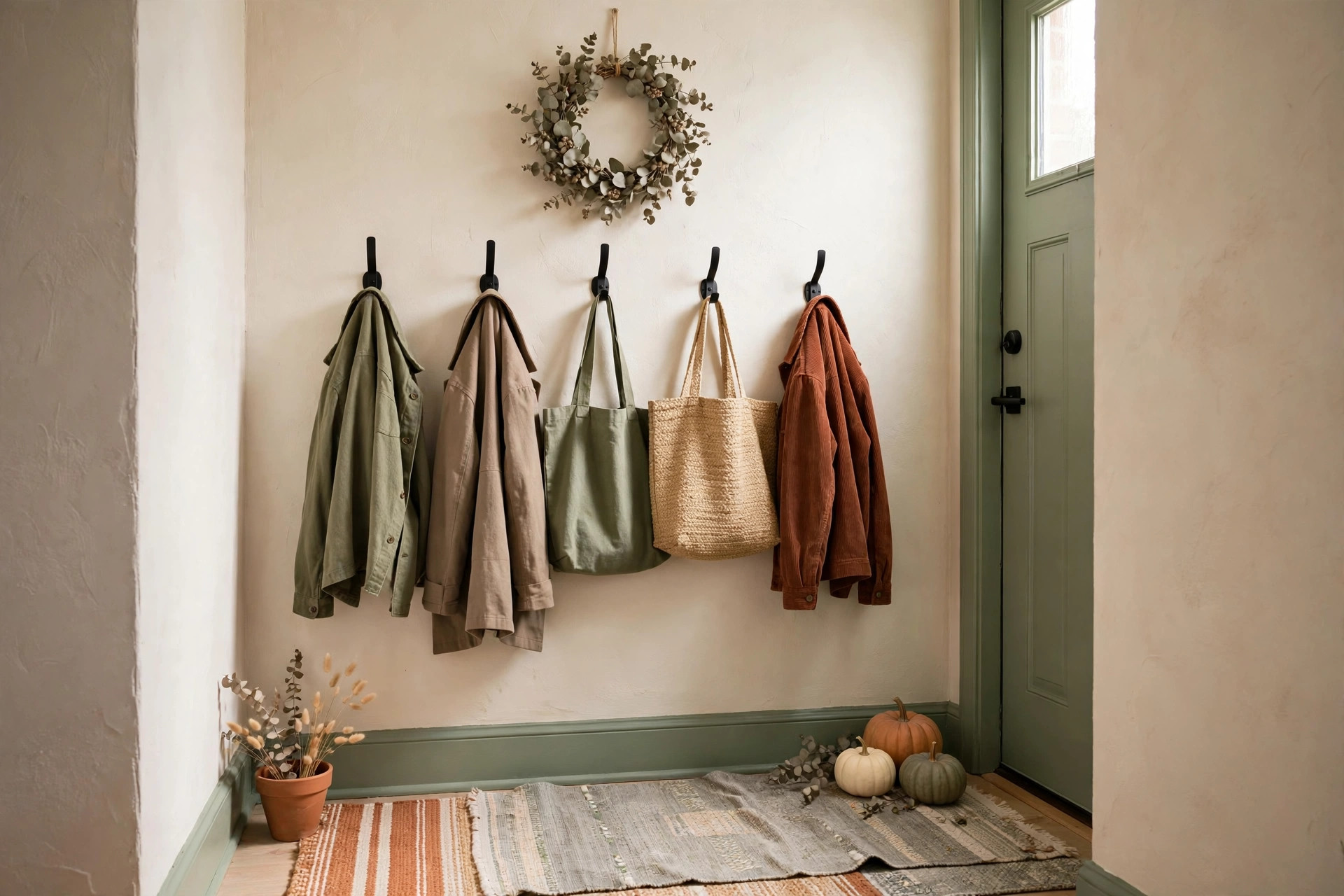
6. Hang hooks at 60 to 66 inches — and add a lower row if you need it
For adults, hooks mounted 60 to 66 inches from the floor keep coats off the ground without making you reach. Space them 6 to 8 inches apart so jackets do not bunch into one damp lump. A second row at 40 to 48 inches works well for bags, dog leashes, and children's coats. For more fall organizing specifics, this guide to pro organizer entryway tips for fall is a practical companion read.
7. Use renter-safe hooks when you cannot drill
Renting does not rule out hooks — it just changes the hardware. Heavy-duty adhesive hooks rated for the weight of a winter coat, over-the-door rails, and tension-mounted or leaning hook racks all work without a single hole. Test adhesive hooks for 24 hours with a loaded tote before trusting them with a coat, keep total weight well under the rating, and avoid placing them on fresh paint. A narrow picture ledge can also hold small frames and a key bowl while its front rail doubles as a light hook rail for scarves.
8. Put a mirror where it catches light, not just faces
A round or arched mirror above a console bounces window light into a dark hall and gives you a last check on the way out. Hang the center around 57 to 60 inches from the floor, and keep the mirror 24 to 32 inches wide in a small entry — large enough to help, small enough not to dominate. In a windowless entry, place it opposite the nearest light source rather than on the darkest wall. If you enjoyed bringing that same glow to your windows, pair this with our fall window decor ideas for a warm, layered look.
The Fall Layer: Color, Texture, and Light
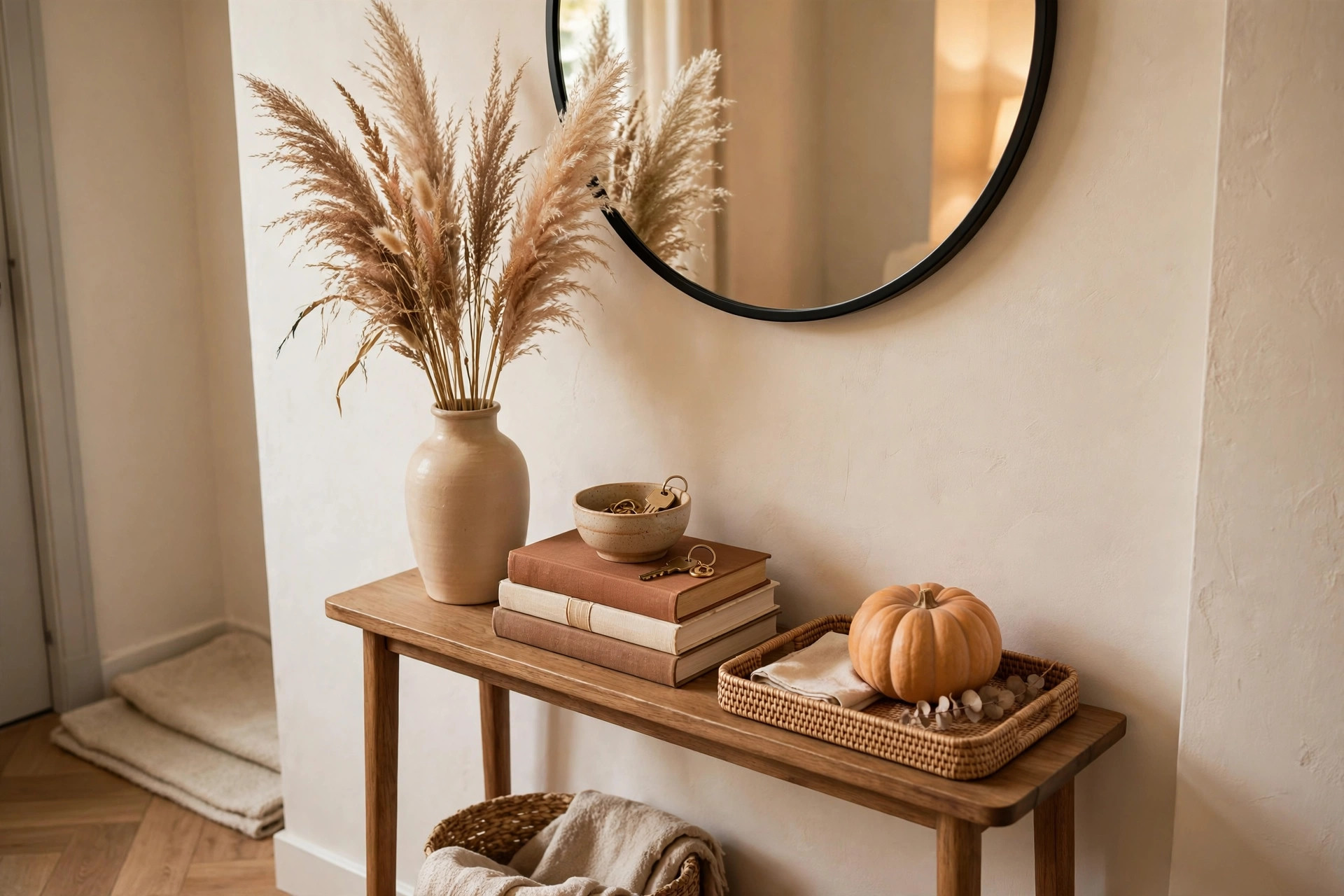
9. Style the console in three heights
The easiest styling formula that actually works is tall, medium, low. Tall: dried pampas grass, wheat, or eucalyptus in a vase, roughly 18 to 24 inches high. Medium: a small stack of books, a framed print, or a table lamp. Low: a shallow tray or bowl for keys, with one plain pumpkin or a cluster of gourds beside it. Odd numbers and varied heights look intentional; a flat row of small objects just looks like clutter that was lined up. This roundup of autumn decor ideas for an entryway shows the same height principle in larger homes — simply shrink the scale.
10. Layer a runner over a washable mat
Two thin layers beat one thick rug in an entry. Put a washable, low-pile mat at the door to catch grit, then a longer runner — typically 2 by 6 feet or 2.5 by 7 feet in a hall — in a warm pattern over or just beyond it. Keep total pile low enough that the door clears it easily, and add a non-slip pad underneath. Choose rust, burgundy, or warm plaid for the runner and let the mat underneath stay plain and dark, where dirt is less visible.
11. Bring fall in with dried florals, not themed clutter
Dried grasses, eucalyptus, cotton stems, and a simple wreath of dried leaves or grasses on the door give you weeks of fall texture with zero watering and no wilting. Plain pumpkins and gourds — white, sage, or classic orange, smooth and uncarved — can sit in a basket or beside the bench and be composted or stored at season's end. One wreath, one vase, one small cluster of gourds is plenty for a small space; repeat the materials, not the number of objects.
12. Stick to a muted palette: cream, terracotta, sage, and burgundy
Four colors are enough, used roughly 60-30-10: mostly warm neutrals like cream and natural wood, then one earthy mid-tone such as terracotta or sage, then a small dose of deep burgundy for depth. Carrying one of these colors into the next room ties the entry to the rest of your home. If your living room already has a seasonal centerpiece, echo its tones here — our fall coffee table decor ideas use the same palette, so the two spaces feel like one home. Browse more in our Seasonal Decor collection.
No Entryway at All? Build a Door-Wall Zone
13. For studios and open plans, decorate the wall the door lives on
If your door opens directly into your living area, stop trying to fake a hallway. Instead, treat the wall beside the door — a stretch about 36 to 48 inches wide — as the entry. A floating shelf at waist height holds keys and mail, two renter-safe hooks hold your coat and bag, a slim mirror hangs above, and a 2-by-3-foot mat on the floor marks the zone. A narrow shoe cabinet, often only 6 to 8 inches deep, can stand against that wall without blocking the door swing.
Visually separate the zone with one change: a slightly deeper paint color on that wall section, a runner leading away from the door, or a small pendant or sconce-style plug-in light. Guests will read it instantly as the entry, and your sofa area stays your living room. Finish with warm light — a small lamp or plug-in sconce on a timer for dusk — because a welcoming entry is mostly about the first five seconds: light, a clear floor, and somewhere obvious to put things down.
A Simple Order to Do It In
Measure and clear the floor first. Add the mat and runner, then the largest piece — bench or console — then hooks and mirror, and only at the end the dried florals, gourds, and tray. Decor last is not a lack of enthusiasm; it is how a small entry stays useful. Live with it for a week, notice what still lands on the floor, and fix that one thing. A small entry does not need more decor. It needs the right few pieces, at the right sizes, in the warmest colors of the season — and a door that still opens all the way.


Comments
Post a Comment