
15 Porch Swing Decorating Ideas for a Cozy, Stylish Porch
15 Porch Swing Decorating Ideas for a Cozy, Stylish Porch
There is no seat quite like a porch swing. It moves, it creaks softly, and somehow a conversation held on one feels ten percent more honest than the same talk on a sofa. But an undecorated porch swing — bare slats, wobbly chains, nothing to sink into — reads more like a chore than an invitation. These porch swing decorating ideas will turn that hanging bench into the seat everyone fights over: layered cushions, warm light, the right paint color, and small styling moves that make the whole porch feel finished. Work through them one by one, or pick the three that fix your biggest eyesore, and your swing will be ready for morning coffee by the weekend.
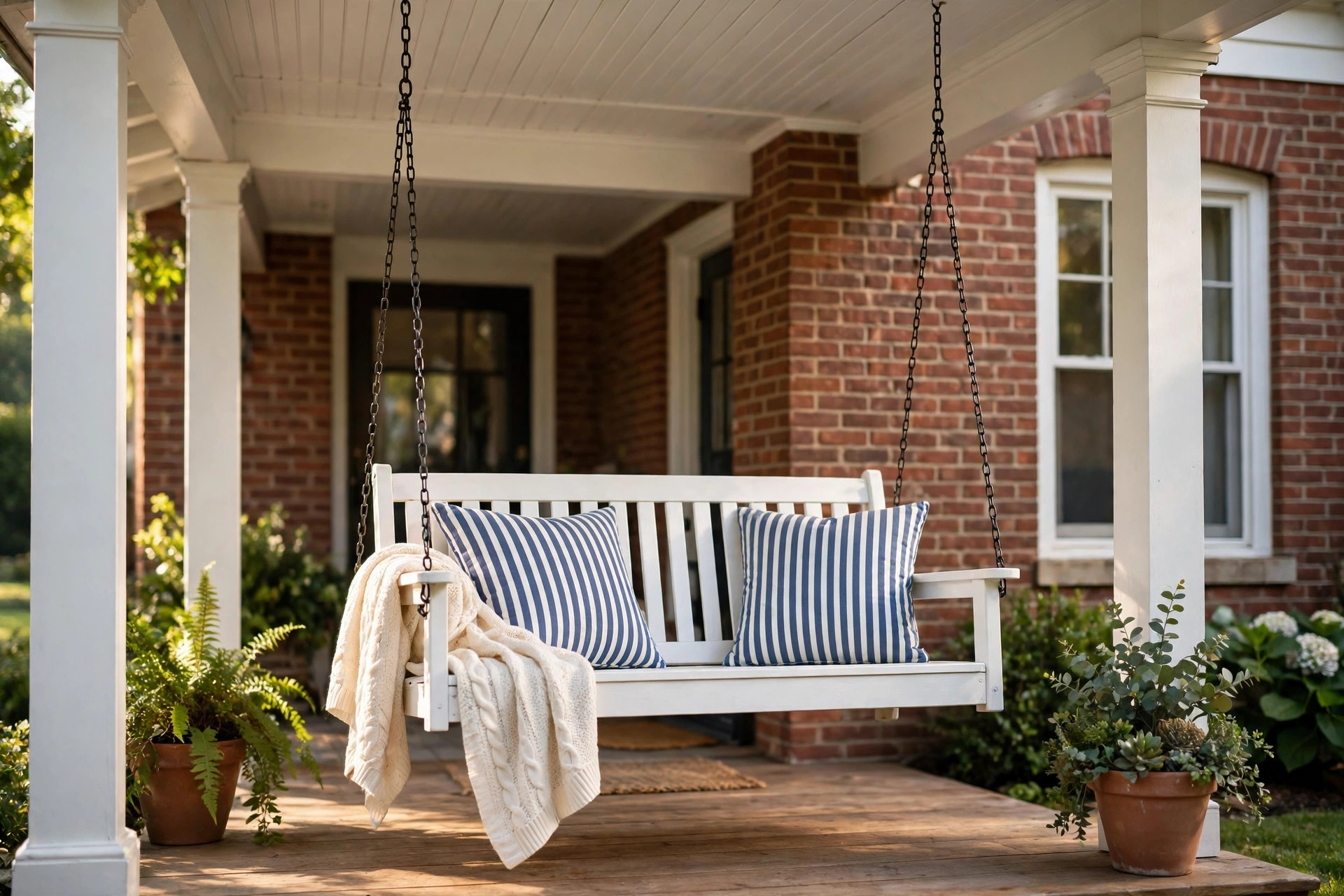
Porch Swing Sizing and Safety Before You Style
A beautifully decorated swing is only beautiful if it hangs safely. Most two-seater porch swings measure 48 to 52 inches wide — size yours to about two-thirds of your porch's usable width so guests can walk past without ducking the chains. Hang it from ceiling joists (not just the beadboard ceiling) using heavy-duty lag bolts or eye bolts, and choose hardware rated for at least 500 pounds, which comfortably covers two adults plus cushions. Leave 18 to 24 inches of clearance behind the swing so it glides without thumping the wall, and about 3 to 4 feet in front if you want to stretch your legs. Once the bones are right, the decorating is the fun part.
15 Porch Swing Decorating Ideas
1. Master the 2-3-1 Pillow Formula
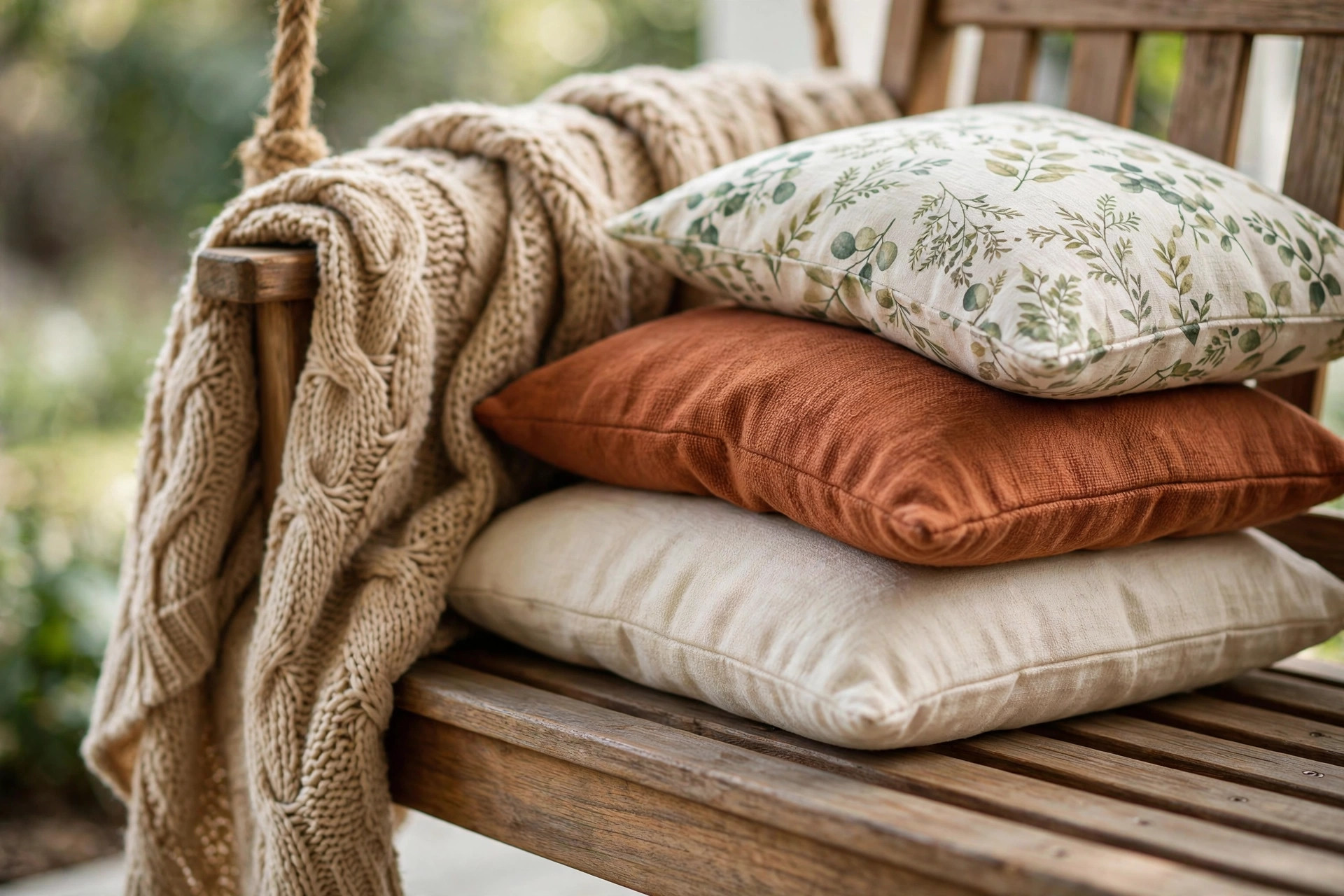
Professional stylists rarely throw pillows at a swing randomly — they use a formula. Start with two large 20-inch square pillows in a neutral solid (think warm white, sand, or soft gray) pushed into the back corners. Layer three 16 to 18-inch pillows in a pattern — ticking stripe, small botanical print, or a subtle geometric — in front of those. Finish with one lumbar pillow (about 12 by 20 inches) in a contrasting texture like nubby cotton or outdoor velvet. Choose solution-dyed acrylic covers, the kind that resist fading and shrug off rain, and store the inserts in a deck box when storms roll in. Six pillows sounds like a lot, but on a 50-inch swing the layers read as plush, not crowded — and guests will sink in instead of perching.
2. Drape a Textured Throw for Instant Warmth
A single throw blanket does more styling work per dollar than almost anything else on this list. Fold it in thirds lengthwise and lay it across one corner of the seat, letting the fringe or tassels hang over the front edge — the asymmetry looks intentional, while a perfectly centered throw reads flat. For spring and summer, pick a lightweight cotton or muslin weave in cream or pale sage. When evenings cool off, swap in a chunky knit or plaid flannel in rust or deep navy. The throw also protects the seat finish where shoes scuff, which matters more than it sounds on painted swings. Shake it out weekly, and machine-wash it monthly so it never gets that dusty porch smell that makes guests subtly move it aside.
3. Paint the Swing a Signature Color
Nothing transforms a porch swing faster than a fresh paint job, and color is the cheapest renovation in home decor. Classic warm white (try a shade like Simply White or Alabaster) keeps things timeless and makes colored pillows pop. Want personality? Sage green suits farmhouses and cottages, navy grounds a modern exterior, and charcoal black makes greenery glow against it. Sand the old finish lightly, apply an exterior-grade bonding primer, then two coats of exterior satin paint rated for wood — satin resists grime better than flat and looks less plasticky than gloss. Paint the chains too, with metal-safe spray paint, in black or oil-rubbed bronze for a finished look. Repaint every three to four years and the swing will outlast the house's other trim.
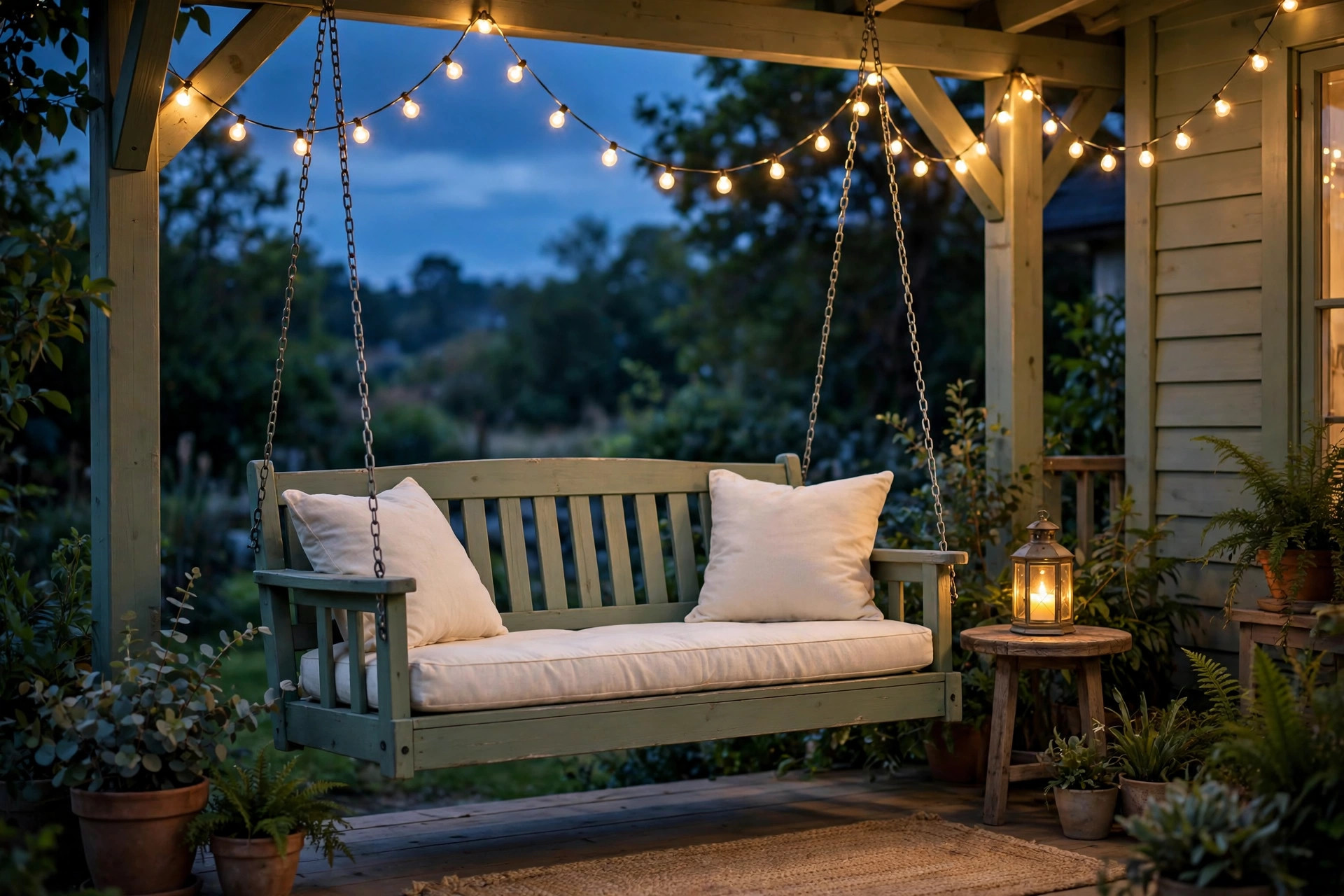
4. String Warm Lights Overhead
Of all the porch swing decorating ideas here, lighting changes the mood most dramatically after sunset. Hang a strand of warm-white (2700K) string lights along the porch beam above the swing, letting them drape in a gentle swag rather than pulling them taut — the soft curve catches the eye and feels romantic. Battery or solar strands work if you lack an outlet, but plug-in commercial-grade strands with shatterproof bulbs last longer and glow brighter. Space the swags about 12 to 18 inches deep so the light washes the seat instead of blinding anyone sitting in it. Pair the overhead lights with a lantern on the side table below and you get layered light: sparkle above, a warm pool below. It is the fastest way to make a porch feel like an outdoor room.
5. Anchor It With an Outdoor Rug
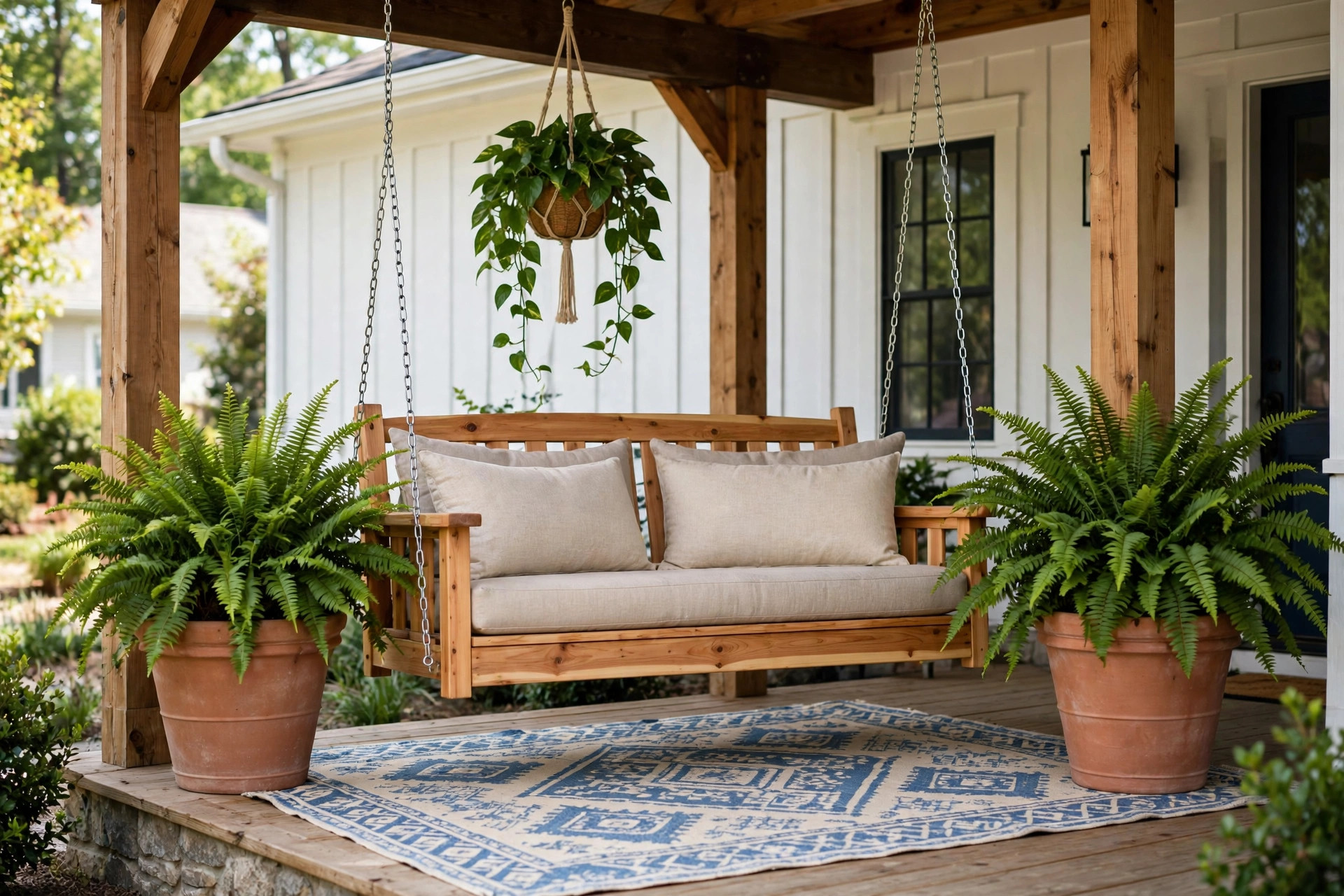
A swing floating over bare concrete looks unfinished, no matter how pretty the cushions are. Slide a flat-weave outdoor rug under the swing's footprint, choosing one about 2 feet longer than the swing on each side — for a 50-inch swing, a 5-by-7-foot rug is the sweet spot. Polypropylene rugs handle rain, hose off easily, and come in every pattern from vintage Persian to modern stripes. Position the rug so the swing's front legs (or the chains' shadow line) land on it, with the bulk of the pattern visible in front where feet rest. A rug also quiets the sound of chair legs scraping and visually zones the seating area, which matters on big porches. Check out our roundup of small front porch decorating ideas for more ways to define a compact porch layout.
6. Flank the Swing With Tall Planters
Greenery softens the hard lines of chains and beams and makes the swing feel tucked into a garden rather than bolted to a house. Place matching planters on both sides of the swing, at least 14 inches in diameter, filled with something upright — ferns, ornamental grasses like fountain grass, or a small olive tree in a warm climate. Matching pots create symmetry, which reads as calm and deliberate; mismatched ones read as charmingly eclectic if you keep the color family tight (all terracotta, all black, all concrete). Hang one trailing plant — pothos, ivy, or string of pearls — from the beam beside the swing so greenery cascades at eye level. Water the planters twice a week in summer, and the whole arrangement will look lush within a month of planting.
7. Try a Boho Layered Look
If your style leans relaxed and collected, a boho-styled swing is forgiving — nothing has to match. Start with a natural wood or rattan-look swing and pile on texture: a macramé wall hanging or tassel garland strung across the backrest, mudcloth-pattern pillows in earthy rust and cream, a jute pouf beside the swing instead of a side table, and a small woven basket holding rolled throws. Hang a trailing plant from a macramé hanger at one end. The rule here is texture over color — rattan, jute, cotton, and wood all in a warm neutral palette feels rich without being busy. This look pairs beautifully with layered rugs, so consider doubling up a jute rug under a smaller patterned one in front of the swing.
8. Style It as a Daybed Swing
A daybed swing — wider and deeper than a bench swing, usually 36 to 40 inches deep — turns your porch into a nap destination. Dress it like an actual bed: a 3-to-4-inch thick outdoor mattress or cushion in a washable cover, a flat sheet tucked under (outdoor fabric, not cotton), two sleeping pillows in waterproof covers, and a quilt folded at the foot. Add a mosquito-net canopy or sheer outdoor curtains on a simple rod if bugs are a problem in your area. This setup needs a deeper porch — measure at least 5 feet of depth from wall to railing — and chains rated higher than a standard swing, since the whole assembly is heavier. Guests will not want to get up, and honestly, neither will you.
9. Add a Small Side Table
A swing without a landing spot for coffee is a swing you leave after ten minutes. Place a 14-to-18-inch side table within arm's reach of the swing — close enough to grab a mug mid-glide, far enough that the swing never bumps it (about 12 inches of clearance is ideal). A small round metal table in black or bronze looks sharp beside a painted swing; a teak or acacia stool suits a natural-wood swing. Top it with a lantern, a small potted succulent, and a coaster, and it becomes a styled vignette rather than just a table. If space is tight, a C-shaped side table that slides under the swing's edge gives you surface without footprint. For more compact-porch furniture tricks, see our small apartment balcony decor ideas — the small-space logic transfers perfectly.
10. Frame the Swing With Outdoor Curtains
Outdoor curtains turn an open porch into a private retreat and give the swing a backdrop that photographs beautifully. Mount a rust-resistant curtain rod or wire cable on the two porch posts flanking the swing, and hang weatherproof panels in a breezy linen-look fabric — white or natural for airiness, or a soft stripe for pattern. Leave the panels tied back during the day and draw them closed for evening privacy or to block low sun. The fabric will soften wind gusts slightly, which makes the swing feel calmer on breezy days. Wash the panels twice a season to keep them bright, and choose grommet tops over rod pockets — they slide easier and survive wind better. This one idea adds more perceived luxury than anything else on the list.
11. Go All-White for Timeless Charm
An all-white porch swing never goes out of style, and it is the easiest palette to maintain because everything matches by default. Paint the swing a crisp warm white, then dress it exclusively in whites and creams: white 20-inch pillows, an ivory knit throw, a natural jute rug beneath. The trick to keeping it from looking sterile is texture contrast — smooth painted wood against nubby knit, crisp cotton against rough jute. Add exactly one natural accent: a green plant in a terracotta pot, or a small wooden tray on the side table. White shows pollen and dust faster than darker colors, so give the swing a quick wipe-down every week or two in spring. The payoff is a look that suits farmhouse, coastal, and traditional homes equally.
12. Rotate Pillow Covers by Season
The smartest decorators do not redecorate — they rotate. Keep your neutral base pillows year-round and swap just the covers: fresh botanical prints and pastels for spring, bold stripes and brights for summer, plaid and warm rust tones for fall, and deep greens and creams for winter. Covers cost a fraction of new pillows and store flat in a drawer. Mark a calendar reminder at the start of each season — the whole swap takes fifteen minutes and makes the porch feel brand new four times a year. For inspiration on seasonal transitions, our fall patio decor ideas show how small textile changes carry a whole space into a new season.
13. Layer Lanterns and Candlelight
String lights give you sparkle; lanterns give you glow. Place two lanterns of different heights — say 10 inches and 14 inches — on the porch floor beside the swing or on the side table, and fill them with flameless LED pillar candles in warm white. The flicker setting on good LED candles genuinely mimics flame, without the worry of an open flame near fabric cushions. Cluster a third small lantern on the steps leading up to the porch to draw the eye toward the swing from the street. Metal lanterns in black or bronze suit most porches; glass hurricanes in a simple cylinder shape suit modern ones. Bring the candles inside during heavy rain unless your lanterns are fully sealed — water spots on LED candles look dingy fast.
14. Hang a Wreath or Garland on the Backrest
A wreath is not just for the front door. Hang a 20-to-24-inch greenery wreath from a wide ribbon on the center of the swing's backrest, or drape a faux eucalyptus garland along the top rail and let it trail over both ends. Boxwood and eucalyptus look fresh year-round; add dried lavender sprigs in summer or pinecones in winter for a seasonal nod without a full redecorate. Secure the wreath with a removable adhesive hook or looped ribbon rather than nails — you will want to take it down for cleaning and storms. This is the rare decorating move that works from the street too: a wreath on the swing reads as a second focal point and doubles your porch's curb appeal in about five minutes of effort.
15. Use a Freestanding Swing Frame
No sturdy ceiling joists? No problem. A freestanding A-frame swing stand lets you put a porch swing anywhere — on an uncovered patio, in a garden corner, or on a porch with a weak ceiling. Choose a powder-coated steel or cedar frame rated for at least 500 pounds, and position it on level ground with about 3 feet of clearance all around for the glide path. Style the stand like part of the decor: train a climbing vine (clematis or jasmine) up one leg, hang a lantern from the top bar, or string lights along the frame's peak. The frame itself becomes a garden structure, which is arguably more charming than chains disappearing into a ceiling. Designers recommend treating a freestanding swing as a garden focal point — see this porch swing styling guide from Homes and Gardens for professional placement tips.
Porch Swing Hanging and Safety Tips
Before you style, make sure the hang is right — a safe swing is a swing you actually relax on. These basics come from standard porch swing installation guidance used by design professionals:
- Anchor into structure: Hang from ceiling joists or a structural beam, never from ceiling boards alone. Use 3/8-inch lag bolts at least 4 inches long, pre-drilling pilot holes.
- Check the rating: Chains, ropes, and all hardware should be rated for the swing's weight plus riders — 500 pounds minimum for a two-seater.
- Mind the height: The seat should sit about 17 to 19 inches off the porch floor — standard chair height — so feet rest comfortably.
- Keep it level: Measure chain lengths carefully; an unlevel swing slides riders to one side and looks sloppy from the street.
- Inspect yearly: Check chains, ropes, bolts, and wood for rust, fraying, and rot every spring before the season starts.
Frequently Asked Questions
What is the best material for a porch swing?
It depends on your climate and how much maintenance you want. Cedar and cypress resist rot and insects naturally and age to a silvery gray if left unstained. Poly lumber (recycled plastic) costs more upfront but needs zero maintenance and never splinters, fades, or rots. Painted pine is the budget pick — charming and easy to repaint, but plan on sanding and repainting every three to four years in harsh weather.
How big should a porch swing be?
The standard two-seater is 48 to 52 inches wide with a seat depth of 18 to 22 inches, which suits most porches. Size the swing to roughly two-thirds of your porch's usable width so traffic can pass. Single-seat swings (around 24 inches) work for narrow porches, while daybed swings (36 to 40 inches deep) need a porch at least 5 feet deep.
Can I hang a porch swing from any porch ceiling?
No — you need structural support. The swing must hang from ceiling joists or a load-bearing beam, not from decorative ceiling boards, using heavy-duty lag bolts or through-bolts. If your ceiling cannot support the load, use a freestanding A-frame stand instead. When in doubt, have a contractor confirm the joist locations and load capacity before hanging.
How do I keep porch swing cushions clean?
Choose covers in solution-dyed acrylic — the color runs through the fiber, so it resists fading and most stains hose off. Brush off pollen weekly, spot-clean spills with mild soap and water, and store cushions in a deck box during heavy rain and over winter. Removable, machine-washable covers make the whole routine effortless.
Can I leave my porch swing out all winter?
Poly lumber and powder-coated metal swings can stay out year-round — just remove the cushions. Wood swings last longer if you cover them or move them under shelter for winter in harsh climates, and reapply sealant each spring. Ropes and fabric elements should always come inside for winter, since freeze-thaw cycles weaken them fastest.


Comments
Post a Comment