
10 Bedroom Curtain Ideas for Better Sleep and Style
10 Bedroom Curtain Ideas for Better Sleep and Style
Curtains might be the hardest-working thing in your bedroom. The right bedroom curtain ideas do three jobs at once: they block the light that keeps you awake, they soften drafts and street noise, and they give the room the finished look that a bare window never will. Most people buy curtains for how they look and hope the sleep part sorts itself out. It rarely does — which is why this list treats darkness and rest as seriously as style.
Every idea below pairs a design move with a sleep payoff, and includes the actual measurements and fabric details that make it work in a real room. No vague advice, no filler — just the specifics.
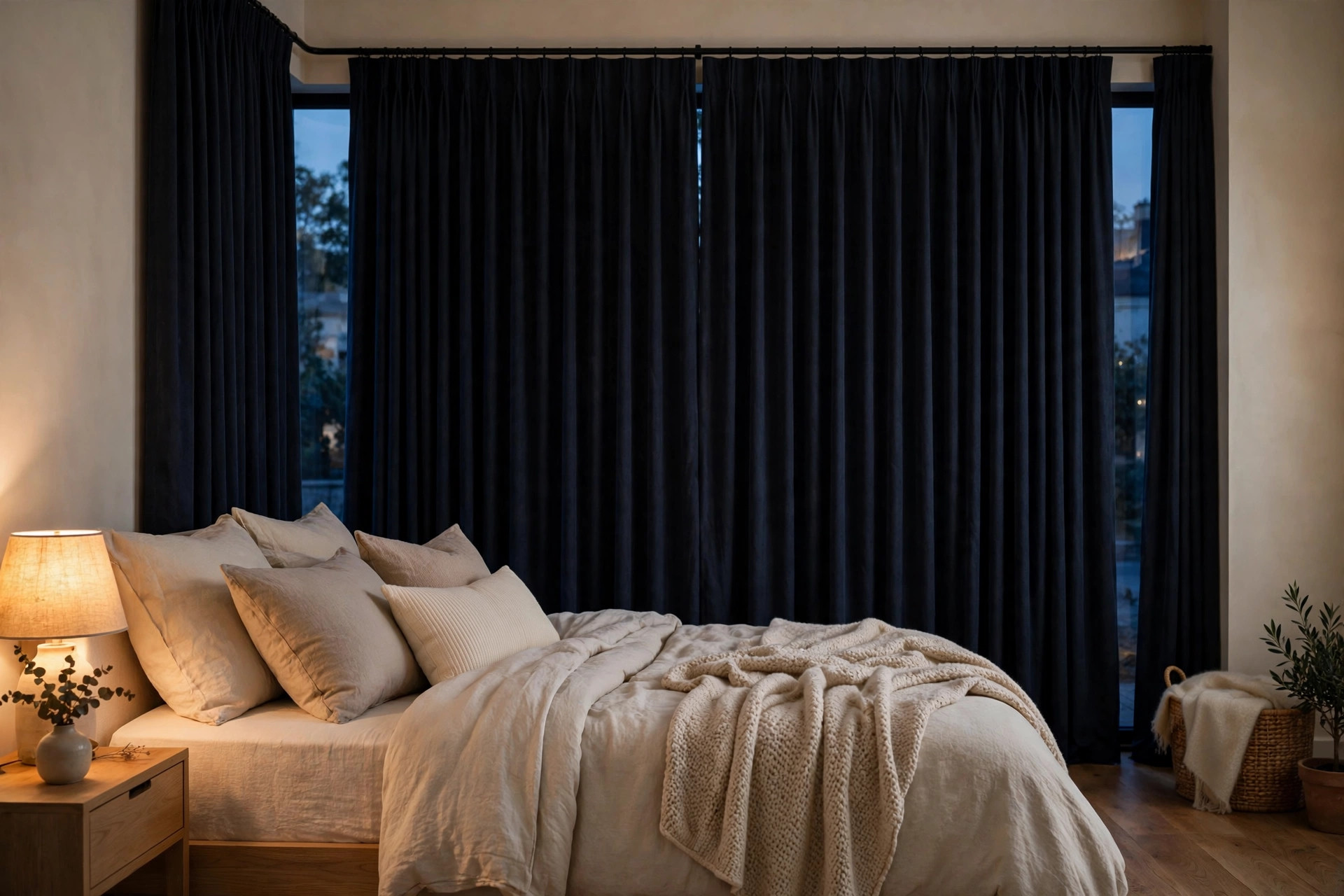
One quick note before the list: light is the single biggest bedroom disruptor that curtains can fix. Research summarized by the Sleep Foundation shows that light exposure at night interferes with melatonin production and the body's sleep-wake cycle — which means a curtain that looks beautiful but leaks light is only doing half its job.
10 Bedroom Curtain Ideas That Improve Sleep and Style
1. Start With True Blackout Panels, Not "Room-Darkening" Ones
There is a meaningful difference between room-darkening and blackout. Room-darkening panels typically block around 80-90% of light; true blackout panels block close to 99%. In a bedroom, that last 10% is the difference between "pretty dark" and actually dark — and your brain notices the difference even when you think you don't.
When shopping, hold the panel up to a bright light in the store. If you can see the shape of the bulb through the fabric, morning sun will find its way through too. Look for panels with a dense woven lining or a thermal-insulated backing rather than a thin coated one, which can crack and flake after a few washes.
Sleep payoff: total darkness supports melatonin production through the night and stops the 5 a.m. summer sunrise from deciding your wake-up time. Style payoff: lined panels hang in deeper, heavier folds — which is most of what makes curtains look expensive.
2. Layer a Sheer Over the Blackout on a Double Rod
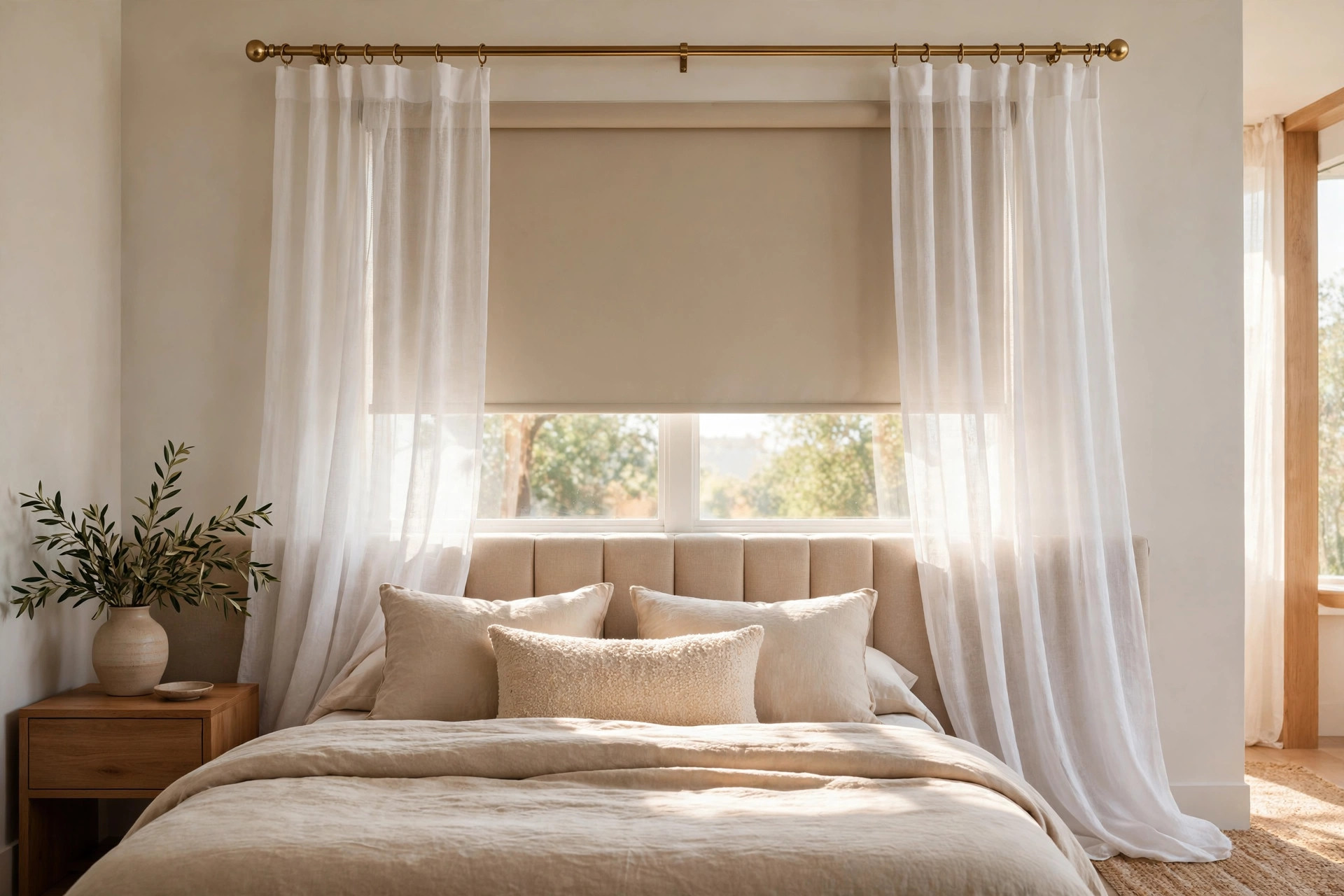
The best bedroom window does two opposite things well: soft filtered daylight at noon, and near-total darkness at midnight. One layer can't do both, so use two. Hang a sheer panel on the inner rod and the blackout panel on the outer rod of a double bracket.
During the day, pull the blackout panels to the sides and let the sheer do the work — privacy without gloom. At night, draw the blackout layer closed. The gap between the two layers also traps a thin pocket of air, which slightly improves insulation against cold glass in winter.
How to set it up: a double-rod bracket set costs little more than a single one. Mount the inner rod close to the wall (about 2-3 inches out) and the outer rod 4-5 inches out so the layers don't fight each other.
3. Use Linen Sheers for Soft, Glare-Free Mornings
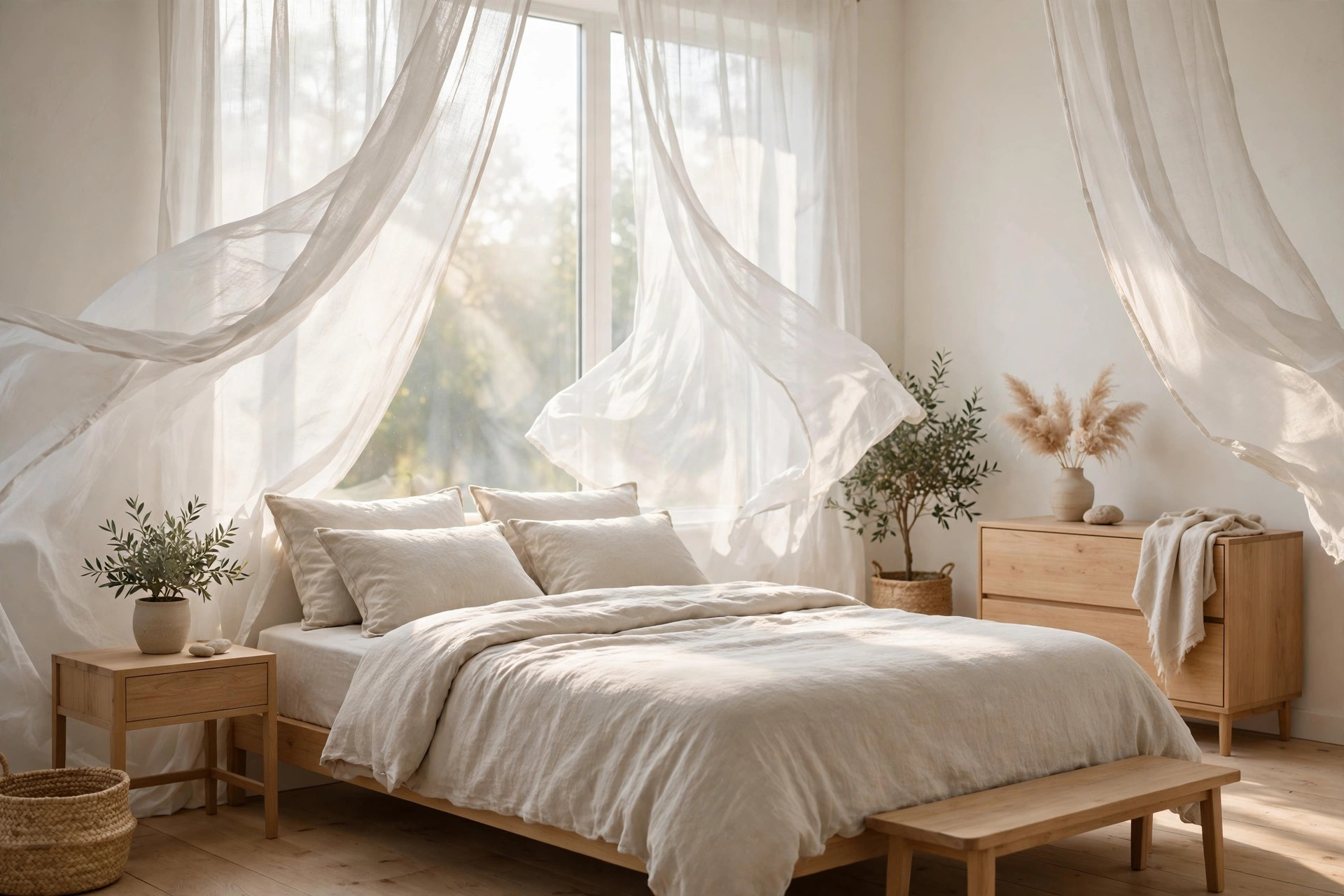
If your bedroom faces east, you know the problem: the first hour of sun is less "gentle wake-up" and more "spotlight interrogation." Washed linen sheers are the fix. At 150-180 GSM they filter glare into a soft, even glow while keeping the room bright enough that you never need a lamp before 10 a.m.
Linen has a slightly irregular weave that scatters light in a way polyester voile can't match, and it wrinkles in a relaxed way that suits bedrooms. Wash sheers on a gentle cycle once or twice a year — dust shows clearly when backlit by sun, and clean sheers look noticeably brighter.
Good to know: sheers alone won't handle streetlights or a bright neighbor's porch light. If light pollution is your issue, pair the sheer with a blackout roller blind mounted inside the frame behind it. You get the soft daytime look and true darkness at night.
4. Hang the Rod High and Wide — Use the Real Numbers
This is the single highest-impact, lowest-cost move on the list, and almost everyone gets it wrong. Hanging the rod just above the window frame makes the window look smaller and the ceiling lower. The designer-tested placement, confirmed by sources like The Spruce, is:
- Height: 4-6 inches above the window frame (up to 12 inches in rooms with high ceilings, or roughly a third of the way to the ceiling)
- Width: 8-12 inches beyond the frame on each side
- Fullness: panels totaling 1.5 to 2 times the window's width, so they keep soft folds even when closed
The wide placement matters for sleep too: when open, the panels stack fully off the glass so you keep every bit of daylight, and when closed, the extra width means fabric overlaps the frame instead of stopping at its edge.
5. Seal the Light Leaks at the Edges
Here is the detail that separates a dark bedroom from a truly dark one. Light doesn't come through blackout fabric — it sneaks around it: the gap between panel and wall at the sides, the slit above the rod, the sliver where two panels meet in the middle.
Fix each one deliberately. Overlap the panels about 4 inches past the frame on each side so there is no straight path for light. A wraparound (French-return) rod curves back to the wall and kills the side gaps entirely. For the center meeting point, buy panels wide enough that they overlap by several inches when drawn, rather than just barely touching.
The noon test: close everything at midday and stand in the room for a full minute while your eyes adjust. Every bright slit you can still see is a leak worth fixing. For the truly light-sensitive, a ceiling-mounted track set a few inches out from the wall seals top, sides, and middle in one move.
6. Choose Fabric by Weight, Not Just by Color
Color gets all the attention, but weight decides how a curtain behaves. A useful rule of thumb: lined always beats unlined for bedrooms. The lining adds body (deeper folds), blocks drafts, protects the face fabric from sun damage, and darkens the room — four wins for the price of one layer.
Some reference weights so you can shop with confidence:
- Sheer voile: 40-80 GSM — daylight filtering only
- Washed linen: 150-180 GSM — soft light control, relaxed drape
- Cotton duck / canvas: 200-280 GSM — substantial, good with a lining
- Velvet: 300+ GSM — maximum drape, darkness, and sound softening
Velvet deserves a special mention for bedrooms: its dense pile absorbs sound noticeably better than flat weaves, which matters if your window faces a street. A pair of lined velvet panels is the closest curtains get to acoustic treatment.
7. Pick Colors That Tell Your Brain It's Bedtime
Bright, high-contrast colors keep the eye alert — great for a kitchen, wrong for a room where you fall asleep. Deep, low-saturation tones (navy, forest green, cocoa, charcoal, warm taupe) recede visually and make the room feel calmer after dark. If your walls are white and you rent, colored panels are also the easiest way to add depth without touching the paint.
Match the panel color to an undertone already in the room — the bedding, a rug, the wood finish — rather than introducing a brand-new color. A cocoa curtain next to chocolate-brown bedroom decor looks intentional; a random red panel looks like a leftover. When in doubt, go one shade deeper than your wall color: it reads as rich without risk.
8. Let the Panels Kiss the Floor (or Puddle Slightly)
Curtains that stop at the sill or hover a few inches above the floor make a bedroom look unfinished — like trousers that are too short. For bedrooms, floor length is the default: measure from the rod (not the top of the window) to the floor, and aim for the fabric to just graze the floor or sit about half an inch above it.
A 1-2 inch puddle looks romantic and formal and works in low-traffic rooms, but it collects dust and pet hair, so skip it if the window is one you open daily. The only good reason for sill-length curtains in a bedroom is a radiator or deep sill underneath the window — and even then, an apron-length panel (just below the sill) looks better than one that ends exactly at it.
9. Treat the Hardware as Part of the Decor
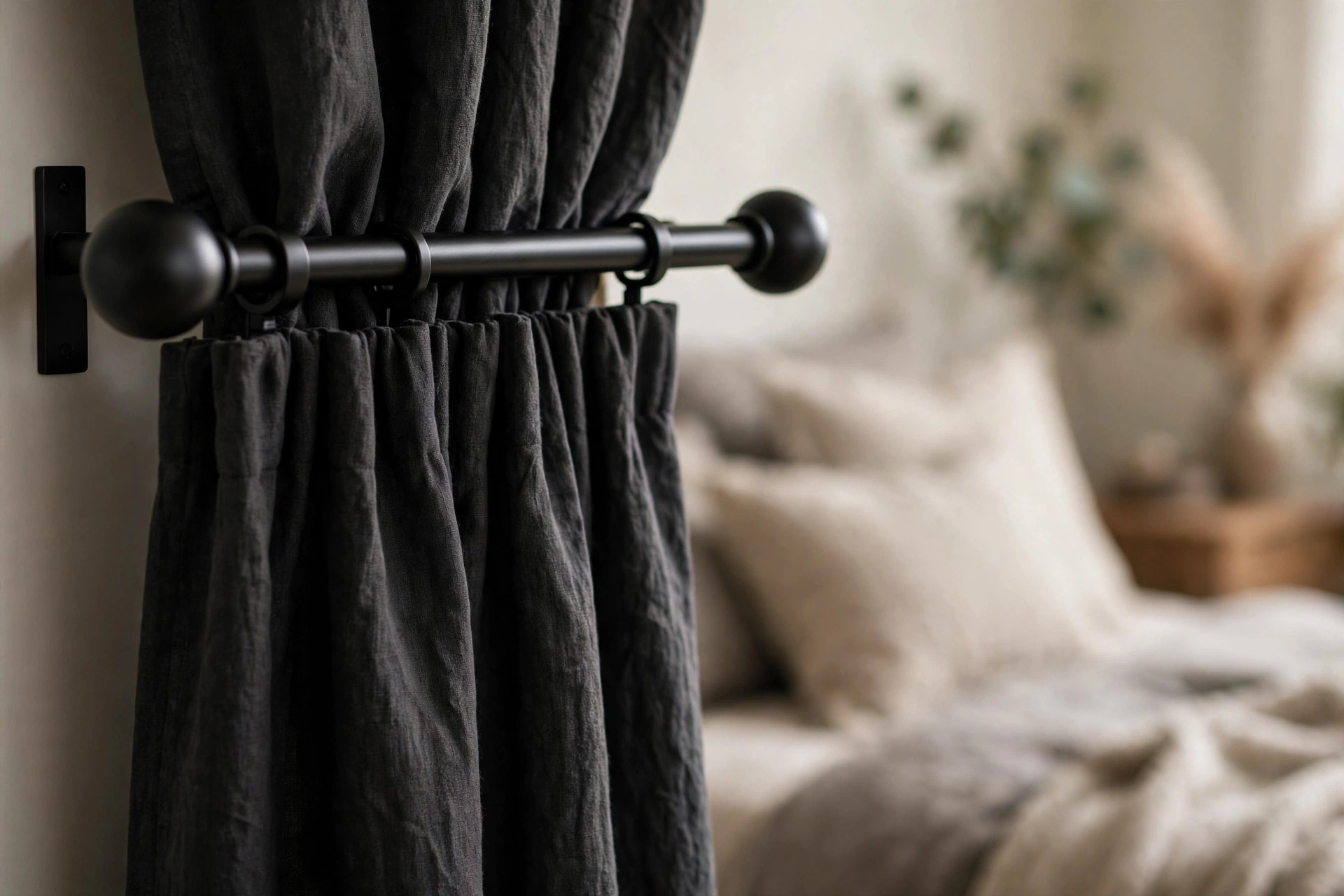
The rod is visible every single day, so it should earn its place. Matte black reads modern and works with almost everything; warm brass or bronze adds a jewelry-like accent that pairs beautifully with cream and oatmeal fabrics; natural wood suits relaxed, rustic rooms.
Finials are the detail people notice up close — a simple ball or disc beats an ornate one in most bedrooms. And if your rod is fine but dated, a can of matte-black spray paint is a legitimate upgrade: remove it, scuff lightly with sandpaper, paint, and rehang. It costs almost nothing and looks like a new rod.
Renter note: tension rods inside the frame and adhesive ceiling-track mounts give you the layered look without drilling. They won't hold heavy velvet, but they handle sheers and light cotton easily.
10. Keep Them Clean So They Keep Working
Dusty curtains filter less light evenly, smell stale, and aggravate allergies — all bad for sleep. The maintenance routine is simple: vacuum panels with an upholstery attachment every couple of months, wash sheers on gentle once or twice a year, and steam (don't iron) blackout panels to release wrinkles without damaging the backing.
One more thing worth checking once a year: sun damage. South- and west-facing panels fade and weaken fastest. If the lining is getting brittle or the face fabric is noticeably lighter on the window side, rotate the panels or add a cheap sacrificial liner behind them — replacing a liner is far cheaper than replacing the curtains.
Bedroom Curtain Measurements — Quick Cheat Sheet
| What to measure | The number | Why it matters |
|---|---|---|
| Rod height | 4-6" above the frame (up to 12" with high ceilings) | Taller window, taller ceiling |
| Rod width | 8-12" beyond the frame, each side | Panels stack off the glass; more daylight |
| Panel fullness | 1.5-2x the window width, total | Soft folds even when closed |
| Panel length | Just kissing the floor (or 1-2" puddle) | Finished look; blocks low drafts |
| Side overlap | ~4" past the frame, each side | Kills edge light leaks |
| Linen sheer weight | 150-180 GSM | Glare control without gloom |
Bedroom Curtain FAQs
How dark should bedroom curtains be?
As dark as you can reasonably get. Light exposure at night disrupts melatonin and sleep quality, so true blackout (not just room-darkening) is worth it for bedrooms — especially if you face east into the sunrise or deal with streetlights. Layer a sheer in front for daytime softness.
Should bedroom curtains touch the floor?
Yes — floor length is the standard for bedrooms. Panels that just graze the floor look finished and also block the cold air that settles low around windows. Sill-length curtains only make sense over radiators or deep sills.
How many curtain panels do I need per window?
Two panels per window in almost all cases, totaling 1.5 to 2 times the window's width. One wide panel looks skimpy when closed and can't stack symmetrically when open. For very wide windows, use two panels per side.
Are blackout curtains worth it for a north-facing window?
Often yes — north windows get less direct sun, but streetlights, porch lights, and bright summer dawns still leak in. If the room is already dark enough, save the money and put it toward better fabric or hardware instead.
The Bottom Line
The best bedroom curtain ideas aren't about finding one magic fabric — they're about stacking small, correct decisions: true blackout for darkness, a sheer for daytime softness, the rod hung high and wide with real measurements, edges sealed against leaks, and a color that helps your brain wind down. Get those five right and the style largely takes care of itself.
Curtains also set the tone for everything around the window. Once yours are sorted, a warm, layered lighting plan keeps the room glowing after dark, and if your window wall doubles as storage space, these small bedroom storage ideas help you hide the clutter that full-length panels reveal. For more in the series, browse all Bedroom ideas.


Comments
Post a Comment