
12 Late Fall Decor Ideas That Transition Easily to Winter
Late October rooms have a problem: pumpkins look tired, bare shelves feel cold, and nobody wants to redecorate twice in six weeks. The smartest late fall decor ideas transition to winter gradually — they keep the neutral base you already own, remove the pieces that shout autumn, and layer in heavier texture, evergreen and candlelight as the light fades.
Think of it as editing, not starting again. Most homes need one storage box, a few textile swaps and one greenery change to cross the season. Below are twelve ideas with real costs, the order to do them in, and the watch-outs that stop a room looking like two half-finished seasons.
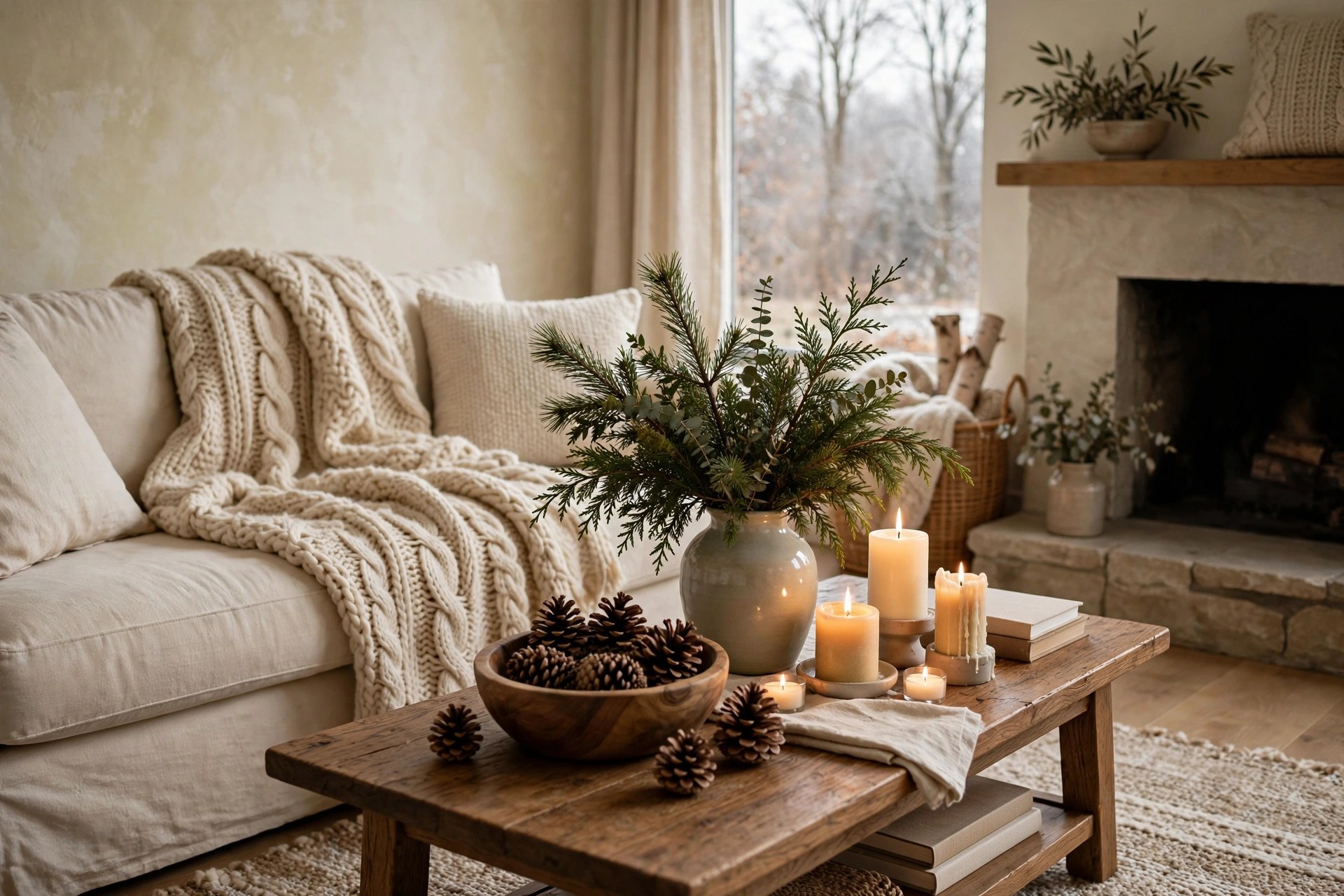
Start at the mantel, where the seasons meet most visibly — our fall garland ideas for mantels start from neutral bases that carry straight through with the swaps below.
The Transition Rules: Keep, Remove, Swap
Keep the neutral base. Cream, ivory and warm white textiles, wood, woven baskets, plain glass, brass and linen were never fall-specific — they are the skeleton both seasons share. If a piece would look right in January, it stays. Removing these is what makes transitions expensive and bare.
Remove only what shouts autumn: saturated orange and rust, gourds and mini pumpkins, leaf prints and wheat sheaves. Then swap, do not add — textiles get heavier, and the palette shifts from warm orange to cream, evergreen and deep green. Guides like Thrive Insider on how to transition fall decor into winter and Eleanor Rose Home on transitioning seasonal decor use the same keep-remove-swap order, because it protects the budget.
Swap the greenery last; it changes the room most. Dried grasses, orange leaves and wheat give way to evergreen stems, pinecones and bare branches — real where you can gather them, faux where you cannot. One swap per main surface is enough; a room does not need evergreen in every corner.
12 Late Fall Decor Ideas That Transition to Winter
Work through the list in order, over two or three weekends. Early ideas cost nothing; later ones add the warmth that carries the room to spring.
1. Keep the Cream and Wood Base, Remove Only the Orange
Start by editing, not emptying. Cream cushions, natural wood, woven baskets, linen and plain glass all stay — they were never fall-specific. What goes is only the autumn layer: orange and rust pieces, gourds, mini pumpkins and leaf-printed textiles. Work room by room, living room first, with one storage box, and stop when the palette reads warm and neutral rather than themed. Cost: $0, plus $8 to $15 for a lidded storage box that fits a shelf. Watch-out: pack gourds and dried pieces clean and dry, or they will smell musty next year.
2. Swap Light Throws for Chunky Knits and Heavier Layers
Fall throws are usually light cotton or thin plaid — fine in October, flimsy by late November. Keep one, then layer in weight: a chunky knit throw at $25 to $45, a faux-fur cushion cover at $12 to $20, or a wool-blend blanket folded over the sofa arm. Put them where hands actually reach — sofa ends and reading chairs — not spread thinly across every seat. Cost: $35 to $70 to re-layer a living room. Watch-out: mix at most three textures per seat, or the sofa starts to look like a bedding department.

3. Trade Fall Leaves and Wheat for Evergreen Stems
Greenery is the loudest seasonal signal in a room, so swapping it changes everything for the least money. Pull out orange leaf stems, wheat sheaves and dried grasses; replace them with evergreen: cedar, pine or fir stems, real clippings in water or reusable faux stems. Keep the same vases and positions — only the foliage changes, so arrangements stay balanced. Cost: $0 for gathered clippings, $15 to $35 for three faux stems. Watch-out: real evergreen dries out indoors in two to three weeks; keep it in water and clear of radiators.
4. Put Pinecones Where the Pumpkins Sat
Every spot a pumpkin occupied — mantel centre, dining table bowl, entryway tray — already has the right scale for a winter replacement, and pinecones are the natural successor. Fill the same bowls and trays with pinecones mixed with small evergreen sprigs, or pile them in a glass hurricane with a candle in the middle. Gathered cones are free; a bag of large decorative cones costs $8 to $14. Cost: $0 to $14 per arrangement. Watch-out: bake gathered cones at a low heat for 30 minutes before using them indoors, to close the scales and remove any insects.
5. Shift Cushions From Rust and Mustard to Cream and Deep Green
Colour does the transition faster than any object swap. Retire the rust, pumpkin and mustard cushion covers — the shades that read unmistakably as autumn — and replace them with cream, ivory, forest and deep green, which suit both fall wood tones and winter evergreen. Covers, not whole cushions, keep this cheap: $10 to $18 per cover in cotton or velvet. Cost: $30 to $60 to re-dress a sofa. Watch-out: keep one warm metallic or tan piece in the mix; an all-cream-and-green scheme with no warmth in it can tip from calm to cold.
6. Build Candle Clusters for the Early Darkness
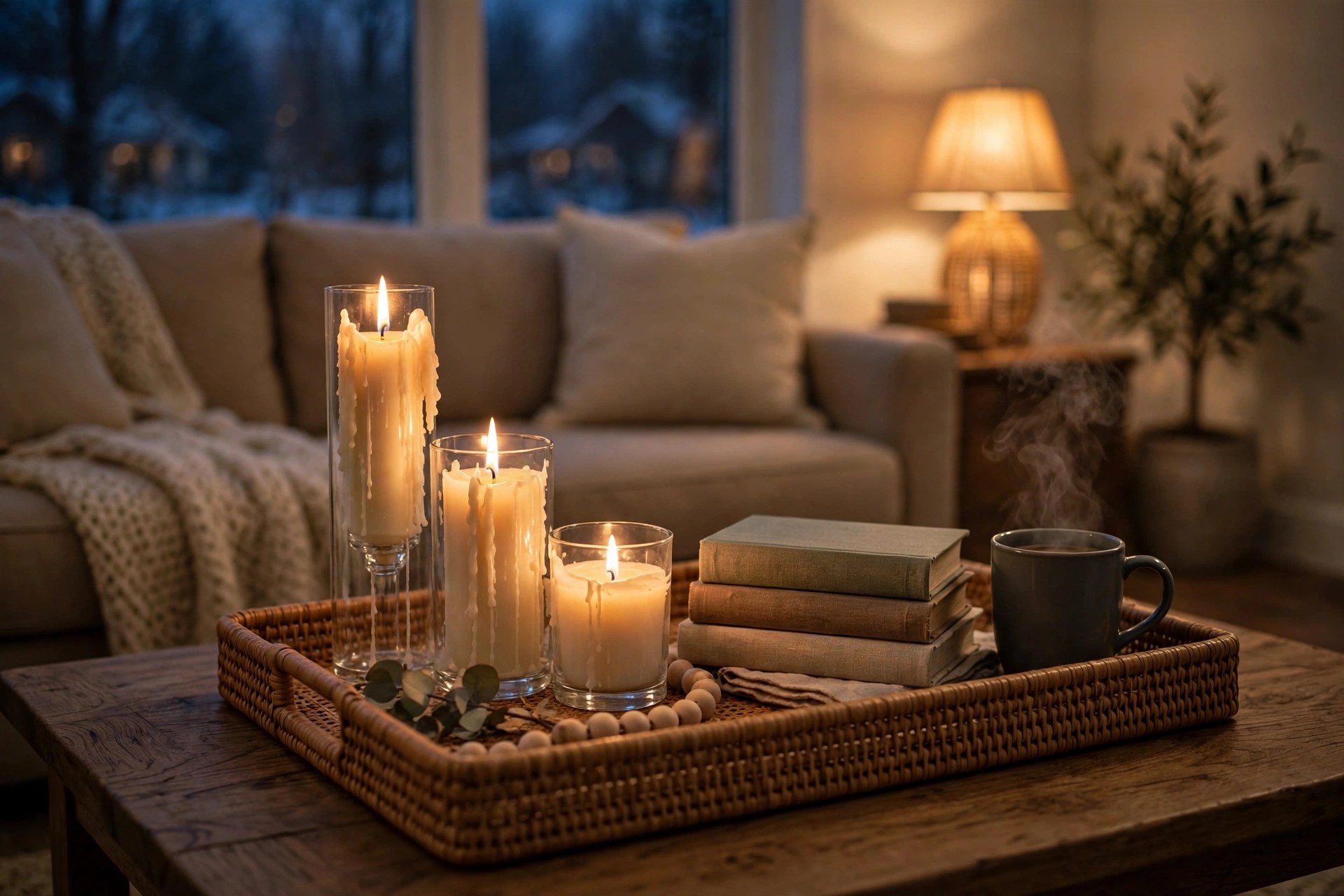
By late November it is dark before dinner, and light becomes decor. Group candles in clusters of three — odd numbers, mixed heights — on the mantel, dining table and one dark corner: cream pillars, plain glass jars, no seasonal scents needed. Battery candles with timers handle shelves and anywhere near textiles; real flame stays on open, stable surfaces. Cost: $12 to $30 for a set of three pillar candles or timer LED pillars. Watch-out: never leave real candles burning near evergreen stems or throws, and keep clusters at least a hand's width from both.
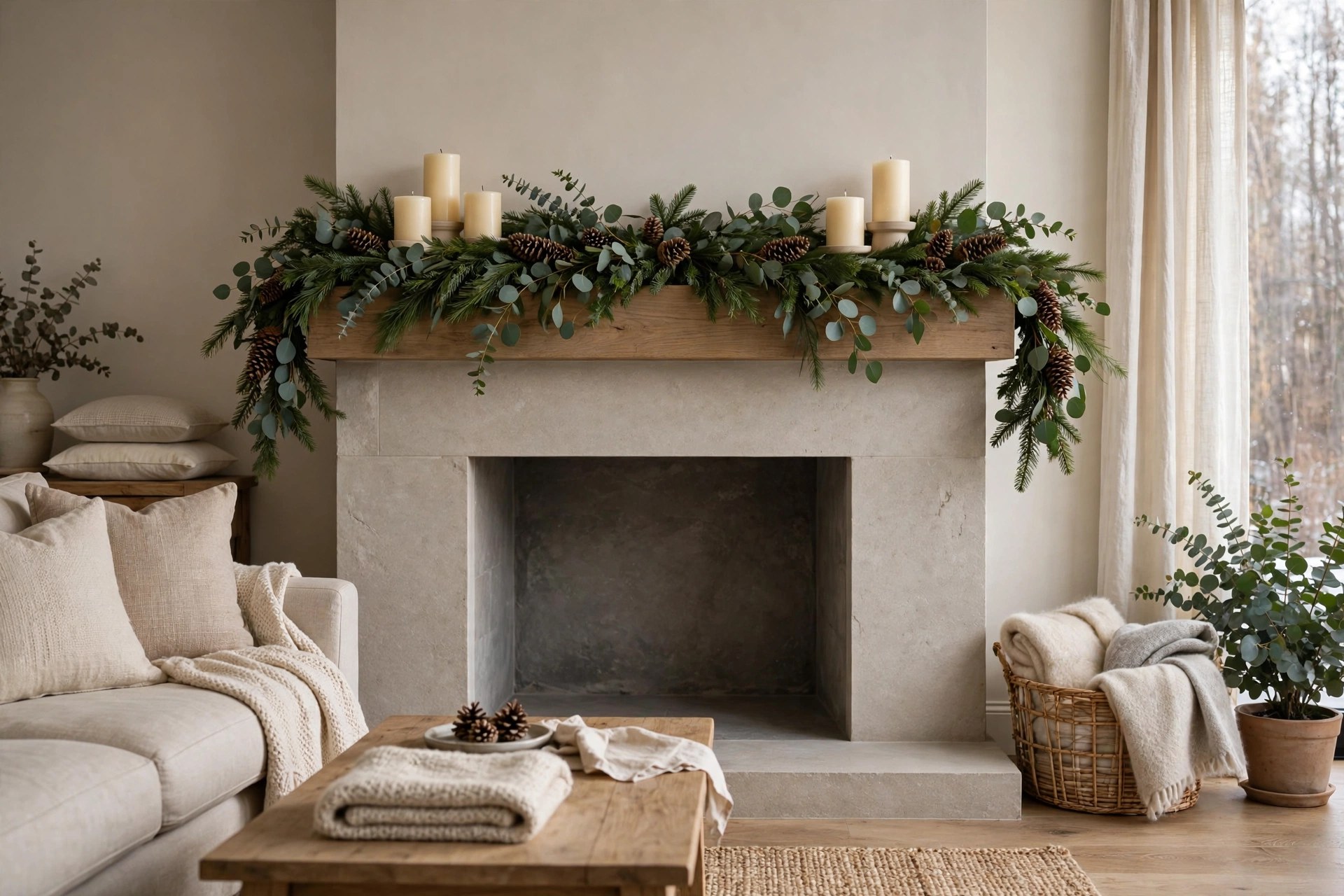
7. Choose a Garland That Belongs to Both Seasons
A plain evergreen garland — no orange leaves, no autumn-coloured berries — is the hardest-working transition piece you can buy. Draped on the mantel or staircase in late fall it reads as deep-season greenery; add pinecones, cream ribbon or warm lights later and it reads as winter, without ever coming down. A 6-foot realistic faux garland costs $25 to $50 and serves for years. Cost: $25 to $50 once. Watch-out: measure before buying and allow extra length for swags — a garland pulled drum-tight across a mantel looks mean and unfinished.
8. Add Brass, Glass and Warm Metal Shine
Winter light is low and grey, and flat matte surfaces can make a transitioned room look dull by afternoon. Small amounts of shine fix that: a brass tray under a candle cluster, a glass cloche over pinecones, a metal lantern by the door. These pieces are season-neutral, so they work in spring too — and most homes already own enough, so shop your own cupboards first. Cost: $0 to $25 for one thrifted brass or glass piece. Watch-out: one metal finish per room is enough; mixing brass, chrome and copper in a small space reads as clutter, not layering.
9. Thicken the Bedding Before You Touch Anything Else
The bedroom transitions through touch more than sight. Swap the light fall quilt for a heavier duvet or add a folded knit throw across the foot of the bed, and change cushion covers from rust prints to cream and deep green to match the living room. A warmer bed also lets you turn the heating down slightly at night. Cost: $30 to $60 for a good throw if you do not own one. Watch-out: layer so the top layer is the washable one — heavy winter throws collect dust, and a dry-clean-only hero piece will quietly stop being used.
10. Rework the Entryway for Boots, Coats and Wet Weather
The entryway is where winter actually arrives: boots, heavier coats, wet umbrellas. Transition it practically: a boot tray ($12 to $20) where the fall basket sat, a heavier washable runner, one basket for gloves and scarves, and the evergreen swap in any arrangement there. Fall's light bench cushion can stay if it is cream or plaid in muted tones. Cost: $25 to $45 all in. Watch-out: measure the boot tray against your largest pair of boots before buying — undersized trays are the most returned entryway item for a reason.
11. Turn the Fall Table Into a Winter Table Slowly
Do not strip the dining table and start again. Its neutral skeleton — linen runner, wooden chargers, plain glassware — carries straight into winter. Remove the pumpkins and orange napkins, then add an evergreen sprig at each setting, pinecones down the centre, and the candle cluster from idea six doing the evening work. Cream or deep green napkins ($12 to $20 for six) complete the shift. Cost: $12 to $25 if napkins are the only purchase. Watch-out: keep the centre arrangement low, under about 6 inches, so guests can see each other over it.
12. Warm the Light Itself: Bulbs, Lamps and Lanterns
The final layer is light temperature. Swap any remaining cool-white bulbs in living areas for warm 2700K bulbs ($8 to $12 for a four-pack), move one table lamp into the darkest corner, and put a lantern with a timer candle by the front door or out on the porch. Warm, low, spread-out light is what makes cream textiles and evergreen read as cosy rather than flat on a grey afternoon. Cost: $10 to $30. Watch-out: keep bulb temperatures consistent within one room — a single cool bulb among warm ones makes the whole scheme look accidental.
Mistakes That Make the Transition Look Unfinished
Stripping everything at once. Emptying a room of fall decor in one afternoon and starting from zero is expensive, wasteful, and produces a colder room than you began with. The transition works because most of the room stays put. Our cozy winter decor ideas show the end-state: warmth built from layers you may already own.
Keeping the obvious autumn pieces too long. One rust cushion among the cream and evergreen does not look eclectic; it makes the room look half-finished. Textiles are the worst offenders, covering the most area — our fall throw blanket styling ideas show which throws read as autumn-only and which muted plaids and creams can stay.
Forgetting light and touch. A room can have the right colours and still feel like fall if textiles stay thin and lighting stays bright and cool. Weight and warm light are what the body notices first. Browse the Seasonal Decor collection for the layered approach that keeps one base working all year.
Questions People Ask
When should I start transitioning fall decor to winter?
Start in mid-to-late November, or whenever the pumpkins begin to look tired — three to four weeks after you put them out. Work in stages over two weekends: edit the orange first, swap textiles second, change greenery last. Let your local light and weather, not the calendar, set the date.
What fall decor can stay out for winter?
Anything neutral and textural: cream cushions and throws, natural wood, woven baskets, linen, plain glass, brass, muted plaid and pinecones. With no autumn colour and no autumn motif — no leaves, pumpkins or orange — a piece works for winter with warmer layers around it.
What colours transition best from fall to winter?
Cream, ivory and warm white as the base, evergreen and deep green as the accent, tan, natural wood and brass for warmth. Retire saturated orange, rust and mustard, which read as autumn at a glance. The shift is mostly subtraction: remove the hot colours and your neutrals read as winter.
How can I transition my decor on a small budget?
Do the free steps first: remove the orange, cluster your candles, gather pinecones and evergreen clippings, and move your heaviest throws into the living room. Then buy one hero piece only — a chunky knit throw or reusable evergreen garland, $25 to $50. It changes the room more than five small ornaments.
You do not need two decorating budgets — you need one good neutral base, edited twice a year. Keep the cream and wood, retire the orange, add weight, evergreen and warm light, and the rooms carry you from the last fall weekend to spring.


Comments
Post a Comment