
12 Small Bathroom Plant Ideas That Love Humidity and Low Light
A bathroom is the one room where a plant can make the whole space feel finished — softer, calmer, less like a row of hard surfaces and bottles. It is also the room where the wrong plant dies quietly in a month. The best small bathroom plant ideas are honest about the two conditions every bathroom offers: plenty of humidity, and usually very little light. Choose plants that genuinely tolerate both, place them where the steam reaches, and a small bathroom becomes the easiest room in the house to keep green.
You do not need a big window or a gardener's instinct. You need the right short list of forgiving plants, pots that drain, and a simple plan for windowless rooms. Below are twelve ideas with real watering intervals, placements, costs, and watch-outs, from a snake plant that asks for almost nothing to ferns that treat shower steam like rainfall.
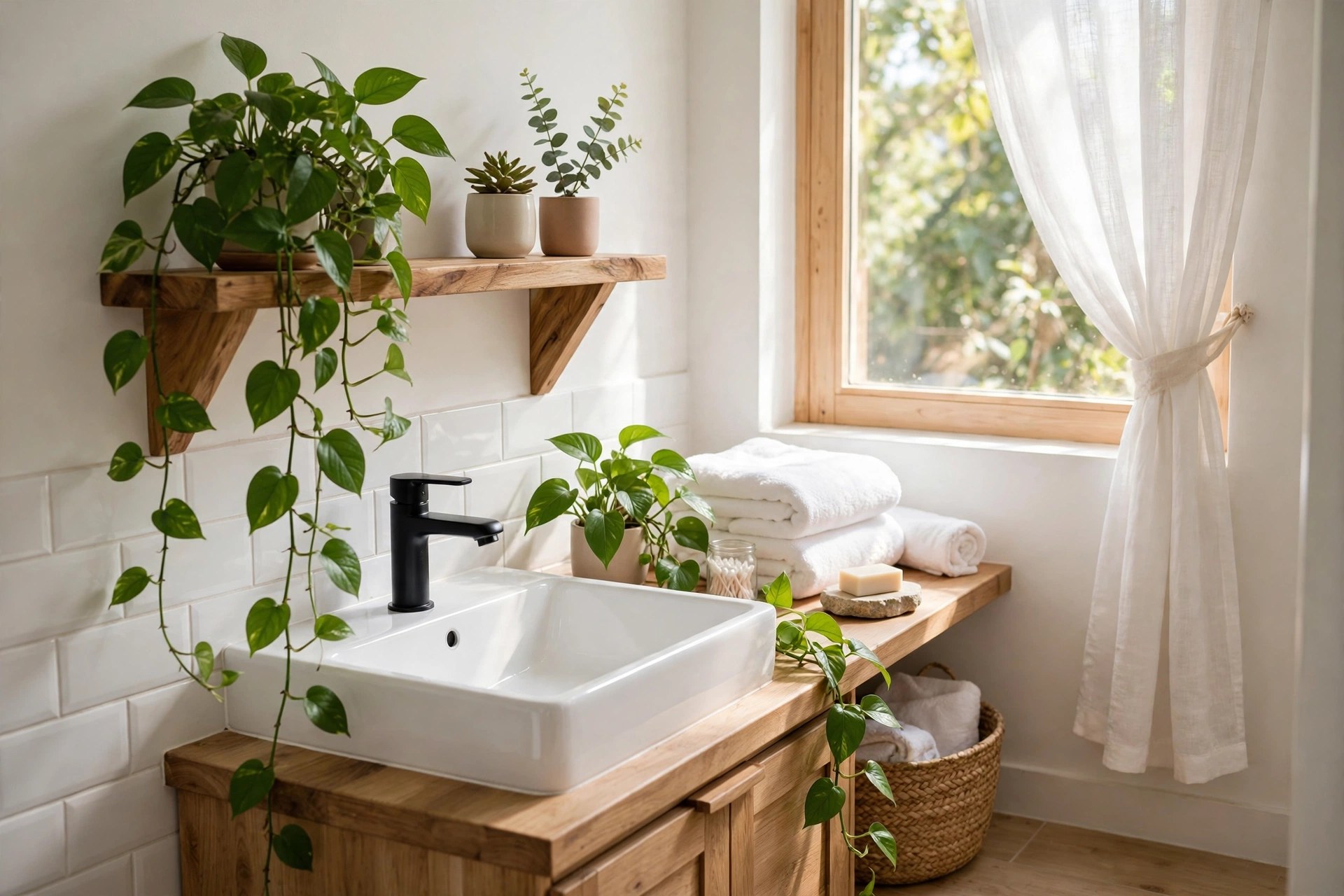
Plants land best in a bathroom that is already calm and edited, so pair this guide with our bathroom shelf decor ideas — a trailing plant on a shelf that also holds towels and clutter reads as more clutter, while the same plant on a clear shelf reads as the room's one living accent.
Match the Plant to the Room: Humidity Is Easy, Light Is the Limit
Rule one: humidity is your free gift. Every shower raises the air moisture that most houseplants crave and living rooms deny them. Ferns, air plants, and peace lilies actively prefer it. What bathrooms rarely offer is light — many have one small frosted window, and plenty have none. So choose for low light first and humidity second, and the plant will thank you in the right order.
Rule two: drainage is non-negotiable. A bathroom plant sits in damp air all day; if its pot also holds standing water, the roots rot. Every pot needs a drainage hole and somewhere for the water to go, and no plant on this list should ever sit in wet soil. Guides like Homestyler on small plants perfect for humid bathrooms and Here in the Catskills on bathroom plants for rooms with no window agree on the core cast: snake plants and ZZ plants for the darkest corners, pothos for shelves, ferns for steam, and a rotation plan when there is no window at all.
Rule three: place by size and habit. Big plants belong on the floor or a slim stand where they cannot be knocked into the sink. Trailing plants belong up high — shelves, mirror edges, the top of a cabinet — where their stems can fall freely. Ferns hang near the shower where the steam is richest, and the smallest plants, like air plants, live on ledges and windowsills. Match the placement to the habit and most of the care takes care of itself.
12 Small Bathroom Plant Ideas That Love Humidity and Low Light
Work in order: start with the toughest plants in the darkest spots, add trailers and hangers where the steam reaches, then solve the windowless problem with rotation. Most of these plants cost $8 to $25 and ask for minutes a month.
1. Put a Snake Plant in the Darkest Corner and Mostly Ignore It
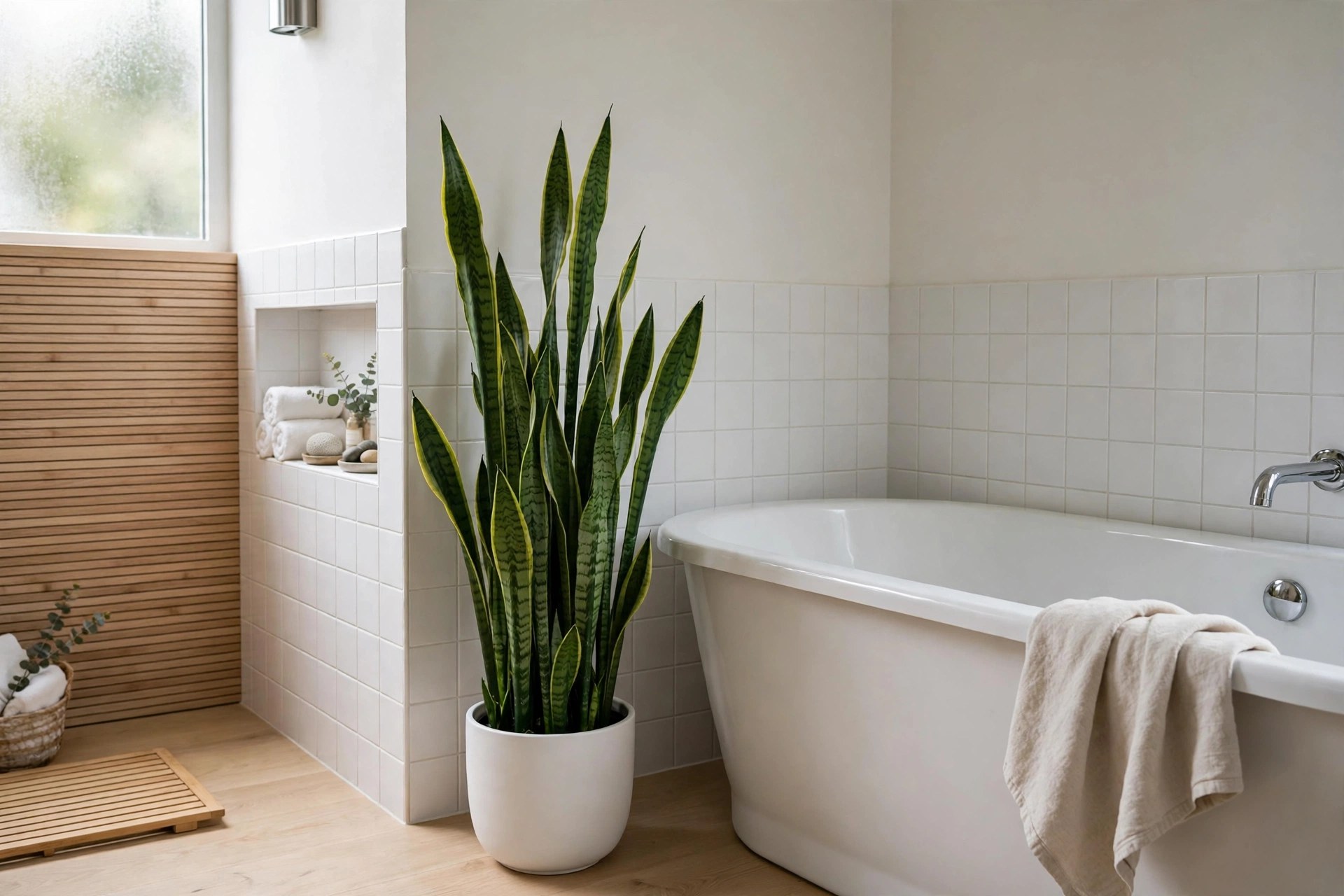
The snake plant is the answer to the bathroom with almost no light. Its upright leaves tolerate low light for months, it stores water in its own leaves, and it wants watering only sparingly — every 3 to 6 weeks is a fair rhythm for a bathroom plant, less in winter. A small one, 8 to 12 inches tall, costs about $12 to $20 and fits on the floor beside the vanity or on a slim stand. The one way to kill it is kindness: never let it sit in wet soil, water only when the soil is dry all the way through, and use a pot with a drainage hole. Watch-out: leaves that go soft and yellow at the base mean overwatering, not thirst — cut back immediately and let the soil dry out fully.
2. Add a ZZ Plant Where Even the Snake Plant Would Sulk
If the room is genuinely dim — an internal bathroom with a borrowed sliver of light — the ZZ plant is the other great survivor. Its glossy leaflets grow from thick underground rhizomes that store water, so like the snake plant it tolerates low light and wants water sparingly, every 3 to 6 weeks, never sitting in wet soil. ZZ plants run about $15 to $30 for a small pot. Growth will be slow in low light; that is not failure, it is the plant pacing itself. Place it on the floor or a low stool where its arching stems have room. Watch-out: ZZ plants are toxic if eaten, so keep them out of reach of curious pets and small children — a high shelf solves it in most bathrooms.
3. Trail Pothos From a Shelf or the Mirror Edge
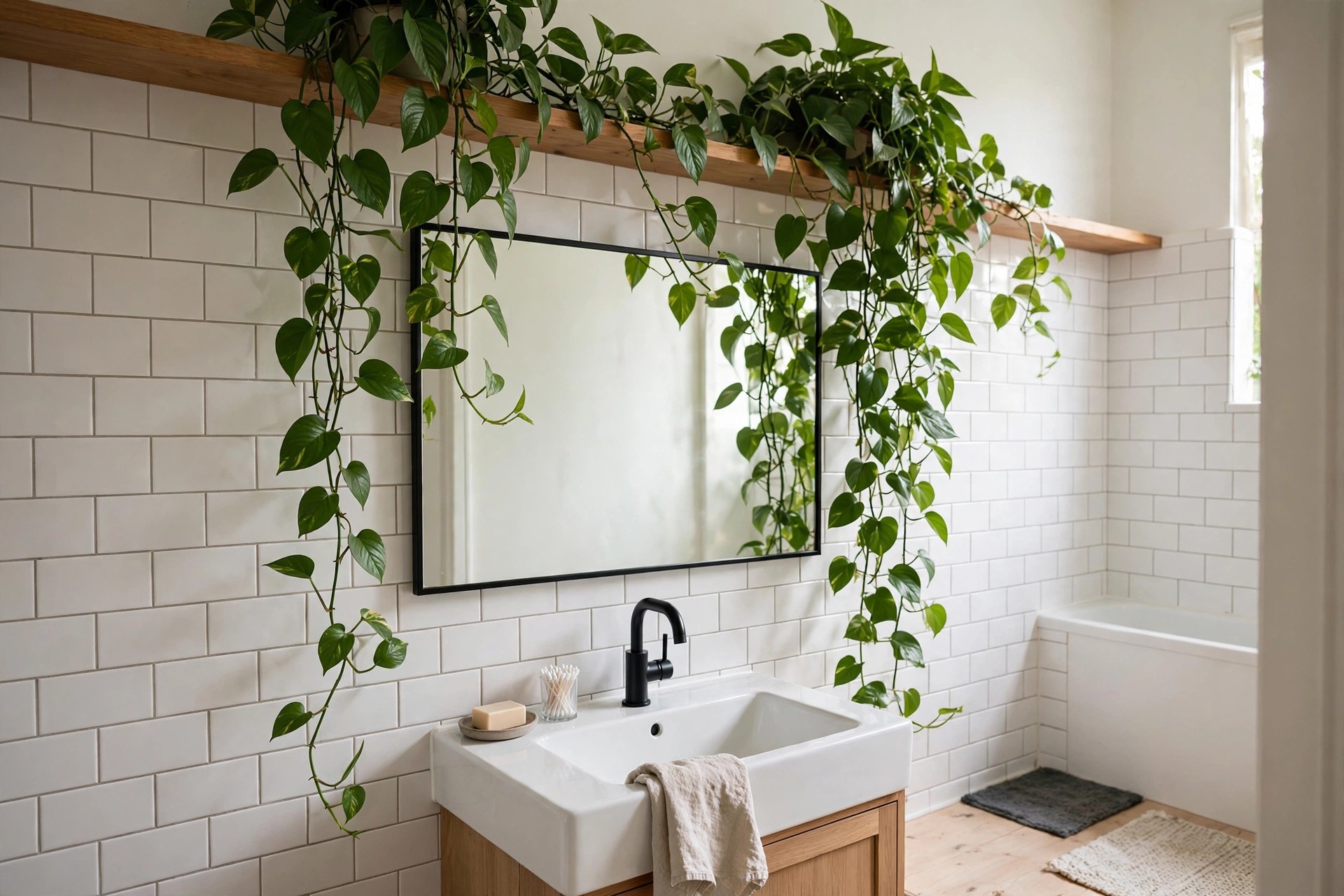
Pothos is the bathroom's best trailing plant: it tolerates low light, loves the humidity, and grows vines that soften every hard edge they fall past. Set a small pot, about $8 to $15, on a high shelf, the top of a cabinet, or beside the mirror, and let the stems trail down — a healthy pothos adds a foot or more of vine in a season. Keep the soil lightly moist rather than soaked, and trim any vine that reaches the sink; cuttings root in a jar of water on the windowsill and become free plants. The styling pairs naturally with our small bathroom mirror ideas, since a vine beside a mirror doubles itself in the reflection. Watch-out: in very low light, variegated pothos slowly turns plain green — normal, not dying.
4. Hang a Boston Fern Where the Shower Steam Reaches
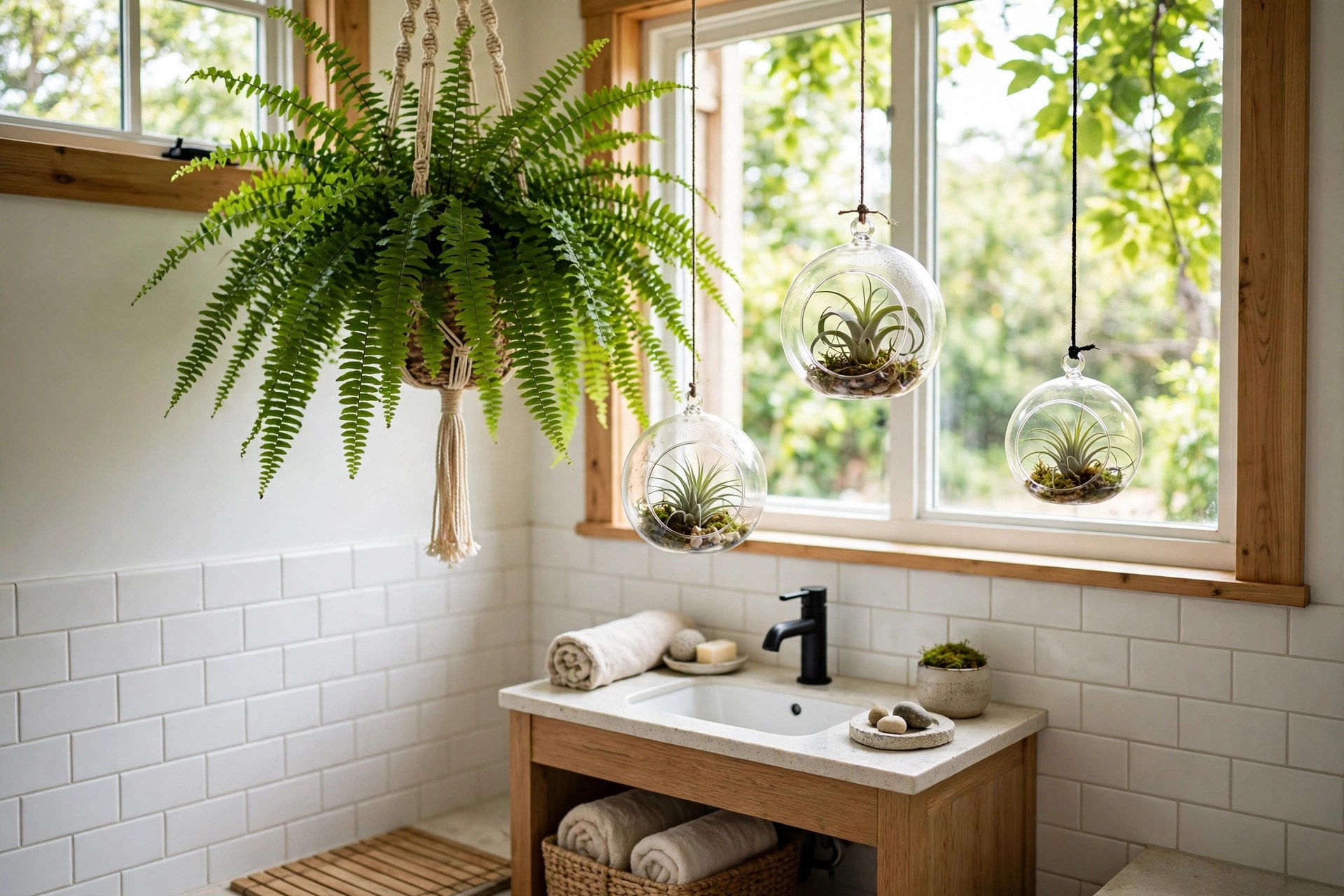
The Boston fern is the plant that loves a bathroom most — if you give it the steam. It thrives in humidity that would rot other plants, and a hanging basket near the shower, where every wash fills the air, is its ideal home. It does ask for consistent moisture in return: keep the soil damp, mist the fronds regularly, and soak the pot when it dries, because a fern allowed to dry out completely drops leaves in protest. Small ferns cost about $12 to $22. Hang it where the fronds clear heads and the shower door — a mature fern spreads 18 inches or more. Watch-out: brown, crispy fronds almost always mean dry air or dry soil, so move it closer to the steam before reaching for plant food.
5. Keep Air Plants in Glass Orbs and on Wall Mounts — No Soil at All
Air plants, the Tillandsia family, are the smallest idea on this list and the most bathroom-suited: they need no soil at all, taking moisture from the humid air itself, which is why they thrive on shower ledges, in glass orbs, and on simple wall mounts where no pot could fit. A plant costs about $5 to $10, and a cluster of three in an orb looks deliberate rather than leftover. Even air plants need a drink: mist them a few times a week, or take them down for a 20-minute soak every week or two, then shake them dry upside down so no water sits in the crown. Watch-out: never seal them in a closed terrarium in a steamy room — they need air moving around them as much as they need moisture.
6. Hang a Spider Plant and Let the Offshoots Do the Decorating
A spider plant earns its place twice: the arching striped leaves fill a high corner, and the plantlets it dangles on long stems — its offshoots — become the decoration, swaying slightly every time the door opens. It tolerates low to medium light, enjoys bathroom humidity, and forgives irregular watering better than most. Hang it from a ceiling hook or set it on top of a tall cabinet where the babies can hang clear of heads and doors. A small plant costs about $10 to $18, and every offshoot can be snipped and potted into a free second plant. Watch-out: brown leaf tips usually trace back to dry air or salts in tap water; an occasional soak under the shower head — fittingly — rinses the soil and the leaves at once.
7. Let a Peace Lily Have the Humid Floor Corner
The peace lily loves humidity as honestly as the fern, and its broad dark leaves fill a floor corner with a calm, finished look no other low-light plant matches. Give it the spot beside the tub or on a low stand, keep its soil evenly moist — it will droop dramatically when thirsty and recover within hours of watering, which makes it the easiest plant in the room to read. In a dark bathroom it may not bloom, and that is fine: the foliage is the point, and white flowers are a bonus for brighter rooms. Small plants cost about $15 to $25. This corner-first thinking matches our small bathroom linen storage ideas — claim the dead corners first. Watch-out: like the ZZ, peace lilies are toxic if eaten, so place them where pets cannot browse.
8. Rotate Plants Through a Windowless Bathroom
No window does not mean no plants; it means plants on a rota. Keep two sets: one living in the bathroom, one recovering in the brightest room you have, and swap them every week or two — a plant rotated to real light for a day or two a week, every week, stays healthy indefinitely in an otherwise dark room. Tough plants rotate best: snake plant, ZZ, and pothos shrug off the schedule, while ferns prefer to stay put near the steam. Leave the bathroom door open whenever the room is empty so borrowed light and air reach in. Watch-out: do not rotate a plant straight into harsh direct sun after weeks in the dark — bright indirect light for its rest week, or its leaves will scorch.
9. Add a Small Grow Light and Stop Apologising for the Room
When rotation is impractical, a small grow light solves the windowless problem permanently. A compact LED grow bulb in an existing fixture, or a small bar light under a shelf, run for 8 to 10 hours on a timer, gives low-light plants everything they are missing — and suddenly even a fern becomes possible in a bathroom with no window at all. Small grow bulbs cost about $10 to $20 and sip electricity. Choose a warm or full-spectrum white light rather than the purple kind, unless you enjoy a bathroom that glows like an aquarium. Watch-out: keep any light and its cord well clear of water spray, use fittings rated for bathrooms, and let the timer, not your memory, run the schedule.
10. Use the Mirror and Pale Surfaces as Light Multipliers
Light already entering the room can be spent twice. A plant placed where the mirror catches window light receives reflected light all day — the same mirror that makes the room feel bigger makes it brighter for anything green. Pale walls, a light shower curtain left open, and a glass door instead of an opaque one all push daylight deeper into the room. Position your neediest plant — usually the fern or the pothos — in the brightest reflected spot, and let the snake plant and ZZ take the true dark. Watch-out: reflected light is gentle and will not scorch, but it is also weak; it supplements a plant's diet, it does not replace a rotation or a grow light in a fully windowless room.
11. Group Small Plants Together to Build Their Own Humidity
Plants grouped closely share the moisture they release, creating a small pocket of higher humidity that suits every member — a trick called grouping, and a bathroom shelf is its natural home. Cluster three small plants of similar needs: a fern, a pothos starting its trail, and a small peperomia or fittonia, in pots that share one tray. The group looks like a deliberate arrangement rather than three strays, and each plant dries out more slowly than it would alone. Total cost for a trio of small plants: about $25 to $45. Watch-out: group plants with similar watering needs together; a snake plant parked in the humidity huddle will get watered on the fern's schedule, and overwatering is exactly what kills it.
12. Keep Pots Small, Drainable and Off the Surfaces You Clean Daily
The final idea is housekeeping, and it decides whether bathroom plants survive contact with real life. Keep pots small enough to lift one-handed — you will move them every time you clean — and always with drainage, on a saucer or in a cachepot you empty after watering. Place plants on shelves, stands, ledges, and hooks rather than ringing the sink, because a plant that must be moved twice a day to wipe the counter will eventually be moved to another room. Wipe leaves monthly; bathroom dust plus humidity makes a grime that blocks what little light the plant gets. Watch-out: skip pebble trays of standing water under pots in a bathroom — the room is humid already, and the tray only breeds residue and mosquitoes.
Mistakes That Kill Bathroom Plants Quietly
Overwatering in a humid room. The air is already wet, the soil dries slowly, and a weekly watering habit carried over from the living room drowns bathroom roots. Water by the soil, not the calendar — dry for snake plants and ZZ, just moist for ferns and lilies. The same check-before-acting habit runs through our mirror ideas guide: measure the real condition of the room before adding anything to it.
Choosing for the photo instead of the light. A sun-loving plant in a dark bathroom does not adapt; it declines slowly enough that the room looks tired for months before the plant is blamed. Start with the survivors — snake plant, ZZ, pothos — and add fussier plants only where steam and light genuinely reach. Browse the rest of the Bathroom collection for the small-room systems that keep the whole space working, plants included.
Questions People Ask
Which plants survive in a bathroom with no window?
Snake plants, ZZ plants, and pothos tolerate low light best. In a fully windowless room, rotate them to a bright room for a day or two each week, leave the bathroom door open when you can, reflect light with the mirror, or add a small grow light on a timer.
How often should bathroom plants be watered?
Far less than living-room plants, because bathroom air is humid and soil dries slowly. Snake plants and ZZ plants want water sparingly, every 3 to 6 weeks, and must never sit in wet soil. Ferns and peace lilies prefer evenly moist soil and regular misting.
Where is the best place to put plants in a small bathroom?
Big plants go on the floor or a slim stand, trailing pothos on shelves and beside the mirror, ferns hanging near the shower where the steam is, and air plants on ledges, in glass orbs, or on wall mounts. Keep pots off the sink surround so cleaning stays easy.
Do air plants really live without soil in a bathroom?
Yes. Air plants (Tillandsia) take moisture from humid air, which makes them ideal for steamy bathrooms. Mist them a few times a week or soak them for about 20 minutes every week or two, then shake them dry upside down so no water sits in the crown.
Start with one snake plant in the dark corner and one pothos trailing from a shelf, give them drainage and honest light — and the hardest, steamiest room in the house becomes the one where your plants ask for the least.


Comments
Post a Comment