
12 Small Bedroom Headboard Alternatives That Need No Headboard
A bed pushed against a bare wall always looks unfinished, but a real headboard is bulky, expensive, and often impossible in a small room. The best small bedroom headboard alternatives give the bed the same finished focal point with zero floor space: paint, fabric, panels, and shelves that live flat on the wall and leave every inch of the room for the bed itself.
You do not need the furniture. You need the frame — something that marks where the bed begins, balances the nightstands, and gives your pillows a backdrop. Below are twelve alternatives with real widths, heights, costs, and the renter-friendly notes that matter.
Start by checking the bed position itself against our guide to small bedroom layout ideas that make a tiny room feel bigger — an alternative only works when the bed is centred on the wall it decorates.
Measure First: Width, Height, and the Pillow Line
Width first. Whatever you put behind the bed should span at least the width of the mattress, and ideally 2 to 6 inches beyond it on each side, so the bed reads as anchored rather than floating under a small decoration. A queen bed is 60 inches wide, so plan a 64 to 72 inch treatment; a twin at 38 inches needs only 42 to 48 inches.
Height second. The visible part of your alternative should rise 24 to 48 inches above the top of the mattress. Less than that disappears behind pillows; more is fine for paint and fabric, which weigh nothing. Designers at Havenly on bedroom ideas for when you do not want a headboard and roundups like Style Your Items on bedrooms without a headboard agree on the shortlist: an accent treatment, oversized art, curtains or fabric, floating shelves, and layered pillows doing the structural work.
Finally, the pillow line. Keep the bottom edge of anything hung — art, ledges, panels — 6 to 12 inches above the top of the mattress, roughly level with the top of your sleeping pillows, so nothing meets the back of your head at 2 a.m. Secure everything properly; above a bed is the one place a loose frame is not an option.
12 Small Bedroom Headboard Alternatives
Match the alternative to your walls and your lease. Renters should start with paint-free options; owners can take the panel and trim routes that add real architecture.
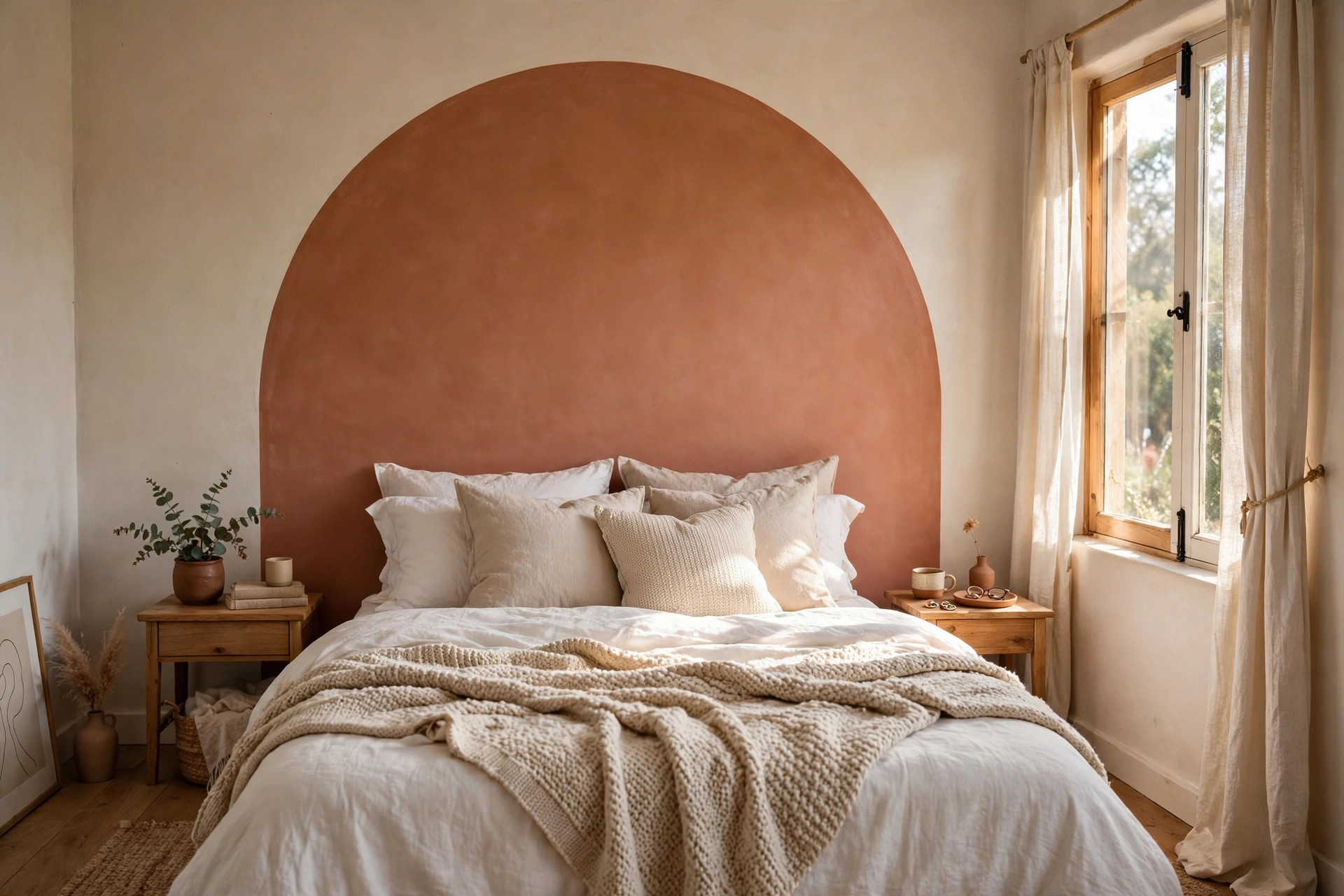
1. The Painted Arch, the Cheapest Focal Point There Is
One quart of paint and a roll of tape create the most popular headboard alternative of the decade. Mark an arch centred on the bed — width of the mattress plus 4 to 8 inches, rising 48 to 60 inches from the floor — using a string-and-pencil compass for the curve, then fill it with two coats of a warm contrasting colour. Terracotta, sage, and dusty blue all work against white bedding. Cost: $15 to $30 all in. Watch-out: matte or eggshell paint only; a shiny arch shows every wall flaw under lamplight.
2. A Painted Rectangle With a Crisp Border
If an arch feels too playful, paint a simple rectangle in the same proportions and frame it with a 2-inch border of a deeper shade or a thin strip of wood trim glued at the edges. The border is what makes it read as a designed panel instead of a paint accident. This suits modern and minimalist rooms where fabric would feel fussy. Cost: $20 to $40 including trim. Watch-out: use proper painter's tape pressed down firmly and peel it while the second coat is still slightly wet for a razor edge.
3. Peel-and-Stick Wallpaper Panel
Removable wallpaper gives you pattern — botanical, geometric, faux grasscloth — with none of the commitment. Apply it only in the headboard zone, from the top of the mattress to 48 inches up, and finish the edges with thin peel-and-stick trim so the panel looks built in. A single roll usually covers a queen-width panel. Cost: $35 to $80. Watch-out: smooth walls only; heavy orange-peel texture telegraphs through thin vinyl and weakens the adhesive over time.
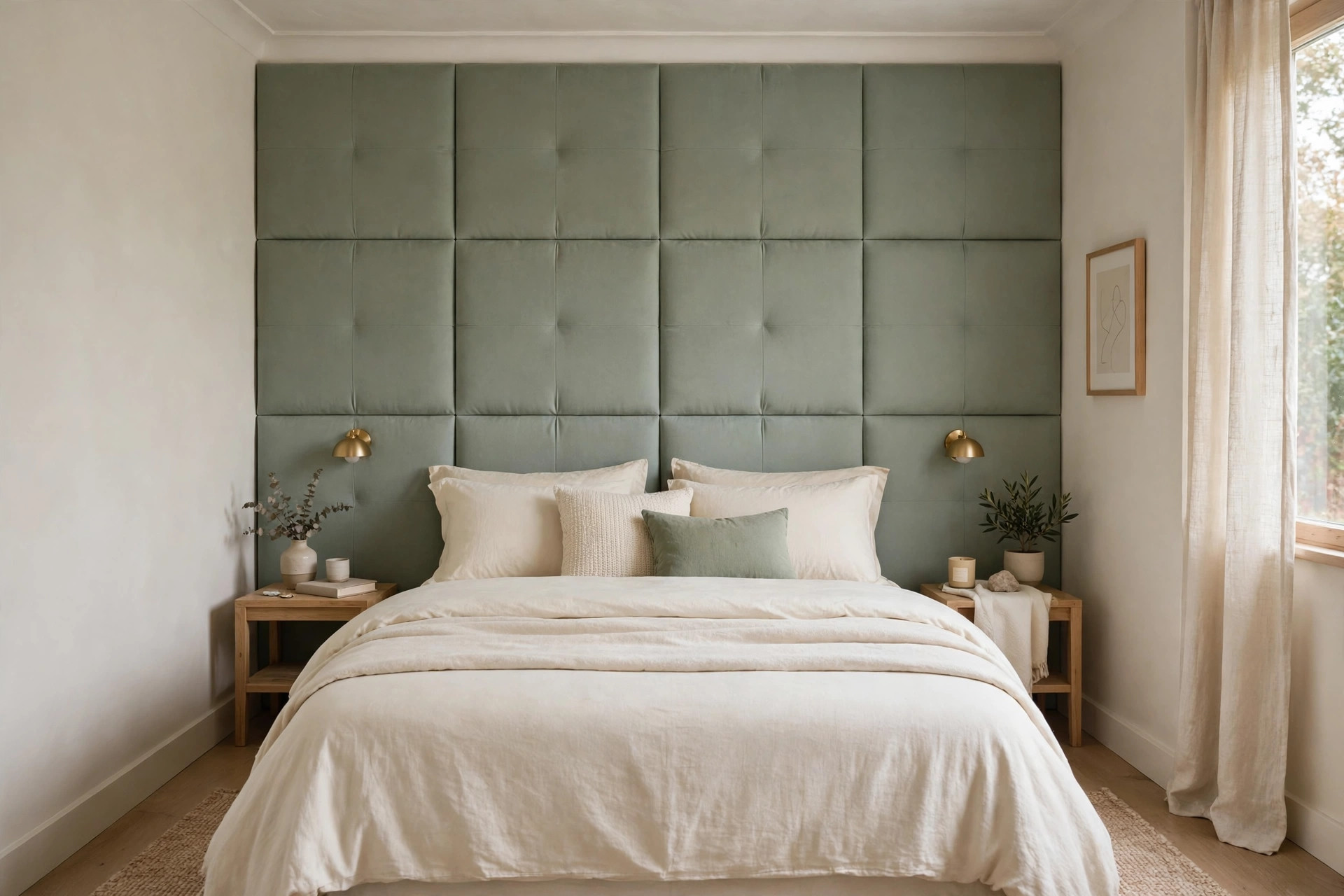
4. Upholstered Wall Panels, Soft Without the Furniture
Individual foam-backed fabric panels, typically 12 by 24 inches or 16 by 16 inches, stick or screw to the wall in a grid and give you the padded lean-back comfort of an upholstered headboard at a third of the depth. Plan two rows above the mattress line so shoulders and pillows meet fabric, not wall. Velvet and bouclé are the forgiving choices; linen shows pressure marks. Cost: $60 to $160 for a queen grid. Watch-out: measure the grid on the floor first — a crooked panel row is very visible from the doorway.
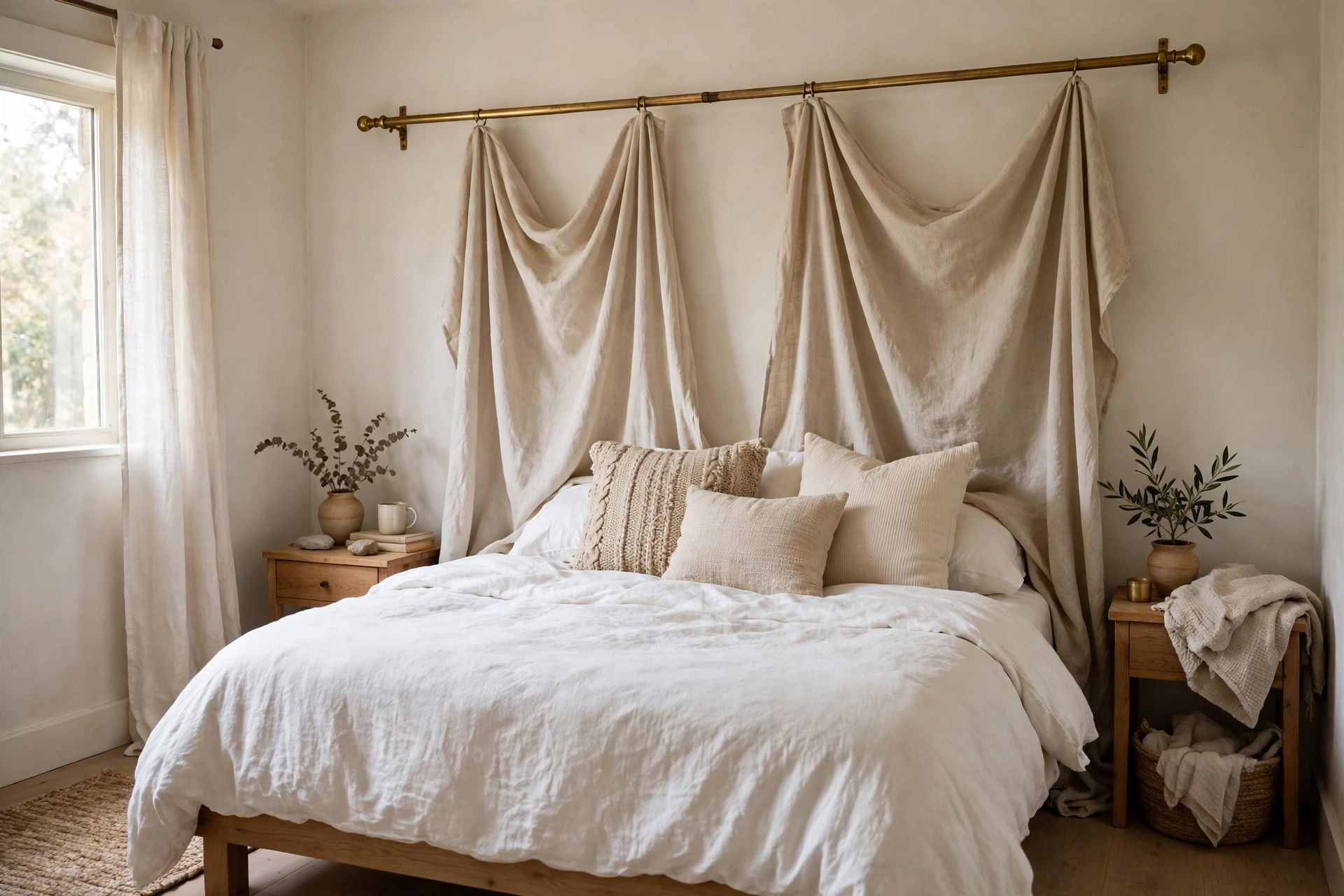
5. A Curtain Rod With Draped Linen Panels
Mount a simple rod 60 to 72 inches wide above the bed and hang two linen or cotton panels so they fall softly behind the pillows. The fabric adds the warmth and height of a canopy headboard, absorbs sound in echoey small rooms, and hides a multitude of wall sins. Steam the panels after hanging so the folds fall straight. Cost: $40 to $90 for rod and mid-weight panels. Watch-out: keep fabric at least a few inches clear of any wall heater, and choose washable fabric — this is a dust-catching position.
6. One Oversized Piece of Art, Hung Low and Wide
A single canvas or framed print at least two-thirds the width of the bed does the headboard's visual job in one move. Landscape abstracts, large botanical prints, and calm photography work; busy small prints do not scale. Hang the bottom edge 6 to 8 inches above the mattress top and use proper wall anchors rated for the frame's weight. Cost: $50 to $200 depending on size and frame. Watch-out: glass frames above a bed should be acrylic-glazed — lighter, and it will not shatter if it ever slips.
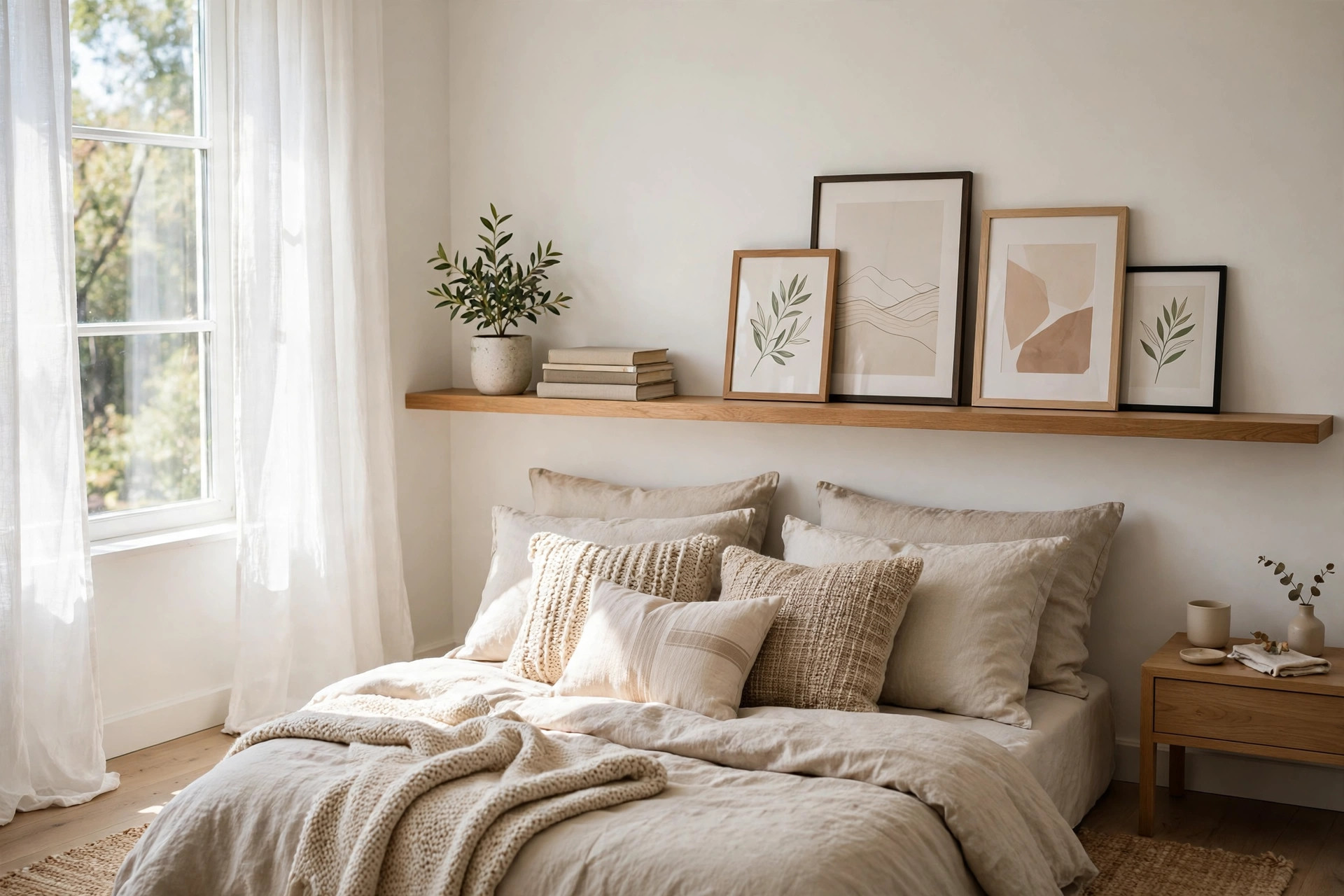
7. A Shallow Picture Ledge With Layered Frames
A picture ledge 4 to 5 inches deep and as wide as the bed turns the headboard zone into a changeable gallery: lean two large frames, layer a small one in front, add a tiny plant or a stack of books. Swapping art takes thirty seconds, which makes this the best option for anyone who redecorates seasonally. Cost: $25 to $60 for the ledge. Watch-out: anchor ledges into studs or with heavy-duty anchors; a loaded ledge above pillows must never rely on two small screws in plasterboard alone.
8. A Long Floating Shelf as a Nightstand Saver
One floating shelf, 8 to 10 inches deep, mounted just above pillow height, works as headboard, display surface, and — in truly tiny rooms — a shared nightstand shelf for a phone, a glass of water, and a small lamp on each end. That can free the floor space two nightstands would take. Cost: $30 to $80. Watch-out: keep the shelf shallow and its load light, mount it level, and never store heavy books directly above where heads rest.
9. A Folding Screen Stood Behind the Bed
A three-panel folding screen — rattan, cane, carved wood, or plain fabric — stood flat against the wall behind the bed gives instant height, texture, and architecture with zero installation. It is the fastest option on this list: buy it, unfold it, push the bed back. Cost: $70 to $180. Watch-out: the screen eats 2 to 4 inches of room depth and can wobble in a draught; a small removable adhesive strip at the top corners keeps it honest against the wall.
10. A Tapestry or Flat-Weave Rug on a Rod
Textiles soften hard rooms better than anything else on this list. Hang a lightweight tapestry, a woven wall hanging, or a flat-weave rug from a simple rod or wooden dowel, centred on the bed and wide enough to extend past the pillows. The texture reads as warmth even in a photograph. Cost: $30 to $100. Watch-out: weigh the piece first — a heavy wool rug needs a proper rug hanger and strong fixings, while cotton tapestries hang happily from clips or a pocket rod.
11. Wood Slat or Trim Moulding Panel
Thin wood slats or applied trim moulding, painted the same colour as the wall, create a panelled headboard wall with real shadow lines. Slats spaced 1 to 2 inches apart over the bed width look modern; picture-frame moulding boxes look traditional. Both are weekend projects with a saw, level, and caulk. Cost: $50 to $120 in pine trim. Watch-out: paint slats before mounting where possible, and caulk every joint — uncaulked seams are what separate a custom look from a craft project.
12. Layered Pillows and a Bolster, the Zero-Install Finish
Sometimes the wall is fine and the bed is simply underdressed. Two Euro shams stood upright against the wall, sleeping pillows in front, then a long bolster or lumbar cushion creates a soft, structured backrest that photographs like a styled headboard. Choose covers with texture — washed linen, a subtle stripe, one patterned cushion. Cost: $35 to $90 for shams and a bolster. Watch-out: this only works if you actually make the bed; it is the one alternative with a daily two-minute maintenance cost.
Mistakes That Make a No-Headboard Bed Look Unfinished
Going too narrow. A 24-inch picture centred over a 60-inch bed does not replace a headboard; it underlines its absence. Every alternative on this list is sized to the bed for a reason — when in doubt, go wider, not taller. If you are styling the bedside zones too, our bedroom nightstand styling ideas keep the two sides balanced so the wall treatment sits in a composed scene.
Forgetting light. A headboard wall with a reading light on each side — sconces, pendants, or small lamps — looks designed; the same wall in flat ceiling light looks empty. Plug-in sconces mounted 60 to 66 inches from the floor, just outside the bed width, are the renter-friendly version. For the corner beside the bed, pair the look with our small bedroom reading corner ideas and the whole room gains a rhythm.
Choosing something you cannot clean or secure. Above-bed decor collects dust and sits over sleeping people. If you cannot dust it, wash it, or anchor it, pick a different idea — paint asks nothing of you, which is why it stays number one. Browse the rest of the Bedroom collection for more small-room finishes that earn their keep.
Questions People Ask
Do you really need a headboard?
No. A headboard is a nice-to-have, not a requirement. What a bed needs is a visual anchor on the wall and a finished pillow line. Paint, panels, fabric, shelves, and art all supply that anchor without the bulk, the cost, or the floor space a framed headboard takes.
What is the cheapest headboard alternative?
The painted arch or rectangle. A quart of paint, tape, and a brush cost $15 to $30 and finish in an afternoon. For renters who cannot paint, a tapestry or curtain panel on a removable rod is the cheapest deposit-safe option at roughly $30 to $50.
How do I make a bed look finished without a headboard?
Centre the treatment on the bed, size it at least as wide as the mattress, keep its bottom edge 6 to 12 inches above the mattress, balance both nightstands, and layer the pillows — Euro shams upright, sleeping pillows in front, one bolster. The formula matters more than the budget.
Is a no-headboard look good for small rooms?
Yes, often better than a headboard. A framed headboard adds 2 to 4 inches of depth and a hard visual stop; a flat wall treatment keeps the wall reading as one continuous surface, which makes a small room feel calmer and slightly larger.
Pick the alternative that matches your lease and your patience: paint this weekend, panels this month, pillows today. Any of the twelve will make the bed look chosen rather than leftover — and in a small bedroom, that single wall does most of the decorating for the whole room.


Comments
Post a Comment