
12 Small Bedroom Paint Color Ideas That Make a Tiny Room Feel Bigger
A tiny bedroom can feel calm and open, or like the walls are closing in. Often the difference is not the furniture. It is the paint. The right small bedroom paint color ideas bounce light, soften corners, and give your eyes fewer stops around the room, so even a 9-by-10-foot space feels easier to breathe in.
You do not need bright white everywhere, and you do not need to fear color. Pale blue can recede, warm greige can add depth without darkness, and even a dark headboard wall can make a room feel deeper. The trick is choosing shade, finish, and contrast with intention.
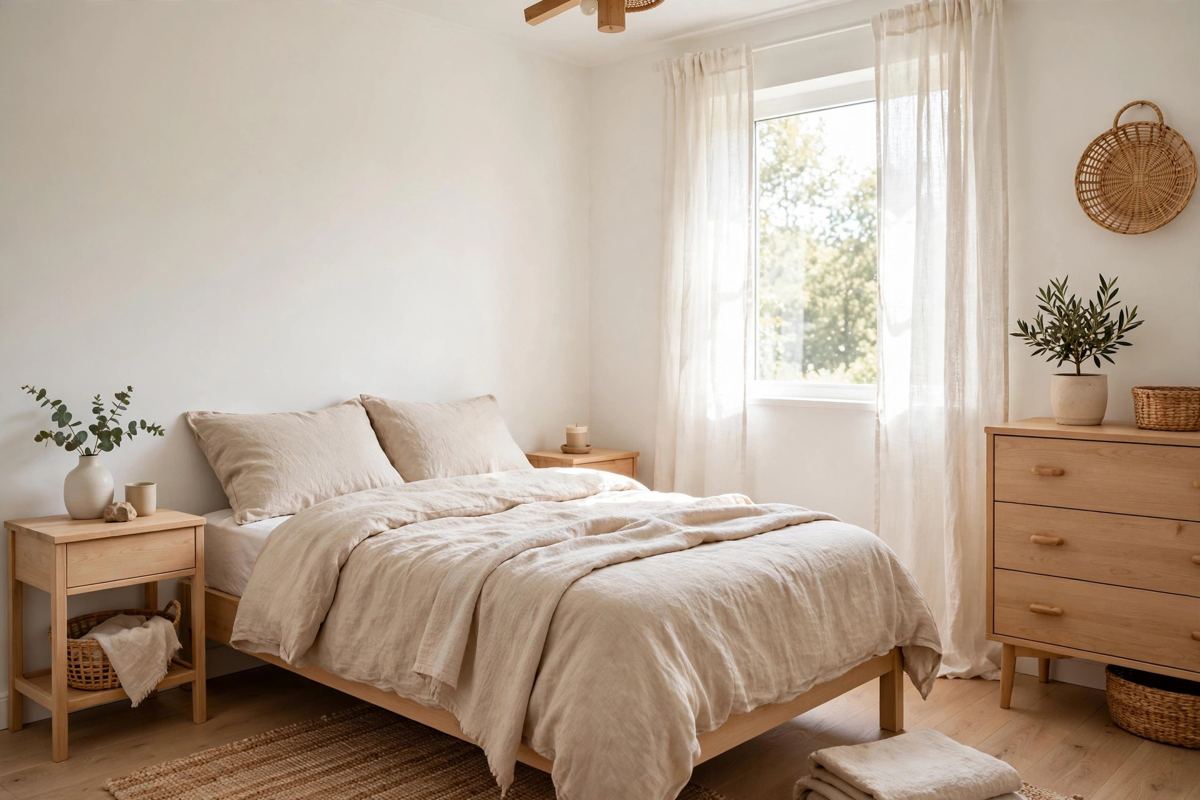
Paint works best when the layout already helps. If the bed is stealing the room, start with our guide to small bedroom layout ideas, then choose the color that finishes the job.
Plan First: LRV, Light Direction, Finish, and a Proper Test
Before you fall for a swatch, learn one number. LRV means Light Reflectance Value. It runs from 0 for black to 100 for pure white, and tells you how much light a color reflects. For most small bedrooms, an LRV of 60 to 85 keeps walls bright without turning them stark. Below 50 usually feels heavy across a whole room.
Next, check which way your window faces. North-facing light is cool and grey, so crisp white can look blue and chilly. Warm whites and greige balance it. South-facing light is warm and strong, so pale blue, sage, and cooler whites stay calm instead of washing out.
Choose the finish as carefully as the color. Use matte or eggshell on walls: a low sheen hides bumps and avoids harsh reflections. Use satin on trim and doors, where a little shine helps with wiping. A gallon of good paint costs about $35 to $75, and a sample pot about $6 to $13, so testing is far cheaper than repainting.
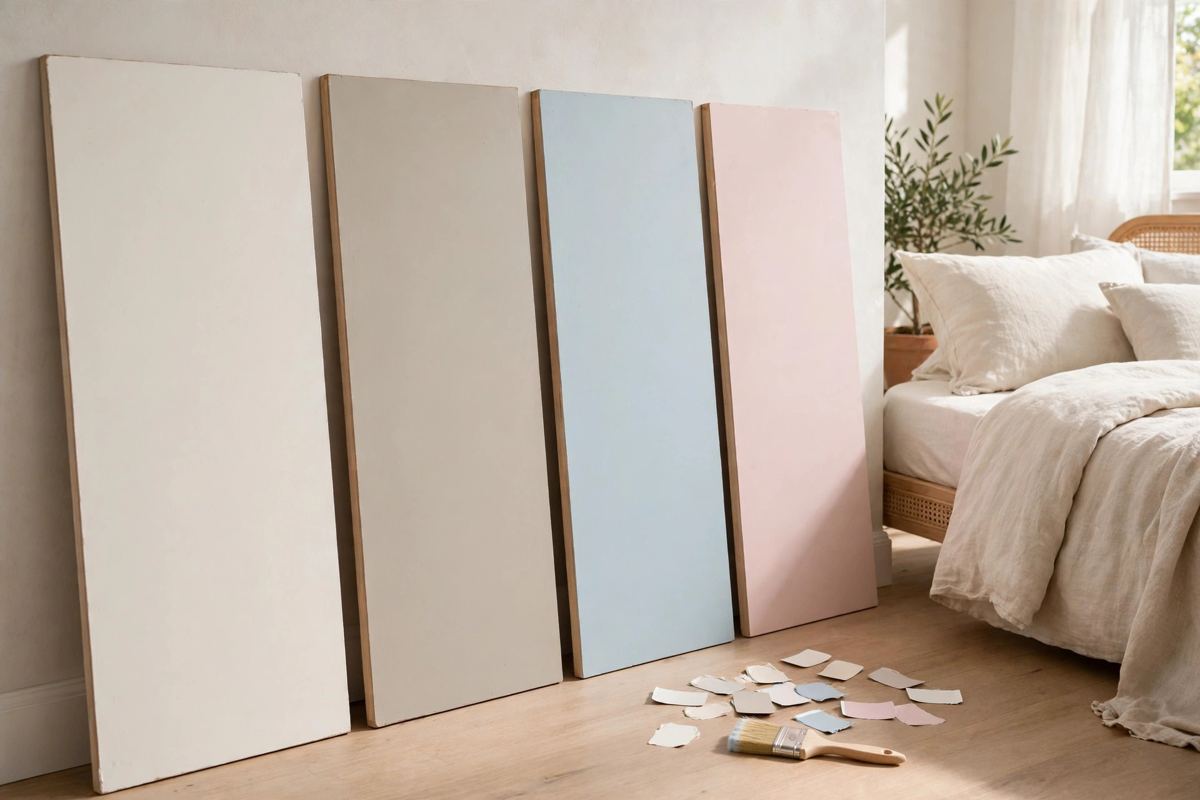
Test properly. Paint each finalist on a large board, at least 24 by 36 inches. Move it around the room and check it in morning, afternoon, and evening lamplight. A tiny swatch lies; a large board tells the truth. Guides like Two Bros Painting on the best paint colors for small bedrooms and Coohom on bedroom paint colors for small rooms make the same point: undertone and real light matter more than the name on the tin.
12 Small Bedroom Paint Color Ideas That Open Up a Tiny Room
Treat these as a menu, not a rulebook. Pick one main wall color first, then decide whether ceiling, trim, and headboard wall should blend in or add depth.
1. Benjamin Moore White Dove OC-17 for a Warm, Safe White
White Dove is the warm white painters reach for when bright white feels too cold. With an LRV around 83 to 85, it reflects plenty of light, but its soft greige warmth stops a room from feeling clinical. It suits north-facing rooms especially well. Pair it with white bedding, light wood, and one darker accent, such as a charcoal cushion. Keep trim the same color for a low-contrast finish that feels calm and wide.
2. Sherwin-Williams Alabaster SW 7008 for Soft Creamy Walls
Alabaster, with an LRV of about 82, is a fraction creamier than White Dove. That warmth helps in a north-facing bedroom where daylight is thin and cool. It flatters warm wood, rattan, and beige textiles. If your room gets strong south light, test it first, because it can read slightly yellow at midday. On the ceiling, Alabaster in flat finish keeps the room feeling gentle and joined up.
3. Agreeable Gray SW 7029 When You Want Greige, Not Grey
Greige, the blend of grey and beige, gives a bedroom more depth than white without giving up much light. Agreeable Gray sits at an LRV of about 60, the lower edge for an all-over color, so it works best with a decent window. It changes through the day, greyer in the morning and warmer by evening. Use white bedding against it, and repeat the greige in a throw or rug.
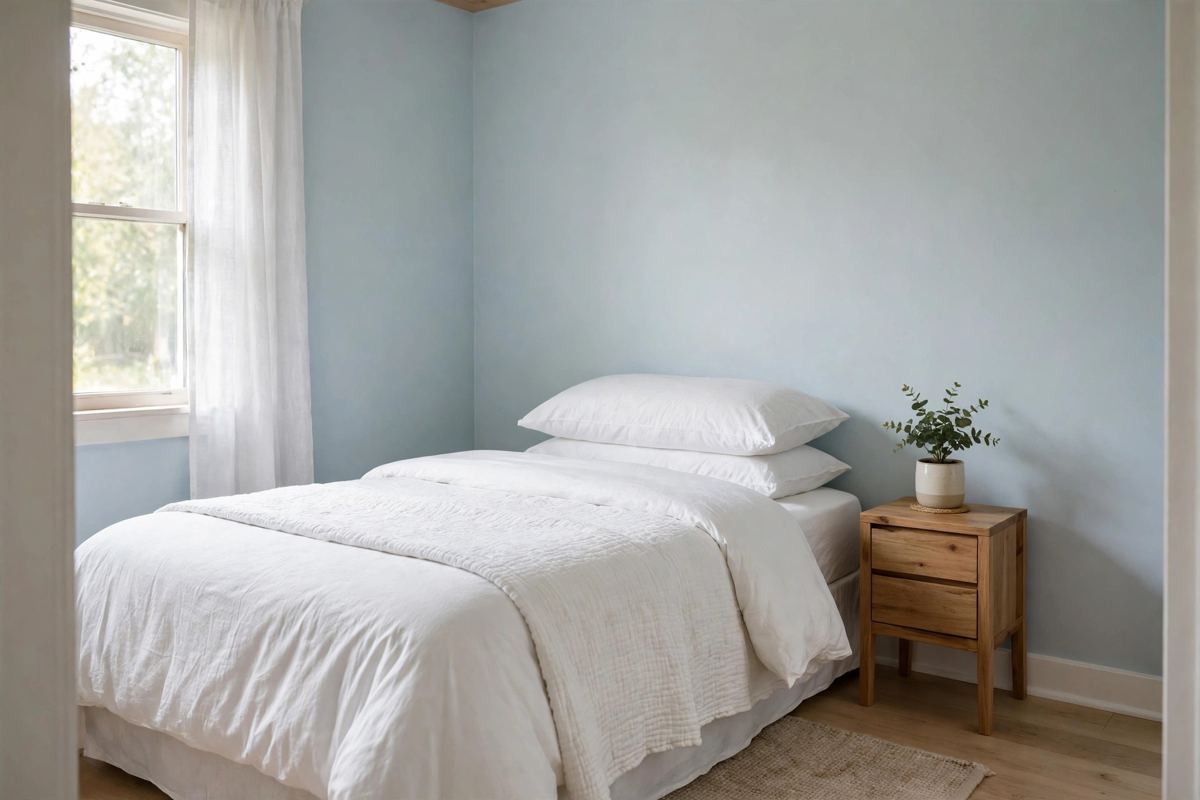
4. Pale Blue That Recedes, Like Rainwashed SW 6211
Cool colors appear to step back, exactly what you want on small walls. Rainwashed is a pale blue-green with an LRV around 63, light enough to stay airy but colored enough to feel restful. It suits a south-facing room that needs cooling down. Keep the ceiling a clean, lighter white so the blue can lift, and use warm wood or brass in lamps and frames so the room does not turn cold.
5. Sherwin-Williams Sea Salt SW 6204 for a Calm Blue-Green
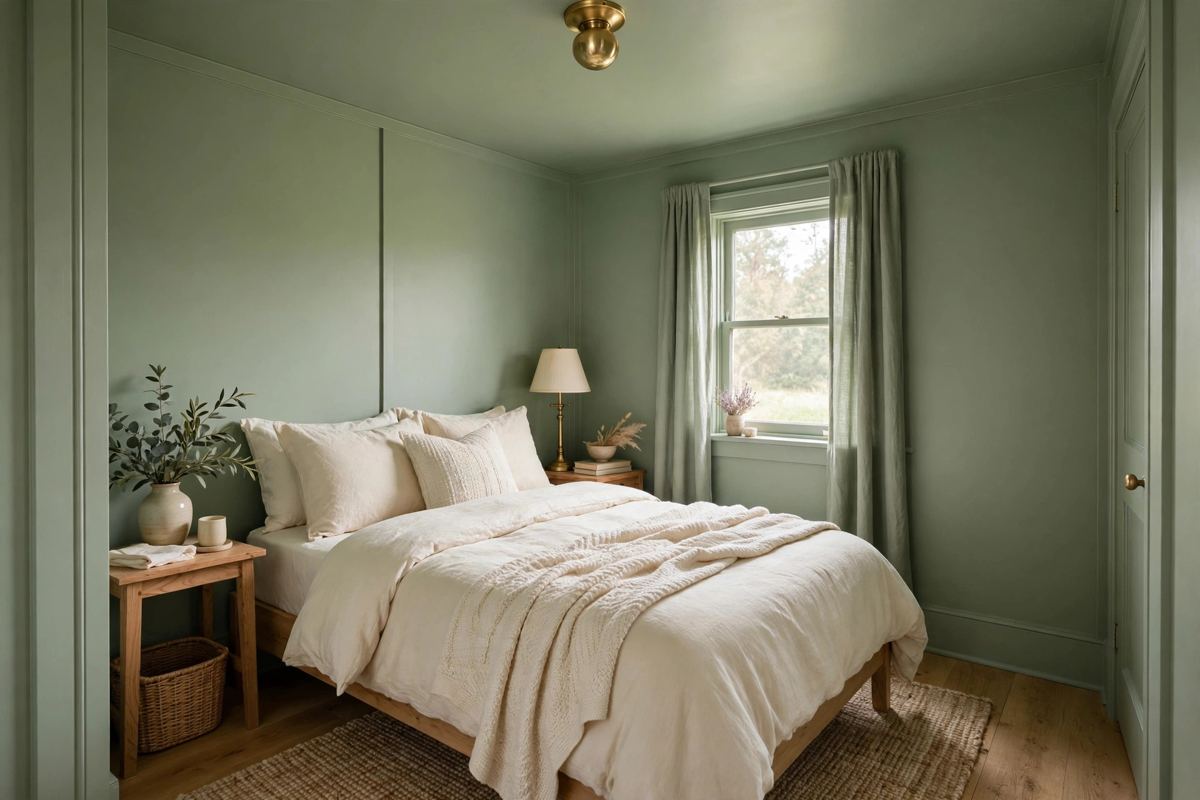
Sea Salt is a forgiving small-room color because it refuses to sit still. At an LRV of about 64, it can read sage, grey, or soft green depending on your light. That shift is a strength in a bedroom used morning and night. It suits white trim, natural linen, and plants. If it looks too green, try a paler blue beside it. If too grey, warmer lamplight will bring the green back.
6. Benjamin Moore First Light 2102-70 for the Softest Blush
A pale blush can make a tiny bedroom feel warm and spacious, as long as it stays very light. First Light is a soft pink with enough grey in it to feel grown-up, not sweet. Use it with warm white trim, light oak, and textiles in cream, taupe, and a little muted terracotta. Avoid lots of other pink with it, which shrinks the palette and the room. One quiet repeat, in a cushion or artwork, is enough.
7. Swiss Coffee OC-45 for a Creamy, Layered Neutral
If White Dove feels too clean and Alabaster too yellow, try Swiss Coffee. This creamy warm neutral, with an LRV in the low 80s, works well in low-light bedrooms and rooms with darker wood. It makes a small room feel cocooning rather than exposed. It is also a kind base for renters stuck with beige carpet or warm-toned floors, bridging old and new finishes instead of fighting them.
8. Color Drenching in One Soft Color for Fewer Visual Breaks
Color drenching means painting walls, trim, doors, and sometimes the ceiling in the same color, changing only the finish. In a small bedroom, fewer breaks mean your eye travels further, and the room feels noticeably larger. Choose a soft color you will not tire of, such as White Dove, pale greige, or Sea Salt. Use eggshell on walls and satin on trim. It also hides awkward angles.
9. Low-Contrast Trim and a Lighter Ceiling to Lift the Box
High-contrast white trim against a colored wall chops a small room into pieces. Instead, paint trim the same color as the walls, or one shade lighter, so edges soften. Paint the ceiling the same color or a lighter version, never darker, unless it is unusually high. A lighter ceiling reads as higher, even with no real inches gained. This helps especially around small windows, wardrobes, and doors that would otherwise create a busy patchwork.
10. A Dark Headboard Wall, Like Hale Navy HC-154, for Depth
It sounds backwards, but one dark wall behind the bed can make a room feel deeper. Hale Navy is a rich, muted navy that works as a headboard wall when the other three walls stay light, ideally with an LRV above 70. Keep bedding pale, add warm lamplight, and stop the dark color at that one wall. Used everywhere, navy closes the room in. Used once, it gives the space a focal point.
11. Benjamin Moore Classic Gray OC-23 for a Pale Warm Grey
Classic Gray is barely grey, and that is its strength. With an LRV around 74, it gives the calm of grey without the chill, because a warm undertone runs underneath it. It is a good choice when bedding, curtains, or flooring already lean cool and the walls need to bring balance back. It stays neutral beside both black metal and warm wood. Beside true white, it often reads as a soft off-white.
12. Pale Sage for a Nature-Led Room That Still Feels Light
A pale sage brings the calm of green without darkening walls. Try Clary Sage SW 6178 in a bright room, or the next lighter shade up the card in a dimmer one. Green sits restfully with wood, linen, and white, and suits good morning light. Keep sage on the walls only, with a warm white ceiling and trim, so it stays fresh. Add greenery sparingly: the wall is already doing the nature work.
Quick Picks by Budget: What to Buy First
Spend in this order, and stop when the room feels right:
- Under $25: two or three sample pots at $6 to $13 each, plus one 24-by-36-inch sample board. Testing is the cheapest way to avoid a repaint.
- $35 to $75: one gallon of your chosen wall color in eggshell or matte. That is usually enough for a small bedroom's walls.
- $75 to $130: add a quart of satin in the same or a lighter shade for trim and doors.
- Renter-friendly route: ask before you paint, get permission in writing, and keep a labeled pot for touch-ups. If painting is not allowed, use the same color logic for bedding, curtains, and a large light rug.
Light matters as much as paint, so pair your color with the layered approach in our guide to cozy bedroom lighting ideas for small rooms. Warm lamplight lifts a pale wall in the evening.
Mistakes That Make a Small Bedroom Feel Smaller
Choosing from a tiny swatch. A two-inch square cannot show undertone or light change. Always test on a large 24-by-36-inch board, morning and evening, before you commit to a gallon.
Using a stark white in a north-facing room. Cool daylight plus blue-white paint equals a chilly box. Choose a warm white with an LRV around 82 to 85 instead, and let textiles add contrast.
Painting the ceiling darker than the walls. A darker ceiling presses down. Keep it the same color or lighter, especially with a low ceiling, so the eye reads height.
Mixing too many strong colors. In a tiny room, one wall color, one trim approach, and one accent are plenty. Every extra color is another visual stop, and visual stops make a room feel small.
Skipping the finish plan. Glossy walls bounce glare and show every bump. Keep walls matte or eggshell, save satin for trim, and your color will look smoother and more expensive.
Start with the board, not the roller. Paint two finalists at 24 by 36 inches, live with them for a day of changing light, and trust what you see in your own room over any photo online. Then commit, keep contrast low, and let the ceiling stay light. For more ideas for the same small spaces, browse our full Bedroom collection, and enjoy how much bigger a tiny room can feel with the right paint.


Comments
Post a Comment