
13 Backyard Privacy Ideas for Small Yards That Feel Secluded
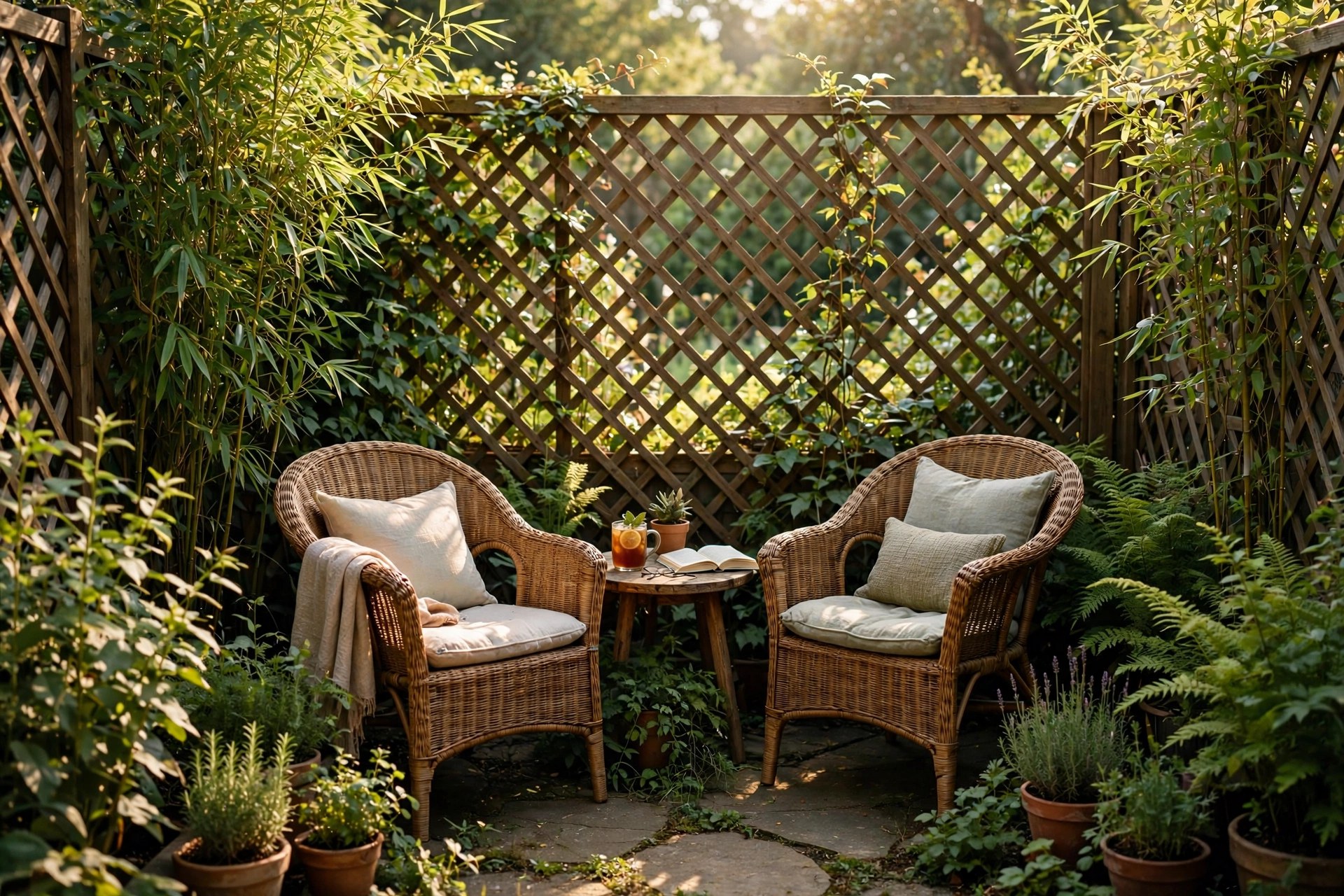
Small yards have a specific privacy problem: the neighbors are close, their upstairs windows look down, and anything big enough to block the view can swallow half your space. These backyard privacy ideas for small yards solve it the slim way — going up instead of out, screening only the sightlines that matter, and using planters, curtains and trellises that stay under 12 inches deep. Before you build anything, sit in your main chair and note exactly where eyes come from: a fence line, one second-story window, a gap at the gate. You are blocking those lines, not walling off the whole yard. And check the rules first: many areas cap rear and side fences at 6–8 feet, and an HOA can be stricter than the city.
How Privacy Works in a Small Yard
A screen only needs to interrupt the line between a neighbor's eye level and where you sit. A seated person's eyes are about 44 inches off the ground; a standing neighbor's are about 5.5 feet, and a second-story window can be 12–15 feet up. That is why a 6-foot screen placed close to your seating works better than the same screen at the far fence — and why overhead cover matters for upstairs sightlines. Collections of solutions like The Spruce's backyard privacy guide mix the same families used below: fences, living screens, structures and fabric. In a small yard, the art is choosing the thinnest effective one per sightline.
13 Backyard Privacy Ideas for Small Yards
1. Screen the Seating Zone, Not the Whole Yard
One 8–10 foot run of screening behind a bench or two chairs delivers 90% of the privacy for a third of the cost of a full perimeter. It also keeps the rest of the yard feeling open. Start here, live with it a month, and add more only where you still feel watched.
2. Tall Planter Boxes With Grasses or Clumping Bamboo
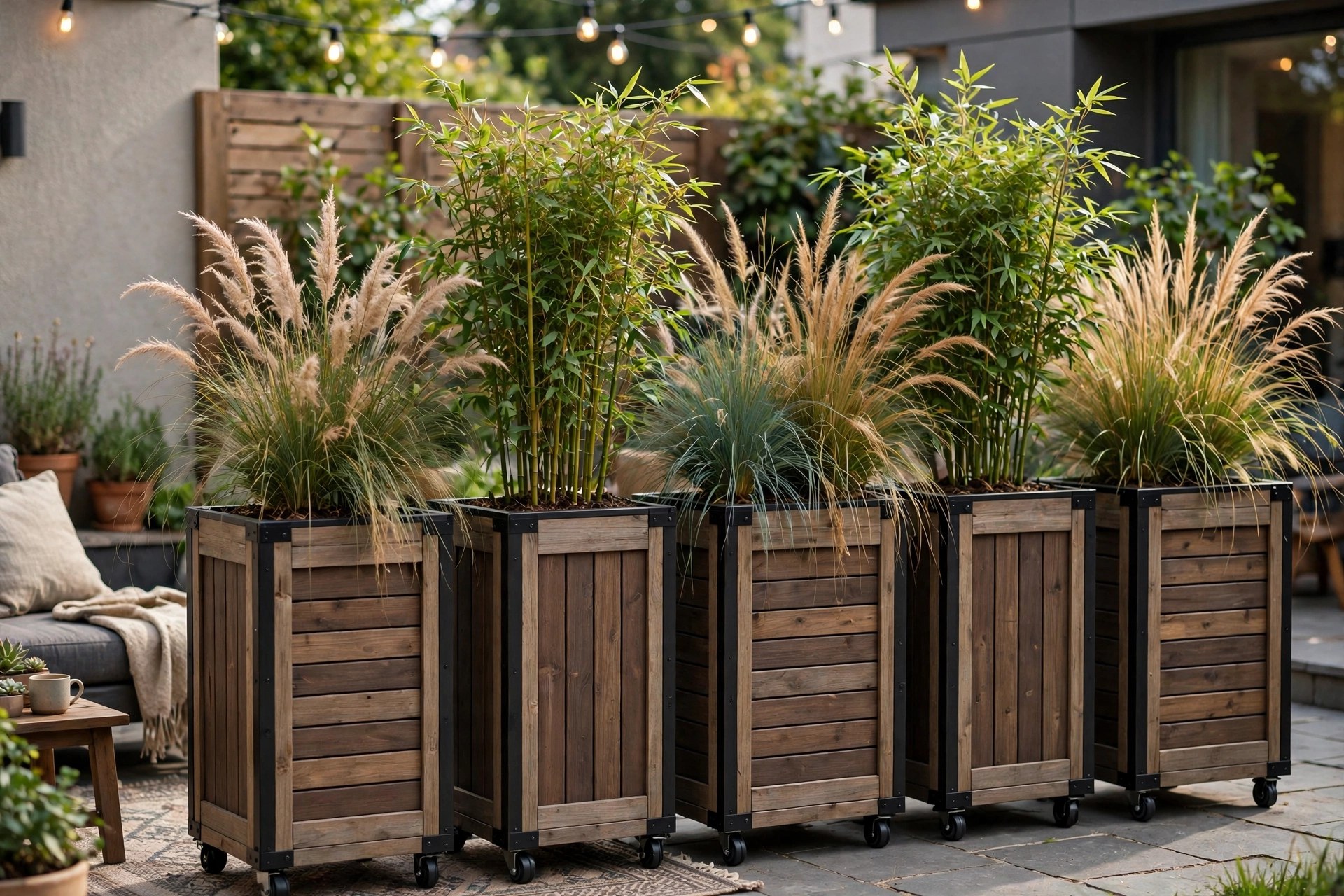
Rectangular planters (about 36–48 inches long, 16–18 inches tall) filled with ornamental grasses or clumping bamboo make a movable green wall 5–6 feet high. Clumping bamboo is the key word — running bamboo spreads aggressively and belongs in a pot, never in the ground. This is the top renter option: nothing is permanent, and the screen moves when you do, a flexibility that fence-free roundups such as Self Storage's privacy guide highlight as well.
3. A Trellis With Climbing Vines
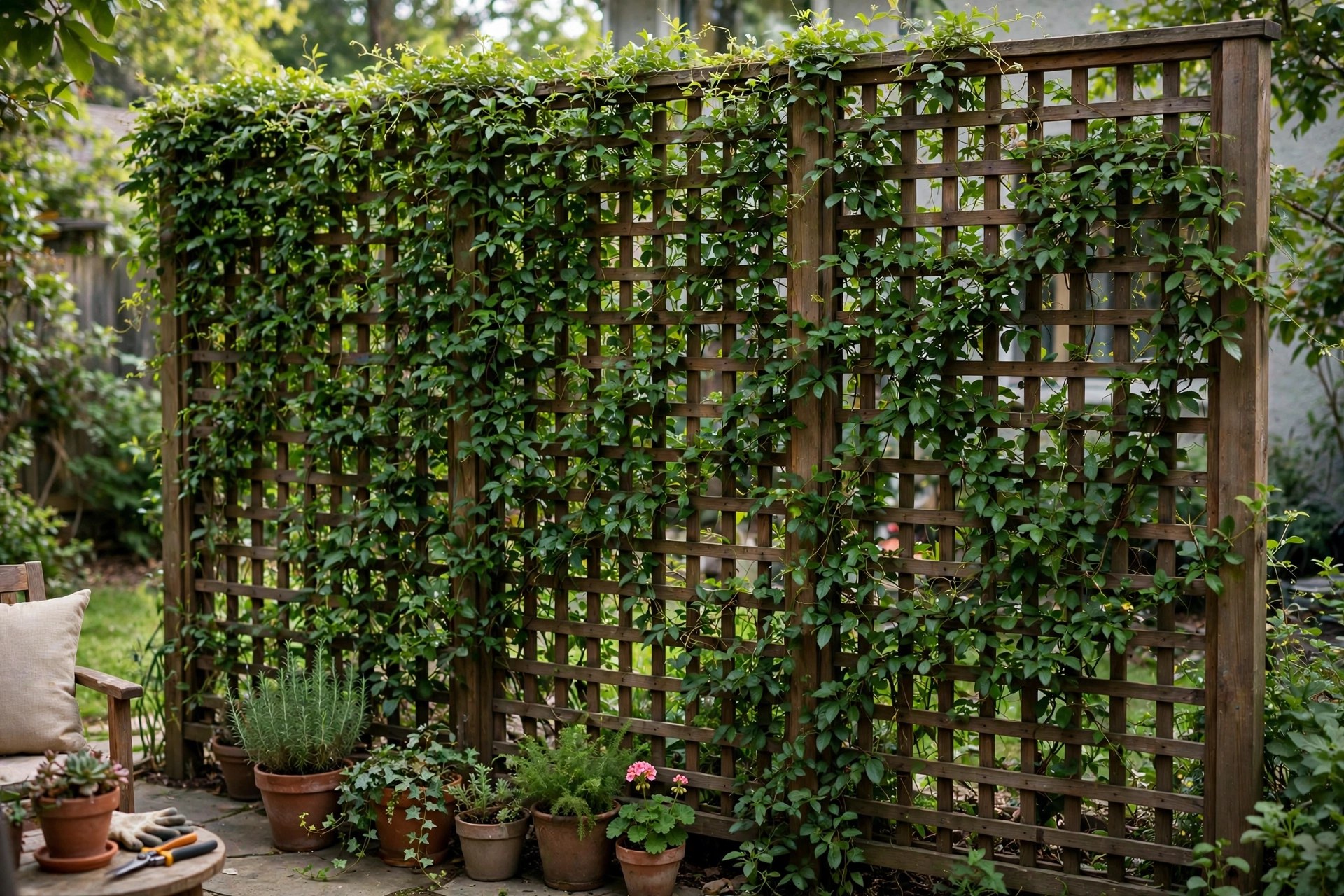
A trellis panel is 2–4 inches deep — the thinnest screen on this list. Set a 6-foot trellis in a planter or against the fence and train jasmine, clematis or climbing roses up it. Annual vines like morning glory give same-summer coverage while slower perennials fill in. Leave a 2-inch gap between trellis and fence so air circulates and both stay dry.
4. Outdoor Curtains on a Pergola or Tension Wire
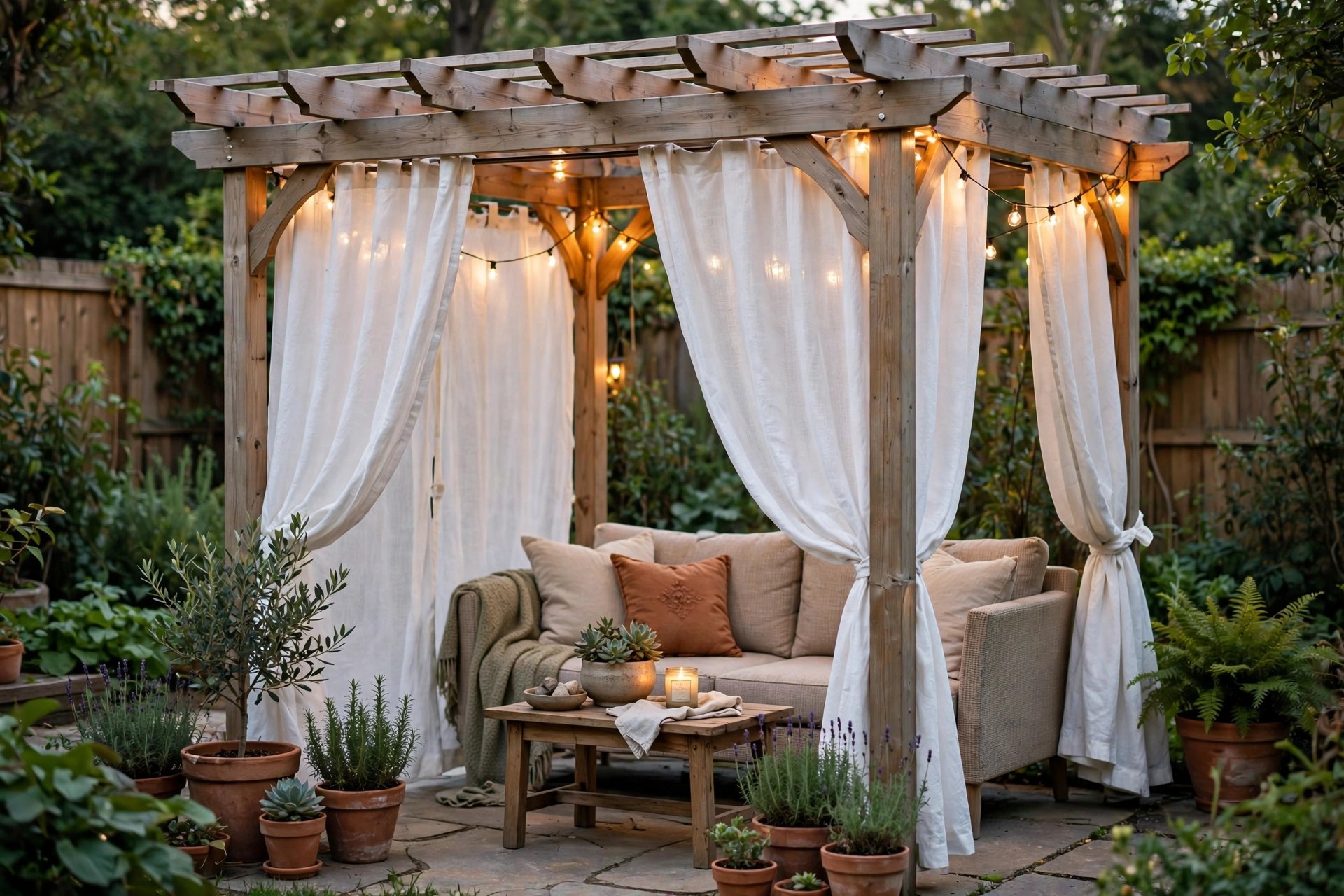
Curtains turn privacy into a choice: closed for dinner, open for sun. Hang weather-resistant panels with grommets from a pergola beam or a tension wire strung between two posts. A standard panel is 50–54 inches wide; measure your span and add 30–50% extra fabric so curtains drape instead of stretching flat. Tie-backs at 36 inches keep them tidy on breezy days.
5. A Slatted Wood Screen for a Modern Edge
Horizontal or vertical slats with 0.5–1 inch gaps block direct views while letting light and air through, so the yard never feels boxed. Build one 4 x 6 foot panel on two posts, or buy a freestanding metal or composite panel. Slats read especially well on small modern patios where a solid fence feels heavy.
6. Layer Plants in Three Heights
One row of shrubs looks thin from every angle but one. Layer instead: a tall layer (small evergreen or columnar tree) at the back, mid shrubs (3–4 feet) staggered in front, and low grasses or flowering plants at the edge. Staggering closes the gaps a single row always leaves, uses beds as narrow as 24–30 inches, and looks like a garden rather than a barricade.
7. Reed or Bamboo Roll Fencing Over an Ugly Fence
If a chain-link or tired fence already exists, the fastest fix is a roll of reed or bamboo screening zip-tied to it — a few dollars per linear foot, installed in an afternoon, and it raises the visual height by 1–2 feet if the roll is taller than the fence. Expect 2–4 seasons from reed, longer from bamboo; both are honest short-term solutions, not permanent structures.
8. Add Height With a Fence Topper
Where rules allow, a 12–24 inch lattice or slat topper on an existing 4–5 foot fence reaches effective privacy height without replacing the fence. Lattice toppers soften with a vine in one season. Confirm your local fence height limit before building — height is the rule most often enforced, sometimes including the topper.
9. Use a Shade Sail for the View From Above
Second-story windows defeat fences; they cannot defeat a ceiling. A triangular shade sail angled over the seating area blocks downward sightlines and midday sun at once. Mount corners at slightly different heights (a 1–2 foot fall) so rain runs off, and use hardware rated for outdoor tension — sails pull hard in wind.
10. A Freestanding Screen You Can Angle
Folding or single-panel freestanding screens (typically 4–6 feet tall) angle to meet an awkward sightline — a diagonal gap between houses, a gate, a side yard. Weight the base or stake it in windy spots. Because nothing is fixed, this is the second-best renter option after planters, and it pairs with our patio string light ideas for an evening corner that feels like a private room.
11. Grow a Narrow Evergreen Column
Columnar evergreens (2–3 feet wide at maturity) are privacy trees sized for small yards: one planted at the exact point where a sightline crosses your fence blocks it year-round. Space them by mature width, not nursery size, and give them a full season before judging coverage — year two is when they earn their place.
12. Build a Living Wall on the Fence Itself
Wall-mounted planters, pocket panels or a pallet garden turn the fence face into a green screen that adds zero depth beyond a few inches. Herbs and trailing plants at eye level distract the eye as much as they block it: a fence covered in greenery stops looking like a boundary at all. Water from the top row down and choose plants with similar thirst.
13. Arrange Furniture to Do Half the Work
Free, instant, underrated: angle seating so backs face the main sightline, tuck the conversation area into the yard's most sheltered corner, and let a large umbrella stand where a screen would go. Combined with the decor in our small front porch decorating ideas for the front and the covered-space inspiration in our screened porch decorating ideas, you get privacy as a whole-property plan, not a single fence. More outdoor projects live under the Outdoor & Porch label.
Common Mistakes to Avoid
Screening the entire perimeter when one zone needed it; planting by nursery-pot size instead of mature size; ignoring wind load on sails, curtains and freestanding panels; and buying materials before measuring the actual sightlines from your chair. Sit first, measure second, build third — in that order, a small yard ends up feeling secluded instead of smaller.


Comments
Post a Comment