
12 Small Living Room Side Table Ideas That Add Storage Without Bulk
If you are hunting for small living room side table ideas that actually earn their floor space, start with this rule: in a small room, a side table has to do two jobs at once. It needs to hold a drink, a book, and your phone within easy reach, and it also needs to hide, stack, or tuck away the clutter that makes a small living room feel tight. A pretty table that only holds a lamp is a luxury most small rooms cannot afford.
The good news is that you do not need a big footprint to get real storage. The best small living room side table ideas use vertical space, hollow bases, drawers, and shapes that slide right up to — or even under — your sofa. Below are 12 proven options, with the exact sizes to look for, honest prices, and the mistakes that make a small room feel even smaller.
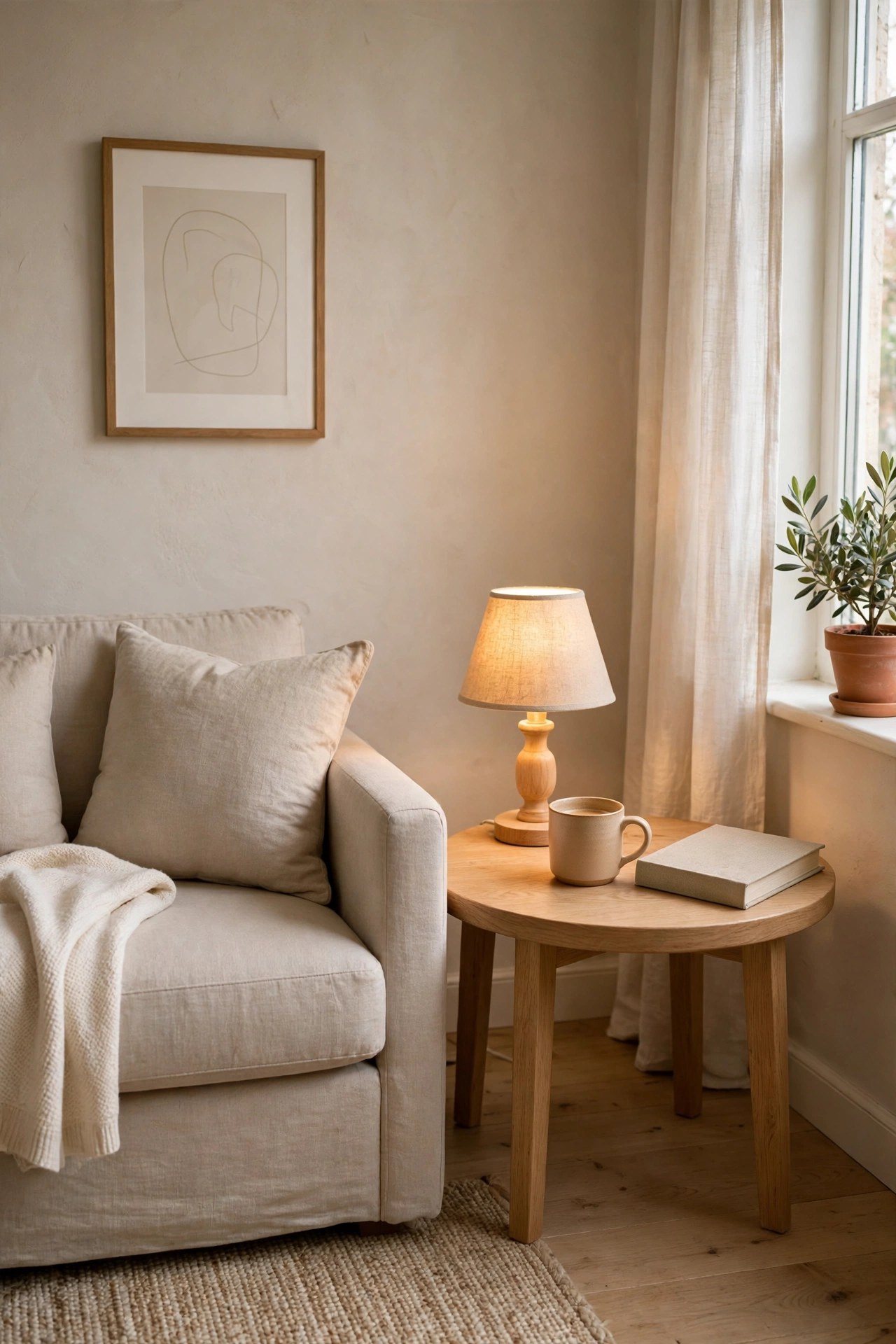
What Size Is Right? Small Living Room Side Table Basics
Before you fall for a style, get the measurements right. A side table that is too tall, too deep, or too far away will annoy you every single day, no matter how good it looks in a photo.
For most sofas, look for a top that is 16 to 22 inches across if it is round, or about 14 to 18 inches wide by 18 to 22 inches deep if it is rectangular. That is enough for a mug, a paperback, and a small lamp, without eating the walkway beside the sofa.
Height matters even more. Aim for a table height within 1 to 2 inches of your sofa arm — for most sofas that means roughly 23 to 26 inches tall. If the table is much lower than the arm, you will be reaching down awkwardly for your drink. If it is much higher, drinks feel precarious and the table visually towers over the seat.
Finally, keep it within easy reach. The edge of the table should sit no more than a comfortable arm's stretch from where you actually sit — ideally right beside the arm, not pushed a foot behind it because a floor lamp is in the way. As design guides on perfect side tables for small spaces also note, proportion and reach are what separate a table you use daily from one that just fills a corner.
A quick measuring checklist before you buy
- Measure your sofa arm height from the floor — write it down.
- Measure the gap beside the sofa, wall to sofa edge, in inches.
- Check for floor vents, baseboards, and outlet access in that gap.
- Tape the table's footprint on the floor with painter's tape and live with it for a day.
- Leave at least 12 to 14 inches of clear walking space past the table if it sits on a walkway.
If you are also rethinking the middle of the room, pair your choice with these small living room coffee table ideas that keep the centre open so the side table and coffee table share the same visual language and do not fight for space.
12 Small Living Room Side Table Ideas With Real Storage
1. Round pedestal table — no sharp corners, no wasted legs
A round pedestal table is the safest first pick for a tight living room. Because it stands on a single central base instead of four legs, you gain floor space underneath and there are no corners to catch your shin on in a narrow walkway. Look for a top 16 to 20 inches in diameter and a sturdy, weighted base so it does not tip when you set down a full mug.
Pedestal tables work well between a sofa and a wall, or beside an armchair. Prices run $45 to $110. There is no hidden storage, so pair it with a small lidded box on top for remotes if clutter is your main problem.
2. Nesting pair — two tables when you need them, one when you don't
Nesting tables are the classic small-space trick for a reason. You keep the smaller table tucked under the larger one day to day, then pull it out when a guest needs a spot for a drink, or when you want a temporary perch for a laptop or a board game. A typical pair has a large table around 20 inches wide and 24 inches tall, and a small one around 16 inches wide and 21 inches tall.
Expect to pay $50 to $130 for a decent set. Check that the small table slides smoothly — felt pads help. Nesting tables give flexible surface rather than hidden storage, ideal if your problem is "nowhere to put things down."
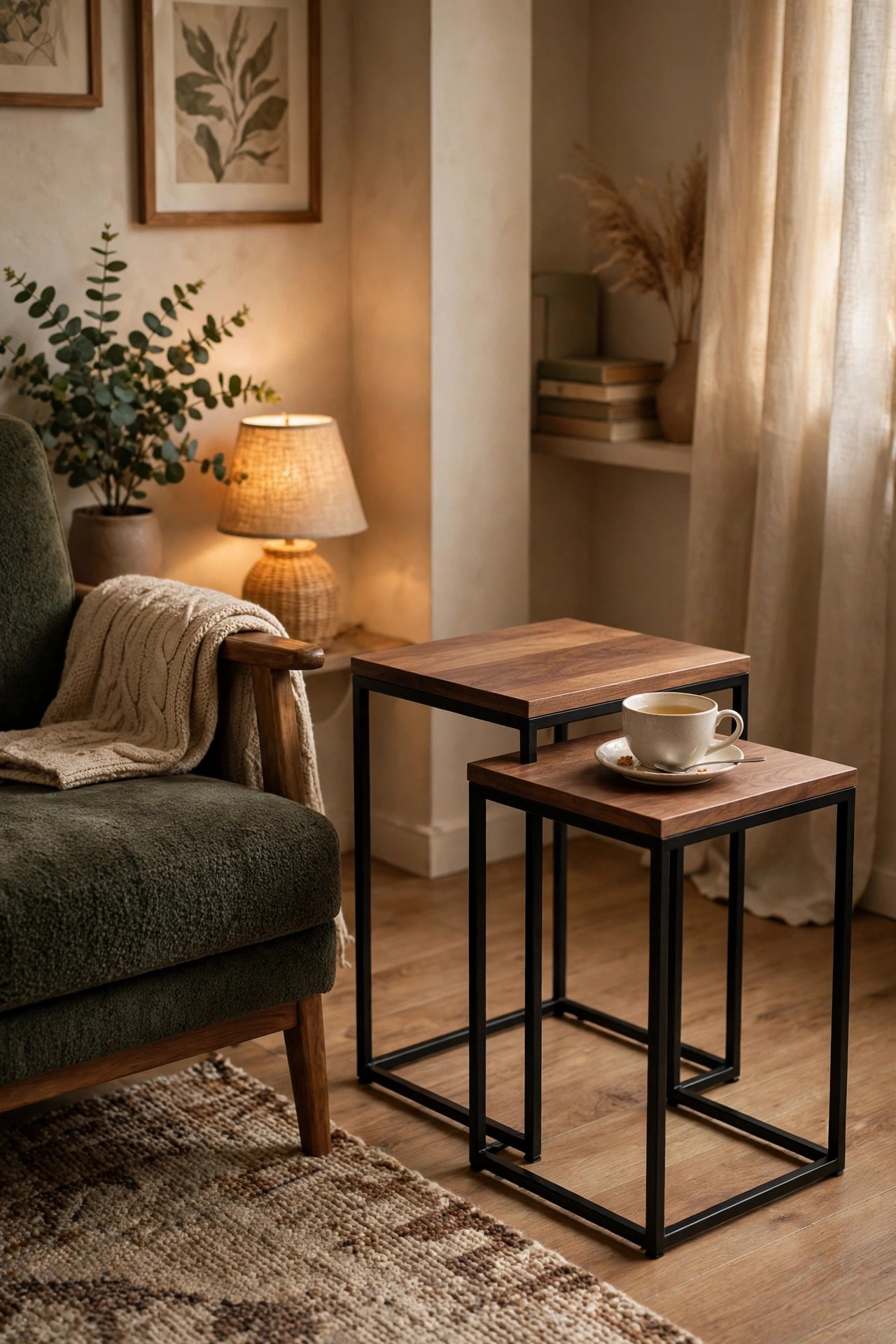
3. C-shaped slide-under table — storage that comes to you
A C-shaped table has a base that slides under the sofa and a top that hovers over your lap or right beside your thigh. It takes up almost zero extra floor space because most of its footprint is hidden under the sofa frame. Most C-tables are 10 to 12 inches wide, 16 to 18 inches deep, and 24 to 26 inches tall — just check that your sofa's under-clearance is at least 1 to 2 inches high enough for the base to slide in.
These are brilliant for laptops, tablets, and evening snacks. Prices sit around $25 to $70. The trade-off is stability: choose a wide, heavy base and do not overload the far edge with a heavy lamp. Used beside the sofa rather than as a permanent fixture, a C-table is one of the most practical small living room side table ideas for renters.
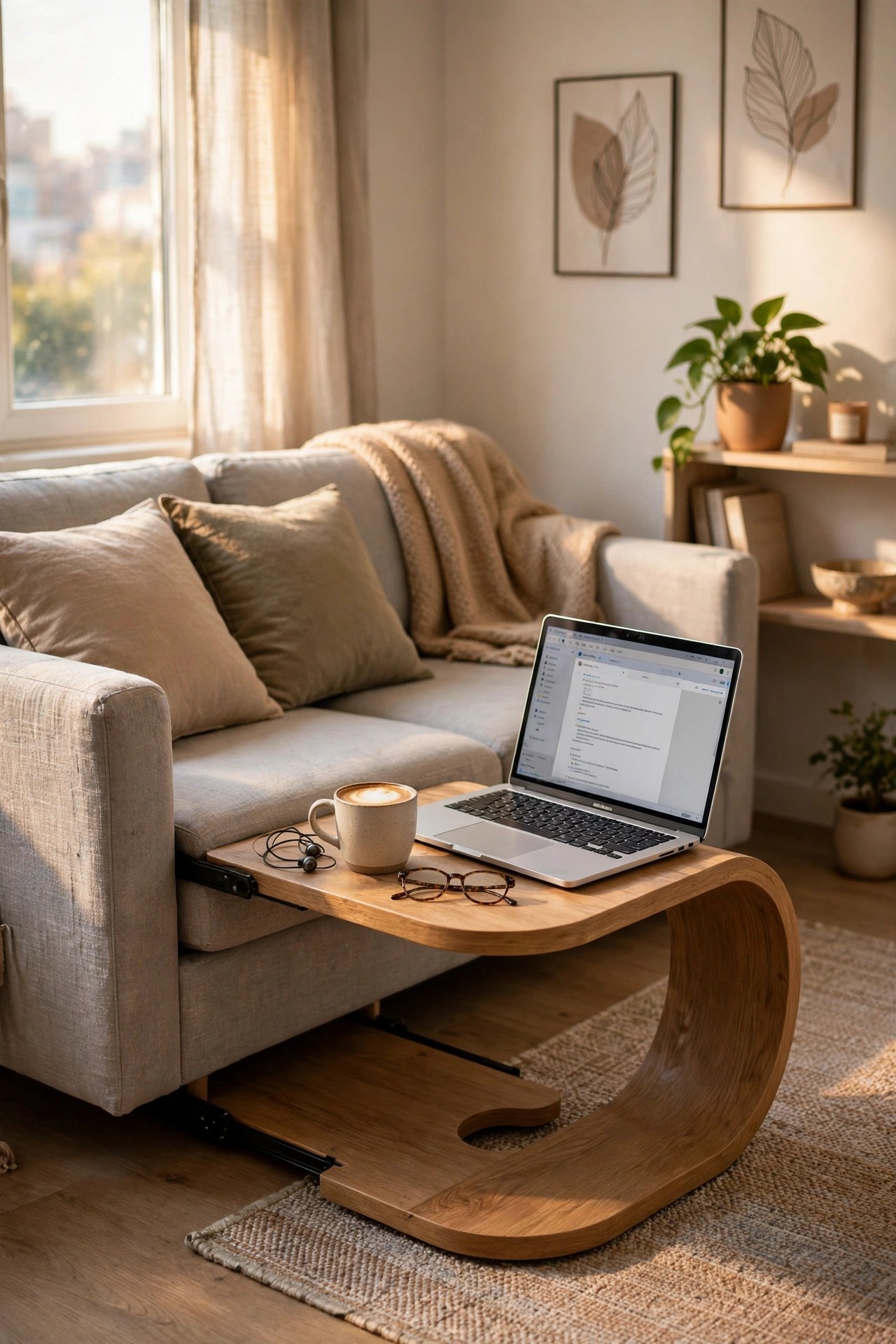
4. Single-drawer table — a home for remotes and chargers
If your sofa arm is currently buried under remotes, charging cables, lip balm, and reading glasses, you do not need a bigger table — you need a drawer. A compact drawer table, roughly 14 to 16 inches wide and 22 to 25 inches tall, gives all that small clutter a closed home, so the top stays clear for a drink and a lamp.
Look for a drawer at least 3 inches deep inside, which is enough for two remotes side by side and a coiled cable. Add a $5 to $8 drawer divider and the chaos ends. Solid options cost $55 to $120. Keep the drawer for daily items only; if you fill it with old paperwork, you are back to square one within a week.
5. Drum table with hidden storage — a whole cupboard in a circle
A drum table looks like a simple cylinder, but the top lifts off or a side door opens to reveal a hollow interior. Inside you can fit a throw blanket, a spare cushion cover, magazines, or kids' toys that need to disappear before guests arrive. Most drums are 16 to 20 inches in diameter and 18 to 22 inches tall — slightly lower than a standard side table, so check your sofa arm height first.
Metal drums run $60 to $150, while woven or wood versions can be found for $45 to $100. Because the storage is fully hidden, a drum instantly makes a small room look calmer. It is also one of the best small living room side table ideas for corners, and it pairs well with the approaches in these small living room corner ideas that turn dead space useful.
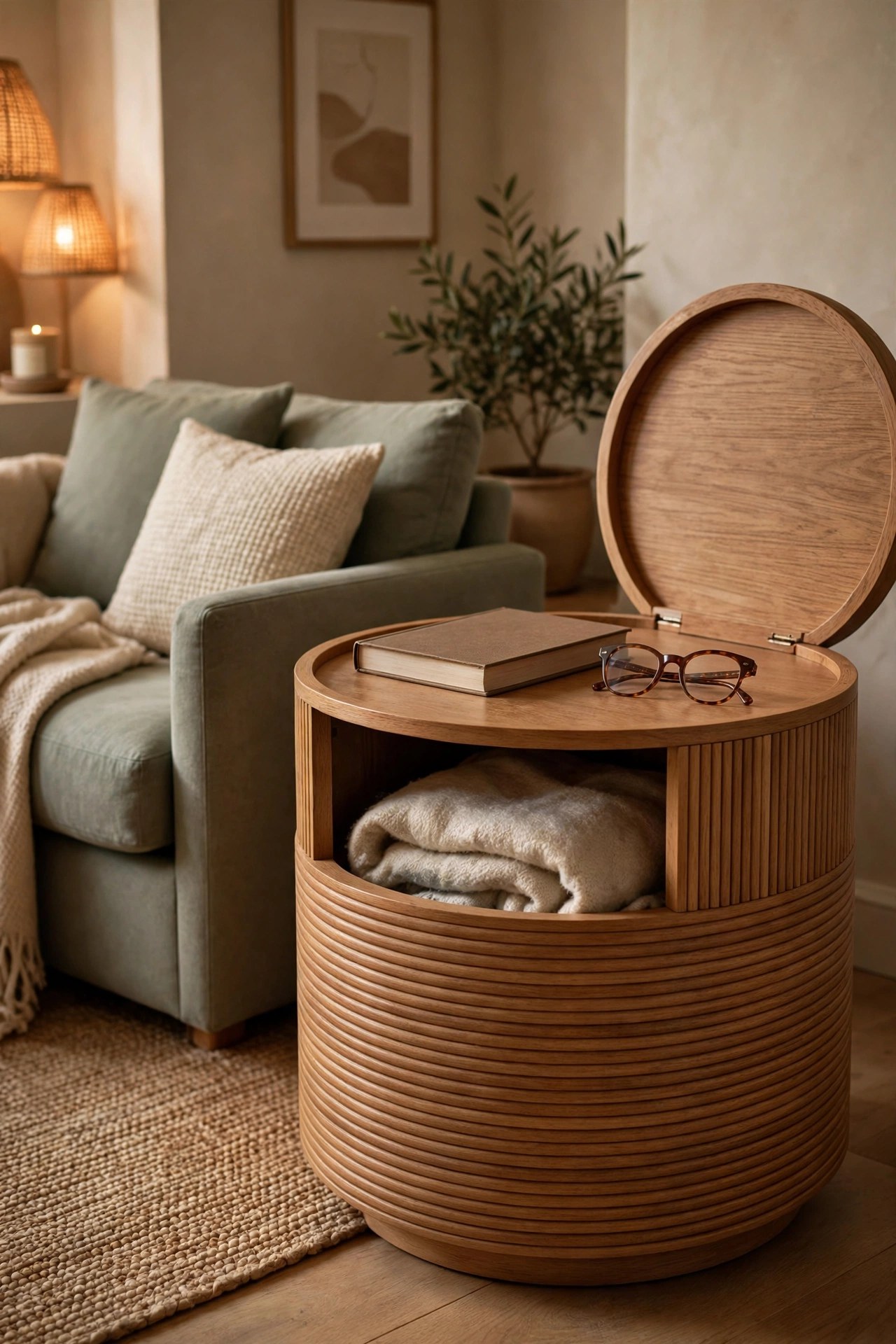
6. Three-tier open shelf table — vertical storage in a tiny footprint
When floor space is fixed, go up. A three-tier side table stacks three small shelves in a footprint of about 12 to 14 inches square, giving you a top for a lamp, a middle shelf for books, and a bottom shelf for a storage basket. Total height is usually 24 to 28 inches, so measure carefully if your sofa arm is low.
Open shelves only work if you edit them. Use one practical item, one book stack, and one small plant per shelf at most. Prices range from $30 to $85.
7. Tray-top table — a lip that stops everything sliding off
A tray-top table has a raised edge, usually half an inch to an inch high, around the whole top. That small lip stops mugs, pens, and phones from sliding off when the table gets bumped — a real risk in a small room where people squeeze past. Many tray tops also lift off completely, so the table doubles as a serving tray for movie night.
Look for a top around 16 to 18 inches across, for $30 to $90. If the tray is removable, check that it sits firmly and does not rattle. This is a good pick for households with kids or a large dog.
8. Charging side table — power built in, cables hidden
A charging table has a built-in power strip, USB ports, or a wireless charging pad in the top or back edge, so your phone and tablet charge beside you without a cable trailing across the floor to a distant outlet. Most are 15 to 18 inches wide and 24 inches tall, with a small shelf or drawer underneath.
Prices are $60 to $140, depending on whether you get USB-A, USB-C, or both. Check two things before buying: the cord length (you want at least 5 to 6 feet to reach your outlet) and whether the ports are fast-charging if that matters to you. Never drape soft furnishings over charging ports, and keep drinks on a coaster away from the powered edge — electricity and coffee should stay neighbours, not roommates.
9. Ultra-slim narrow table — for the 10-inch gap nobody uses
Many small living rooms have a useless sliver of space — 10 to 12 inches between the sofa and the wall, or beside an armchair. An ultra-slim table is built exactly for that gap. It is long and narrow, often 10 inches wide by 24 to 30 inches long, with a lower shelf for magazines or a remote caddy.
Because it is so narrow, it will not hold a large lamp, but it is perfect for a drink, a phone, and a small book. Prices are friendly, around $20 to $55. Anchor it visually with a small plant or a framed photo at the far end so it looks intentional rather than squeezed in. These slim designs prove that small living room side table ideas do not need a standard shape to work.
10. Wall-mounted floating side shelf — zero floor space at all
If there is literally no floor space beside your sofa, mount the table on the wall. A floating side shelf, typically 12 to 16 inches wide and 10 to 12 inches deep, installs at sofa-arm height and leaves the floor completely clear for cleaning and for visual breathing room. Some versions fold down flat when not in use.
Use proper wall anchors or fix into a stud — a shelf holding a lamp and drinks should be rated for at least 15 to 20 pounds. Costs are $20 to $60 plus fixings. Renters should check their lease first, and patching two small screw holes later is a five-minute job. A floating shelf is also a neat partner to the broader systems in these small living room storage ideas that add space without renovation.
11. A sturdy stool that doubles as a table — flexible and honest
A flat-topped stool is the hardest-working piece in a small home. Day to day it is a side table for a drink and a book; when guests come, it becomes an extra seat; in a pinch, it is a plant stand or a footrest. Choose a stool 14 to 17 inches in diameter and 18 to 20 inches tall, with a completely flat, stable top.
Wood and ceramic stools both work, at $25 to $90. Avoid curved or padded seats if you want to balance a mug. The lower height suits low, modern sofas best. Keep a small tray on top to protect the surface.
12. Basket-base table — soft storage under a solid top
The last idea combines a solid round or square top with a woven basket as the base. Lift the top, and the basket holds blankets, yarn, toys, or the board games that otherwise live on the floor. Most are 16 to 18 inches across and 20 to 22 inches tall, and the natural texture warms up rooms that are heavy on flat-pack furniture.
Prices run $35 to $95. Choose a basket with a sturdy frame inside so it does not sag when it is half empty, and keep heavier items at the bottom. This style suits casual, cosy rooms far better than formal ones — and that honesty about fit is exactly how you avoid buying storage you will hide in a cupboard.
How to Measure Your Space for a Small Side Table
Measuring takes five minutes and prevents the most common return in small-space furniture. Start with the sofa arm height, because that single number rules out half the tables you will see online. Write it down — do not trust memory in the shop.
Next, measure the available footprint. Mark the width between the sofa and the wall, door swing, or walkway, then subtract at least 2 inches of breathing room so the table does not scrape either side. Tape the footprint on the floor and walk past it at normal speed, carrying a laundry basket if that is your real life. If you clip the tape, the table is too big.
Then check height against use. Sit on the sofa, rest your arm naturally, and note where your hand lands. Your drink should land at roughly that height, on a surface you can reach without leaning. Finally, check outlets. A table that blocks your only nearby socket will create a cable problem worse than the clutter problem you were solving.
Common Small Living Room Side Table Mistakes to Avoid
Buying for the photo, not the seat
A table styled with one tiny vase looks elegant online, but your real table must hold real things. Before buying, list the five items that will live on it. If they do not fit the top size given, the table does not fit your life, however pretty it is.
Matching everything exactly
A side table that exactly matches your coffee table and TV stand can make a small room feel like a showroom set. Mix one material — if the coffee table is oak, a black metal or stone-look side table adds depth without clutter. Coordinated is good; identical is flat.
Ignoring the walkway
The fastest way to make a small room feel smaller is to narrow its walkways. If people have to turn sideways to pass your new table, it is too deep for that spot. Choose a narrower, C-shaped, or wall-mounted option instead, and keep the route clear.
Forgetting weight and stability
Lightweight tables tip. In a small room they get bumped more, not less. Heft the table in the shop, press firmly on one edge of the top, and check the base width. A small footprint demands a heavier, wider base to stay safe.
Styling Your Side Table Without Adding Clutter
Once the practical job is done, styling is simple. Work in three layers: something tall (a small lamp or a vase with two stems), something flat (the book you are actually reading, not a decorative stack), and something small and personal (a coaster you like, a framed photo, a candle). Then stop. Empty space on the top is not a failure — it is where your mug goes.
Keep a hard rule for drawers and hidden compartments: review them monthly. The moment a drawer becomes a junk drawer, empty it onto the sofa, keep only what you reach for weekly, and move the rest to its real home. Storage only works if it stays edited.
Budget-wise, you honestly do not need to spend a lot. A good slim, tray, or C-table can be found for $20 to $55, the mid-range drawer, nesting, and shelf options sit at $50 to $110, and only large drum or charging tables regularly reach $120 to $150. Spend first on the right size and stability; finish and brand matter far less at this scale.
Pick the idea above that matches your actual problem — nowhere to put drinks, nowhere to hide clutter, or no floor space at all — measure twice, and choose once. That is how small living room side table ideas stop being inspiration photos and start making a small room work every day.


Comments
Post a Comment