
15 Fall Charcuterie Board Ideas for Cozy Autumn Gatherings
A fall charcuterie board is really a styling project disguised as food — and these fall charcuterie board ideas treat it that way. Instead of another recipe, this is about presentation: choosing boards, building color and height, garnishing like a stylist, and setting a table that makes guests reach for their phones before they reach for the cheese. Every idea below is alcohol-free and family-friendly, built for cozy autumn gatherings from movie nights to Friendsgiving.
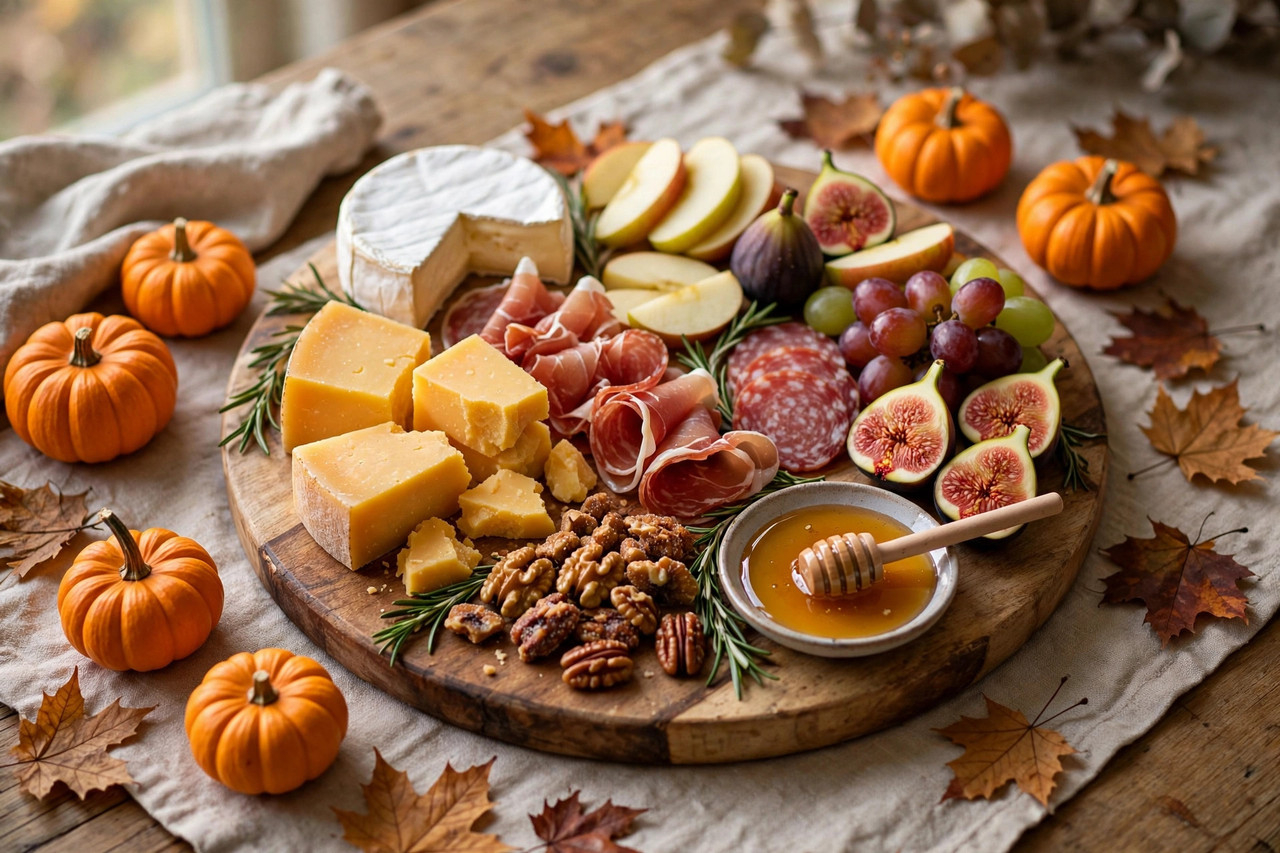
1. Start with a big wooden board — size matters
Cost: $25–$60. The board is the frame, so give yourself room: an 18-to-20-inch round acacia or olive-wood board serves 6–8 people comfortably. A board that's too small forces cramming, and crammed reads as messy no matter how good the food is. Round boards photograph best and suit fall's organic feel; rectangular boards suit longer tables. Oil a wooden board with food-safe mineral oil the night before so the grain glows — a dry, pale board dulls the whole presentation. Food stylists consistently rank the board itself as the highest-impact choice, as Homes & Gardens' grazing table guide confirms: natural wood and marble platters carry the entire look.
2. Anchor with 3–5 cheeses in varied shapes
Cost: $20–$40. Place cheeses first, spaced in a loose triangle or zigzag across the board — they are the anchors everything else flows between. Vary the shapes deliberately: a wedge of aged cheddar, a round of brie, a log of goat cheese, a block of manchego. Different silhouettes create visual rhythm; five identical cubes look like a deli tray. Slice one cheese, crumble another, leave one whole with a knife — the variety of cuts signals abundance. Keep soft cheeses whole until serving time so they hold their shape in a warm room.
3. Build the fall color story with fruit
Cost: $10–$20. Fall gives you the best board palette of the year: sliced Honeycrisp apples, fresh figs halved to show the jewel interior, red and green grapes in small clusters, pear slices, and a split pomegranate for the deep-red pop. Arrange fruit in color clusters rather than scattering — a drift of figs here, a cascade of grapes there — because grouped color photographs dramatically better. Toss apple and pear slices in lemon water for two minutes before arranging so they stay bright through the party. Dried apricots and cranberries fill small gaps and add chewy contrast.
4. Fold meats into roses and rivers
Cost: $12–$25. Flat deli slices look sad; folded meat looks styled. Make salami roses by overlapping slices around the rim of a small glass, then flipping the glass onto the board. Fold prosciutto into loose ribbons and run a "river" of them between the cheeses. Roll or rosette whatever you use — the technique takes five minutes and transforms the board from assembled to designed. For family gatherings, keep a small separate pile of plain folded turkey or ham for kids who find the fancy folds suspicious.
5. Add crunch: candied nuts and roasted pepitas
Cost: $5–$12. Every great board needs something crunchy: candied pecans, marcona almonds, roasted pepitas, or honey-roasted peanuts. Serve nuts in small mounds tucked against cheeses — they fill the awkward gaps between large items and give the board its finished, abundant look. Buy them pre-candied in fall (stores stock pumpkin-spice and maple varieties) or roast raw pecans with maple syrup and sea salt at 350°F for 12 minutes. Keep nuts in a separate small bowl if any guest has allergies, and label it.
6. Include something sweet: honeycomb and apple butter
Cost: $8–$18. A small jar of honey with a wooden dipper, a square of real honeycomb, apple butter, or fig jam gives guests a sweet-salty pairing that feels distinctly autumn. Place sweet items in tiny bowls or ramekins rather than directly on the board — spreads migrate and stain. The honey dipper left in the jar is a visual cue that practically begs to be photographed. Pair honeycomb with blue cheese and apple butter with sharp cheddar; put a tiny handwritten tag noting the pairing and guests will think you hired a caterer.
7. Garnish with rosemary, thyme, and dried orange
Cost: $3–$8. Garnish is what separates a nice board from a stunning one. Tuck fresh rosemary and thyme sprigs into every gap — the green is essential against all the amber and cream. Add dried orange slices, a few cinnamon sticks, and small whole figs for fall texture. The rule from professional stylists: if it grows from the ground, it's fair game. Keep garnishes to the edges and gaps, never piled on top of food, and skip anything inedible-looking — pinecones are for the table around the board, not on it.
8. Create height with cake stands and small bowls
Cost: $0–$30. Flat boards photograph flat. Set one small cake stand or overturned bowl on the board and build a cluster of fruit or cheese on top — a single 4-inch lift creates the dimension that makes boards look professional. Use small bowls for olives, cornichons, and dips so their brine stays contained. Vary heights across the whole table, not just the board: a tall candle, a low pumpkin, a raised platter. The eye travels up and down, and the spread feels generous.
9. Follow the one-jewel-pop color rule
Cost: $0. Beige is the enemy — cheese, crackers, and bread are all tan, so every board needs one vivid accent. In fall, that pop is pomegranate arils, fresh figs, or dark red grapes; one strong color against the neutrals is enough. If your board still looks beige after fruit, the garnish is missing — add more rosemary and a handful of dried cranberries. Step back and squint: you should see distinct zones of cream, amber, deep red, and green. If it's all one tone, rearrange before guests arrive.
10. Make individual mini boards for each guest
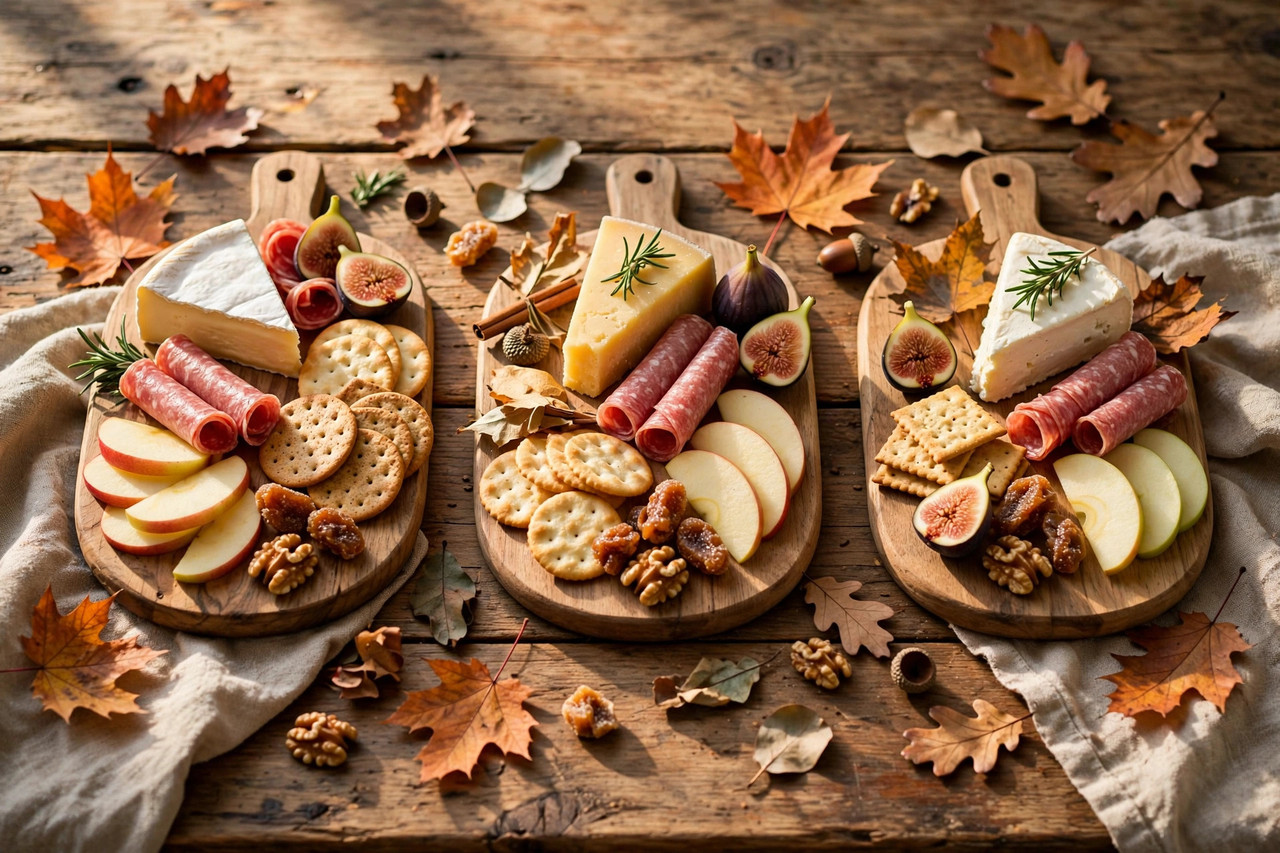
Cost: $3–$6 per board for small wood or slate boards. For seated dinners or larger parties, mini boards feel personal and luxurious: one small board per place setting with a wedge of cheese, folded meat, fruit, crackers, and nuts. They double as the table's decor — no separate place cards needed if you tie a rosemary sprig to each with twine. Buy a set of 8–12 small slate or acacia boards once and reuse them for every gathering; at $30–$50 for a set, the cost per party drops to almost nothing. This also solves the double-dipping worry elegantly.
11. Scale up to a full grazing table for crowds
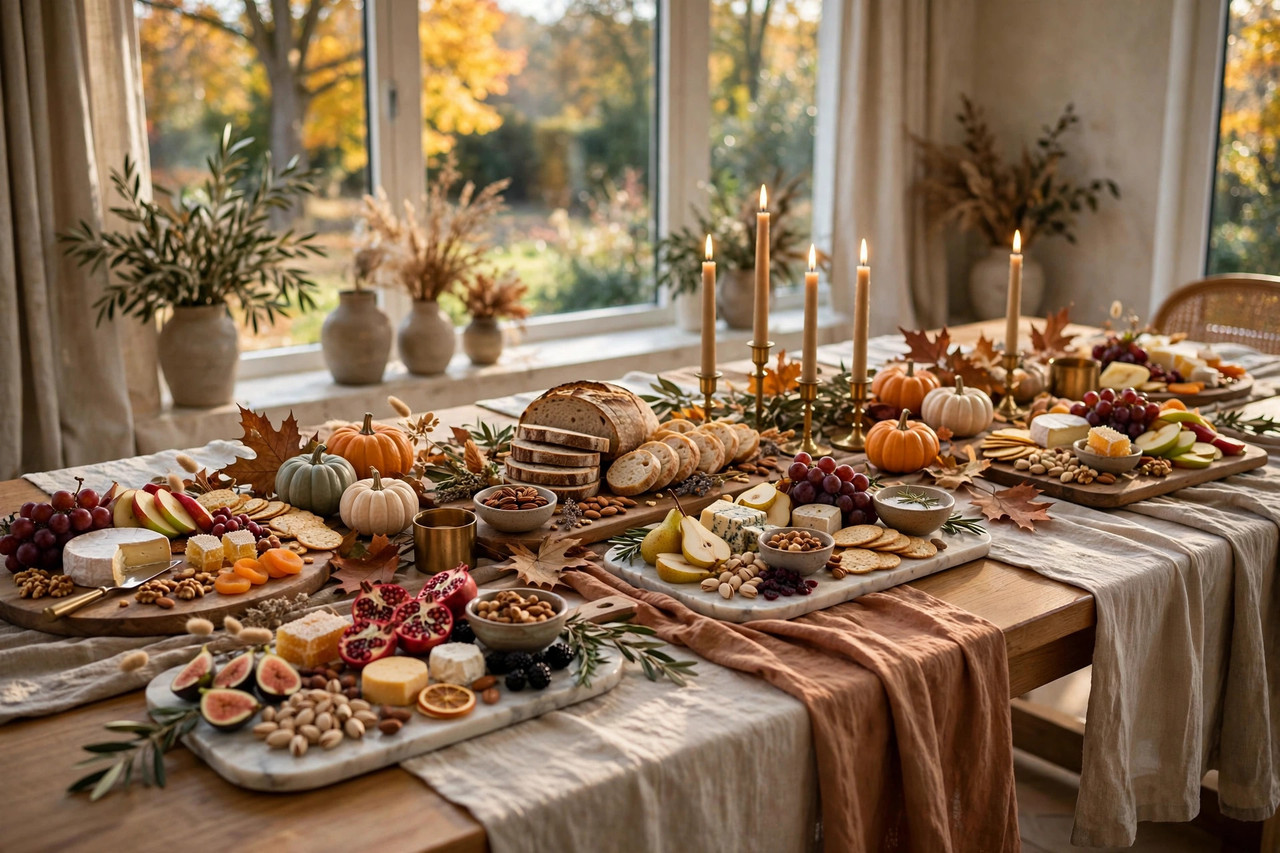
Cost: $40–$80 in extra food. For 12+ guests, skip the single board and cover the table: lay a linen runner down the center, then layer boards, platters, and bowls edge to edge with no table showing. Start with the largest items (cheese wheels, bread loaves), fill mid-zones with fruit and meat, then tuck nuts, garnishes, and small bowls into every gap. Drape eucalyptus or fall leaves along the runner first so greenery peeks through the food. A grazing table is the centerpiece and the meal in one — no separate fall centerpiece needed, which simplifies your table styling enormously.
12. Build a dessert board variant
Cost: $15–$30. After the savory board, or instead of it for afternoon gatherings: a dessert board with caramel-dipped apple slices, pumpkin-spice cookies, chocolate-covered pretzels, candied pecans, mini muffins, and bowls of whipped cream and caramel sauce. Use the same styling rules — anchors first, color clusters, height, garnish — and add one fall touch like mini meringue pumpkins. Dessert boards are the crowd-pleaser for family gatherings with kids, and they photograph even better than savory ones. Keep it nut-separated if allergies are a concern.
13. Set up a warm-drink pairing station
Cost: $10–$25. Since the table is alcohol-free, make drinks an event: a slow cooker of hot apple cider with cinnamon sticks, a hot-chocolate bar with marshmallows and crushed peppermint, and sparkling apple cider in a pretty pitcher. Style the station like part of the spread — same linen, same mini pumpkins, matching mugs. A labeled drink station ("Maple Cider," "Cocoa Bar") gives guests something to gather around while the board gets photographed. It also keeps the kitchen clear, because nobody needs to ask what's available.
14. Style the table around the board
Cost: $0–$25. The board doesn't sit in a vacuum — dress the table: a natural linen or burlap runner, scattered dried leaves, three to five mini pumpkins in varied sizes, and two or three candles in brass holders at different heights. Keep everything low around the board itself so guests can reach across; tall items go to the table's ends. This is where no-carve pumpkin decorating ideas earn their keep — painted or decoupaged mini pumpkins as table decor tie the whole autumn theme together without a single Halloween reference. Dim the overheads and let candles do the work after sunset.
15. Time it right: assemble late, serve safe
Cost: $0. The unglamorous idea that saves every board: slice and prep everything up to a day ahead (stored separately, wrapped tight), but assemble no more than 1–2 hours before guests arrive so fruit stays bright and cheese stays at its best texture. Keep crackers and bread off the board until the last 30 minutes — they go stale and absorb moisture. Remember the two-hour rule: perishable food shouldn't sit out longer than two hours, so for long parties, refresh with a second smaller board halfway through rather than one giant one. Put out small plates, napkins, and cheese knives before anyone arrives — hunting for plates mid-party breaks the spell.
Fall charcuterie board FAQs
How far ahead can I make a fall charcuterie board?
Prep components a day ahead — slice cheeses, wash fruit, make candied nuts — but assemble the board itself only 1–2 hours before serving. Fruit browns, cheese sweats, and crackers go stale, so the board is always a day-of styling job. The table decor (runner, pumpkins, candles) can be set the night before.
How much food do I need per person?
As an appetizer, plan 3–4 ounces of cheese and 2–3 ounces of meat per person, plus fruit, nuts, and crackers to fill out. As the main event (grazing table), double it. It is always better to have one abundant board than two sparse ones — fullness is the whole aesthetic.
What are good non-alcoholic pairings for a fall board?
Hot apple cider with cinnamon, sparkling apple cider, pumpkin-spice hot chocolate, and even a simple cranberry spritzer all pair beautifully with cheese and charcuterie. Serve them in a styled drink station with labels so the beverages feel as intentional as the board.
How do I keep a charcuterie board looking good all evening?
Refresh, don't rebuild: keep backup fruit, nuts, and crackers in the kitchen and top up gaps as they appear. Tuck fresh rosemary into any empty spots — greenery hides a multitude of sins. For parties over two hours, plan a second-wave mini board rather than letting the first one sit out past food-safety limits.


Comments
Post a Comment