
12 Small Living Room Console Table Ideas Behind the Sofa
The strip of floor behind a floated sofa is the most wasted space in a small living room. The best small living room console table ideas behind sofa setups turn that dead strip into a working surface: a lamp, your drink, the remote, and the charger that otherwise lives on the floor. Done right, the table also gives the sofa a finished back, so the room reads as planned instead of pushed together.
You do not need depth. You need the right depth — shallow enough to fit the gap, level with the sofa back, and long enough to look deliberate. Below are twelve setups with real depths, heights, prices, and watch-outs.
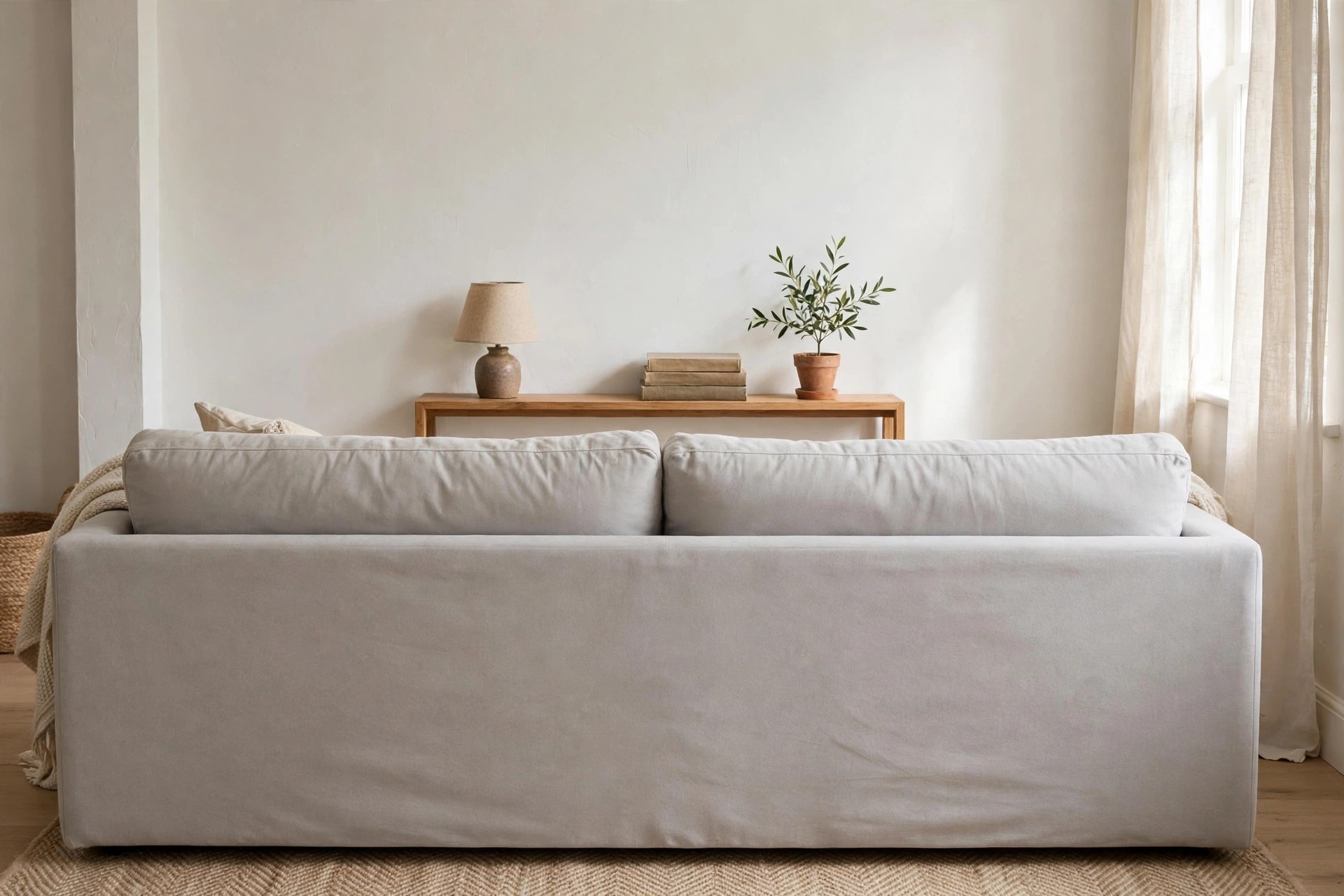
Before you measure, check the sofa position itself against our guide to small apartment living room layout ideas that feel bigger — floating the sofa only works if the walkway behind it stays clear.
Measure First: Depth, Height, Length, and the Walkway Rule
Measure the gap between the sofa back and the wall or walkway edge. Most small rooms offer 6 to 12 inches; a console needs to sit inside that, not borrow from it. Depths run from a skinny 5.5 inches up to about 12 inches — anything deeper belongs in an entryway, not behind a sofa. Height matters more than people expect: the top should land at or just below the sofa back, typically 28 to 32 inches, so lamps and drinks read as part of the seating, not a shelf looming over it.
Length is the styling secret. A table roughly two-thirds to the full length of the sofa looks intentional; a short table marooned in the middle looks like storage. Roundups like NestSorted on behind-sofa storage ideas for small spaces and Economy Home Decor on behind-couch decorating ideas agree on the shortlist: ultra-narrow tables of 5.5 to 10 inches deep, charging models with built-in outlets, and drawer consoles that hide clutter instead of displaying it.
Finally, the walkway rule: if people pass behind the sofa, keep at least 24 to 30 inches of clear floor beyond the table. If the table eats the walkway, go narrower — depth is the one dimension you can always trade away.
12 Small Living Room Console Table Ideas Behind the Sofa
Match the idea to your gap first, then to your clutter. A household drowning in remotes needs drawers; a household drowning in cables needs outlets.
1. The Classic Slim Console, 10 to 12 Inches Deep
The standard answer, and still the best when you have the full gap. A slim console 10 to 12 inches deep and 48 to 60 inches long holds a lamp, a short stack of books, and a plant without anything overhanging. Open legs keep it light. Expect $70 to $150 in wood-look laminate or metal-and-wood. Watch-out: at 12 inches deep there is no room for error — measure the gap at its narrowest point, including skirting boards.
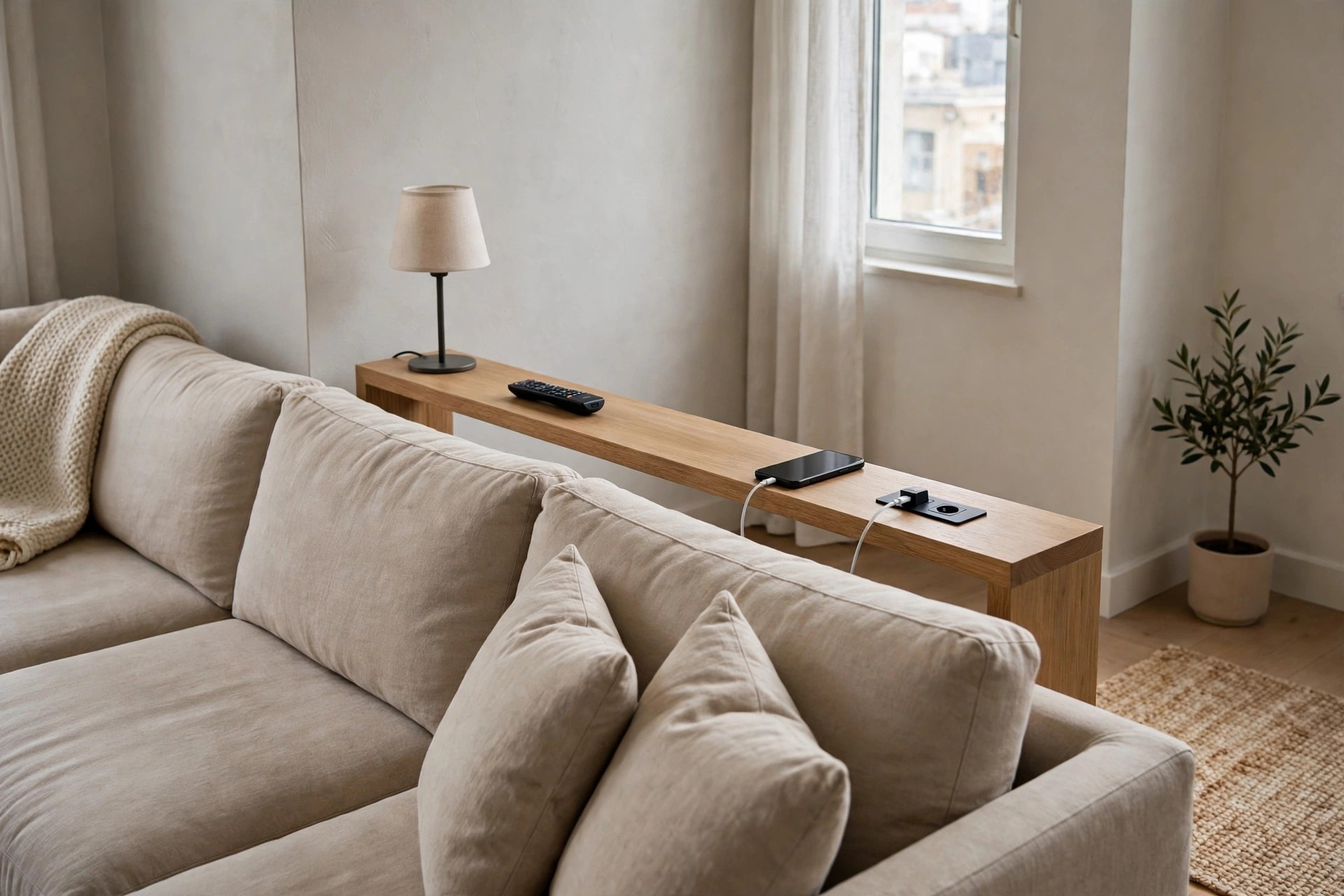
2. The Ultra-Narrow Charging Console, Under 6 Inches Deep
When the gap is barely a hand's width, go ultra-narrow. Tables as shallow as 5.7 inches deep and up to 79 inches long exist specifically for this job, many with two built-in AC outlets and USB or USB-C ports, so phones and lamps plug in without a cable crossing the floor. Expect $90 to $180. Watch-out: very long, very shallow tables can wobble — use the supplied anti-tip hardware and push the sofa back to brace it.
3. A Two-Drawer Console That Hides the Clutter
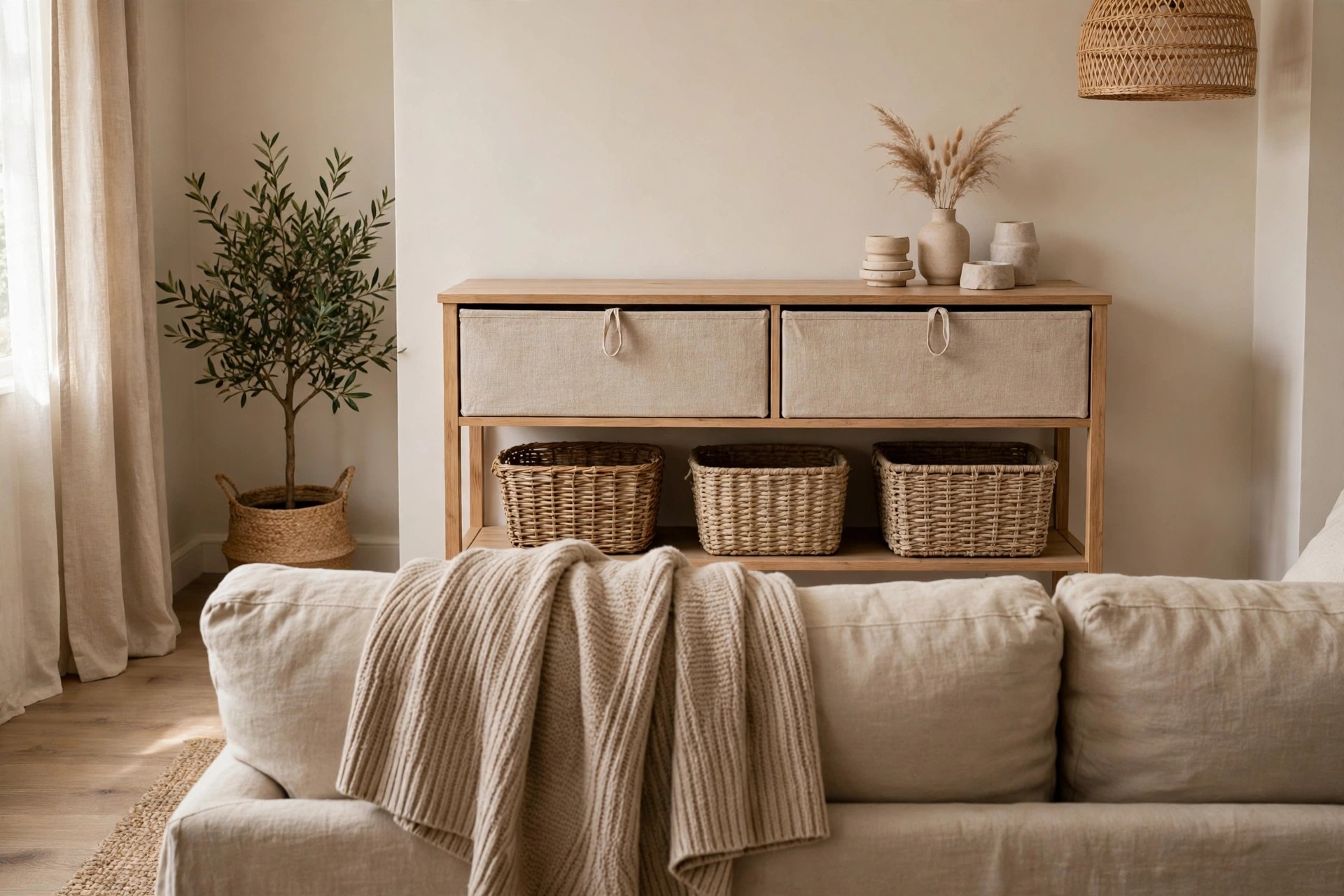
An open shelf behind a sofa becomes a junk strip within a week. A narrow console about 9.5 inches deep with two closed drawers on top and open shelves below hides remotes, chargers, and mail while the top stays styled. Fabric-drawer models run $60 to $120; solid drawers $120 to $220. The tabletop on typical models holds up to about 88 pounds, plenty for lamps and books. Watch-out: fabric drawers suit light items only — heavy hardbacks belong on the shelf below.
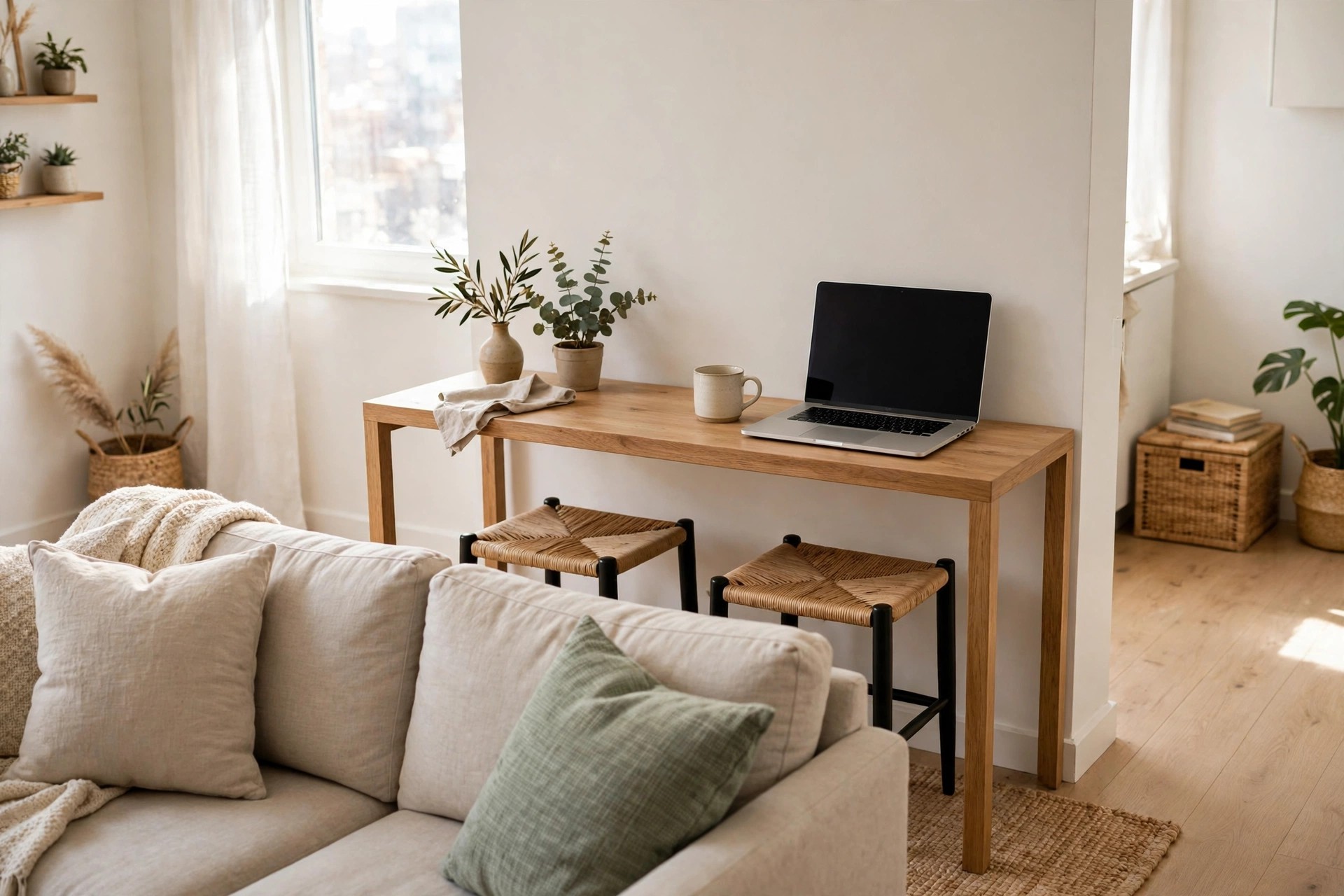
4. A Console That Doubles as a Desk or Breakfast Bar
At standard desk height, 28 to 30 inches, a longer console plus two backless stools becomes a laptop spot by day and a breakfast bar for two by morning — a favourite trick in studio apartments where a dining table will never fit. The sofa back acts as a natural divider between work and rest. Expect $150 to $350 for a sturdy 55- to 70-inch model. Watch-out: stools must tuck fully underneath, or they will colonise the walkway you just protected.
5. A Low Bookshelf Turned Sideways
A low, open bookshelf — about 12 inches deep and 24 to 30 inches high — slid behind the sofa gives you a display top and two shelves of book storage in one footprint, for $50 to $130. Watch-out: at 12 inches deep this only works with a generous gap, and the top sits below the sofa back, so choose a taller lamp to bring height back.
6. A Pair of Matching Consoles Instead of One Long Table
Long tables are hard to deliver, hard to move, and hard to match to an odd sofa length. Two identical 30- to 36-inch consoles side by side solve all three, and you can separate them later if the layout changes. Bought as a pair, expect $100 to $200 total. Watch-out: level them carefully — a visible step where the two tops meet gives the trick away.
7. A C-Table Cluster for Sofas Against the Wall
If your sofa cannot float at all, steal the idea instead of the layout: two or three slim C-tables, tops about 10 by 16 inches, slide over the sofa arms and give you the lamp-and-drink surface a console would have provided. Sets run $45 to $110. It pairs neatly with the dead-corner fixes in our small living room corner ideas that turn dead space useful. Watch-out: measure arm height first — the C-frame must clear it by an inch.
8. A Console With a Lower Shelf for Baskets
One lower shelf plus two woven baskets, each roughly 12 by 9 inches, swallows throws, games, and the charger tangle while looking like decor. Consoles with a full lower shelf run $80 to $170. Watch-out: baskets wider than the shelf depth look stuffed; keep them an inch narrower than the shelf on every side.
9. A Wall-Mounted Floating Shelf Behind the Sofa
Zero floor footprint: a wall shelf 8 to 10 inches deep, mounted so its surface sits just below the sofa-back height, does the console's job where the gap is only a few inches. A 48- to 60-inch oak or laminate shelf costs $35 to $90 plus rated brackets. Watch-out: fix into studs or proper hollow-wall anchors — a shelf holding lamps and books is not a picture ledge.
10. A Bench-Style Console for a Softer Look
A low upholstered or wooden bench, 12 to 14 inches deep and 18 to 20 inches high, tucks behind shorter sofas as extra seating first and surface second — pull it out when guests come. Expect $70 to $160. Watch-out: a bench sits well below sofa-back height, so it works for plants and books, not for a reading lamp you plan to use from the sofa.
11. A Glass-Top Console That Disappears Visually
In the smallest rooms the problem is visual weight, not inches. A glass top on a slim metal frame, 10 inches deep, holds the same lamp and books as a wooden table while the eye reads straight through it. Expect $90 to $200. It is the same lightening trick we use on the wall in our small living room TV wall ideas — less visual bulk, same function. Watch-out: glass shows every cable, so pair it with a cord cover along the back leg.
12. A Vintage or Second-Hand Find Cut to Fit
Narrow hall tables, old sewing-machine bases, and long plant stands turn up second-hand for $20 to $60 and often have exactly the shallow depth new furniture lacks. Sand, paint, and set the height with risers or trimmed legs. Watch-out: check for wobble and woodworm first — repairs are far harder once it is in the gap.
Quick Picks by Gap and Budget
Measure the gap, then spend in this order:
- Gap under 6 inches: ultra-narrow charging console (idea 2) or a wall-mounted shelf (idea 9). Total roughly $60 to $180.
- Gap of 8 to 12 inches: classic slim console (idea 1) or the two-drawer clutter-hider (idea 3). Total roughly $70 to $220.
- Studio or open-plan room: desk-height console with stools (idea 4) or the sideways bookshelf (idea 5). Total roughly $120 to $350.
- Under $60 total: a second-hand find (idea 12) or a C-table set (idea 7).
- Best single upgrade: built-in charging. One outlet strip in the table ends the floor-cable problem permanently.
Mistakes That Make a Behind-Sofa Table Look Wrong
Buying too deep. A standard 16- to 18-inch-deep console forces the sofa into the room and the walkway into the table. Behind a sofa, 12 inches is the ceiling and 6 to 10 inches is the sweet spot.
A table taller than the sofa back. A top that pokes above the cushions breaks the line of the room. Match the back height or sit just below it — 28 to 32 inches covers most sofas.
Styling the whole length. Objects end to end read as clutter. Work in groups — lamp, stack, plant — and leave roughly a third of the top empty.
No plan for cables. A lamp and two chargers mean three cords dropping behind the sofa. Choose a charging model, or fit a simple cable channel down one leg on day one.
Forgetting the lamp scale. A small table needs a lamp with presence: a shade roughly 10 to 14 inches across. A tiny lamp on a long table looks lost and lights nothing.
Frequently Asked Questions
How deep should a console table behind a sofa be?
Between 6 and 12 inches for small rooms. Ultra-narrow charging models go as shallow as 5.7 inches; classic slim consoles sit at 10 to 12 inches. Measure your actual gap first — the table must fit inside it with the sofa in its final position.
How tall should a behind-sofa console be?
At or just below the sofa back, typically 28 to 32 inches. Desk-height models are 28 to 30 inches, which is why they double as work surfaces so well. Much taller looks disconnected; much lower disappears behind the cushions.
Can you put a console behind a sofa that is against the wall?
Only if you can spare 6 or more inches — pull the sofa forward by the table's depth and the room loses almost nothing visually. If you cannot spare the inches, use C-tables over the arms (idea 7) for the same lamp-and-drink function.
What should you put on a behind-sofa console?
A lamp at one end, a short stack of books or a tray in the middle, and one plant or vase — grouped, with empty space between. Add closed storage below for remotes and chargers, and the top stays calm.
Start with the tape measure: gap depth, sofa-back height, sofa length. Pick the idea that matches all three, solve the cable question on day one, and the dead strip behind your sofa becomes the hardest-working surface in the room. For more small-room upgrades, browse our full Living Room collection.


Comments
Post a Comment