
12 Small Living Room TV Wall Ideas That Make the TV Belong
A TV in a small living room can easily look dropped in at the last minute — a big black rectangle, tangled cords, and a stand that eats half the floor. These small living room TV wall ideas are about one simple shift: treat the TV as part of the wall, not furniture pushed against it. Get the height right, keep the console slim, give the screen company, and hide the mess behind it. The room will feel calmer and a little bigger.
Most ideas below cost under $150, several cost nothing but an hour and a tape measure, and all have rental-friendly versions. Start with the measurements, then pick three or four ideas that fit your layout.
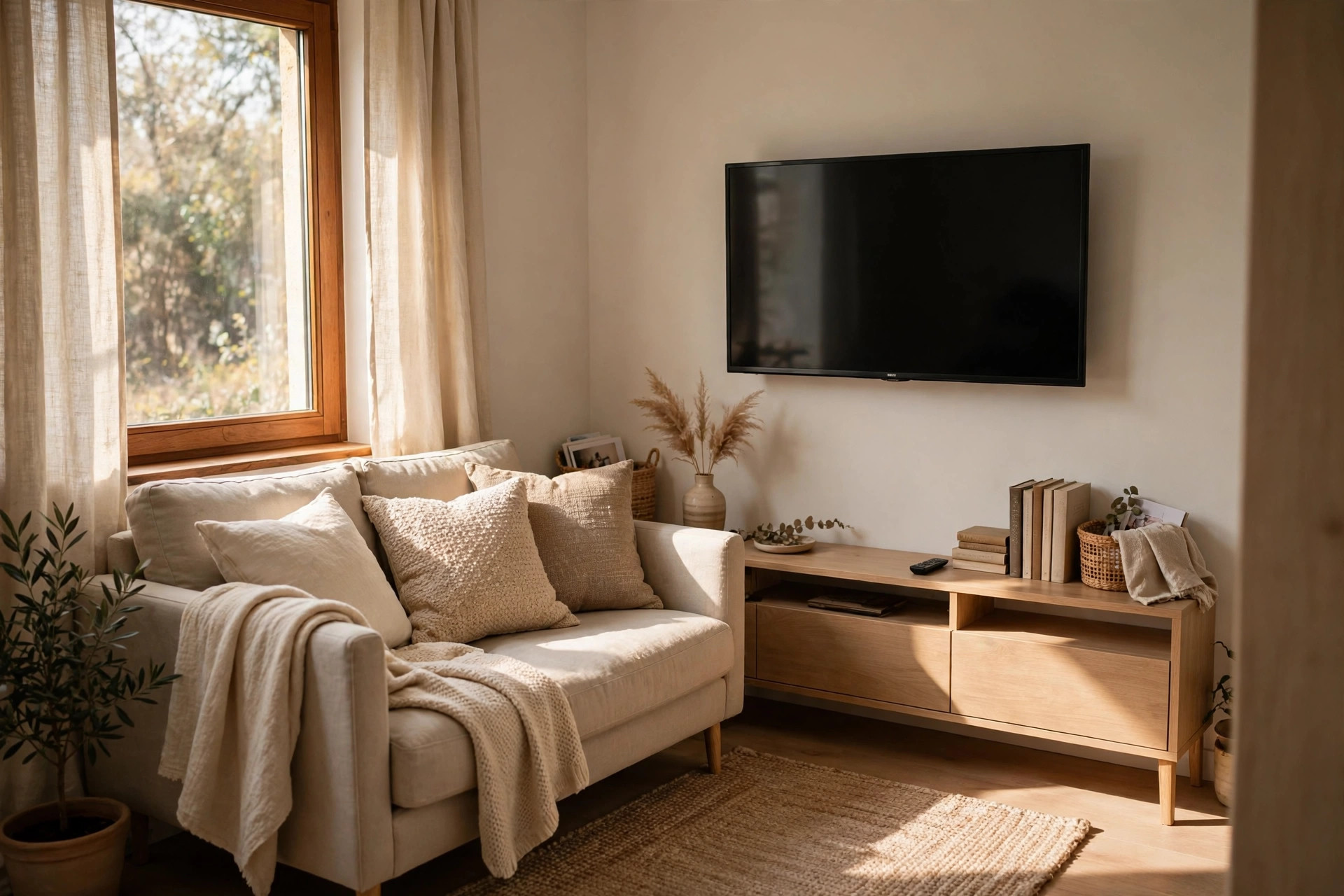
Plan First: Measurements That Make a TV Wall Work
Most TV walls look wrong because the numbers are off: the screen is too high, the console too deep, or the sofa too close. Fix the numbers first.
- Centre of the screen: 42 to 48 inches from the floor for seated viewing. Sit on your sofa and aim for your eye level.
- Gap above a console: 4 to 6 inches between the top of a low console and the bottom of the screen.
- Console depth: 12 to 16 inches is plenty for a soundbar and remotes.
- Viewing distance: about 1.5 times the screen diagonal. A 55-inch TV wants roughly 6.9 feet; a 43-inch TV is happy at about 5.4 feet.
- Walking clearance: keep 2 to 3 feet between the console and the sofa or coffee table.
- Side breathing room: at least 6 inches between the TV edge and a doorway, window frame, or tall bookcase.
Guides from The Spruce on small living rooms with a TV and Enhanced Home's small room TV guide agree: scale and placement matter more than expensive furniture.
12 Small Living Room TV Wall Ideas for a Screen That Belongs
The first ideas fix placement, the middle ones fix appearance, and the last ones add the details that make guests stop noticing the TV at all.
1. Wall-Mount the TV at Eye Level, Not Fireplace Height
A flat mount costs $25 to $45 and is the biggest upgrade for a small room. It frees the console top, removes the chunky stand, and holds the screen just 1.5 to 2.5 inches from the wall. Tape a cardboard outline at the 42 to 48 inch centre before drilling, and face it for one evening. If your neck hurts looking at cardboard, the real screen will hurt too. Renting? Choose a minimal-screw mount rated for your screen, and keep the original stand for move-out day.
2. Choose a Slim, Low Console — or Skip It Altogether
A low console, 18 to 22 inches high and 12 to 16 inches deep, grounds the TV without crowding the room. Long and low beats short and tall: a 59-inch console under a 55-inch TV looks deliberate. No floor space? Mount the TV, add one floating shelf for a soundbar, and move boxes to a side cabinet. If storage is the real problem, our small living room storage ideas that actually work pair well with this setup.
3. Blend the Screen With a Dark Wall or a Frame
A black screen on a white wall will always shout. Paint just the TV wall deep charcoal, navy, forest green, or warm black, and the screen melts into it when off. One gallon, $35 to $55, covers most single walls in two coats. Choose matte or eggshell; gloss reflects windows. The other route is a frame-style TV or add-on frame, $80 and up, which makes the screen read as artwork. Renters can use removable dark wallpaper behind the TV instead.

4. Build a Gallery Arrangement Around the TV
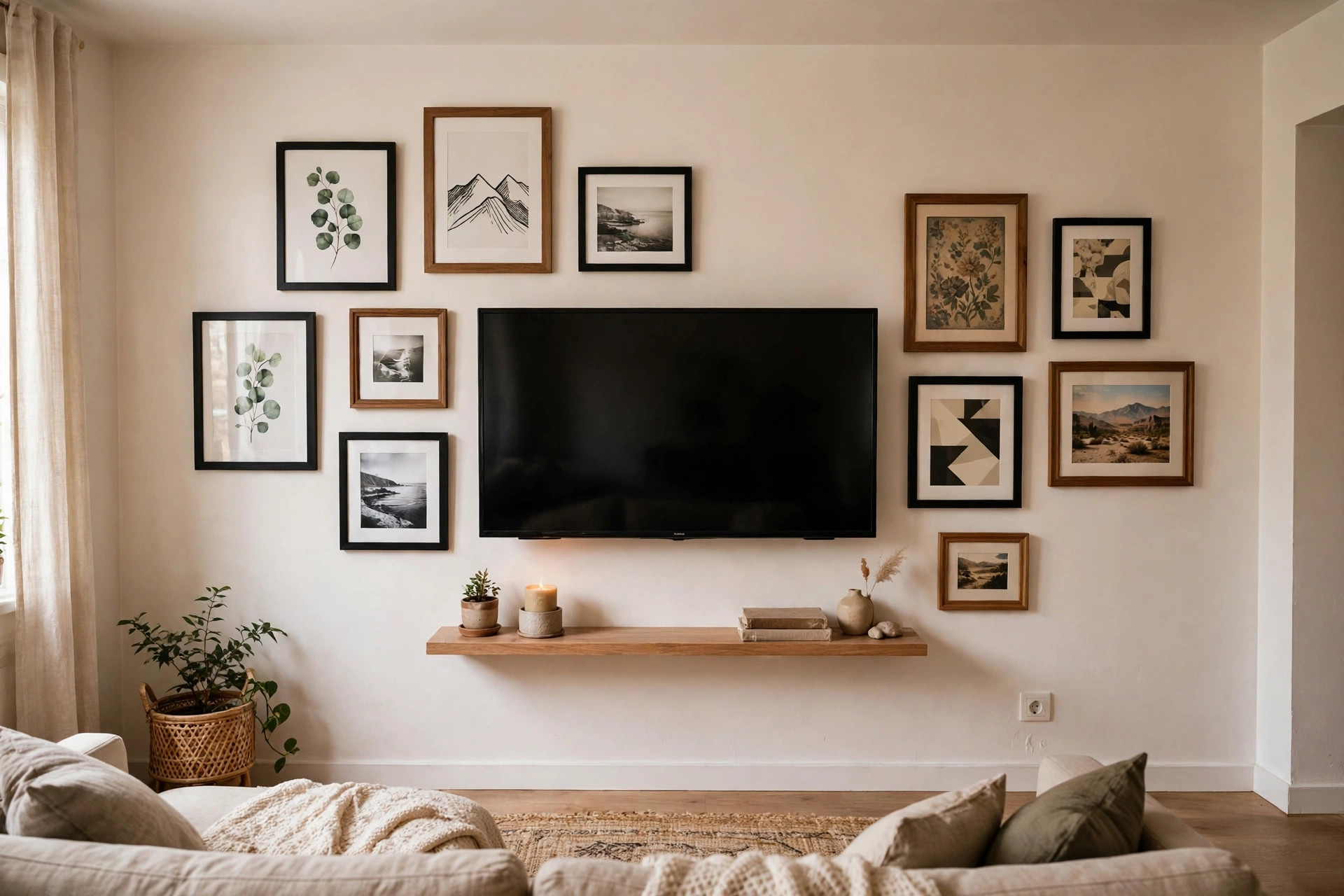
Instead of hiding the TV, give it company. Hang framed prints and photos around the screen so it becomes one rectangle among many. Keep frames in one or two finishes, leave 2 to 3 inches between pieces, and make the arrangement wider than the TV itself. Lay it all on the floor and photograph it first. Our small living room gallery wall ideas show layouts that balance a dark screen with lighter art.
5. Add Floating Shelves to Balance the Screen
One or two floating shelves, 24 to 36 inches long, break up the flat wall and hold what you actually want to see: a small plant, a short stack of books, a ceramic bowl. Place a shelf to one side, not centred above the TV. Slight asymmetry looks relaxed and stops the wall becoming a shrine to the screen. Most $30 to $60 shelves hold 15 to 25 pounds in studs. Keep the middle mostly empty; crowded shelves make a small room feel smaller.
6. Hide Every Cable — In the Wall or Behind a Painted Cover
Visible cords undo all the work above. An in-wall cable kit, $50 to $70, routes power and HDMI behind drywall between openings behind the TV and near the outlet, using recessed plug plates. It takes about an hour; check local rules and your lease first. The rental-friendly option is a surface cord cover, $12 to $20, painted the exact wall colour, running straight down from the centre of the TV. One painted line disappears. Three loose black cables never will.
7. Use LED Bias Lighting Behind the Screen
A warm LED strip behind the TV, at 2700 to 3000K, softens the contrast between a bright screen and a dark room, so evening viewing is easier on your eyes. It also makes the TV look like it floats, which reads as intentional. USB strips that plug into the TV cost $15 to $25 and switch on with the screen. Stick the strip an inch in from the edges on the back panel so light spreads evenly. Skip colour-changing modes; warm white looks grown-up.
8. Try a Corner Placement When the Main Wall Is Too Short
If windows, doors, and a fireplace chop up every wall, a corner setup can be the honest answer. Use a corner mount or narrow corner console, angle the sofa to face it, and remember the distance rule: corners put seats closer than you think, so a 43-inch TV can beat a 55-inch one here. Soften the angle with a tall plant or floor lamp behind the console, and run the cord cover down the corner seam, where the eye expects shadow.
9. Add Low Baskets and Closed Boxes for Remotes and Clutter
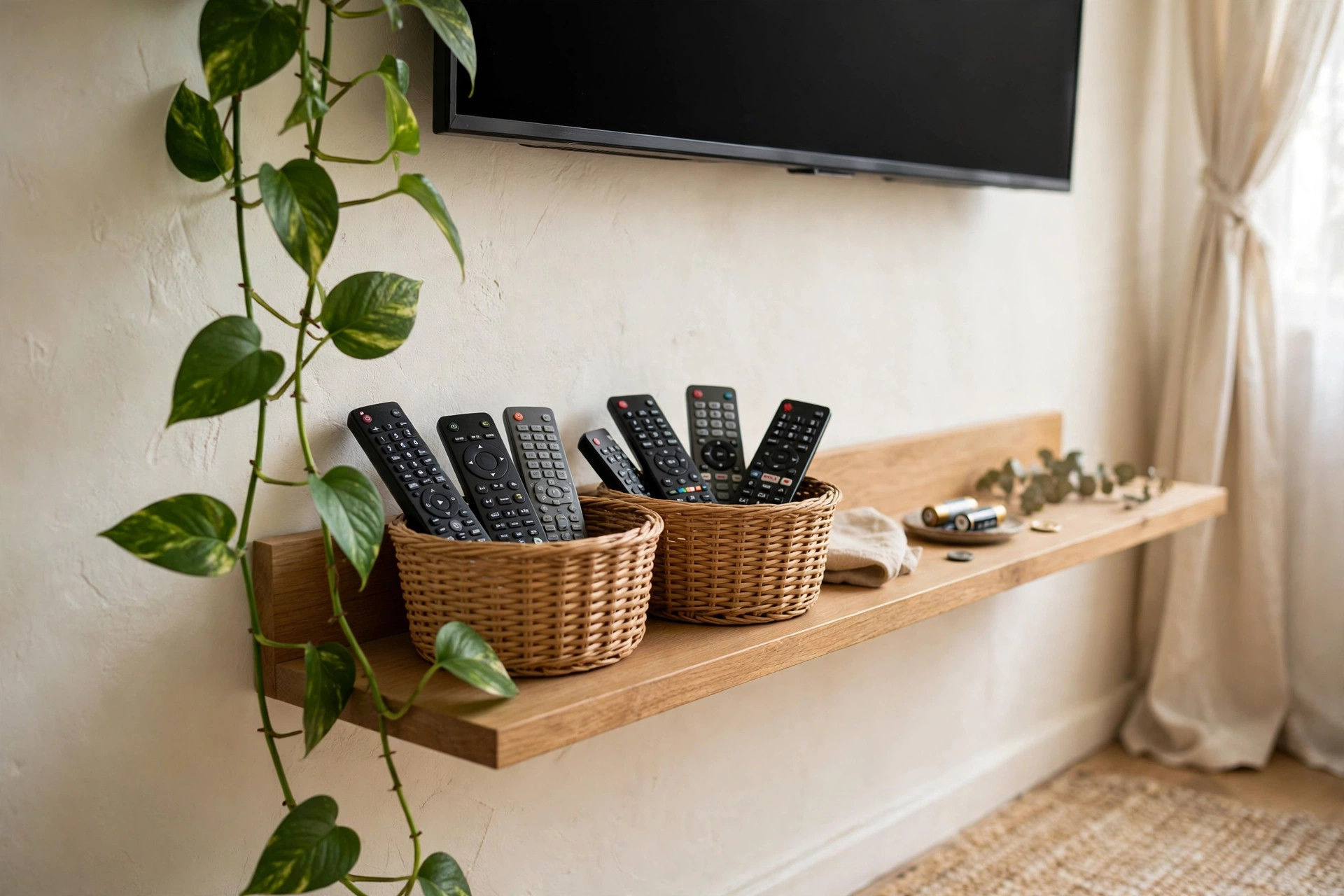
Remotes, chargers, and controllers make a tidy wall look untidy by 7 p.m. Give them one closed home: a lidded basket, roughly 12 by 8 inches, on or inside the console. It holds four remotes and two controllers with room to spare. Woven baskets cost $15 to $30 and add needed texture. Make it a rule: if it controls the TV, it sleeps in the basket. Chargers live there too, fed by one short power strip inside the console.
10. Soften the Edges With Plants and Textiles
A TV wall is all hard lines and glass. One plant changes that: a trailing pothos on a shelf, a medium floor plant at the end of the console, or a small tree in the corner breaks the rectangle pattern. Textiles help with sound, too. A rug, curtains, and a throw reduce the slight echo small hard rooms give a TV soundtrack, so dialogue sounds clearer at lower volume — which your neighbours will appreciate as much as you do.
11. Use Panelling, Slats, or a Simple Trim Frame Behind the TV
A defined zone tells the eye where the TV area starts and ends. Wood-look slats, peel-and-stick panelling, or a simple rectangle of trim moulding can do it. Keep the zone 8 to 12 inches wider than the TV each side, from console height to a foot above the screen. Trim moulding costs $25 to $40 plus paint and reads as architecture once painted the wall colour. Slat panels cost $90 and up. Keep it shallow; deep feature walls steal inches.
12. Match the TV Size to the Room, Even If a Bigger One Is on Sale
The commonest small-room mistake is buying the deal instead of the size. Under 5 feet of viewing distance suits a 40 to 43 inch TV; 5 to 7 feet suits 50 to 55 inches; a 65-inch screen needs about 8 feet. A slightly smaller TV, well placed, looks more expensive than an oversized one squeezed in, and fits mounts and consoles more easily. Already own the big TV? Ideas 3, 4, and 11 are your best tools for calming it down.
Quick Picks: What to Buy First, by Budget
- Under $30: a painted cord cover, a lidded remote basket, and an hour fixing the height. This trio removes most visual mess in one afternoon.
- $30 to $75: a slim wall mount and a warm LED bias light strip. The TV sits flat, glows softly at night, and the console top clears.
- $75 to $150: an in-wall cable kit, or a long, low second-hand console 12 to 16 inches deep. Measure depth twice; sellers most often get that number wrong.
- Best single splurge: paint for one dark wall, or a TV frame if you cannot paint. Both fix the shouting black rectangle, from opposite directions.
Start with cables and height this weekend: they cost least and fix what your eye notices first. Then browse our full Living Room ideas collection for the layout closest to your room shape. A mirror beside the screen softens the whole wall — see our living room mirror ideas for sizing and placement.
Mistakes That Make a Small TV Wall Look Worse
- Hanging it too high. If you look up from the sofa, the mount is wrong, however level it looks standing up.
- A deep, bulky entertainment centre. Old 20-inch-deep units were built for tube TVs. They eat floor space and make flat screens look lost.
- Centring everything on the TV. Perfect symmetry turns the wall into an altar. Offset shelves and art keep it a living room first.
- Leaving cords as an afterthought. Loose cables are the fastest tell that a setup was never finished.
- Filling every inch around the screen. A small wall needs empty space to breathe.
- Gloss paint and bright white backlighting. Both create glare. Matte walls and warm 2700 to 3000K light keep nights comfortable.
A small TV wall works when the screen stops being the loudest thing in the room. Right height, slim furniture, hidden cables, and a little company around the screen — that is the whole formula. Pick three ideas, measure twice, and give the wall one weekend afternoon. The next movie night will feel different, and so will every ordinary evening in between.


Comments
Post a Comment