
13 Living Room Mirror Ideas That Bounce Light and Style
13 Living Room Mirror Ideas That Bounce Light and Style
Living room mirror ideas are the fastest way to make a room feel brighter, bigger, and more finished — without buying new furniture. A well-placed mirror does three jobs at once: it borrows light from the window and throws it deeper into the room, it creates the illusion of extra square footage, and it fills a blank wall with something more interesting than another framed print. These living room mirror ideas cover every placement that actually works, with the sizing and hanging rules that separate a designer-looking result from a mirror that just hangs there.
The 5 Mirror Placement Rules (Read Before You Hang Anything)
Every mirror below works because it follows the same five rules. Get these right and almost any mirror looks intentional.
1. Reflect something worth doubling. A mirror doubles whatever sits opposite it — a window, a plant, a beautiful lamp. It also doubles clutter, a blank wall, and the TV. Stand where the mirror will hang and look at the opposite wall: if you wouldn't frame that view as a photo, move the mirror.
2. The two-thirds rule. A mirror hung over a console, sideboard, or sofa should be about two-thirds the width of the furniture below it. Wider and it overwhelms; narrower and it looks like an afterthought.
3. Eye-level center. The center of the mirror should sit around 57 to 60 inches from the floor — average eye level. Above a console or mantel, leave 6 to 10 inches between the furniture top and the mirror's bottom edge.
4. Bigger than you think. In small living rooms, the most common mistake is a mirror that's too small. An oversized mirror reads as architecture and visually pushes the wall back; a tiny decorative mirror just adds clutter. When in doubt, size up.
5. One statement or one cluster — not both. A single large mirror is a focal point. A gallery of small mirrors is a focal point. One large mirror plus a gallery on the same wall is visual noise. Pick a lane per wall.
13 Living Room Mirror Ideas
1. The Oversized Leaner Behind the Sofa
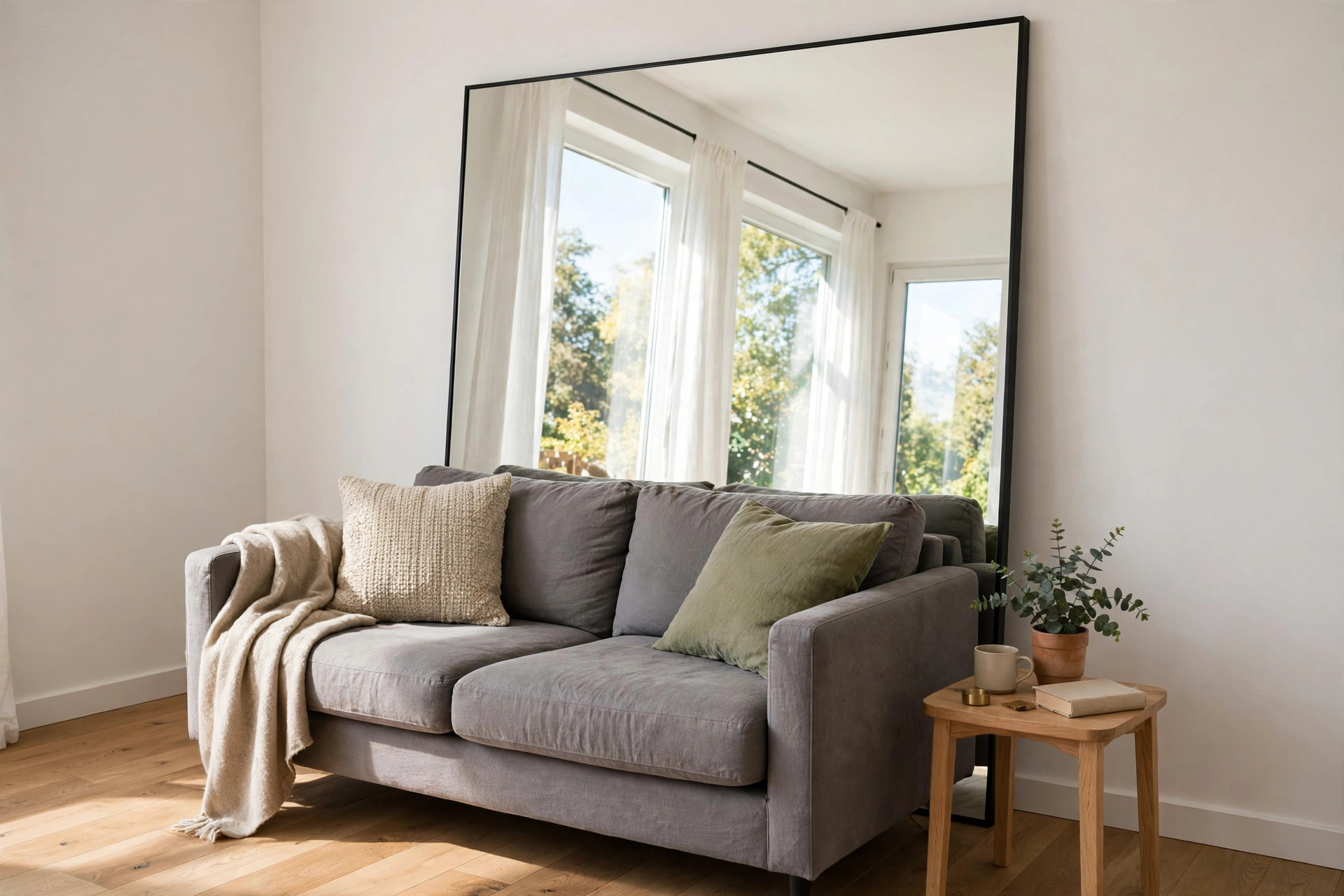
Lean a tall, oversized mirror (at least 60 inches high) against the wall directly behind the sofa, slightly off-center. No drilling, no hardware — perfect for renters — and the reflection doubles the seating area so the room reads twice as deep. Anchor the bottom with the sofa back so it can't slide, and keep the lean angle shallow, about 5 degrees off the wall.
2. A Round Mirror Over the Console
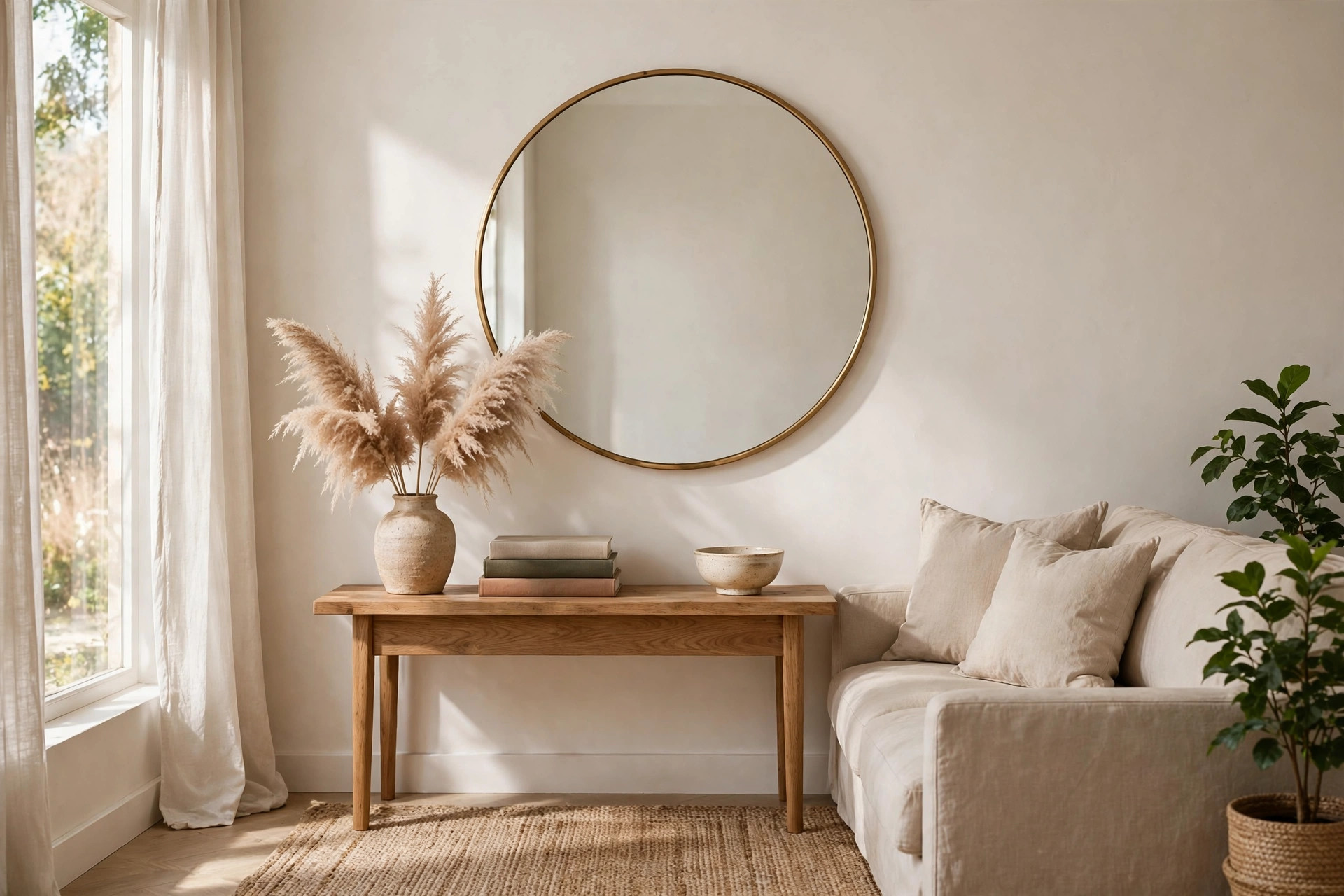
The classic for a reason: a large round mirror (36 to 42 inches in diameter) centered over a console table, sized to two-thirds of the console's width. The circle softens all the rectangles in the room — sofa, rug, TV — and gives you a natural styling surface below for a vase, a stack of books, and a small bowl. This is the single highest-impact living room mirror idea for an entry-facing wall.
3. The Opposite-Window Trick
Hang or lean a mirror on the wall directly opposite your largest window and you've effectively added a second window. The mirror catches daylight and throws it back across the room, which is why this is the first move designers make in dark living rooms. It works best with a simple, thin-framed mirror — the frame should disappear so the reflection reads as pure light. Pair it with the layered lighting approach in our cozy living room lighting ideas for small apartments and a dim room can feel genuinely bright.
4. A Mirror Gallery Wall
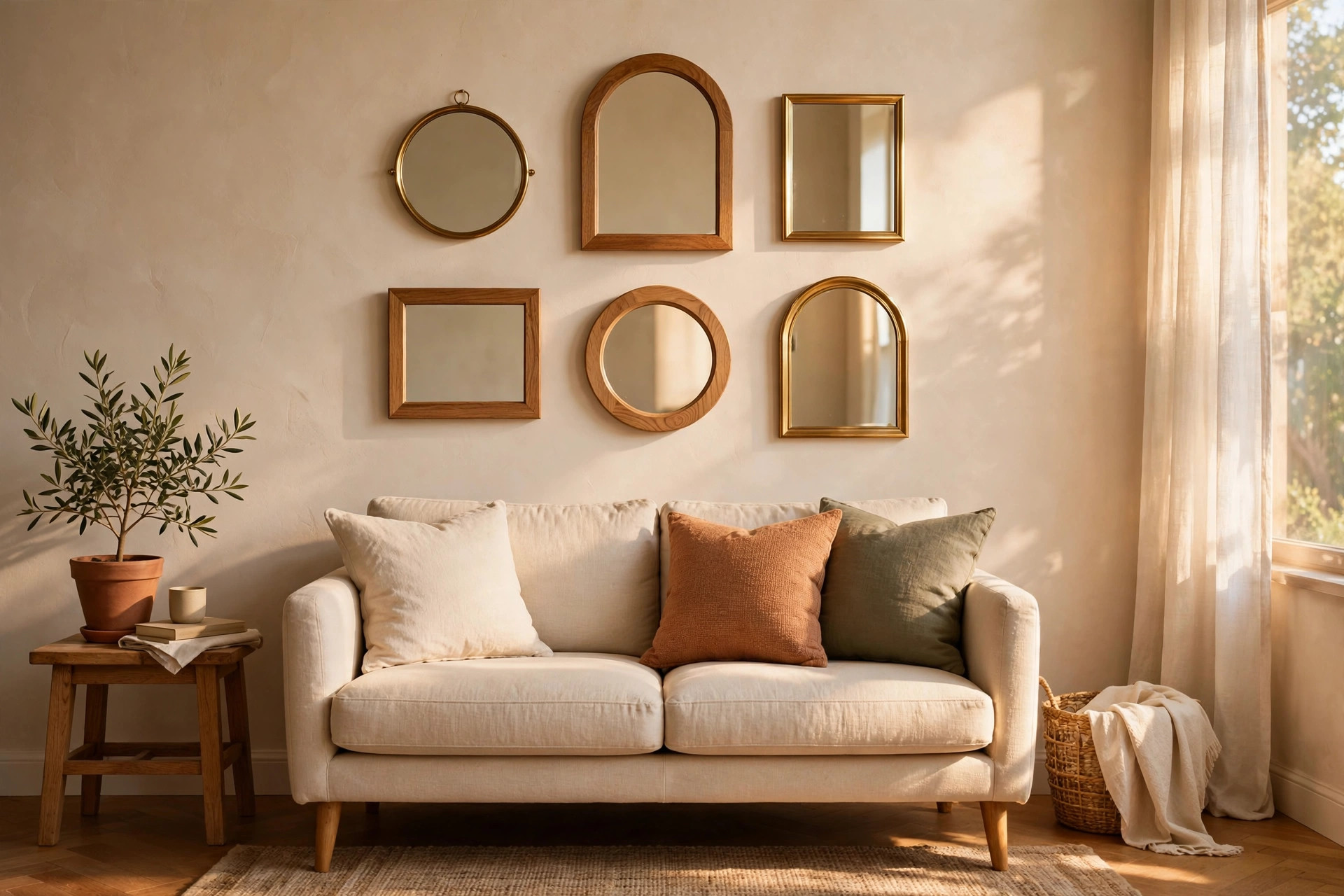
Cluster five to seven small mirrors in mixed shapes — round, arched, rectangular — with frames in one shared finish (all brass, all black, all wood). Keep 2 to 3 inches between frames and map the arrangement on the floor first. A gallery wall works where one big mirror would feel heavy, like a narrow wall beside a doorway, and it lets you collect mirrors over time instead of committing to one expensive piece.
5. The Arched Mirror (the Boxy-Room Softener)
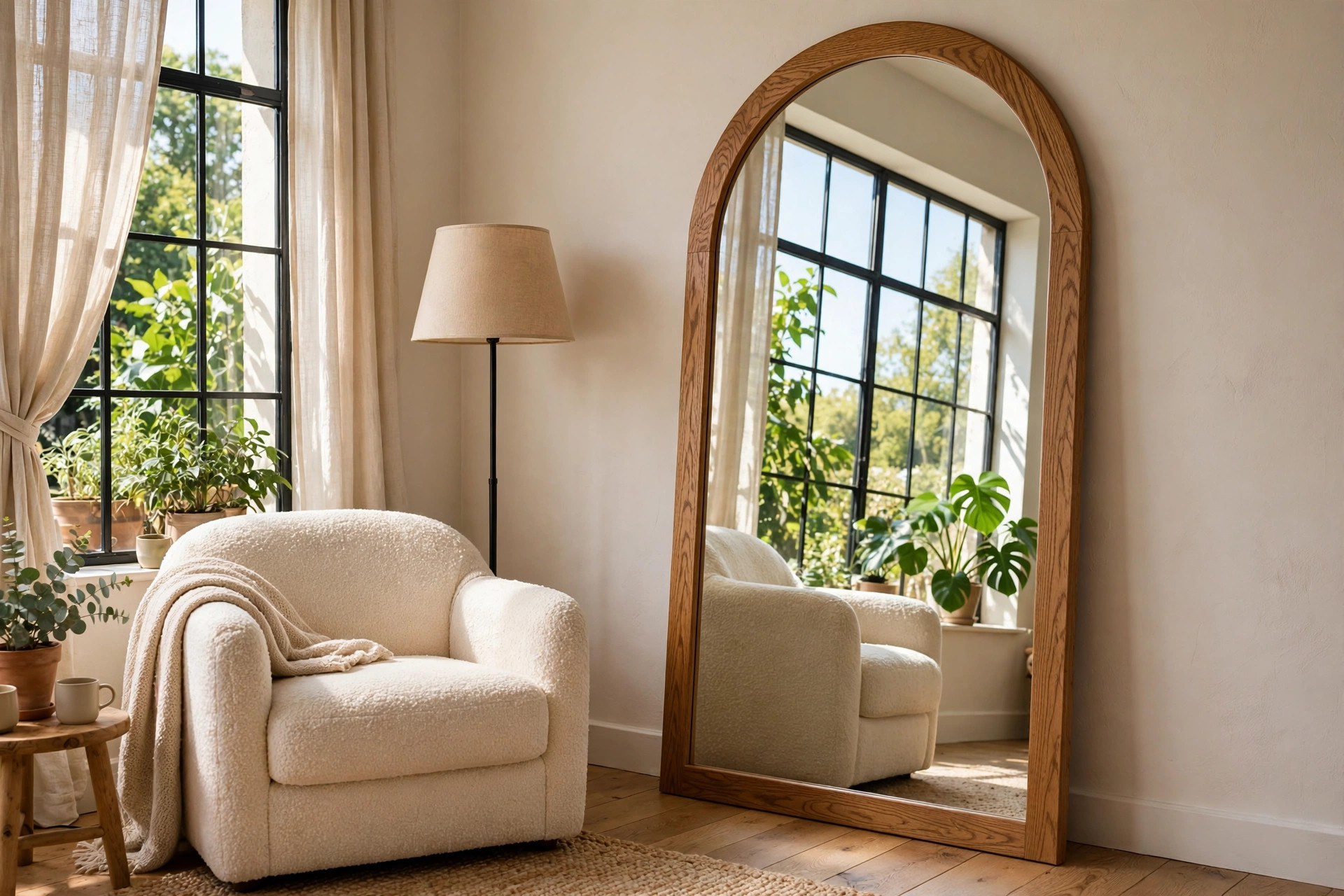
Living rooms are boxes full of rectangles. A tall arched mirror breaks that geometry with one curve, which is why arches photograph so well and pin so heavily. Place it opposite a window or beside a reading chair, and let it stand mostly empty around it — arches need breathing room to read as sculpture rather than decor.
6. A Sunburst Mirror as Art
Where you'd hang a statement painting, hang a sunburst mirror instead. The radiating frame acts as both art and light-bouncer, and it needs nothing beneath it — a sunburst over a mantel or a bare console is a complete vignette. Keep the wall color calm around it; sunbursts fight with busy wallpaper.
7. The Dark-Corner Fix
Every living room has one: the corner where light goes to die. Angle a tall mirror into that corner and place a floor or table lamp in front of it. The lamp's glow bounces off the glass and the corner stops being a black hole. This is the cheapest "extra light" you can buy — no electrician, no new fixture, just reflection. It pairs naturally with the corner-styling tricks in our awkward living room layout ideas.
8. Above the Mantel
A mirror over the fireplace mantel is traditional because the mantel is usually the room's focal wall and the mirror amplifies it. Size it to the mantel's width (two-thirds rule), keep the bottom edge 6 to 10 inches above the mantel shelf, and style the shelf low — candlesticks and a small plant, nothing tall enough to block the reflection. If you style a seasonal mantel, a mirror behind the decor doubles the whole display; our fall fireplace mantel decor ideas show how that layering works.
9. Mirrored Furniture (Reflection Without a Wall Mirror)
When the walls are full, put the mirror in the furniture: a mirrored side table, a mirrored tray on the coffee table, or a console with mirrored drawer fronts. You get the light-bounce and the glam without finding a single free stretch of wall. One mirrored piece per room is the limit — two starts to feel like a showroom.
10. The Renter's No-Drill Leaner
Full-length leaner mirrors (about 65 by 22 inches) need zero hardware: they lean, they reflect a full outfit or a full room, and they move with you. In a living room, tuck one beside a bookshelf or at the end of a console. Add adhesive bumper pads where the frame meets the wall to protect paint, and never lean an unanchored mirror where kids or large dogs roughhouse.
11. Vintage Ornate Mirror + Modern Furniture
The most interesting living rooms mix eras. A heavy gilt or carved-wood vintage mirror hung above a clean-lined modern sofa creates the tension that makes a room feel collected rather than catalog-bought. Thrift stores and estate sales are full of these for a fraction of new prices — check the glass for desilvering (dark spots at the edges) and re-silver or embrace the patina.
12. Mirror Panels Flanking the TV
A big black TV is a visual hole in the wall. Flanking it with two tall, narrow mirrors (or mirrored panels) softens the effect: the reflections break up the dark rectangle and the symmetry looks deliberate. Keep the mirrors' frames quiet — thin black or brass — so they frame the TV rather than competing with it.
13. Layer a Mirror Into the Shelf Styling
Prop a small mirror on a bookshelf or against the back of an open shelf, layered in front of books. It catches light deep in the shelving and adds depth to what is usually the flattest surface in the room. This is also where hidden storage earns its keep — our small living room storage ideas show how styled shelves can hide as much as they display.
Where NOT to Hang a Mirror
Three placements that always backfire: directly opposite the TV (glare and doubled screen distraction), reflecting the messiest zone in the room (the mirror doesn't hide clutter, it broadcasts it), and hung so high that it reflects only ceiling — if you can't see a pleasant view standing at normal distance, lower it to the 57-inch center rule.
Living Room Mirror FAQ
How big should a mirror be over a sofa or console?
Aim for roughly two-thirds the width of the furniture below it. Over a standard 72-inch sofa, that's a 48-inch-wide mirror — which feels huge until it's up, and then looks exactly right. For round mirrors over consoles, 36 to 42 inches in diameter suits most living rooms.
Do mirrors really make a small living room look bigger?
Yes, but only when they reflect light or a pleasant view. A mirror opposite a window genuinely doubles perceived daylight and depth. A mirror facing a blank wall just doubles a blank wall — placement matters more than the mirror itself.
What's the best mirror shape for a living room?
Round and arched mirrors are the most forgiving: they soften boxy rooms, suit almost every style, and never look like an office. Rectangular mirrors work best oversized and leaning, or flanking a TV or mantel where symmetry helps.
A mirror is the rare decor purchase that works in every living room, every style, and every budget — the only real decision is placement. Start with the opposite-window trick or the two-thirds console rule, and the room will tell you what it needed. For more living room inspiration, browse our full Living Room collection. If you want a style-first roundup to compare shapes and frames, Homyvise's 24 living room mirror ideas cover farmhouse through glam, and Housing.com's mirror placement guide is a solid second opinion on the classic positions.


Comments
Post a Comment