
12 Small Patio Storage Ideas That Hide the Clutter Outside
A small patio fails fast when cushions live on the chairs, tools lean in the corner, and the hose becomes a trip hazard — which is why good small patio storage ideas are really about hiding everyday clutter in pieces that earn their footprint. On a patio that might only be 8 by 10 feet, storage cannot just store. It has to seat someone, hold a drink, or disappear against a fence. The twelve ideas below give approximate sizes and capacities, what each one actually hides, and the weatherproofing detail that decides whether it survives its second season.
Measure Your Patio Zones First
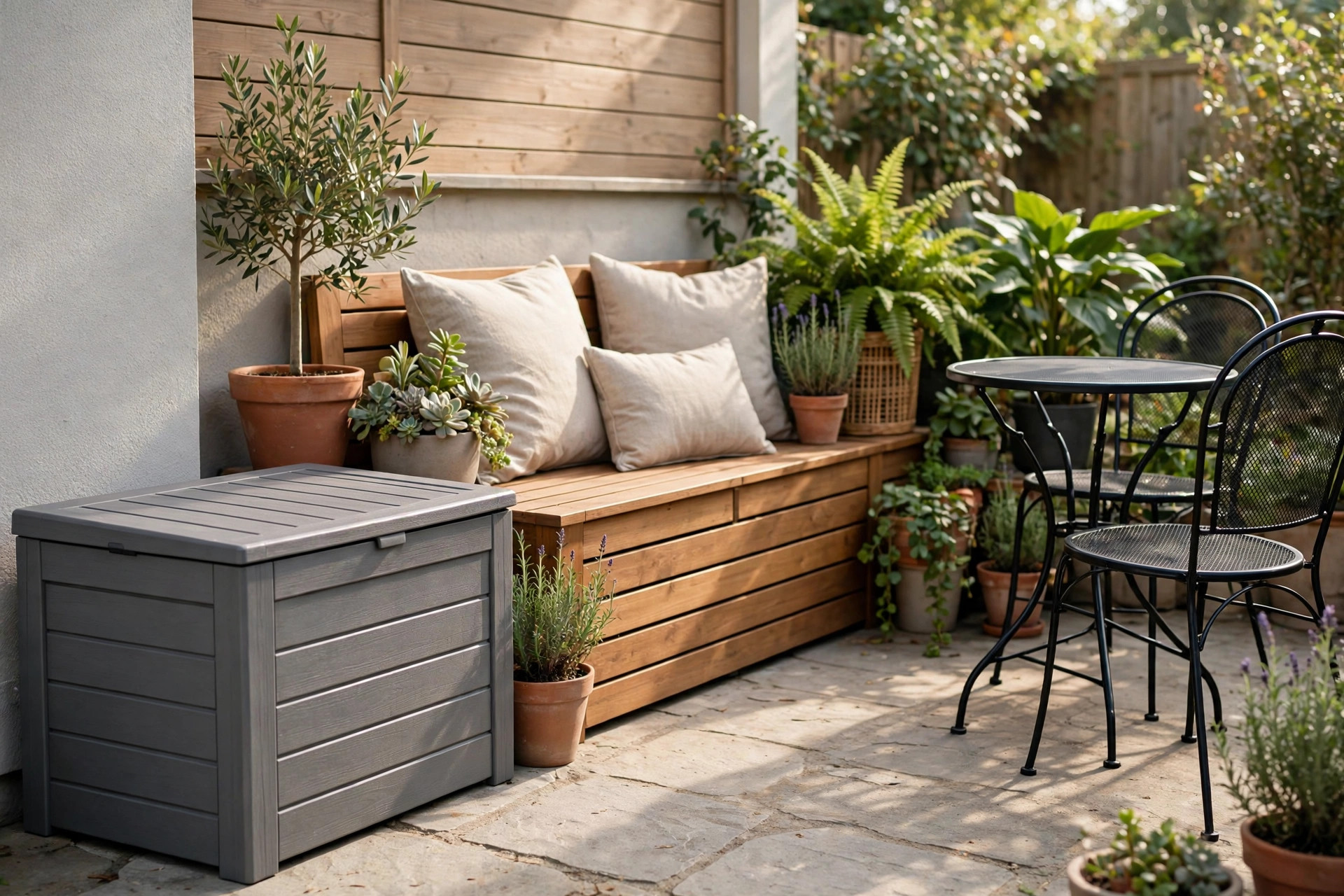
Before you buy anything, split your patio into three zones on paper: sitting, walking, and dead space. Keep the walking path from door to seating at least 30 inches wide and completely clear. Storage belongs in the dead zones: the 18 to 24 inches behind a bench, the corner nobody sits in, the strip along the fence, and the space under a raised deck edge.
Measure each dead zone's width, depth, and height, and write the numbers on your phone. Most mistakes are depth mistakes: a deck box 24 inches deep sounds modest until it eats half the walkway. As a rule, nothing on a small patio should be deeper than 24 inches, and the best pieces are 12 to 18 inches deep. Making the space feel private too? Our backyard privacy ideas for small patios pair well with the fence-line storage in idea 5.
12 Small Patio Storage Ideas That Hide the Clutter
1. A Right-Sized Deck Box, Not the Biggest One
The classic deck box is still the fastest fix, but size it to your clutter, not your optimism. A small box of 30 to 50 gallons (roughly 36 to 43 inches wide, 20 deep, 22 tall) swallows four to six chair cushions or a folded rug plus tools. A medium 70 to 90-gallon box holds a full cushion set for a loveseat and two chairs. Anything over 120 gallons belongs in a yard, not on a small patio. Weatherproofing note: choose a resin box with a sloped lid that overlaps the base like a roof shingle — flat lids pool water and leak. Raise it on its feet or two thin pavers so the base never sits in standing water.
2. A Storage Bench That Seats Two and Hides the Cushions
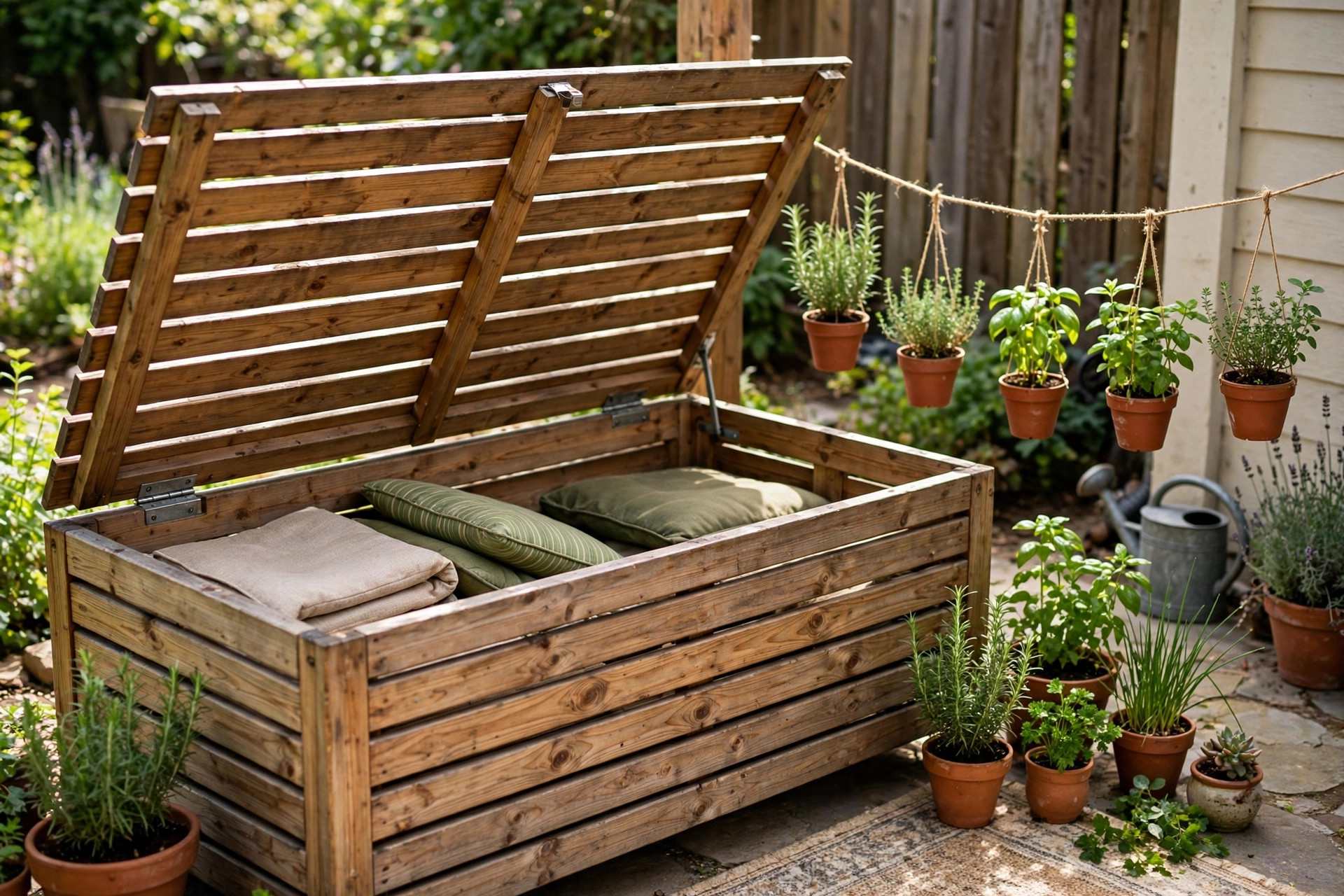
A storage bench around 40 to 48 inches long, 16 to 18 inches deep, and 17 to 19 inches high does double duty: two extra seats and roughly 30 to 40 gallons of hidden storage. It hides exactly what makes a patio look messy — cushions, throws, a watering can, kids' outdoor toys. Push it against the railing and it anchors the seating zone too. Weatherproofing note: bench lids get sat on, so look for a reinforced lid rated for adult weight, and add a waterproof liner bag inside if cushions must stay bone dry. Renter-friendly: fully freestanding, no fixing needed.
3. Storage Ottomans and Side Tables That Open Up
For the smallest patios, scale down. A storage ottoman about 18 to 24 inches across hides a throw and a book, then works as a footrest or extra seat. A drum-style storage side table, roughly 14 to 16 inches in diameter and 18 inches tall, hides sunscreen, candles, and coasters right where you use them. Two small pieces beat one big box when floor space is broken into awkward corners. Weatherproofing note: fabric ottomans must be outdoor-rated and still do better under cover; resin and metal drum tables can stay out in open rain.
4. A Slim Vertical Shed Against the Fence
When floor space is gone, go tall and shallow. Slim vertical sheds start at about 2 by 2 feet (roughly 15 to 20 cubic feet) for long-handled tools and a hose, and step up to about 5 feet wide by 2 feet deep for bikes or a folded lounger. At 5 to 6 feet tall, a slim shed uses airspace a deck box wastes. Weatherproofing note: sheds fail at the base and door seal — set it on a level paver or gravel pad, never bare soil, and check the door closes flush. Renters: choose a freestanding model with no wall anchors, and get the landlord's okay first.
5. Vertical Wall and Fence Storage
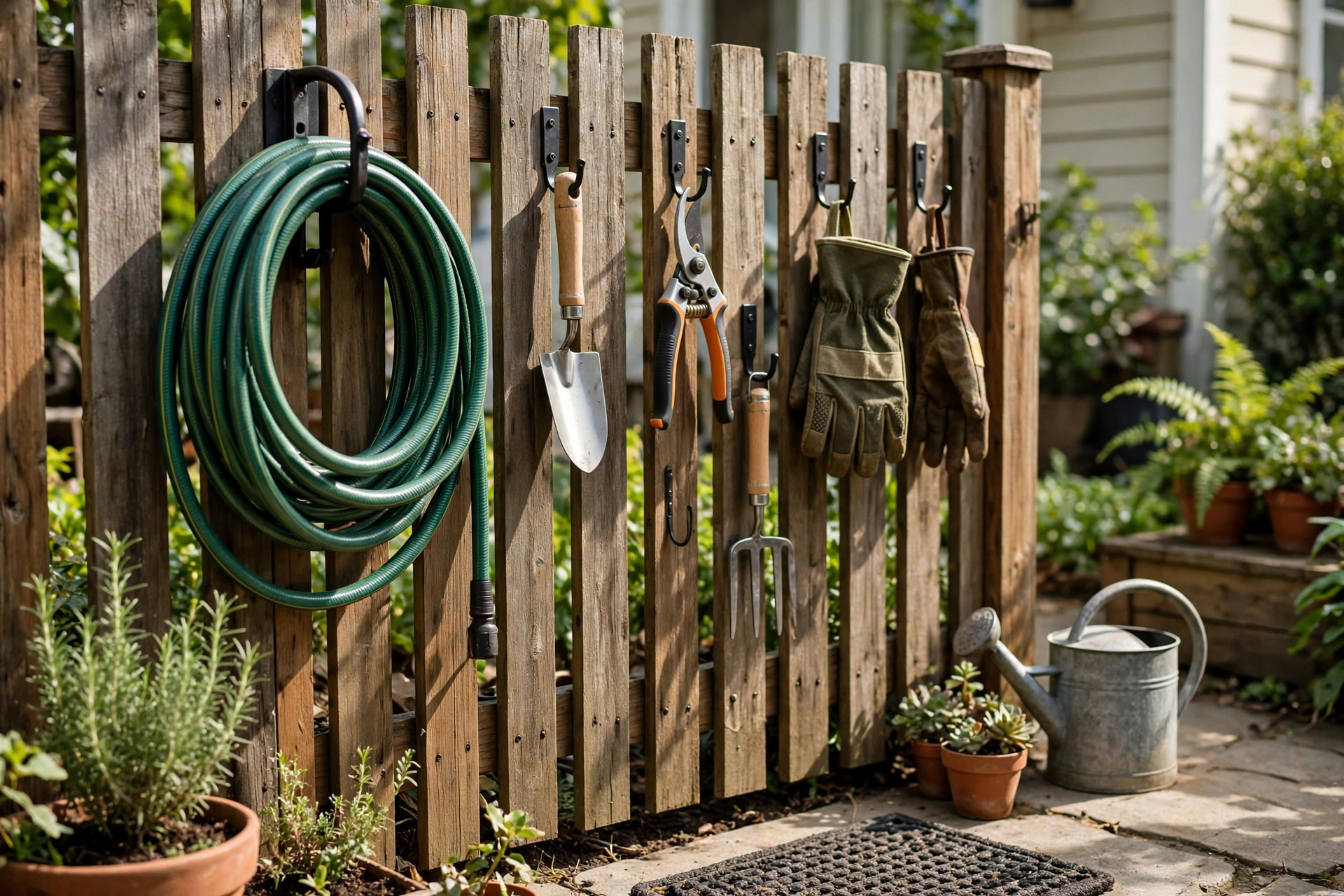
The fence is free storage you are already looking at. A folding rack, sturdy hooks, or a hanging pocket organizer takes tools and gloves off the floor entirely. Plan a strip about 4 feet wide and 3 feet tall: hooks spaced 8 to 10 inches apart hold a hose coil, a broom, and hand tools without crowding. Keep the lowest hook 12 inches off the ground so rain splash misses metal tools. If your fence carries lights, keep storage below the light line — our patio string light ideas for small spaces show how to keep that glow clear. Renter-friendly: over-fence hooks need no screws. Weatherproofing note: galvanized or powder-coated hardware only; plain steel rust-stains a fence in one wet season.
6. Under-Deck and Under-Bench Dead Space
The space under a raised deck edge, bench, or outdoor sofa is already shaded — it just needs the right container. Low waterproof bins about 30 inches long, 16 wide, and 6 to 8 tall slide into gaps that fit nothing else. Use them for the seasonal layer: furniture covers, citronella refills, spare pots, monthly grill tools. Label each bin's end; unidentified under-storage is storage you never open. Weatherproofing note: this zone gets drips, so bins need snap-on lids with a real seal.
7. A Rolling Garden Caddy for Daily Tools
If you garden in containers, a rolling caddy — about 24 inches long, 14 deep, and 30 tall with two or three tiers — keeps the daily kit together: trowel, pruners, twine, gloves, watering can. Wheel it to the pots, then park it in a dead corner. In one color it reads as intentional, not cluttered. Weatherproofing note: pick powder-coated metal or resin, and keep pruners in a lidded tin so blades stay dry.
8. A Corner Unit for the Corner Nobody Uses
Every small patio has one corner too tight for a chair. A triangular corner deck box or quarter-round shelf unit, roughly 24 inches along each wall, turns that dead angle into storage for plant food, spare bulbs, and the watering can. Corner units sit shallower in the walking zone than a square box in the same spot. Weatherproofing note: corners collect leaf litter and damp — leave a 1-inch gap behind the unit so air can move.
9. A Tall, Narrow Cabinet for the Hose and Tools
A slim upright cabinet about 18 to 24 inches wide, 14 to 16 inches deep, and 5 feet tall is the tidy answer to the leaning-tools corner. Inside: the hose coiled on a hook, long tools upright, and one shelf for sprays and feed. It reads like furniture rather than a shed, which matters when the patio is your view from the kitchen window. Weatherproofing note: look for a vented back panel — sealed cabinets sweat in heat and mildew everything inside.
10. A Weatherproof Cushion Bag for Off-Season
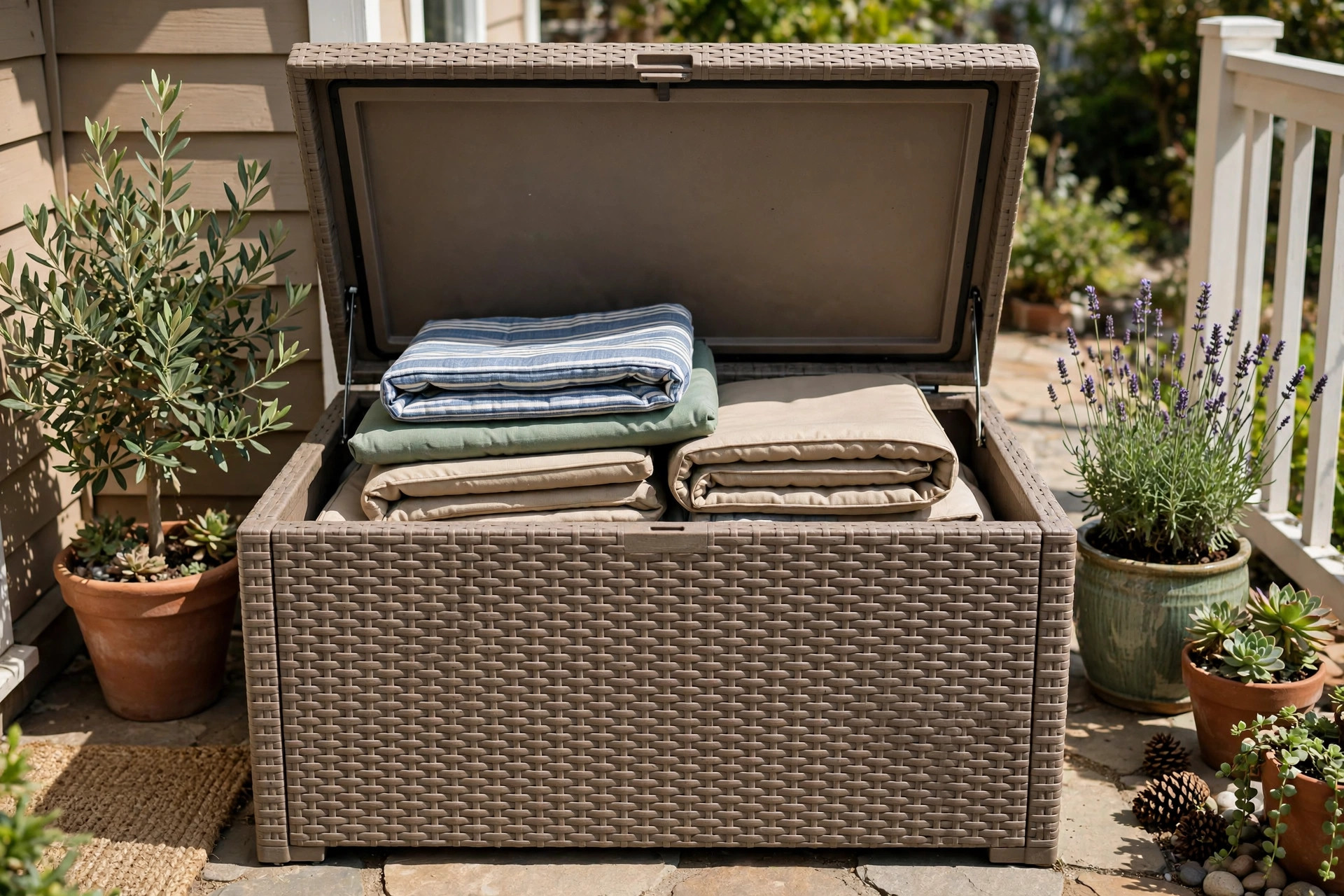
Half of patio clutter is cushions with nowhere to go in winter or a rainy week. A heavy-duty cushion storage bag, roughly 48 by 24 by 18 inches, holds a full set and slides under a bench, into the slim shed, or onto a garage shelf. It is the cheapest idea on this list and the one that saves cushions from mildew spots. Weatherproofing note: a bag is water-resistant, not waterproof — store it under cover, cushions fully dry, zip closed and facing down.
11. A Potting Bench That Doubles as a Bar
A narrow potting bench, about 36 to 40 inches wide and 16 to 18 inches deep, gives container gardeners a work surface, a lower shelf for pots and soil, and hooks for tools — then clears down in minutes to hold drinks and a lantern when friends come over. Choose a slatted top so soil and water fall through instead of pooling. Renter-friendly: freestanding and flat-pack. Weatherproofing note: wood models need a yearly coat of outdoor oil or sealer; resin and metal skip that job.
12. Planters With a Hidden Hollow Base
The most invisible small patio storage ideas look like decor. Tall planters with a hollow lower section, a hollow garden stool (about 14 inches across and 18 inches tall), or a trunk-style coffee table hide the small stuff — sunscreen, matches, spare tea lights — inside pieces you would display anyway. A pair of garden stools gives you side tables, extra seats, and two hidden compartments. Weatherproofing note: check for a drainage gap or removable inner bucket so hidden items never sit in planter runoff.
Resin vs Wood vs Metal: A Quick Materials Comparison
- Resin (plastic): the practical default. Fully waterproof, light, no sealing, cheapest per gallon. It can fade in harsh sun. Best for deck boxes, slim sheds, and bins.
- Wood: the best-looking option, heavy enough to stay put in wind. Needs a sealer coat every year or two; cheap softwood rots from the base up. Best for benches and potting benches.
- Metal: strongest and slimmest — thin walls mean more storage in the same footprint. Watch rust at scratches; galvanized or powder-coated finishes last longest. Best for tall cabinets and sheds.
Manufacturers agree — Keter's small outdoor storage solutions start with measuring and matching the box to the items, and Garden The Earth's small backyard storage ideas lean on the same vertical, multi-use approach used above.
The Renter-Friendly Shortlist
Renting rules out drilling and permanent sheds, not storage. The safest picks here are the storage bench (idea 2), over-fence hooks and tension racks (idea 5), a rolling caddy (idea 7), a cushion bag (idea 10), and a flat-pack potting bench (idea 11) — all freestanding, mark-free, and easy to move. For more renter-safe outdoor inspiration, browse our Outdoor & Porch archive.
Small Patio Storage Mistakes to Skip
Buying the biggest box on sale is mistake one: oversized storage steals the patio it was meant to save. Mistake two is a flat, unsealed lid — one rainy month and the cushions smell like it forever. Mistake three is storing soft things directly on the ground; even a waterproof box sweats underneath, so feet or pavers are non-negotiable. Finally, give each zone one job — cushions in the bench, tools in the cabinet, seasonal extras in the under-bins.
Start with the measure-first step this weekend. Find your dead zones, pick the piece that hides your worst clutter pile, and size it honestly. A patio with hidden storage does not just look bigger — it finally works like a room.


Comments
Post a Comment