
12 Small Yard Fire Pit Seating Ideas That Feel Cozy
A small yard does not need a big fire to feel warm. It needs a tight circle, chairs at the right distance, and room behind each seat to stand up safely. The best small yard fire pit seating ideas shrink the layout, not the comfort, so four people can sit close on a cool fall evening.
A circle 10 to 12 feet across and a pit 24 to 36 inches wide fit most small yards. Below are twelve layouts, with measurements and prices.
If neighbors look straight in, pair this guide with our backyard privacy ideas for small yards, then place the pit in that sheltered corner.
Measure First: Clearances, Seating Distances, and the Circle That Fits
Keep a wood-burning pit at least 10 feet from the house, fences, sheds, and anything that can burn; many local codes require 15 to 25 feet for wood fires, so check local rules first. Keep 7 to 10 feet of open air above the flame. Never place a pit on a wood deck without a manufacturer-approved heat shield, or under a covered porch.
Place seats about 3 to 6 feet from the pit: 3 to 4 feet for propane or natural gas, 3 to 5 feet for a fire pit table, and around 6 feet for wood, which throws more heat and sparks. Outer's seating clearance guide and Dell's seating distance guide, citing U.S. Fire Administration advice, agree: too close is risky, too far and nobody feels the fire.
Leave 24 inches behind each seat, plus a 36-inch walkway. A 30-inch pit with 4 feet to the chairs needs roughly 12 to 13 feet across. With only 10 feet, choose a 24-inch pit and a semicircle. Pick level ground, check for utilities before digging, and keep an extinguisher within reach. Never leave a fire unattended.
12 Small Yard Fire Pit Seating Ideas That Feel Cozy
Every idea below assumes the clearances above are already met.
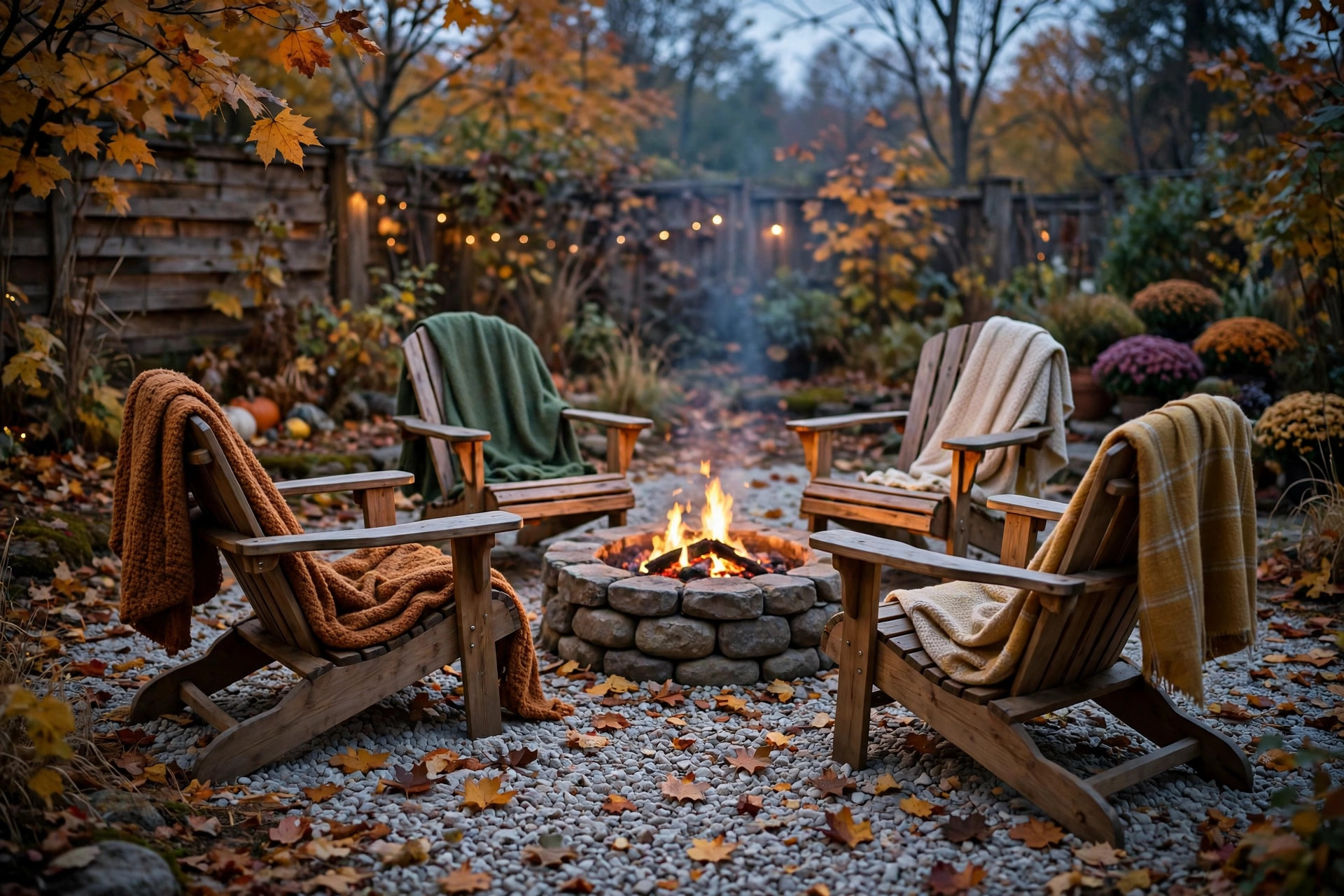
1. The Classic Four-Chair Adirondack Circle
Four Adirondack chairs, each about 30 to 35 inches wide with a seat 14 to 16 inches high, lean back for fire-watching, and the wide arms hold a mug. Place them around a 28- to 36-inch pit, fronts 4 to 6 feet from the rim for wood or 3 to 4 feet for gas. Four is the maximum around a 36-inch pit. Wood chairs run $120 to $250 each; resin starts near $80 to $150. Watch out: they sit low, so mix in one higher chair.
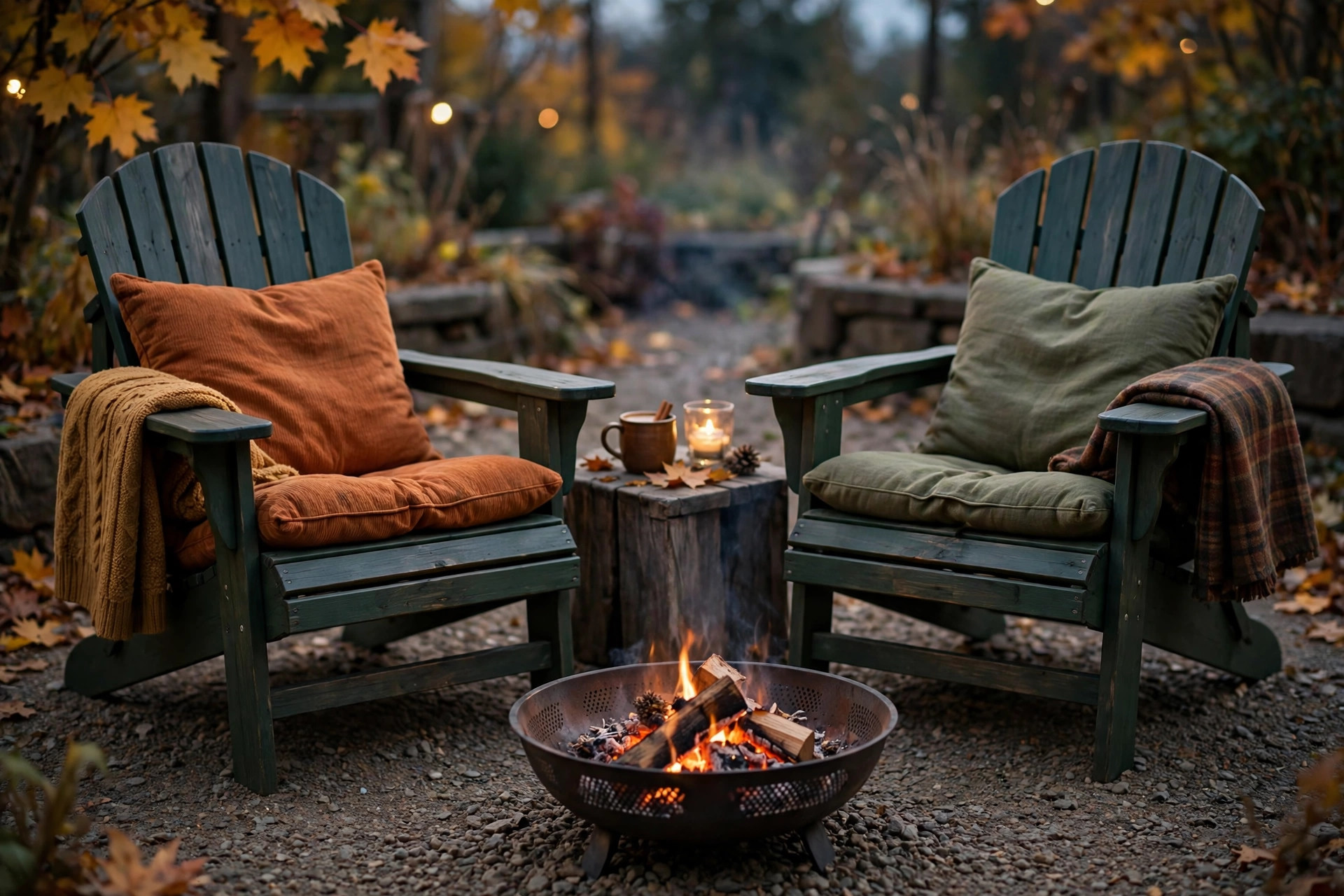
2. A Curved Built-In Bench That Hugs the Pit
A curved bench saves the space loose chairs waste. Set its inner edge 4 to 6 feet from a wood pit, or 3 to 4 feet from gas, so heat stays even. Aim for a seat 16 to 18 inches high and 16 to 20 inches deep, with cushions you can carry inside. Masonry runs roughly $600 to $1,500 in materials; a wood bench kit costs less. Leave a 36-inch gap at one end for leaving. Watch out: a fixed bench cannot shuffle closer, so measure twice.
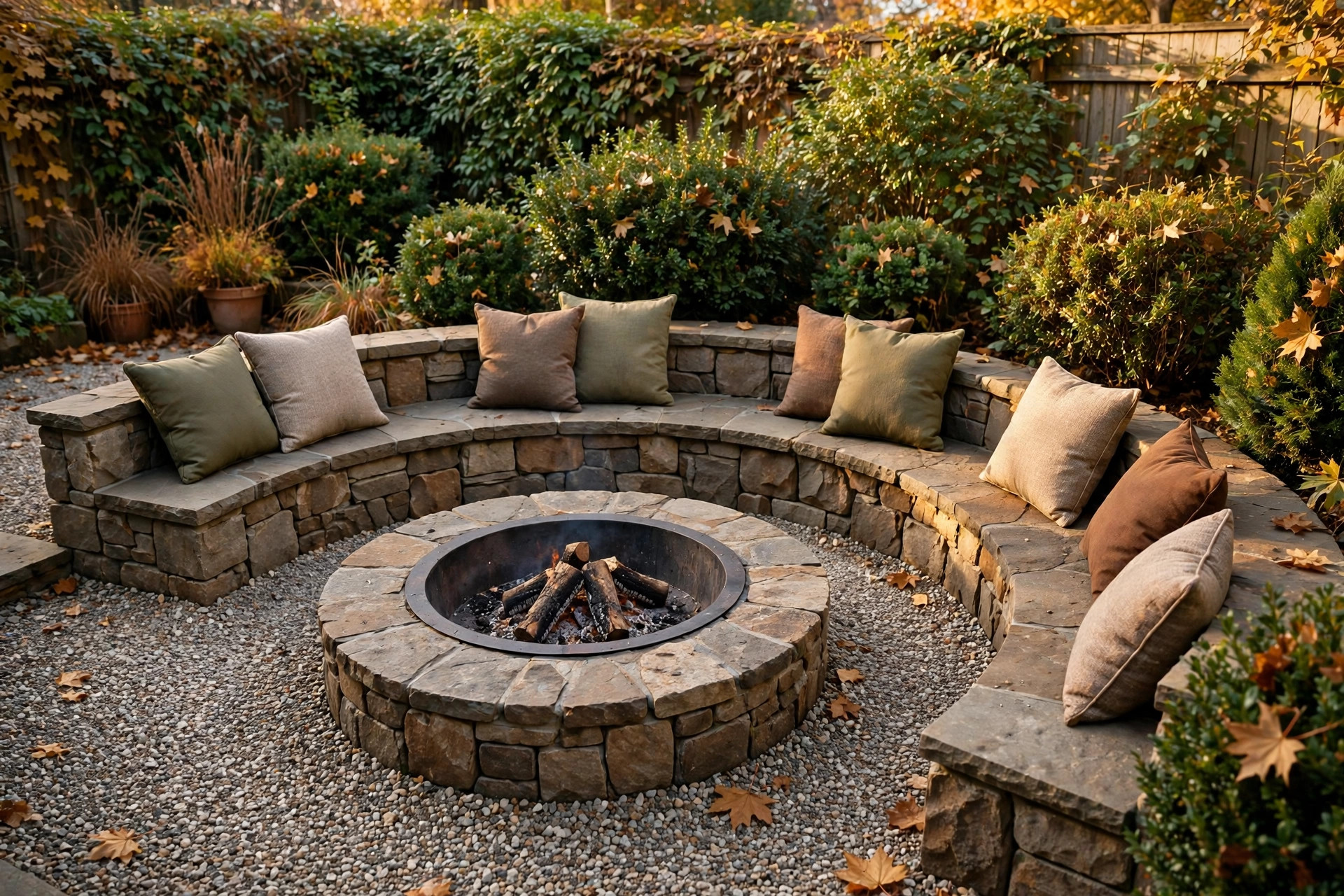
3. A Gravel Pad Circle, 10 to 12 Feet Across
Dig out grass in a 10- to 12-foot circle, lay landscape fabric, and spread pea gravel or decomposed granite 2 to 3 inches deep. For a 10-foot circle, gravel costs about $60 to $100, far less than pavers at $300 to $600. Gravel gives chairs a stable, non-flammable footing and drains after rain. Edge it with blocks or steel. Watch out: compact the base first, or chair legs will sink, and plan to top up yearly.
4. A Compact 24- to 30-Inch Pit for the Tightest Yards
Shrink the pit, not the safety margins. A portable steel bowl 24 to 30 inches wide throws gentler heat, so chairs sit at the closer end of the range. Bowls run about $60 to $180; double-wall, lower-smoke styles run $200 to $400. Keep the same 10-foot minimum from structures, because a small bowl still makes sparks. Watch out: never move seats closer than 3 feet to make it fit; if clearances fail, use Idea 11 instead.
5. An L-Shaped Sectional Around a Square Pit
Place a square pit, about 28 to 36 inches across, in front of a compact L-shaped sectional so both sides face the flame. Keep cushions 3 to 5 feet away for gas and around 6 feet for wood. Small sectionals run about $400 to $900. Add one movable chair opposite, without closing the exit. Watch out: sectionals are bulky, so keep a 36-inch walkway behind at least one side.
6. Log Rounds and a Low Bench for a Low-Cost Ring
Log rounds 14 to 18 inches across and 16 to 18 inches tall make sturdy stools, and a plank bench on blocks seats two more. Sand the tops, add a thin cushion, and place them 4 to 6 feet from a wood fire. Cost can be near zero with fallen wood, or about $15 to $40 per round. Use a spark screen, usually $25 to $60. Watch out: logs get damp, so store cushions dry and replace softened rounds.
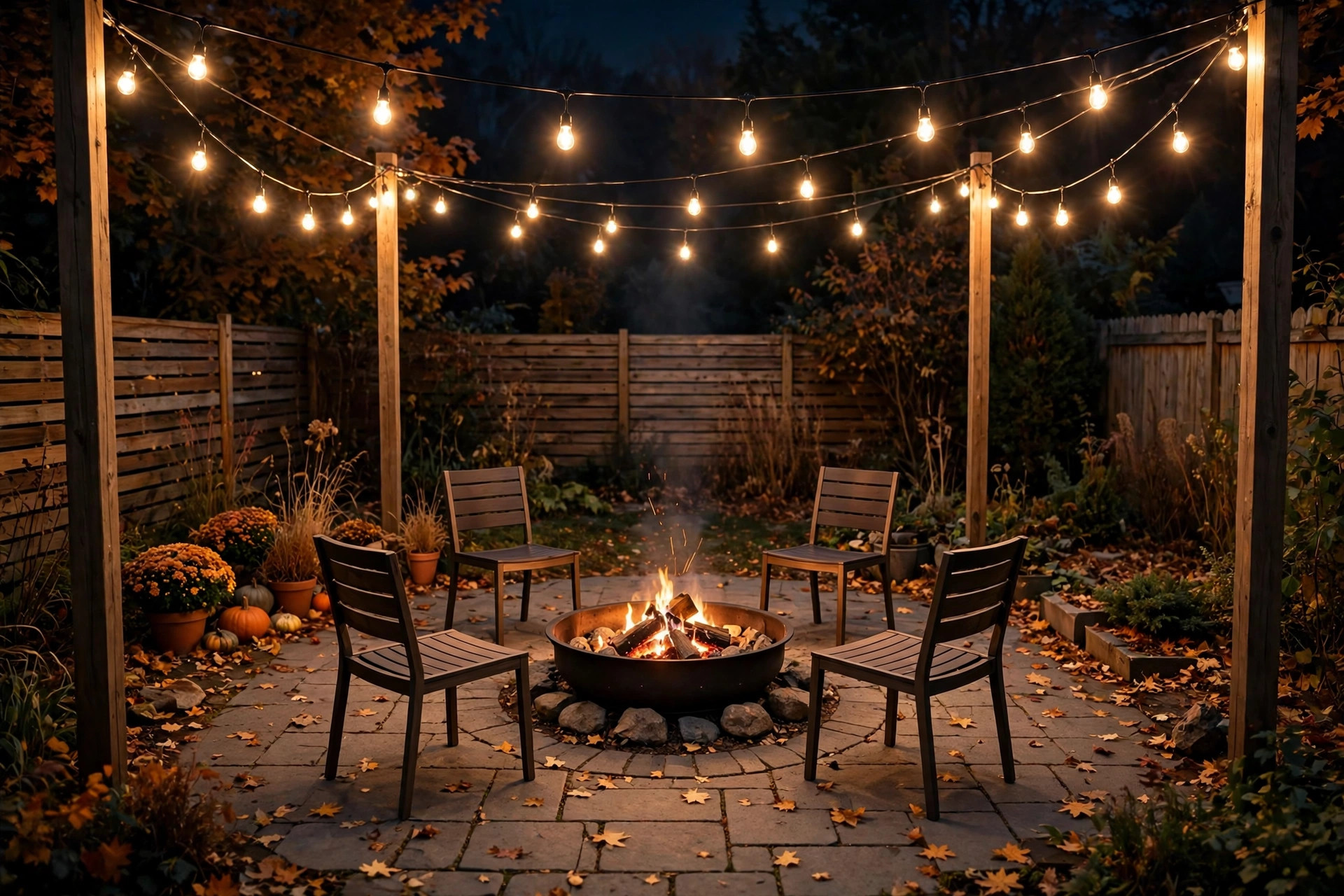
7. String Lights on Posts, High and to the Sides
Hang string lights from posts at the edges of the circle, at least 8 to 10 feet up, and never drape a strand directly over an open wood flame, where heat and sparks can damage it; follow the manufacturer's clearances first. Two 8-foot posts plus a 25- to 48-foot strand, about $25 to $60, will frame a small circle. For layouts, see our patio string light ideas for small backyards. Watch out: skip bright spotlights, which wash out the fire glow.
8. A Semicircle Against a Fence, With Shelter Behind the Seats
Arrange three chairs or a bench in a semicircle, with a fence, hedge, or screen behind the seats to block wind. Keep the pit at least 10 feet from a combustible fence, so this needs real depth, or a gas pit used exactly as its manufacturer allows. Face seats so the breeze carries smoke away from sitters. Watch out: never pull the pit toward the fence; the backdrop belongs behind the people, not the fire.
9. Swivel Chairs and Tiny Side Tables
Swivel chairs, about 28 to 32 inches wide, let guests turn to talk without dragging legs across gravel. Give each pair one side table, 12 to 16 inches across and 18 to 22 inches tall, beside the chair, never between chair and fire. Swivel chairs run about $150 to $350 each; a side table is $30 to $80. Watch out: lightweight chairs tip on gravel, so choose heavier bases.
10. A Fire Pit Table for a Patio That Must Earn Its Keep
A propane fire pit table, commonly 28 to 44 inches long, is a coffee table by day and a low-smoke fire at night, with seats comfortable at 3 to 5 feet because heat rises. Tables run about $180 to $500, plus a tank. There is no ash, which suits yards where wood smoke would drift to neighbors. Style the patio as in our fall patio decor ideas, keeping throws clear of the burner. Watch out: follow the clearance card exactly.
11. A Tabletop Fire Bowl When There Is No Room for a Pit
Some yards cannot meet a full pit's clearances, and honesty beats squeezing one in. A tabletop bowl, typically 8 to 12 inches wide, fueled by gel or propane exactly as its maker directs, gives real flame on an existing table for about $40 to $120. Keep it on a stable, heat-safe surface, away from napkins and sleeves. Watch out: some properties ban open flame of any size, and never refill a gel bowl while warm.
12. Layered Cozy Details: Throws, Cushions, and Wood at the Edge
Keep a lidded box outside the circle, beyond heat and sparks, with outdoor throws, about $15 to $35 each, and spare cushions. Store firewood off the ground, well away from the pit. Add solar path lights, about $15 for ten, along the walkway. Keep rugs out of a wood pit's spark range. Watch out: throws must never hang near flame or embers.
Quick Picks by Budget and Yard Size
- Under $200: a portable 24- to 30-inch steel bowl ($60 to $180), chairs you own, and a bucket of sand within reach.
- $200 to $500: a 10-foot gravel pad ($60 to $100), two Adirondack chairs, a spark screen, and string lights on two posts.
- $500 to $1,200: a propane fire pit table or curved bench, four cushions, and layered lighting.
- Only 10 feet of clear space: skip the wood pit. Choose a tabletop bowl or small gas table.
- Best comfort upgrade: side tables and throws at the edge of the circle.
Mistakes That Make a Small Fire Pit Area Feel Cramped or Unsafe
Squeezing clearances for a bigger pit. Ten feet from structures is the minimum, and 15 to 25 feet where wood-fire codes require it.
One chair distance for every fuel. Three feet from a gas table can feel pleasant; 3 feet from a wood fire is hot and in spark range. Match distance to fuel, 3 to 6 feet.
No way out. A closed ring with no 36-inch gap traps the person nearest the fire. Leave at least one clear exit, preferably two.
Fire on grass, mulch, or a bare wood deck. Use gravel, pavers, or concrete under the pit, clear dry leaves, and use only a manufacturer-approved shield where a deck is allowed.
Lights and fabric over the flame. String lights belong high and to the sides, throws on the far side of chairs, and umbrellas stored away from the pit.
Frequently Asked Questions
How far should a fire pit be from the house in a small yard?
At least 10 feet is the common minimum, and many local codes require 15 to 25 feet for wood-burning pits. Check local rules before you buy; if your yard cannot meet them, choose a gas table or a tabletop bowl where allowed.
How far should chairs be from a fire pit?
About 3 to 6 feet from the pit: 3 to 4 feet for gas, 3 to 5 feet for a fire pit table, and around 6 feet for wood. Add 24 inches behind each chair and a 36-inch walkway.
What size fire pit is best for a small yard?
A pit 24 to 36 inches wide suits most small yards. A 24- to 30-inch pit fits a 10- to 12-foot circle, while a 36-inch pit serves four chairs at most. Plan the whole layout, not just the bowl.
What is the best ground surface under a fire pit seating area?
Pea gravel over landscape fabric, at about $60 to $100 for a 10-foot circle, is non-flammable, stable, and drains well. Pavers cost more, roughly $200 to $600, and need the least upkeep. Avoid bare grass and dry mulch near the fire.
Can I put string lights above a fire pit?
Not directly above an open wood flame. Hang them at least 8 to 10 feet up, offset to the sides, following the manufacturer's clearances. Solar path lights add safer light at ground level.
Start with the tape measure: chalk the pit, seating ring, and walkway, sit in it one evening, and only then buy. For more ideas, browse our full Outdoor & Porch collection.


Comments
Post a Comment