
12 Small Backyard Deck Decor Ideas That Make It Feel Like a Room
If you are hunting for small backyard deck decor ideas, your deck probably suffers from the most common small-deck problem: it is treated as a walkway with a chair on it, instead of a room. A small deck does not need more space to feel generous — it needs the same things any good room has. One comfortable place to sit, a floor treatment that defines the area, light for the evening, and greenery that softens the edges. Get those four right and even a 10 by 10 deck becomes the most-used room in the house.
This guide shares 12 decor ideas sized and priced for small decks, in the order a real makeover happens: seating first, then the rug, then shade and privacy, then light and plants. Every idea includes honest sizes and budgets, and the mistakes section covers the errors that make small decks feel cramped no matter how much you spend.
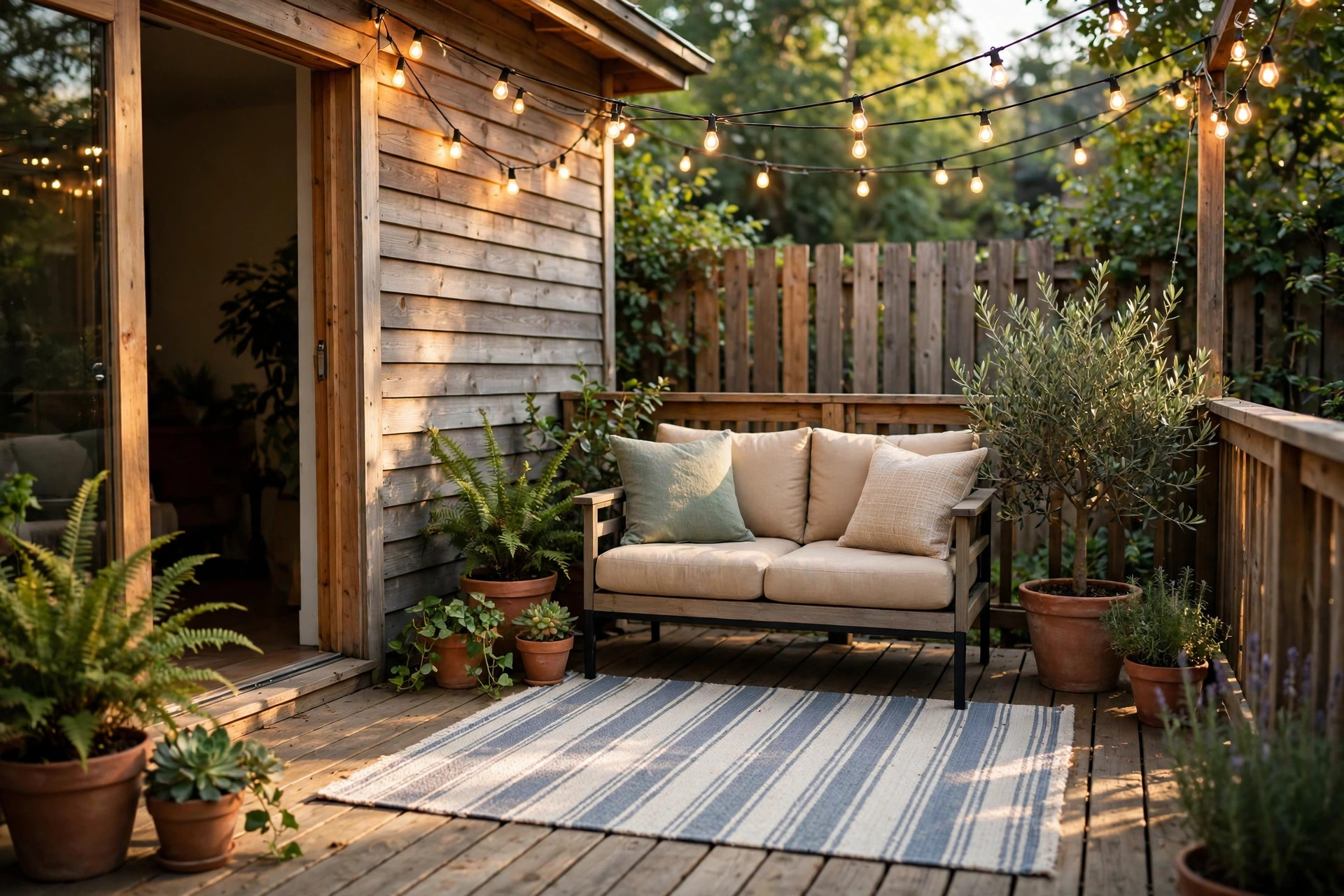
Start With the Rule of One Zone
A large deck can hold dining, lounging and a grill station. A small deck can hold one of those things well, or all three badly. Pick your one zone — morning coffee for two, an evening lounge corner, or dining for four — and let everything else support it. Furniture for one clear purpose always looks designed; furniture for three purposes looks stored.
Measure before anything else. A comfortable seating zone needs roughly 6 by 6 feet: a loveseat or two chairs, a small table, and room for knees. Keep a clear path of about 30 inches from the door to the steps, and never place decor where it narrows that path. If your deck is part of a bigger small-space plan, our small patio outdoor rug ideas go deeper on the floor layer this guide starts with.
12 Small Backyard Deck Decor Ideas That Make It Feel Like a Room
1. One Comfortable Seating Piece, Properly Sized
Everything starts here. For most small decks the right answer is a compact loveseat (about 48 to 55 inches wide) or two proper armchairs — not a full sectional, and not folding chairs that announce themselves as temporary. Deep seats and real cushions are what make people stay outside.
Leave at least 18 inches between seating and the table, and 24 inches behind chairs if people pass there. A decent loveseat costs $180 to $450; two armchairs $150 to $350. Buy the best seating your budget allows and economise on everything else — nobody remembers a rug, everybody remembers an uncomfortable chair.
2. An Outdoor Rug That Defines the Room
A rug is the cheapest room-maker there is. On a deck it draws a border around your seating zone, softens the boards underfoot, and makes furniture placed on it look like a set instead of a collection. Choose a rug that fits under at least the front legs of all seating — for a loveseat zone, 5 by 7 feet is the usual sweet spot.
Pick flat-weave polypropylene: it dries fast, hoses clean and survives sun. Avoid oversized busy patterns in a small space; stripes and simple geometrics make a deck feel larger. Good outdoor rugs cost $40 to $120. Shake and dry it after heavy rain so the boards beneath stay healthy.
3. Cushions and One Throw in a Tight Colour Story
Cushions are where a small deck gets its personality, and the rule is restraint: two or three colours total, repeated. Cream and terracotta, or sage and natural linen, read as calm; five unrelated brights read as clutter. Two seat cushions, two back cushions and one outdoor throw is plenty for a loveseat.
Choose solution-dyed or polyester outdoor fabrics that shrug off sun and light rain, and store cushions in a deck box or indoors during long wet spells — mildew is the number one small-deck decor killer. Cushion sets cost about $40 to $100.
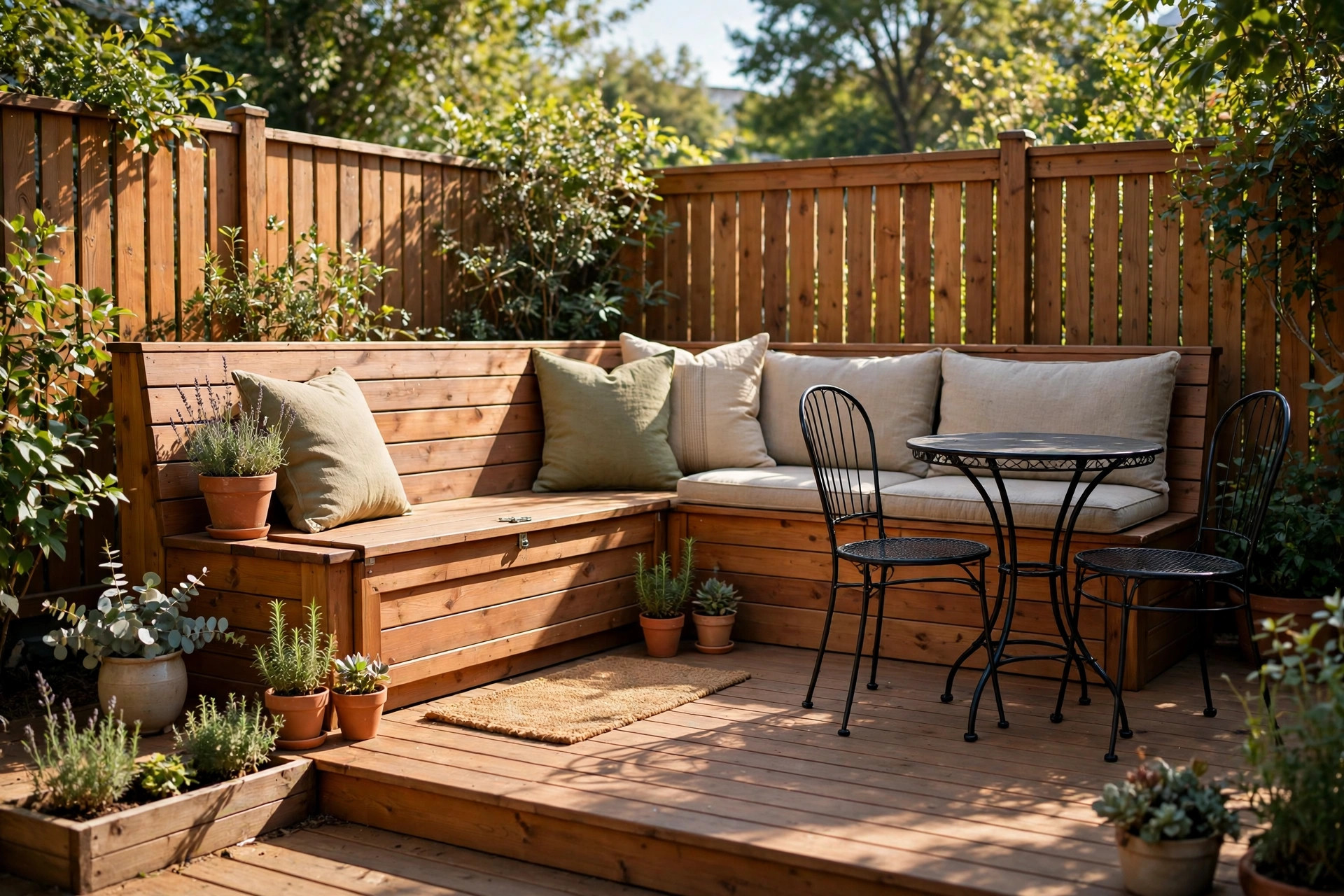
4. A Bistro Set for the Coffee-for-Two Deck
If your one zone is morning coffee or a quiet meal for two, a bistro set beats a lounge setup: a 24 to 28 inch round table and two chairs fit in a 5 by 5 foot corner and fold away in winter. Round tables win on small decks because there are no corners to catch hips on a tight path.
Metal sets cost $90 to $220 and last for years with a winter cover. Add one cushion per chair and a small potted herb on the table and the corner is finished. Keep the set light enough to move for cleaning — decks need sweeping underneath more often than people expect.
5. A Storage Bench That Seats and Hides
The hardest-working furniture on a small deck is a bench with storage inside: it seats two, and it swallows cushions, throws and garden tools the rest of the time. A 45 to 50 inch bench along the railing uses space that chairs cannot, because it needs no pull-out room behind it.
Benches cost $120 to $300. Check that the lid is weather-sealed or plan a liner bag for cushions, and confirm the internal size against your biggest cushion before buying. This one piece is what keeps a small deck looking tidy between uses — for more hiding places, see our small patio storage ideas.
6. String Lights Overhead for Evening Hours
Decks earn their keep in the evening, and light is what makes evening possible. A simple run of outdoor string lights — from the house wall to a pole or the railing — puts warm light over the whole zone without using a single inch of floor or table. Space two gentle swags over a small deck rather than one tight zigzag.
Use outdoor-rated, shatterproof LED strings, about $20 to $45 for 25 feet, on a timer so they simply appear at dusk. Keep bulbs at least 7 feet above the deck where people walk. For a full lighting plan beyond strings, our patio string light ideas cover layouts and fixings in detail.
7. Lanterns at Three Heights
String lights give the glow from above; lanterns give it from within the seating. Use three: one on the table, one on the floor beside the seating, one on the steps or railing. Battery or solar lanterns with warm LEDs give the candle look with no flame near cushions — the safe choice on a wooden deck.
Lanterns cost $12 to $35 each. Vary the heights, keep the style in one family (all black metal, or all natural wood and glass), and the set looks collected rather than matched.
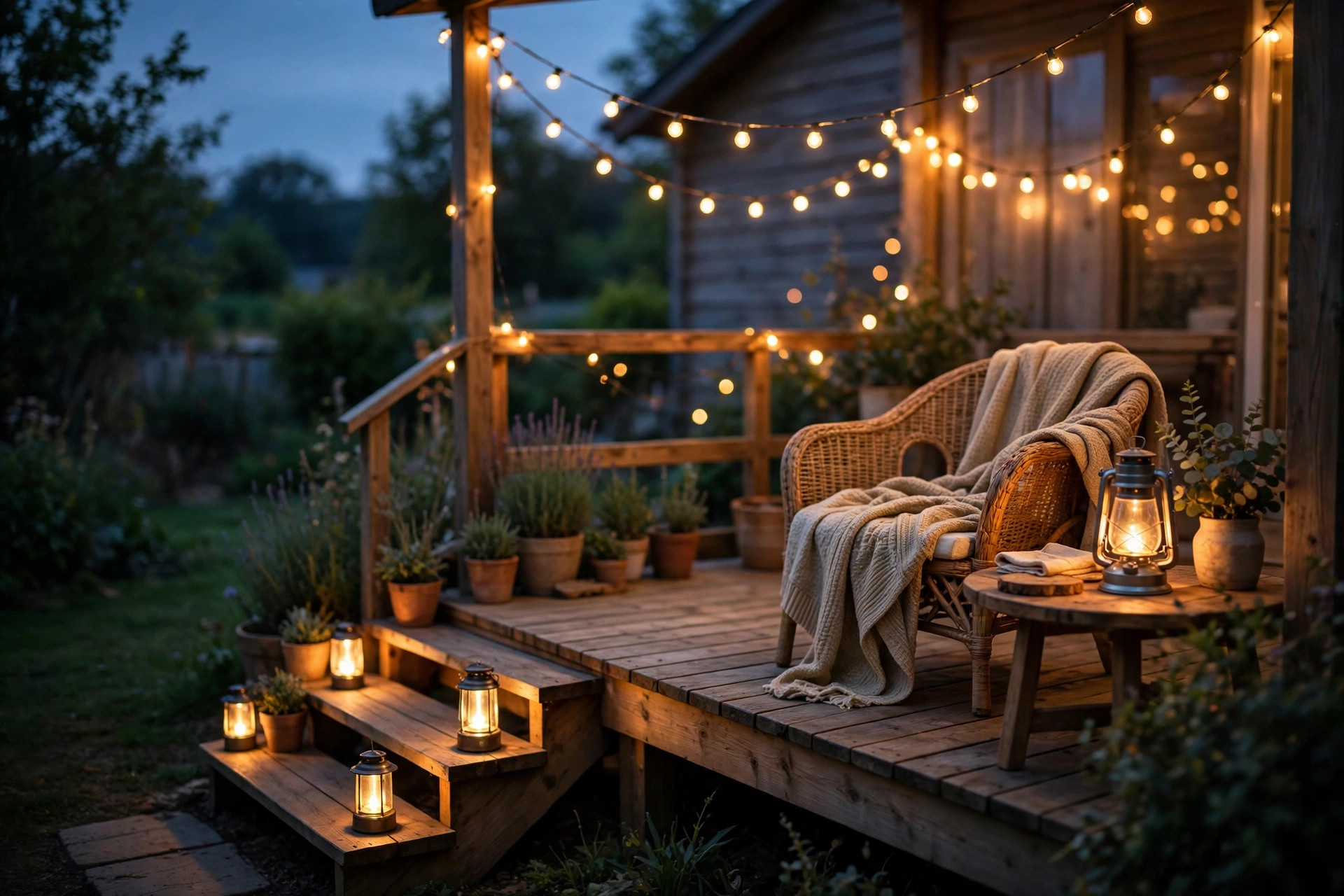
8. Potted Plants in Layers, Not a Row
Greenery softens a deck's hard edges, but a row of identical small pots looks like a garden centre shelf. Layer instead: one tall plant in the corner (a small olive, a tall grass, or a fern on a stand), one medium pot beside the seating, and small pots grouped in odd numbers on the steps or table.
Group pots by thirst so watering stays simple, and use pot feet so water does not sit against the boards. Planters cost $10 to $40 each. Choose plants for your actual sun: ferns and hostas for shade, lavender and grasses for full sun — a dead plant is the worst decor on any deck.
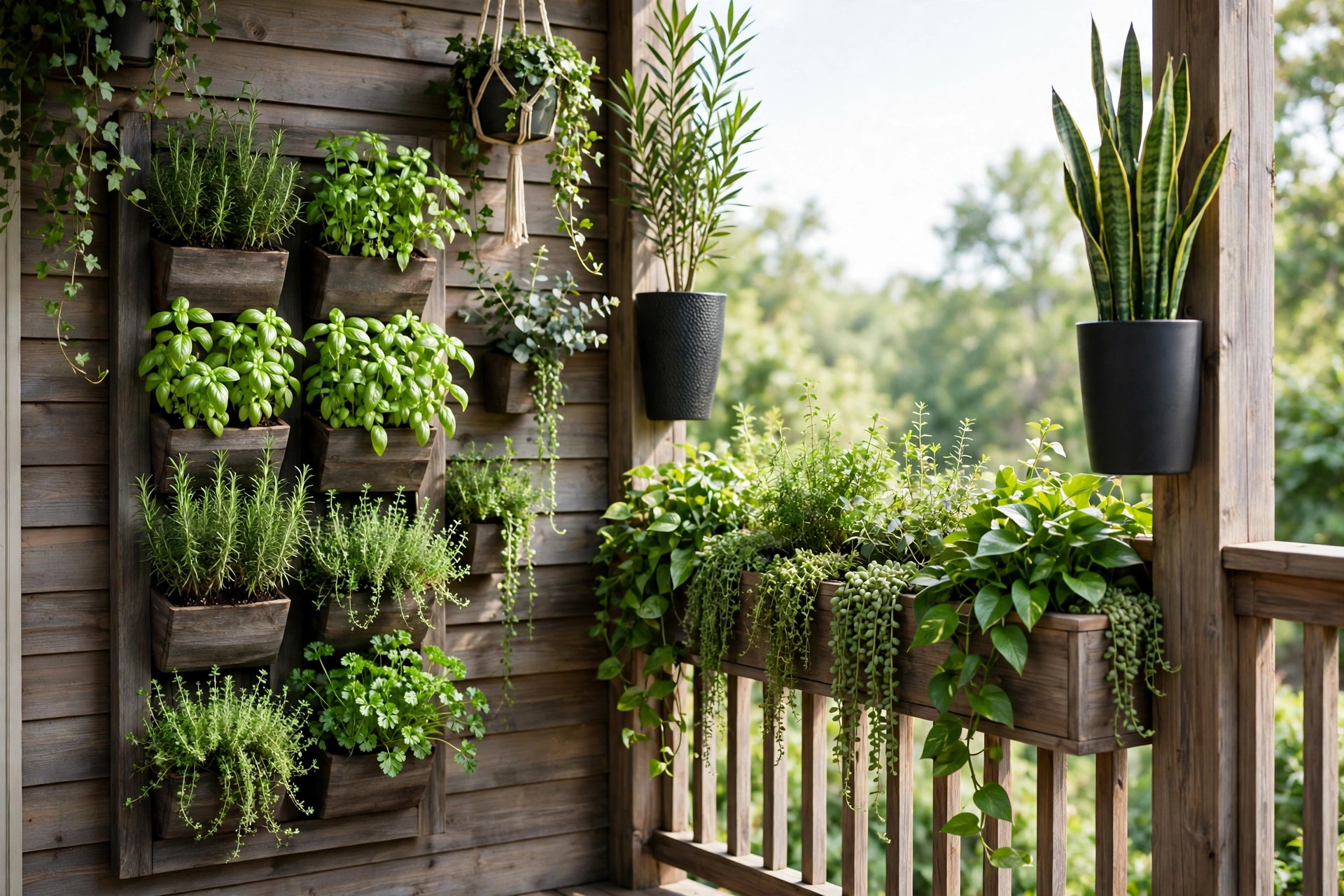
9. A Vertical Plant Wall or Railing Planter
When floor space is gone, go up. A railing planter box adds flowers and herbs along the edge without touching the floor, and a simple vertical planter or trellis panel on the fence turns a blank boundary into the deck's feature wall. Trailing plants soften railings beautifully.
Railing boxes cost $15 to $35 and must be secured with their brackets, never just balanced. A trellis panel costs $25 to $60. Keep total added weight modest on older railings, and water vertical planters little and often — they dry faster than pots.
10. Shade That Fits: A Small Umbrella or Shade Sail
A deck you cannot use at midday is half a deck. On a small deck, a half-umbrella against the wall, a 7 to 9 foot tilting umbrella, or a triangular shade sail over the seating zone gives shade without a pergola's footprint or cost. Angle matters more than size: shade the seats at the hour you actually use them.
Umbrellas cost $50 to $150 with a base heavy enough for your wind — at least 40 pounds on an exposed deck. Shade sails cost $25 to $60 plus fixings, and must be tensioned with a slight slope so rain runs off. Take both down in storms; small-deck shade is light by design.
11. Privacy From One Slatted Screen or Curtain
Most small decks sit close to a neighbour. One privacy element — a slatted wood screen, a trellis with climbers, or an outdoor curtain on the exposed side — makes the seating feel sheltered instead of watched. One side is enough; screening every side makes a small deck feel like a box.
Screens cost $60 to $180, curtains $25 to $60 on a wire or rod. Check local rules and any shared-fence agreements before fixing to a boundary. Plants on a trellis take a season to fill in, so pair them with a curtain for privacy now and greenery later.
12. One Small Side Table and a Tray
Every seat needs a surface within reach, and on a small deck a single garden stool or slim side table (14 to 18 inches across) serves both chairs: drinks, a book, the lantern at night. A tray on top corrals small items and carries everything indoors in one trip.
Stools and side tables cost $25 to $70. Choose one that can live outside year-round — ceramic, metal or treated wood — so it never becomes another thing to store. This is the finishing piece: small, useful, and the difference between a deck that looks decorated and a deck that works. For full small-deck layouts, The Spruce's small deck ideas show how these pieces combine at different sizes.
Small Deck Budgets: Where the Money Should Go
Spend in this order: seating first, because comfort decides whether the deck gets used; the rug second, because it creates the room; light third, because it doubles the deck's hours. Plants, cushions and decor come last and can grow over a season. A realistic starter total is $300 to $600 spread over a few months — far less than rebuilding anything, and every dollar lands where you feel it.
Mistakes That Make Small Decks Feel Smaller
- Too many zones. Dining plus lounging plus grill on 100 square feet means none of it works. One zone, done well.
- Furniture bought without measuring. A sectional that leaves 10 inches of path is a daily annoyance, not a bargain.
- Real candles near cushions on wood. Use warm LED lanterns; the look is the same and the risk is gone.
- Pots in a single row. Layer heights and group in odd numbers, or the deck reads as storage.
- Forgetting storage. Cushions with no home end up indoors, and a deck you must assemble before use is a deck you stop using.
The Bottom Line
Small backyard deck decor ideas succeed when they treat the deck as one small room: one zone, real seating, a rug to draw the border, shade and privacy where they are needed, warm light for the evening, and plants in layers. Build it in that order, keep the path clear, and your small deck will feel like the room your house was missing.


Comments
Post a Comment