
12 Small Bedroom Mirror Ideas That Make a Tiny Room Feel Bigger
If you are searching for small bedroom mirror ideas that actually work in a real, tiny room, you are not looking for decoration alone. You want more light in the morning, a room that does not feel boxed in, and a place to check an outfit without squeezing sideways past the bed. The good news is that a mirror is one of the cheapest ways to get all three. Placed well, it doubles the daylight you already have, gives the eye a longer view to travel, and adds a finished, intentional feel that paint alone rarely delivers.
The secret is placement first, shopping second. A beautiful mirror hung in the wrong spot will only reflect a laundry pile or glare straight into your eyes at night. A simple, inexpensive mirror hung in the right spot will quietly make the whole room feel calmer and larger. This guide walks through 12 distinct ideas, each with honest sizes and prices, then a clear placement and size guide, and finally the mistakes that waste money in small bedrooms.
Why Mirrors Work So Well in a Small Bedroom
A mirror does two useful jobs at once. First, it bounces light. Put one opposite or beside a window and it picks up daylight and throws it into the darker half of the room, so you need less artificial light during the day and the corners stop looking dull. Second, it creates a false view. Your eye reads the reflection as extra space continuing beyond the wall, which is why even a modest 24-inch mirror can change how a 10 by 11 foot room feels when you walk in.
That only works if the reflection is worth looking at. Aim every mirror at something pleasant: a window, a made bed, a plant, or a piece of art. Think of it as a second picture window, and curate what it shows.
Before you buy anything, it helps to think about how the room itself is arranged. If your furniture layout is still fighting you, start with these small bedroom layout ideas that make the most of every inch and then add the mirror where the layout leaves a clear, light-filled wall. The two changes together do far more than either one alone.
12 Small Bedroom Mirror Ideas That Make a Tiny Room Feel Bigger
1. A Large Round Mirror Opposite the Window
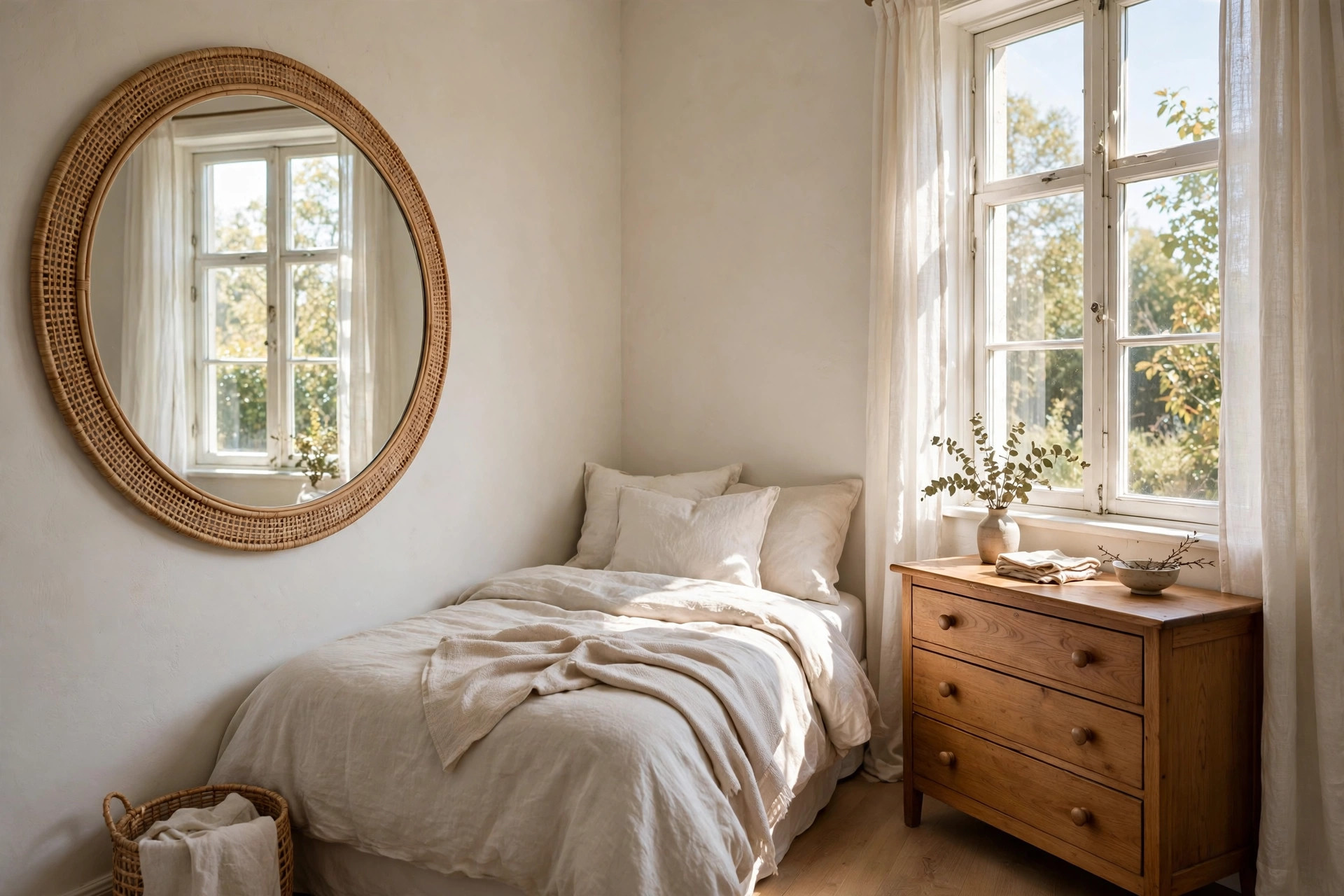
This is the single most effective trick in a small bedroom, and the one to do first if you only buy one mirror. Hang a large round mirror, 28 to 36 inches across, on the wall directly opposite your window. It catches the full spread of daylight and reflects the sky and outdoor view back into the room, which reads as a second window.
Round shapes soften a room full of straight lines from the bed, dresser, and door frames, so the space feels less rigid. Keep the centre of the mirror at about 57 to 60 inches from the floor, roughly eye level for most adults. A thin wood, black metal, or brushed brass frame works in almost any scheme and costs about $45 to $120 in this size. Avoid a very thick, ornate frame in a tiny room; it eats visual space and makes the mirror feel heavy instead of airy.
2. A Leaning Arched Full-Length Mirror in the Corner
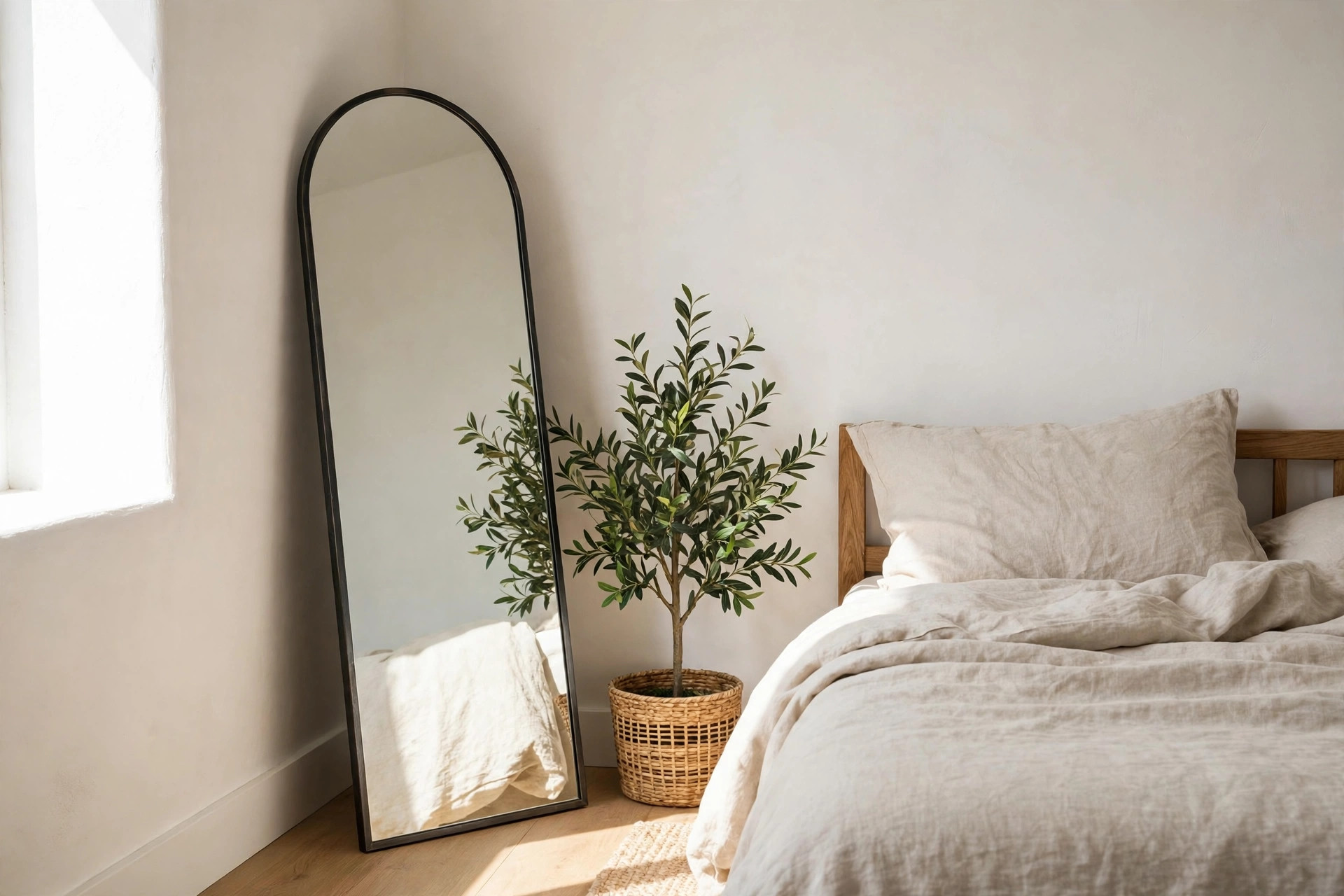
An arched full-length mirror brings a gentle, architectural shape to a plain corner and gives you a proper head-to-toe view. Choose one 60 to 72 inches tall and 20 to 24 inches wide. Lean it in an unused corner beside the bed or near the wardrobe, at a slight angle of about 5 to 10 degrees from the wall.
Safety is not optional here. Always secure a leaning mirror with an anti-tip strap or wall anchor, especially with children or pets. Prices run from about $80 to $220. Place it so it reflects the window or a neatly made bed, not the back of a door. The arch also draws the eye upward, helping low ceilings feel taller.
3. A Round Mirror Above the Dresser, Two-Thirds the Width
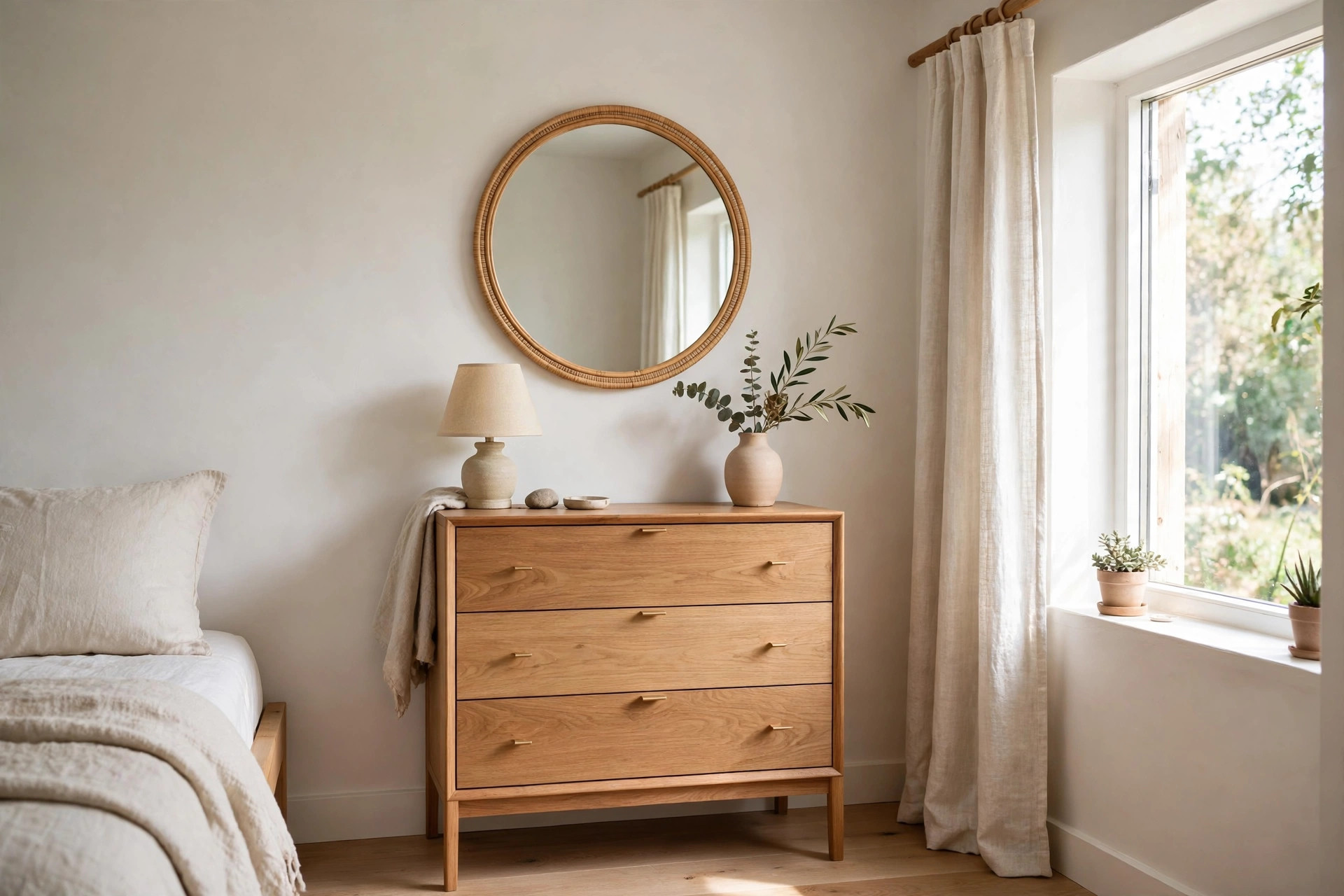
Above a dresser is the most natural home for a bedroom mirror, but size is where most people go wrong. The reliable rule is simple: the mirror should be about two-thirds the width of the dresser below it. For a slim 36-inch dresser, that means a mirror around 24 inches wide. For a 48-inch dresser, aim for about 32 inches.
Hang it so the bottom edge sits 6 to 10 inches above the dresser surface, leaving room for a small lamp, a tray, or a vase without crowding the glass. This pairing is practical for getting ready and it anchors the dresser wall so it looks styled rather than accidental. A round or oval mirror in the $35 to $110 range is plenty here. If you are also rethinking colour on that wall, these small bedroom paint colour ideas that open up a tiny space pair beautifully with a pale wood or white-framed mirror.
4. Mirrored Sliding Wardrobe Doors
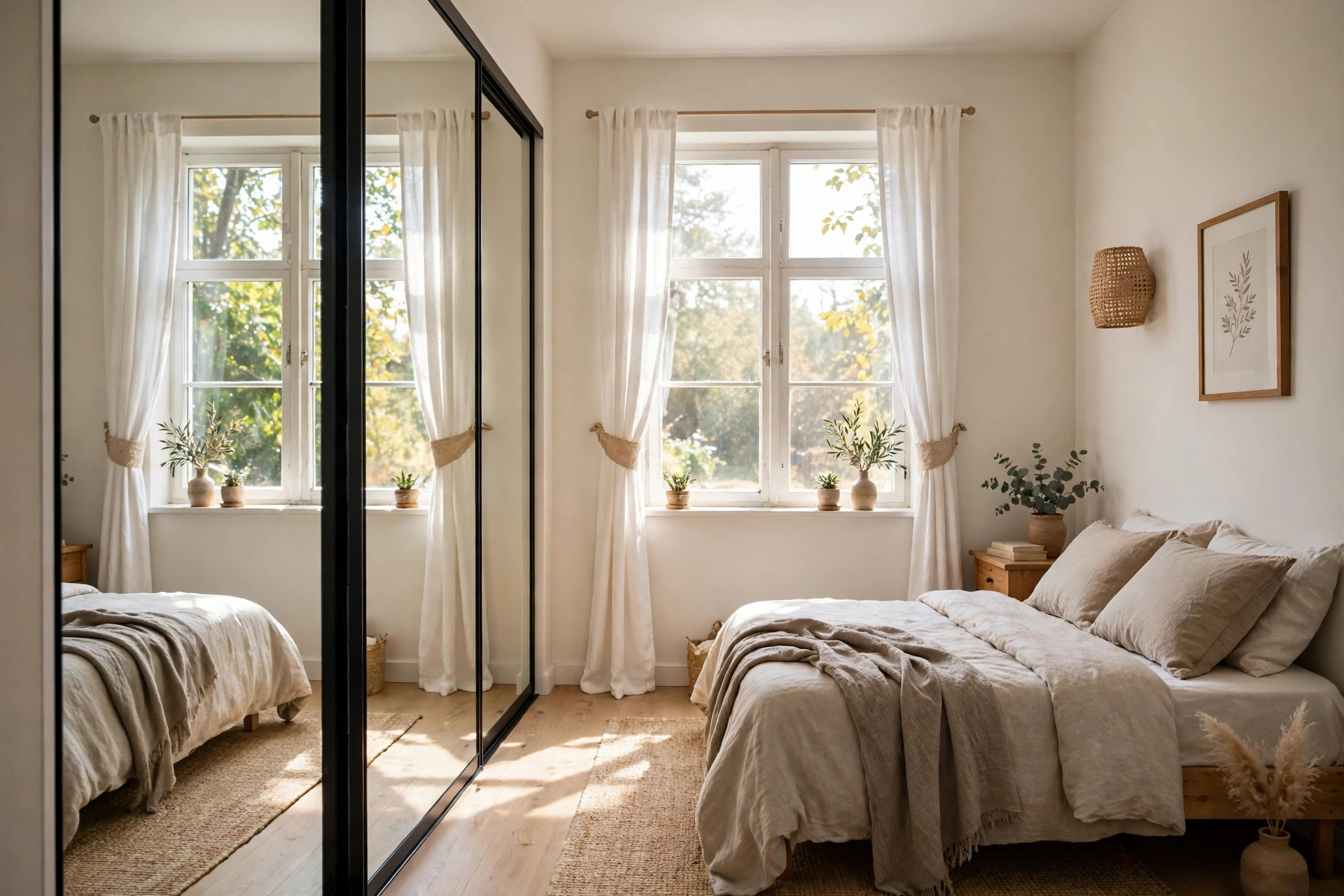
If your small bedroom already has a built-in wardrobe, mirrored sliding doors are the biggest space illusion you can buy. They reflect the entire room, bounce window light across the ceiling, and remove the need for a separate full-length mirror altogether, which frees up wall space.
This is the most expensive idea here, usually $250 to $300 and up for a pair of doors. It is still worth considering during any wardrobe update, because no other change doubles the sense of width so completely. Keep the glass clean, and choose frameless or slim-framed doors for the calmest look.
5. A Grid of Small Mirrors Instead of One Big One
When a single large mirror feels too costly or too heavy for a rented wall, try a neat grid of small mirrors. Six or nine square or round mirrors, each 10 to 12 inches, arranged in two or three tidy rows, reflect light in fragments and act almost like wall art.
Keep gaps even, about 2 inches, and map the grid with painter's tape before hanging anything. Sets cost about $25 to $60 in total. The grid works best beside a window rather than directly opposite it. Choose matching frames for a calm, intentional look.
6. A Mirror Behind a Bedside Lamp
This is a quiet evening trick that makes a small bedroom feel warm instead of cramped after dark. Place a mirror, around 20 to 24 inches tall, on the wall or on the nightstand directly behind your bedside lamp. When the lamp is on, the mirror doubles its glow and spreads a soft pool of light across the wall.
It is especially helpful in rooms with no ceiling light or with a single harsh overhead bulb you dislike using. Use a warm bulb, and keep the mirror slightly above the lamp base so the reflection is of light, not of tangled cords. A small framed mirror for this job costs about $20 to $50. For more ways to layer gentle light like this, see our guide to cozy bedroom lighting ideas for small rooms that feel warm, not dim.
7. A Long Mirror on the Back of the Door
In the smallest bedrooms, the back of the door is often the only full-length space left. An over-door or mounted long mirror, typically 48 to 60 inches tall and 14 to 16 inches wide, uses that forgotten surface without taking a single inch of floor or wall elsewhere.
Over-door hooks are renter-friendly and cost about $15 to $40 for the whole mirror. If you mount it with screws, check the door is solid enough to hold the weight and that the mirror does not rattle every time the door moves; foam pads at the corners solve that. One honest warning: a door mirror reflects whatever is in front of it when the door is closed, so keep that view reasonably tidy or the room will always look busier than it is.
8. Two Matching Mirrors Above Twin Nightstands
Symmetry calms a small room. If your bed sits between two nightstands, hang a matching mirror above each one, each about 18 to 24 inches wide, with their centres at the same height. The pair frames the bed, makes the wall feel wider, and gives both sides of the bed their own reflected light.
The identical mirrors tie the two sides together visually, even if the nightstands differ. Expect to pay about $30 to $80 per mirror. Keep shapes simple, and leave at least 6 inches between each mirror and anything tall on the nightstand.
9. A Floor-to-Almost-Ceiling Mirror Panel on a Narrow Wall
Many small bedrooms have one awkward narrow wall section, perhaps 24 to 30 inches wide, between a door and a corner. A tall, slim mirror panel that fills most of that width, hung from about 12 inches above the floor to near the ceiling, turns dead space into the room's longest view.
You can buy a single tall panel, 60 to 72 inches by 20 to 24 inches, for about $70 to $180. The unbroken vertical reflection makes the ceiling feel higher. Angle it toward a window or dresser rather than directly facing the bed.
10. A Vintage-Style Mirror Above a Small Desk or Vanity Corner
If your bedroom doubles as a place to get ready or work, a mirror above a small desk or vanity corner earns its keep twice. It gives you a proper spot for hair and makeup in natural light if it sits near the window, and when you are working it reflects light onto the desk surface.
Choose a mirror 22 to 28 inches wide, centred around 57 inches from the floor. An antique-style frame is fine in this one personal spot. Second-hand mirrors like this often cost just $25 to $75 and add real character. Keep the desk surface in the reflection uncluttered.
11. Mirrored Nightstand or Dresser Fronts for Subtle Shine
Not every mirror needs to hang on a wall. A nightstand or small dresser with mirrored front panels reflects light at a low level, brightening the dark zone under and around furniture where small rooms often look gloomy. The effect is gentler than a wall mirror because you see light and colour in it, not a sharp reflection of yourself.
A single mirrored nightstand usually costs about $90 to $200. Start with one piece rather than a matching set, which can tip a tiny room into glittery. Keep the top styled simply and clean the panels weekly, because fingerprints show quickly at hand height.
12. A Wide Horizontal Mirror Above the Headboard
The wall above a headboard is often left empty or filled with a picture that does little for light. A wide, low mirror, about 36 to 48 inches wide and 16 to 20 inches tall, hung securely above the headboard, stretches the bed wall sideways and reflects light from a window on the opposite or side wall.
Fix it firmly with proper wall anchors rated for its weight; never rest a mirror on a headboard where it could slip. Leave 8 to 12 inches between the top of the headboard and the bottom of the frame so the bed does not look crowded. Prices sit around $50 to $140. If you share the bed and either of you dislikes seeing movement reflected while falling asleep, choose a frosted-edge or antiqued finish here, which softens the reflection while still bouncing light.
Placement and Size Guide: Getting It Right First Time
Most mirror disappointment comes from three simple errors: wrong height, wrong size for the furniture below, or a reflection nobody wants to see. Use these rules and you will avoid nearly all of them. They are the same principles professional stylists rely on, and they cost nothing to apply.
Height. For a mirror you look into while standing, hang it so its centre is 57 to 60 inches from the floor. Above furniture, ignore that rule and relate it to the piece below instead: 6 to 10 inches above a dresser or desk is the comfortable gap. For a full-length mirror, the top should sit at least a few inches above your head height when reflected, which is why 60 inches is the practical minimum and 65 to 72 inches feels generous.
Width. Above a dresser, vanity, or sink-style unit, keep the mirror at about two-thirds the width of the furniture. Much wider and it overwhelms the piece; much narrower and it looks lost. On an empty wall, a mirror that covers roughly one-third to one-half of the wall width usually feels balanced in a small bedroom.
Light. Opposite a window gives the strongest daylight bounce. Beside a window is the second-best spot and often better for a dressing mirror, because you get side light on your face instead of glare. Never place a mirror where it will reflect direct, harsh sun into the bed or a desk chair for hours; the glare is tiring and can create an uncomfortable hot spot.
Safety. Use wall anchors suited to your wall type, not just the screws in the box, and secure any leaning mirror with an anti-tip strap. In a rental, heavy-duty strips work for mirrors under about 5 pounds; anything larger deserves a proper hook.
For a helpful overview of how designers think about mirror placement in bedrooms of all sizes, this guide to bedroom mirror ideas and placement from Amerisleep is a useful second read alongside the rules above.
Quick Checklist Before You Buy
- Measure the wall and the furniture below it, then check the two-thirds width rule.
- Stand where the mirror will go and note exactly what it will reflect.
- Confirm the centre height: 57 to 60 inches for a standing mirror.
- Choose the fixing for your wall type, plus an anti-tip strap for any leaning mirror.
- Check the price against the type: small and simple should be $15 to $60, not $150.
- Decide the frame finish last, matching one other finish already in the room.
Common Small Bedroom Mirror Mistakes to Avoid
Reflecting clutter. A mirror doubles whatever it faces. If it faces an open wardrobe, a chair piled with clothes, or a crowded shelf, the room instantly looks twice as messy. Tidy the view, close the wardrobe doors, or move the mirror. This one change fixes more disappointing mirrors than any purchase.
Hanging it too high or too low. A mirror whose centre is well above eye level becomes a ceiling reflector that nobody can use, and one hung too low cuts off your reflection mid-face. Mark the 57 to 60 inch centre line with tape, step back, and check before drilling.
Going too small. A tiny 12-inch mirror on a big empty wall does almost nothing for light or space. In a small room it feels counterintuitive, but one confident, larger mirror almost always works better than several timid small ones, unless you are deliberately building the even grid described earlier.
Facing the bed directly. Many people find a mirror that reflects the bed head-on distracting at night, catching movement and street light. If that bothers you, angle the mirror toward a window or dresser instead. There is no rule that a bedroom mirror must face the bed, and comfort at night matters more than symmetry in a photo.
Skipping the safety fixings. A leaning full-length mirror without a strap, or a heavy mirror on a single weak screw, is an accident waiting for a bump. Spend the extra $5 to $10 on proper anchors and straps. It is the least glamorous part of the job and the most important.
Final Thoughts
You do not need all 12 ideas. Pick one main mirror for light — ideally opposite or beside the window — and, if you need it, one practical full-length mirror. Get the size right, hang it at the right height, secure it properly, and make sure it reflects something you enjoy looking at.
Start with the idea that solves your biggest frustration first, whether that is a dark corner, nowhere to check an outfit, or a room that simply feels boxed in. A $40 mirror in exactly the right place will do more for a tiny bedroom than a $300 mirror in the wrong one, every single time.


Comments
Post a Comment