
12 Small Living Room Floor Lamp Ideas That Brighten Dark Corners
If you are hunting for small living room floor lamp ideas, your room probably has the same problem as most compact living rooms: one ceiling light in the middle, and four corners that fall into shadow the moment the sun goes down. Those dark corners are not just a lighting flaw. They make the walls feel closer, the room feel smaller, and the seating feel less inviting than it should.
A floor lamp is the fastest fix because it needs no wiring, no table to sit on, and almost no floor space. Put the right lamp in the right corner and the room instantly gains height, warmth, and a second pool of usable light for reading or conversation. This guide walks through 12 floor lamp ideas that genuinely suit small rooms, each with honest sizes and prices, then a placement and bulb guide so the lamp you buy works the first time.
Why Floor Lamps Work So Well in Small Living Rooms
Good rooms are lit in layers: a general layer, a task layer for reading and work, and an accent layer that adds glow. A single ceiling fixture only gives you the first layer, and it casts shadows into every corner. A floor lamp adds the other two layers exactly where you sit, which is why one well-placed lamp changes a room more than a brighter ceiling bulb ever will.
Floor lamps also draw the eye upward. A lamp 58 to 64 inches tall pulls attention to the full height of the room, and a bright corner stops the eye from stopping at a dark wall. If you want the broader picture first, our guide to cozy living room lighting ideas for small apartments covers the full layered approach, while this guide goes deep on the single most flexible piece in it.
12 Small Living Room Floor Lamp Ideas That Brighten Dark Corners
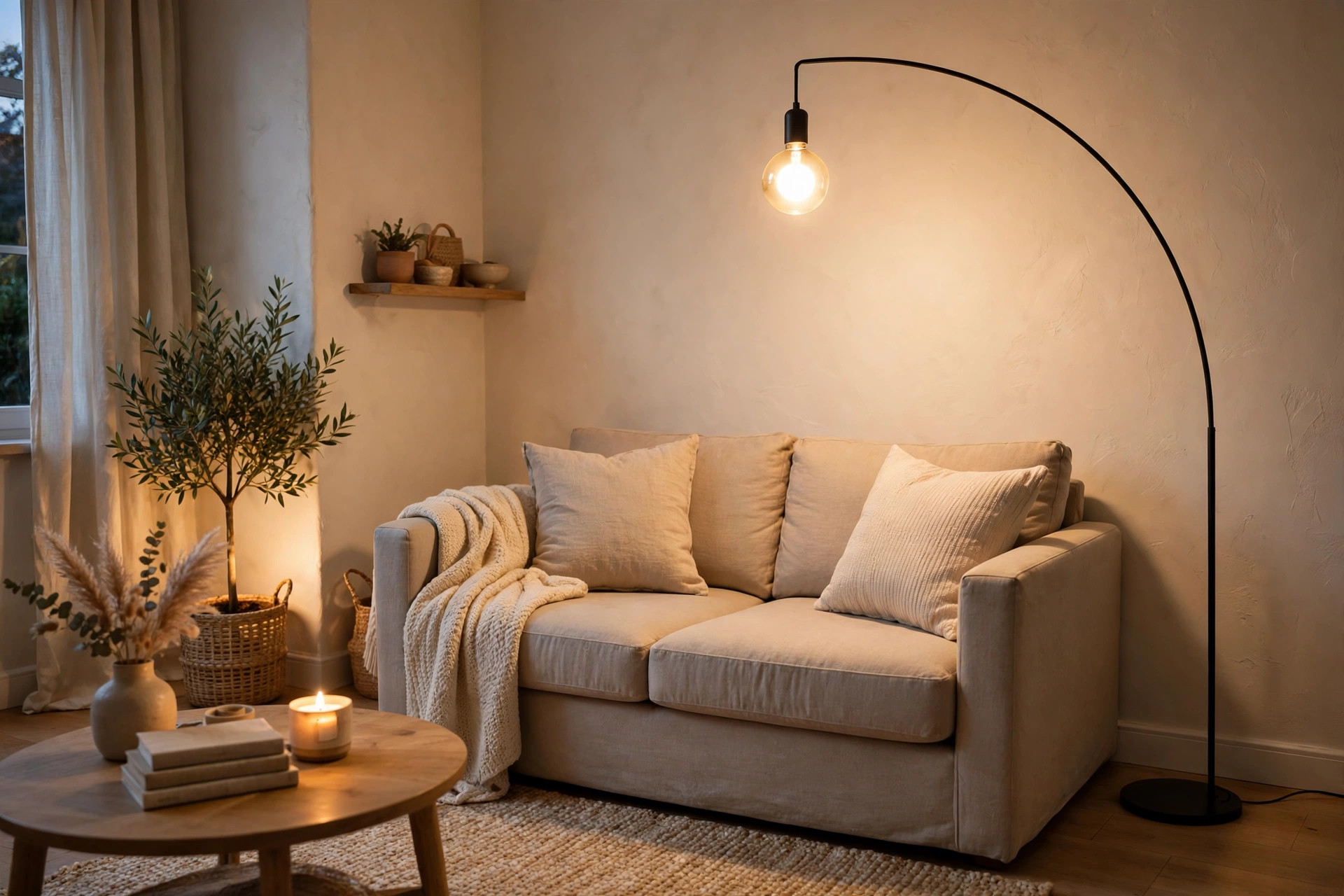
1. A Slim Arc Lamp Over the Sofa
The arc lamp is the hardest-working shape in a small living room. The heavy base tucks behind or beside the sofa, taking a footprint of roughly 10 to 12 inches, while the curved stem reaches over the seating and drops light exactly where people sit. You get overhead-style light for reading and conversation with no ceiling work and no table space used.
Choose an arc that reaches about 66 to 80 inches high with an overhang of 30 to 40 inches, so the shade lands over the middle seat rather than behind your head. Simple metal arcs cost about $60 to $150. Keep the shade open at the bottom for direct light on a book, and use a warm bulb, 2700K to 3000K, so the light feels like evening, not office.
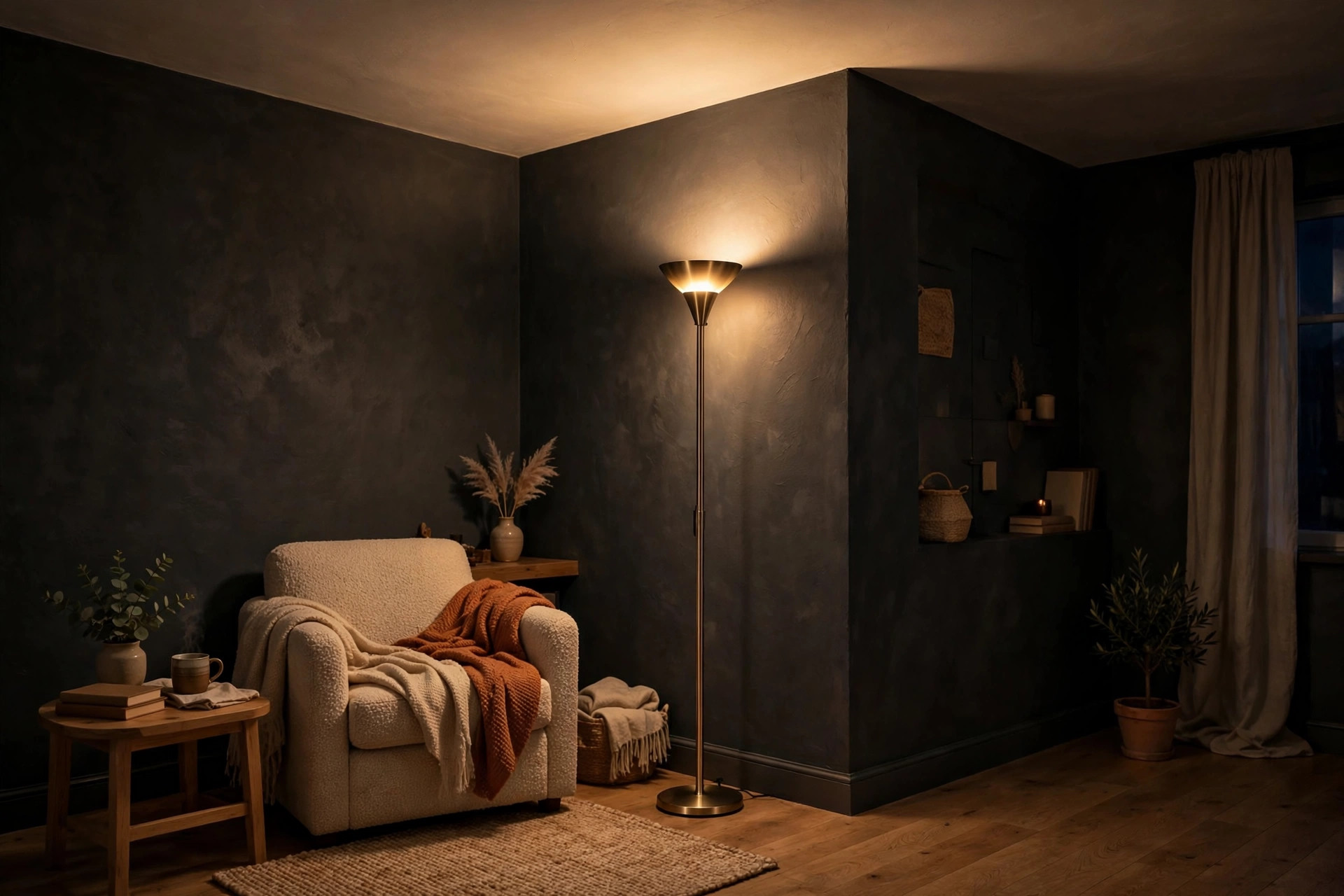
2. A Torchiere Uplight in the Darkest Corner
A torchiere points its light straight up. The beam bounces off the ceiling and washes back down as soft, shadow-free ambient light, which is exactly what a dark corner needs. Because the glow comes from above, the corner stops reading as a dead end and the ceiling feels higher.
Torchieres are among the slimmest lamps made, often with a base under 10 inches across, and basic models cost about $30 to $80. Place one in the corner furthest from the window. If your torchiere has a glass or metal bowl, keep it dusted; a dusty uplight loses a surprising amount of brightness.
3. A Tripod Lamp for a Reading Corner
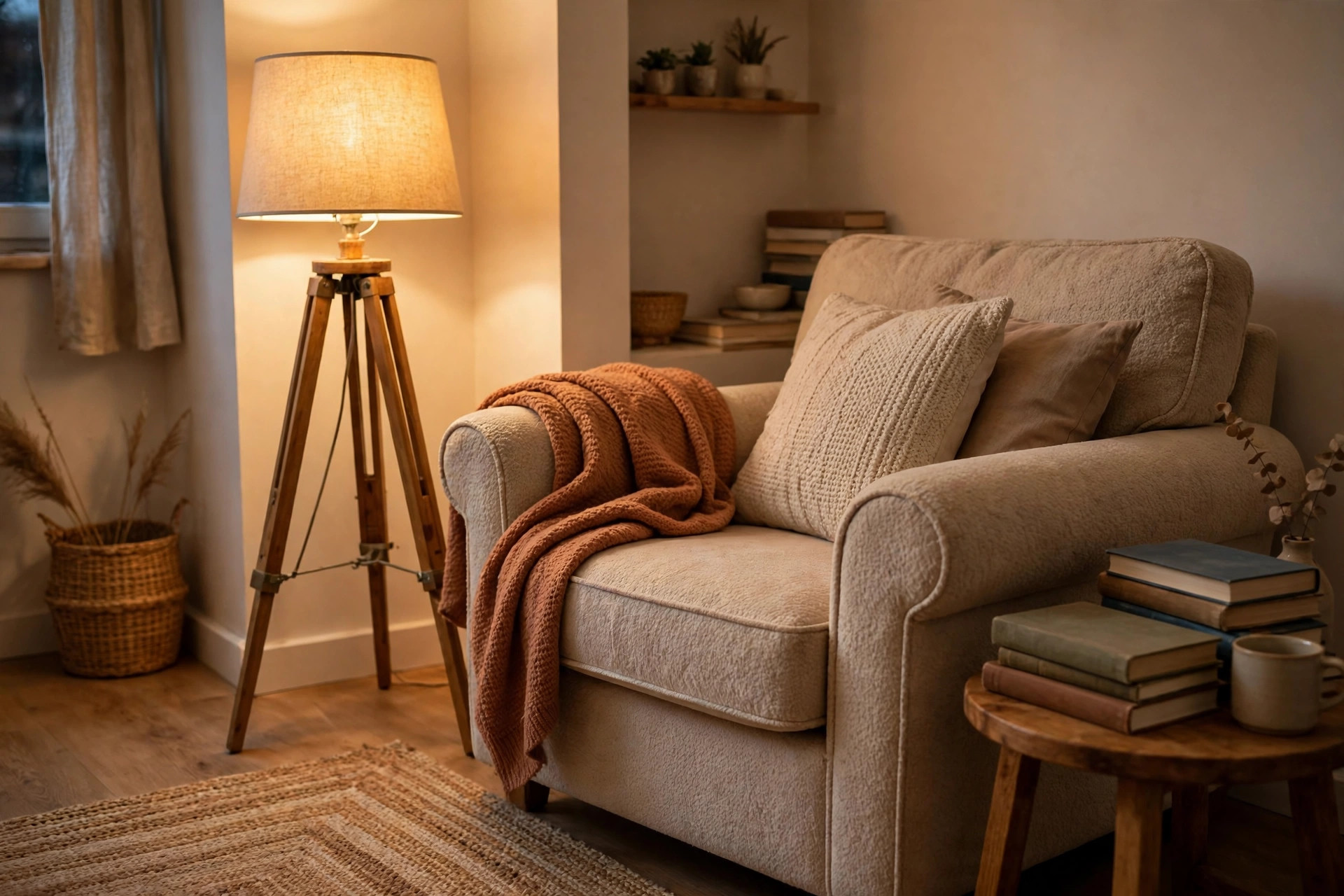
A tripod lamp turns an empty corner into a reading spot. The three legs give it a furniture-like presence, so the corner looks designed rather than filled. Pair it with an armchair and a small side table and you have the most-used seat in the room.
Be honest about footprint: tripod legs spread 18 to 24 inches wide, the broadest base in this list, so reserve this style for a corner that can spare the room. Fabric drum shades soften the light for reading without glare. Wood-leg tripods cost about $50 to $130. If the corner is truly tight, the slim options further down this list will serve you better, and our roundup of small living room corner ideas that turn dead space useful has more ways to use that same corner.
4. A Minimalist Pole Lamp for the Tightest Gap
When the only free floor space is a 10-inch gap beside the sofa, a minimalist pole lamp is the answer. One straight stem, one small shade or exposed bulb, and a base that slides almost completely under the sofa frame. It adds a point of warm light without any visual bulk.
These lamps cost about $25 to $60 and suit modern and Scandinavian rooms best. Choose a shade that directs some light down for reading, not a bare bulb at eye level, which glares when you are seated. A footswitch on the cord is worth having, because reaching behind a sofa to find a switch gets old fast.
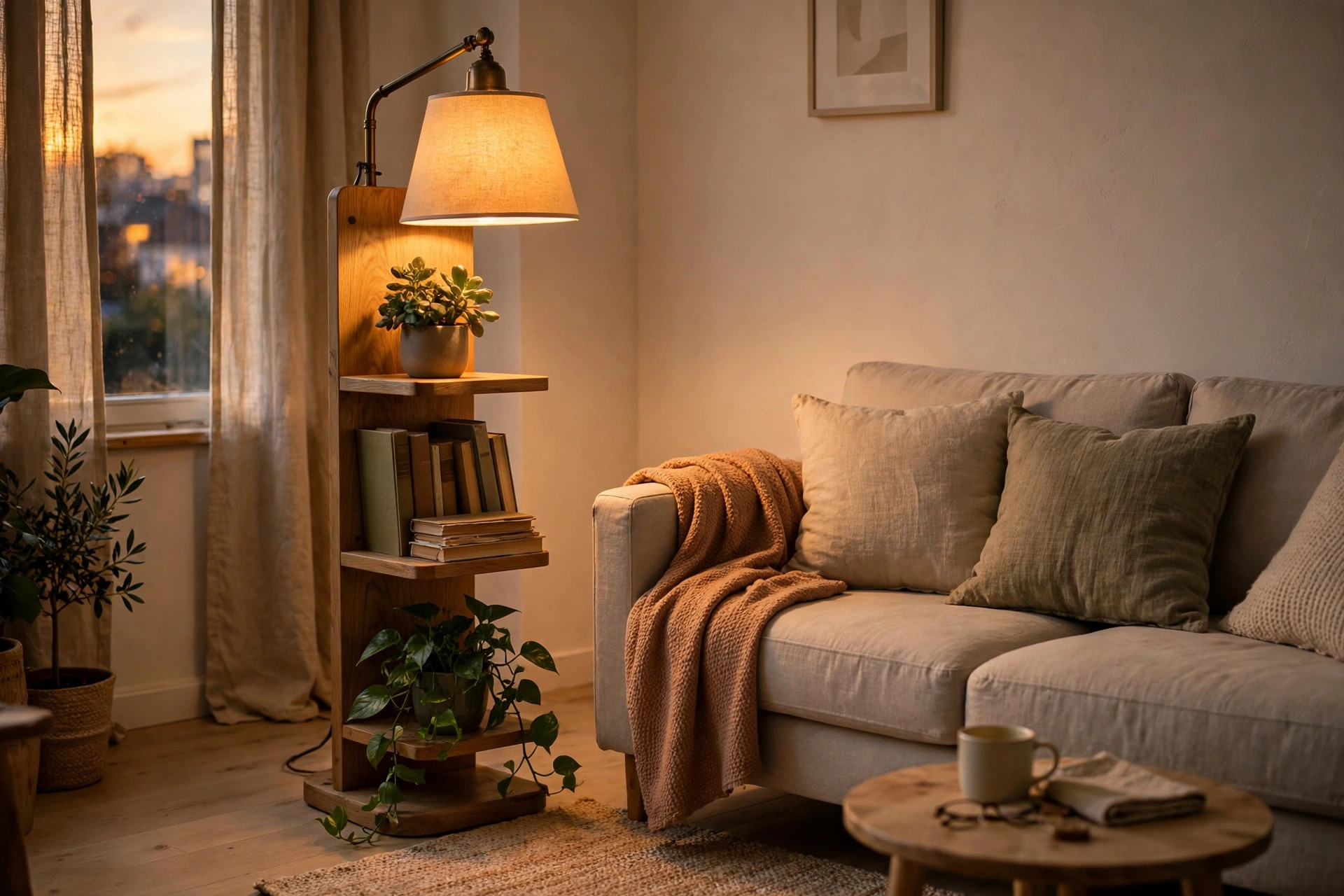
5. A Shelf Floor Lamp That Earns Its Footprint
A shelf floor lamp stacks two or three small shelves inside its frame, giving you a lamp and a mini bookcase in one 10 to 12 inch square. In a small room, any piece that does two jobs deserves a serious look. Use the shelves for the book you are reading, a small plant, and the remote that otherwise lives on the floor.
Expect to pay about $45 to $100. The light from these lamps is soft and ambient rather than strong task light, so treat it as your glow layer and keep a brighter source for long reading sessions. Keep the shelves styled lightly; cramming them full makes the lamp look like storage, not furniture.
6. An Adjustable Pharmacy Lamp for Serious Readers
Pharmacy lamps are the classic reading tool: a slim stem, a height that adjusts, and a metal shade on a swivel that points light down onto the page and nowhere else. If one seat in your living room is where all the reading happens, this is the lamp for it.
Set the shade about 40 to 42 inches from the floor, roughly at shoulder height when seated, so the bulb stays out of your eyes while the page is fully lit. Quality metal pharmacy lamps cost about $60 to $160 and last decades. Brass and black finishes both work in small rooms because the silhouette is so thin.
7. A Globe Lamp for Soft, Even Glow
A globe lamp spreads light in every direction through a frosted glass or fabric ball, so it behaves like a small moon in the corner: gentle, even, and kind to faces on a video call or in conversation. It is the best choice when your complaint is harsh shadows rather than darkness itself.
Single-globe floor lamps run about $40 to $110. The light is ambient, not task light, so do not rely on a globe alone for reading small print. A dimmer, or a smart bulb you can warm and dim from your phone, makes a globe lamp the most flexible mood light in the room.
8. A Tree Lamp When One Corner Must Do Everything
A tree lamp has two or three heads branching from one stem, each aimed in a different direction: one up for ambient bounce, one down over the chair for reading, one across the room for accent. For a studio or a living room with a single available corner, it replaces two or three separate lamps.
Tree lamps cost about $50 to $120. The honest warning: cheap tree lamps look cluttered fast. Choose one finish, keep the heads at clearly different heights, and resist pointing all three at the seating area, which creates competing bright spots.
9. A Lantern-Style Lamp for Warm, Rustic Rooms
In farmhouse, cottage, and collected-style rooms, a lantern floor lamp — a cage or glass lantern head on a wood or black metal stand — adds texture that a plain shade cannot. The visible bulb and open frame throw patterned light and shadow that make plain walls feel warmer.
Use a warm vintage-style LED filament bulb so the look stays cosy without the heat or energy use of old bulbs. Lantern lamps cost about $55 to $140. One is a statement; the rest of the room should stay calm around it.
10. A Slim LED Corner Bar for Modern Rooms
The newest option is a vertical LED bar that stands in the corner itself, washing both walls with light from floor to ceiling. It takes almost no visual space — many are under 5 inches deep in the corner — and makes the corner disappear entirely, which is a striking trick in a small modern room.
Basic corner bars cost about $35 to $90; versions with remotes and colour control cost more. For a living room, set it to warm white most of the time. Colours are fun for a film night, but warm white is what makes the room feel bigger every other evening.
11. A Classic Drum-Shade Lamp Beside the Sofa
The timeless option still works: a straight stem, a round base, and a fabric drum shade, placed at the end of the sofa where a table lamp would need a table. The drum shade throws light up and down at once, so it covers ambient and reading duty in a single, calm silhouette.
Keep the proportions right: the shade should be roughly 14 to 18 inches across for a small room, and the bottom of the shade should sit near eye level when you are seated, about 40 inches from the floor, so you see light, not bulb. Good drum lamps cost about $40 to $100. If you would rather free the floor entirely, pair this idea with the right end table from our guide to small living room side table ideas that add storage without bulk and use a table lamp instead — the placement rules are the same.
12. A Matching Pair Flanking the Sofa or Fireplace
Symmetry is the oldest trick for making a small room feel ordered. Two identical slim lamps, one at each end of the sofa or each side of a fireplace, frame the seating and double the light without doubling the visual noise, because the eye reads a matched pair as one idea.
This is the most expensive route, roughly $80 to $200 for a pair of decent lamps, and it only works if the lamps are genuinely slim. Two bulky lamps will crowd a small room. Torchieres and minimalist poles are the safest pairings.
Placement and Bulb Guide: Getting It Right First Time
Height. For general living room use, choose a lamp 58 to 64 inches tall. Shorter lamps disappear behind the sofa; much taller ones dominate a small room. For a reading lamp, what matters is the shade: its bottom edge should sit at about seated eye level, near 40 to 42 inches, so the bulb is hidden and the page is lit.
Position. The three placements that almost always work are: in the darkest corner, beside the main reading seat, and at the far end of the sofa from the window, balancing daylight. Keep the base 2 to 4 inches out from the wall so the light can wash the wall rather than dying against it, and run the cord along the skirting board, never across a walkway.
Bulbs. Warm white, 2700K to 3000K, is the living room range. For brightness, aim for about 800 lumens for an accent lamp and 1,100 to 1,600 lumens for a lamp you read by. Dimmable bulbs earn their small premium every single evening. For a deeper look at corner placement in particular, the Lightopia guide to living room corner lighting is a useful companion read.
Stability. In homes with toddlers or large dogs, weight matters: choose a base of at least 8 to 10 pounds, or place the lamp where furniture shields it on two sides. A lamp that wobbles every time the sofa moves will end up unplugged in a cupboard.
Quick Checklist Before You Buy
- Measure the gap honestly: base diameter plus swing room for the shade.
- Decide the job first — ambient glow, reading light, or both — then pick the style.
- Check total height (58 to 64 inches for most) and shade height against seated eye level.
- Confirm the switch type: footswitch or dimmer beats a stem switch behind a sofa.
- Budget the bulb separately if the lamp ships without one, and choose 2700K to 3000K.
Common Floor Lamp Mistakes to Avoid
One lamp, asked to do everything. A soft globe in the corner will not make a reading chair work, and a hard task lamp will not make the room feel warm. If you can only buy one, buy the adjustable pharmacy style or a dimmable arc — they cover the widest range.
The bulb in your eyes. If you can see the bare bulb from your seat, the lamp is too short, the shade is too shallow, or it is placed too far into the room. Lower the line of sight problem first; brightness second.
Cool white bulbs. A 4000K or 5000K bulb in a living room lamp makes every fabric look grey and every evening feel like a waiting room. This single swap ruins more good lamps than any other mistake.
Ignoring the cord. A cord crossing the path between sofa and door is a trip hazard and looks untidy in every photo. Plan the outlet before the lamp: the right corner is the one with a socket behind furniture.
Final Thoughts
Start with the darkest corner and the seat you use most. For most small living rooms, one arc lamp over the sofa or one torchiere in the far corner removes the boxed-in feeling in a single evening, for well under $100. Get the height right, choose a warm bulb, hide the cord, and let the lamp pull the room upward. Small rooms do not need more light fittings — they need light in the right places.


Comments
Post a Comment