
12 Small Backyard Garden Path Ideas That Make a Yard Feel Finished
A small backyard without a path is a lawn you apologise your way across — muddy shoes in spring, worn yellow lines by August, and no clear route to the shed, the gate, or the garden beds. The best small backyard garden path ideas fix that with surprisingly little material: a path only needs to be where feet actually land.
That is the budget secret hiding in plain sight. You do not pave a yard; you pave a route, often with a few dozen stones and a weekend. Below are twelve path ideas with real widths, stride spacing, base depths, and costs — from a $40 mulch trail to a flagstone walk that lasts decades.
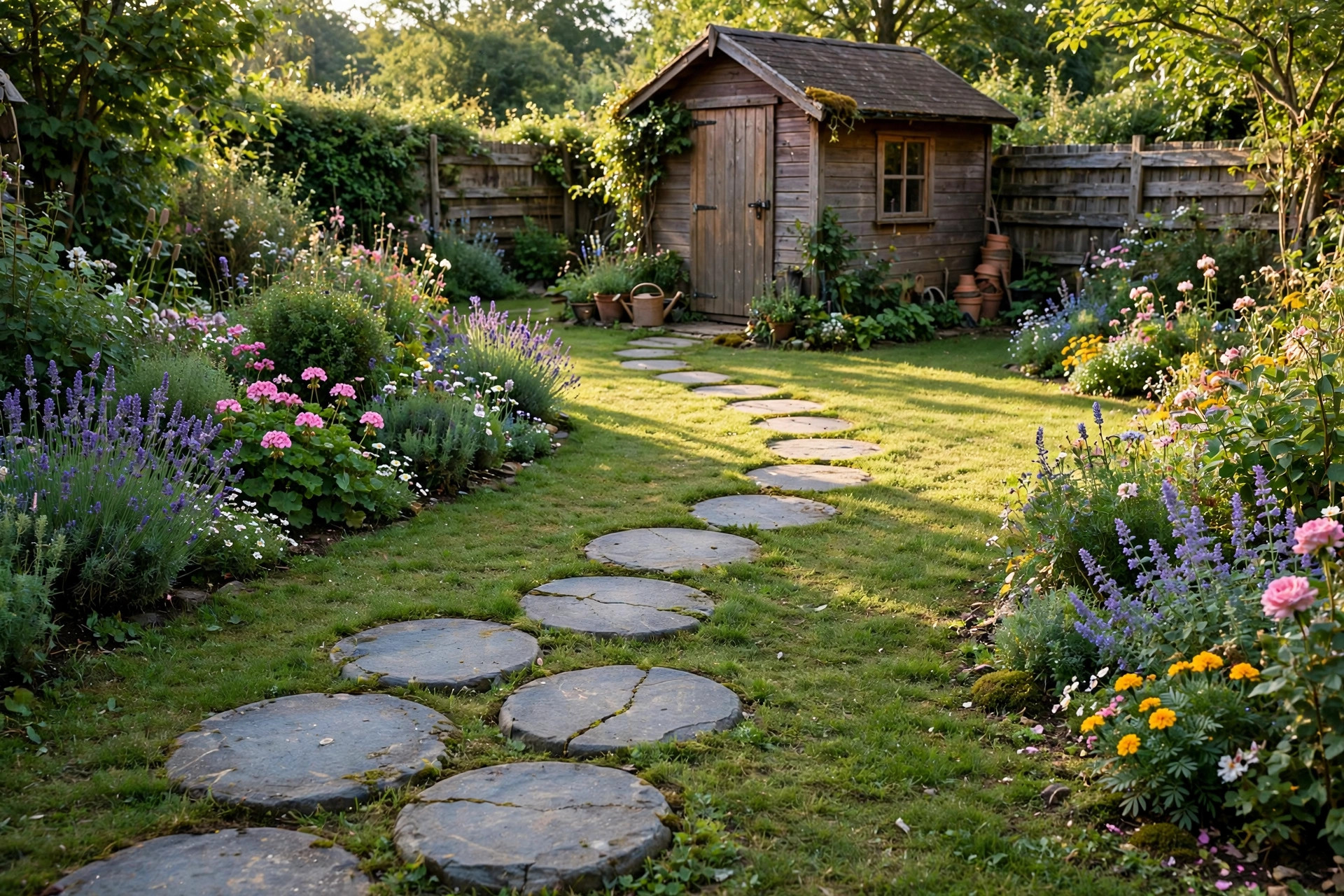
Plan the route around the yard you already have: if privacy planting is still on your list, our backyard privacy ideas for small yards that feel secluded pair naturally with a new path, since both follow the same edges.
Plan First: Route, Width, and Stride Spacing
Walk the route before you buy anything. Lay a garden hose or rope along the line you naturally take — gate to patio, patio to shed — then walk it at normal pace. Paths get used where feet want to go, and a path built on the designer's line instead of yours becomes an expensive decoration beside a muddy shortcut.
Size it honestly. A single-file garden path needs 24 to 30 inches of width; a main route where two people pass, or a wheelbarrow rolls, needs 36 inches. Stepping stones should be 16 to 24 inches across, set at your stride: about 24 inches centre to centre for most adults, with 3 to 6 inches of gap between stone edges. Guides like this stepping stone pathway DIY guide and Yard Utopia on easy DIY garden path ideas agree on the build order: layout first, then a compacted gravel and sand base, then stones set level and tested by actually walking them.
Mind water. A path should sit slightly crowned or slope gently — about 1 inch of fall across its width — so rain sheds instead of pooling. Never let a new path dam water against a fence, a shed, or the house wall; if the route crosses a soggy dip, that section needs extra base depth or a small gravel drainage bed under it.
12 Small Backyard Garden Path Ideas
Match the material to the traffic. Daily routes to a shed or bin store deserve stone or compacted gravel; a decorative line through flower beds can be as light as mulch or bark.
1. Stepping Stones Set Into the Lawn
The classic small-yard answer: large flat stones, 16 to 24 inches across, set individually into the grass at stride spacing. Cut the turf around each stone, dig 2 to 3 inches deeper than the stone's thickness, bed it on sand or crushed stone, and set the top flush with the soil so the mower passes straight over. Cost: $3 to $10 per stone. Watch-out: stones set proud of the lawn are ankle-catchers and mower-blade killers — flush is the whole trick.
2. Stepping Stones Floating in Gravel
Lay a gravel bed 24 to 36 inches wide and set your largest, flattest stones into it as the walking surface. The gravel never needs mowing, drains instantly, and makes each stone look deliberate. Set stones on a compacted base first, then fill gravel around them to the same height. Cost: $80 to $180 for a 12-foot run including edging. Watch-out: this path needs real edging — metal, brick, or stone — or the gravel migrates into the lawn within one season.
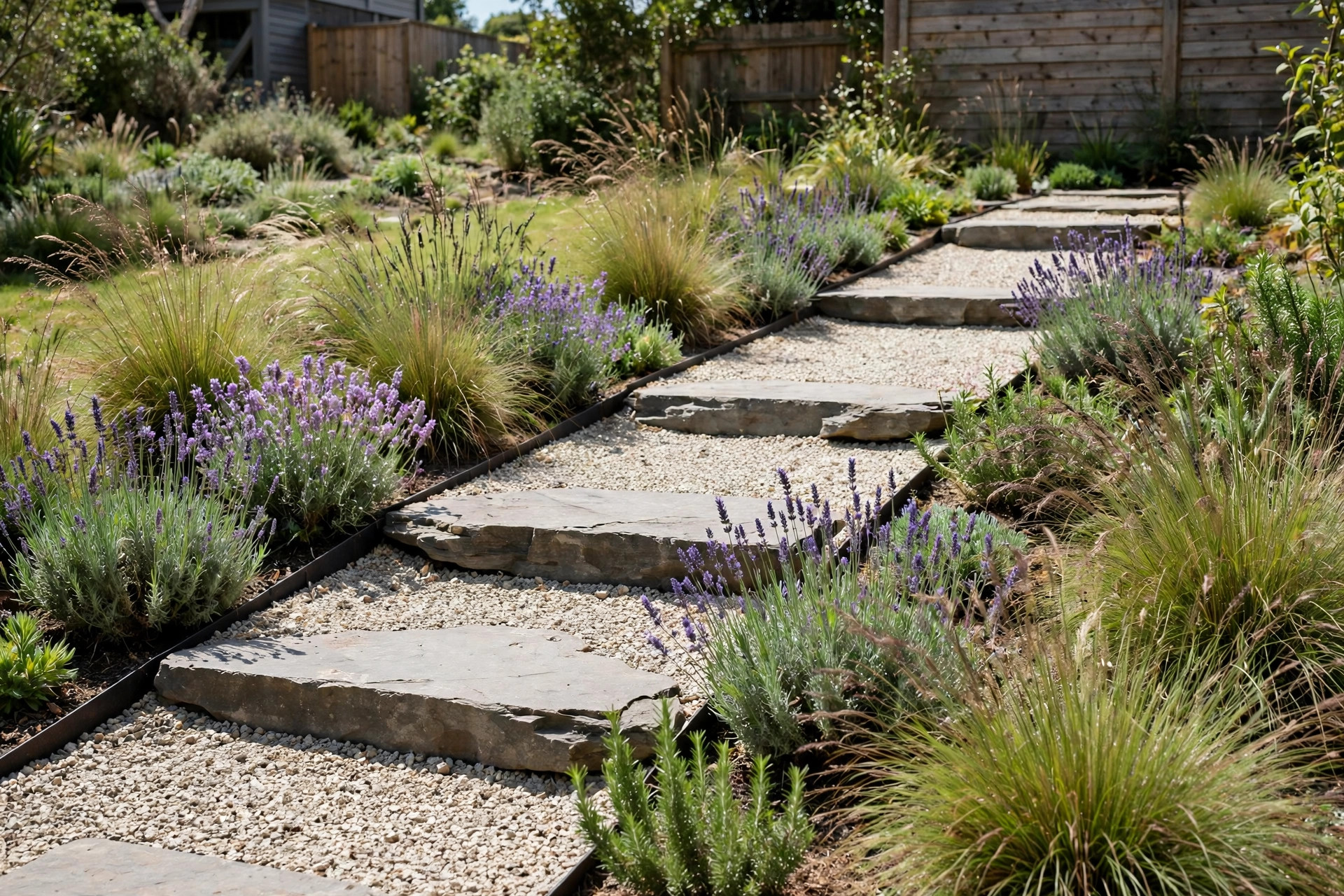
3. A Pea Gravel Path With Brick Edging
Pea gravel is cheap, forgiving, and instantly tidy: 2 to 3 inches of it over a compacted base and weed barrier, held by a soldier course of bricks dug in along both edges. It crunches pleasantly underfoot and suits traditional and cottage yards. Cost: $50 to $150 for a short path. Watch-out: pea gravel rolls underfoot and travels on shoe soles; it is a poor choice on slopes, for wheelbarrows, and right outside a door you sweep often.
4. Crushed Stone or Decomposed Granite, the Firm All-Rounder
Angular crushed stone and decomposed granite lock together when tamped, forming a surface firm enough for wheelbarrows, bikes, and heels — everything pea gravel fails at. Lay it in two 1-inch layers, wetting and tamping each one. Cost: $60 to $160 for a 12-foot path. Watch-out: it needs the same disciplined edging as gravel, and light-coloured stone dust tracks onto pale patios for the first few weeks until it settles.
5. Irregular Flagstone Fitted Like a Puzzle
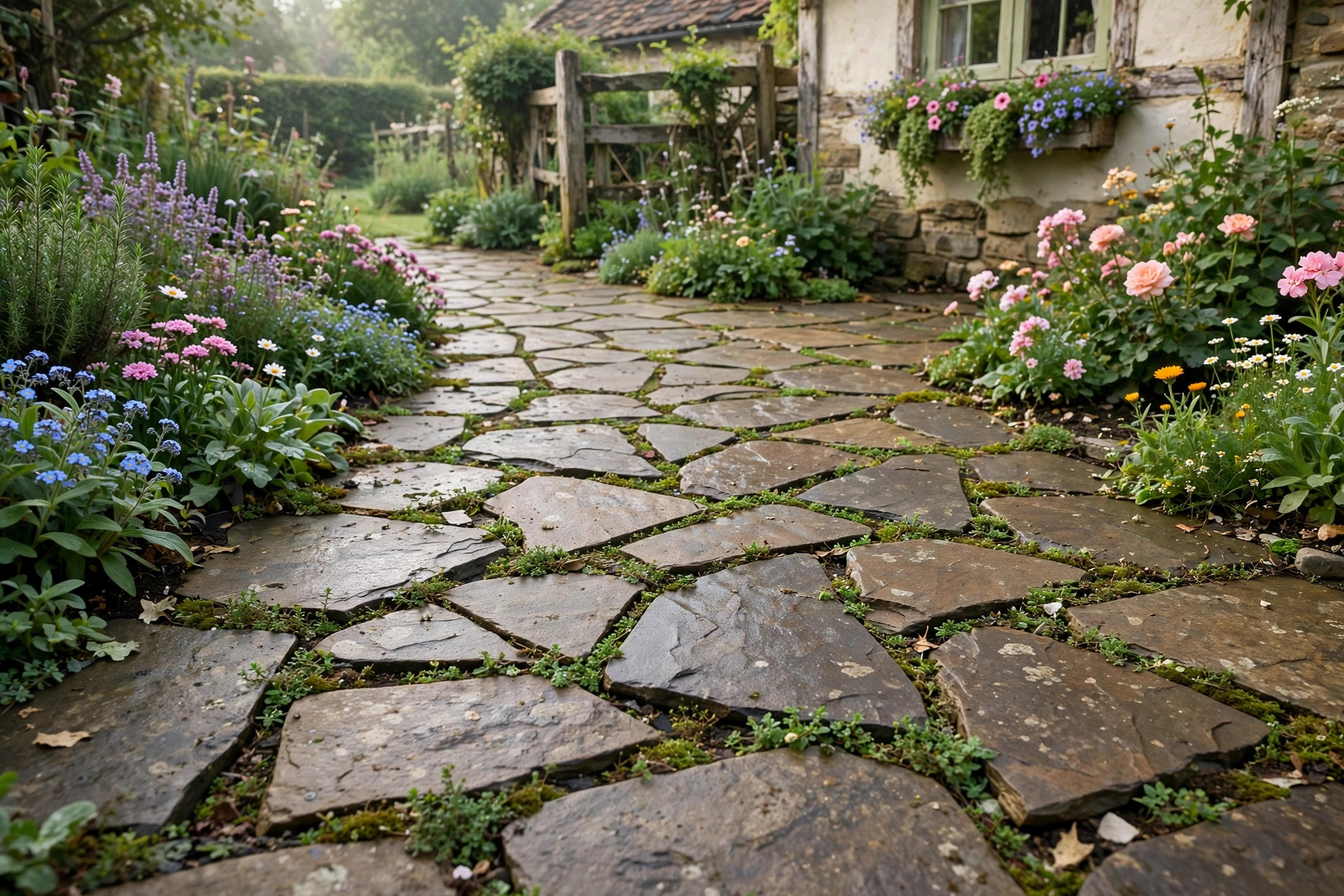
Natural flagstone, at least 1.5 to 2 inches thick with a textured face, fitted edge to edge with tight joints, is the premium small-yard path — and the most forgiving to lay, because irregular shapes hide imperfect spacing. Bed each stone on sand or fine gravel, wiggle until it does not rock, and fill joints with gravel, sand, or creeping thyme. Cost: $200 to $450 for a short run. Watch-out: smooth slate and polished stone get genuinely slippery when wet; choose a riven, grippy finish.
6. Square Concrete Pavers in a Clean Modern Line
Large square pavers, 18 to 24 inches, in a straight or offset grid over gravel or lawn, give a small modern yard its structure. The geometry does the decorating, so keep spacing ruthlessly even — measure every gap with the same spacer block. Cost: $4 to $9 per paver. Watch-out: concrete pavers show every height error; spend your patience on the base, levelling each paver against its neighbours with a long straightedge, not one stone at a time.
7. A Mulch or Wood-Chip Trail Through the Beds
The cheapest path there is, and the right one for routes through planting: 3 inches of wood chips or shredded bark over landscape fabric, edged with logs, stones, or nothing at all. It is soft, quiet, and disappears into the garden visually. Cost: $0 to $40 — many areas offer free wood chips from tree services. Watch-out: mulch decomposes; plan a top-up every year or two, and keep it a few inches clear of wooden fence bases and shed walls, where constant damp invites rot.
8. Brick in a Herringbone or Basketweave Pattern
Reclaimed or new clay bricks laid on a sand bed make the most characterful small path of all, and a 24-inch width keeps the count — and cost — sane: roughly 4 to 5 bricks per square foot in herringbone. Cost: $100 to $300 depending on your brick source. Watch-out: use proper paving bricks, not soft wall bricks, which flake apart after a few freeze-thaw winters; and set a string line, because patterned brick shows a wandering edge mercilessly.
9. A Curved Path That Makes a Small Yard Feel Bigger
Any of these materials, laid on a gentle S-curve instead of a straight line, buys you the oldest trick in garden design: the eye cannot measure the yard in one glance, so it reads larger. A curve also lets the path dodge roots, rocks, and the one shrub you refuse to move. Cost: same materials, slightly more edging. Watch-out: keep curves lazy — a radius you can mow and wheel along. Tight wiggles look nervous and make every future wheelbarrow trip annoying.
10. Log Slice Rounds for a Woodland Corner
Thick slices of hardwood log, 3 to 4 inches deep and 12 to 18 inches across, set like stepping stones on a sand bed, suit shaded, informal corners where grass struggles. Seal the tops with outdoor wood oil to slow checking and silvering. Cost: $0 to $60 if you have or can source a log. Watch-out: log rounds are a 3-to-6-year path, not a permanent one, and they are slippery when wet and mossy — keep them off main routes and steps.
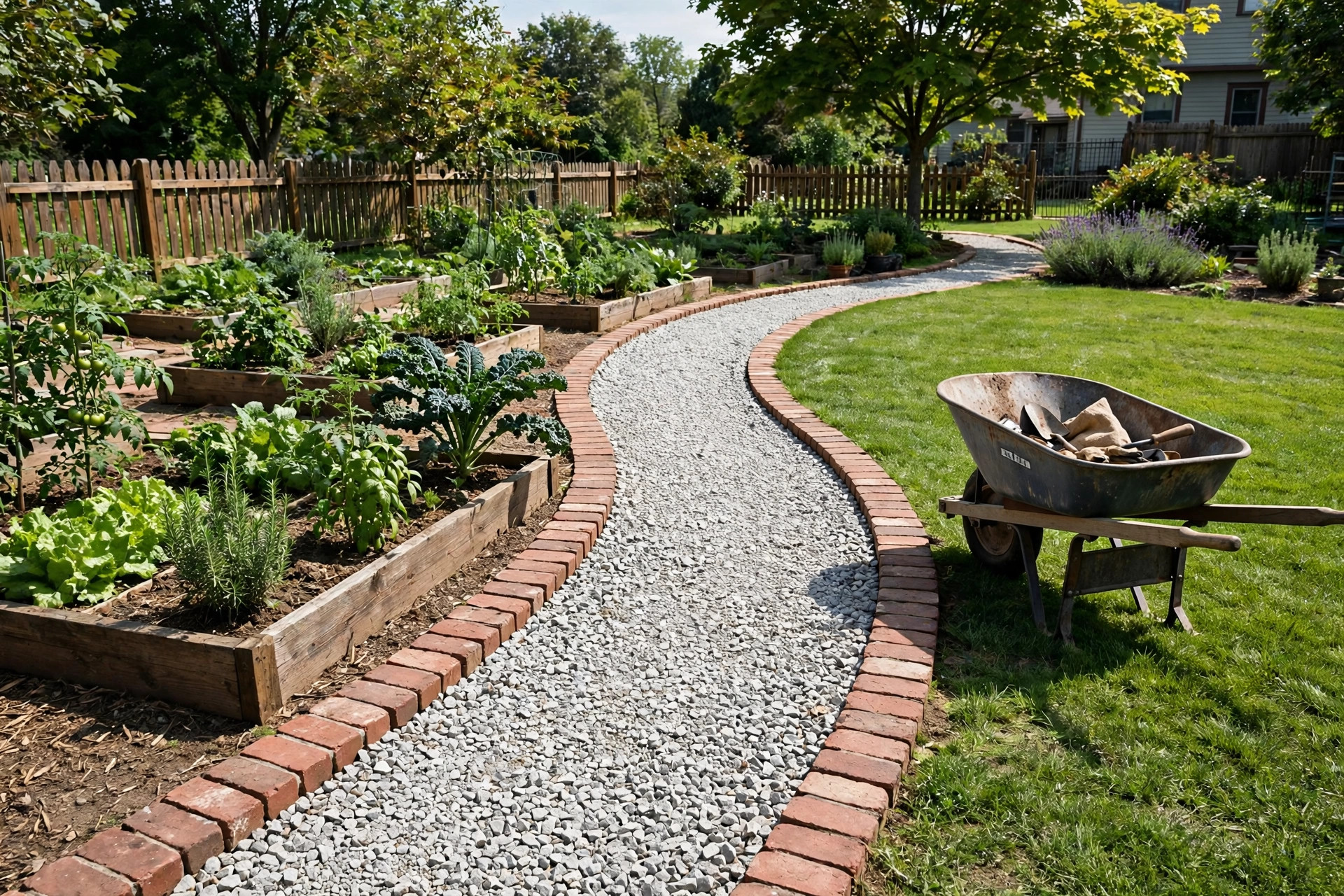
11. A Mixed Path: Stone Where Feet Land, Gravel Between
The budget hybrid professionals use: full paving only at landings — the patio edge, the shed door, the gate — with stepping stones at stride spacing between, all over one gravel bed. A 12-foot crossing needs only about six large stones, roughly half the paving of a solid path. Cost: $90 to $200. Watch-out: keep stones and gravel in one colour family; a mixed path reads as designed when the palette is tight and as leftover materials when it is not.
12. A Lit Path Edge for Evening Use
Whatever surface you choose, a path you use after dark deserves light: low solar stake lights every 6 to 8 feet on alternating sides, or a rope of warm light along one edge. Light the turns and the destination, not every stone — pools of light with shadow between feel designed; a runway does not. Cost: $20 to $60 for solar stakes. Watch-out: cheap solar lights dim within a season; buy replaceable-battery models and place them where they get real sun, not under the shrub they are meant to showcase.
Mistakes That Make a New Path Look Old in a Year
Skipping the base. Stones laid straight on soil sink, tilt, and grow mossy edges within one wet season. Even the simplest path deserves its 2 to 3 inches of compacted gravel and an inch of sand — it is an hour of work that buys a decade of level stones. If your yard gear currently lives in a muddy corner, our small patio storage ideas that hide the clutter outside will give the new path a tidy destination to arrive at.
Guessing the stride. Stones spaced for a giant or a toddler make every crossing a small annoyance forever. Lay the stones loose, walk the route in your normal shoes ten times, adjust, and only then dig. Your feet are the measuring tool this project actually respects.
Forgetting the edges at night and in winter. A path that vanishes after dark or turns to a skating rink of smooth wet stone fails its main job. Add light at turns and choose textured stone for main routes — then borrow from our patio string light ideas for small backyards to make the whole route glow, and browse the Outdoor & Porch collection for the rest of the yard.
Questions People Ask
How wide should a backyard garden path be?
24 to 30 inches for a single-file garden path, 36 inches for a main route where two people pass or a wheelbarrow rolls. Stepping-stone paths use stones 16 to 24 inches across at about 24 inches centre to centre, matched to your own stride before you dig anything.
What is the cheapest garden path to build?
A mulch or wood-chip path: often under $40, sometimes free if local tree services give away chips. Next cheapest is stepping stones set into an existing lawn at $3 to $10 per stone, because you are only paving where feet land instead of covering the whole route.
Do stepping stones need a base?
Yes — a small one. Cut the turf, dig 2 to 3 inches deeper than the stone, add compacted gravel or crushed stone, then an inch of sand for levelling. Stones set directly on soil sink and rock within a season; the base is what keeps each stone flush and mower-safe.
Which path material is best for a wheelbarrow route?
Compacted crushed stone or decomposed granite, or pavers and flagstone on a proper base. Avoid pea gravel and loose mulch on working routes — wheels sink, slip, and scatter them, and you will rebuild the surface every spring.
Start with the route you already walk, pave only where your feet land, and spend your effort on the base and the stride spacing. Do that and even the cheapest path on this list will make the whole yard look planned — because a yard with a path reads as a garden, and a yard without one reads as a chore.


Comments
Post a Comment