
12 Small Bedroom Closet Organization Ideas That Double Space
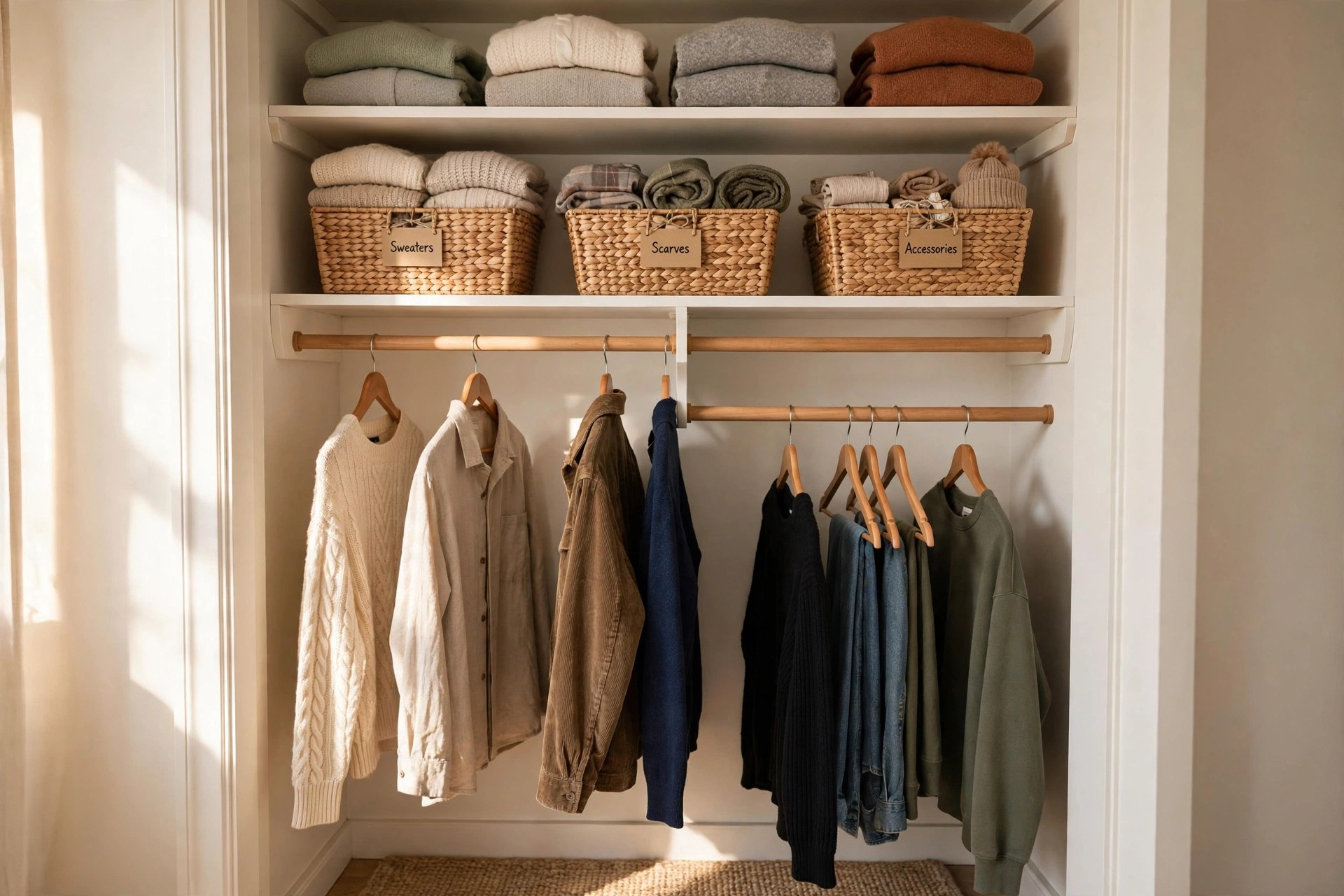
A small closet rarely fails because it is small. It fails because one long rod, one high shelf and a pile on the floor is not a system — it is a container you throw things into. These small bedroom closet organization ideas rebuild that container into zones: double hanging where clothes are short, shelves where things fold, the door and the floor treated as real storage, and every container labeled so the system survives a busy week. Most of the twelve ideas below cost under $30, need no renovation, and work in a standard reach-in closet about 4 to 6 feet wide and 24 inches deep. Measure your closet's width, depth and ceiling height before you buy anything — those three numbers decide which ideas fit.
Before You Organize: The 20-Minute Reset
Take everything out. Yes, everything. Group what comes out into keep, relocate and donate piles on the bed. Professional organizers quoted by Apartment Therapy make the same point in different words: a bedroom closet should hold what you use in this season of your life, not an archive of all of them. Off-season coats, spare bedding and the "someday" jeans belong in under-bed bins or a hallway cupboard. Most people find 20–30% of the closet's contents never needed to be in it at all — and that is your first, free, extra shelf.
12 Small Bedroom Closet Organization Ideas
1. Double-Hang the Short-Clothes Section
Shirts, blouses, folded-over pants and skirts are all under 42 inches long. A single rod at 66–68 inches wastes the 24 inches of air beneath them. Add a second rod at about 34–36 inches and you have doubled the hanging capacity of that section in one step. Tension rods work for renters; a screwed-in rod holds more weight. Keep one 40-inch stretch of single hanging for dresses and long coats, and double-hang everything else.
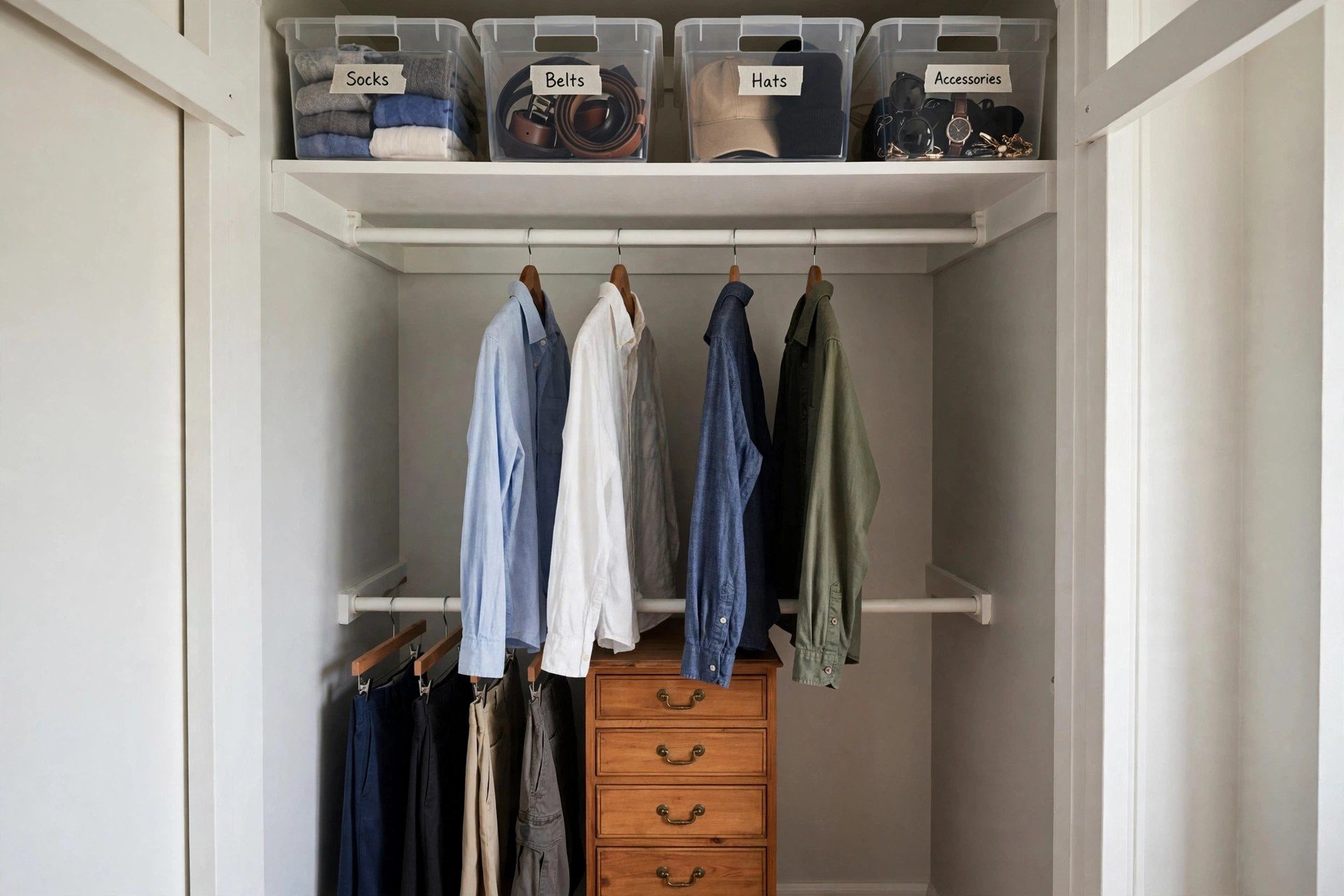
2. Put a Narrow Dresser Under the Hanging Clothes
The dead space under short hanging clothes is exactly dresser-shaped. A narrow unit 30–36 inches wide and under 32 inches tall slides in and swallows underwear, T-shirts, gym clothes and pajamas — freeing bedroom floor space at the same time, a trick roundups like Clutterless Home Solutions also recommend for a built-in look on a budget. Measure the depth: the dresser should sit at 20 inches deep or less so doors and hangers clear it. And when the dresser itself is the chaos, our small bedroom dresser organization ideas give every drawer one clear job.
3. Switch to Slim Velvet Hangers — All of Them
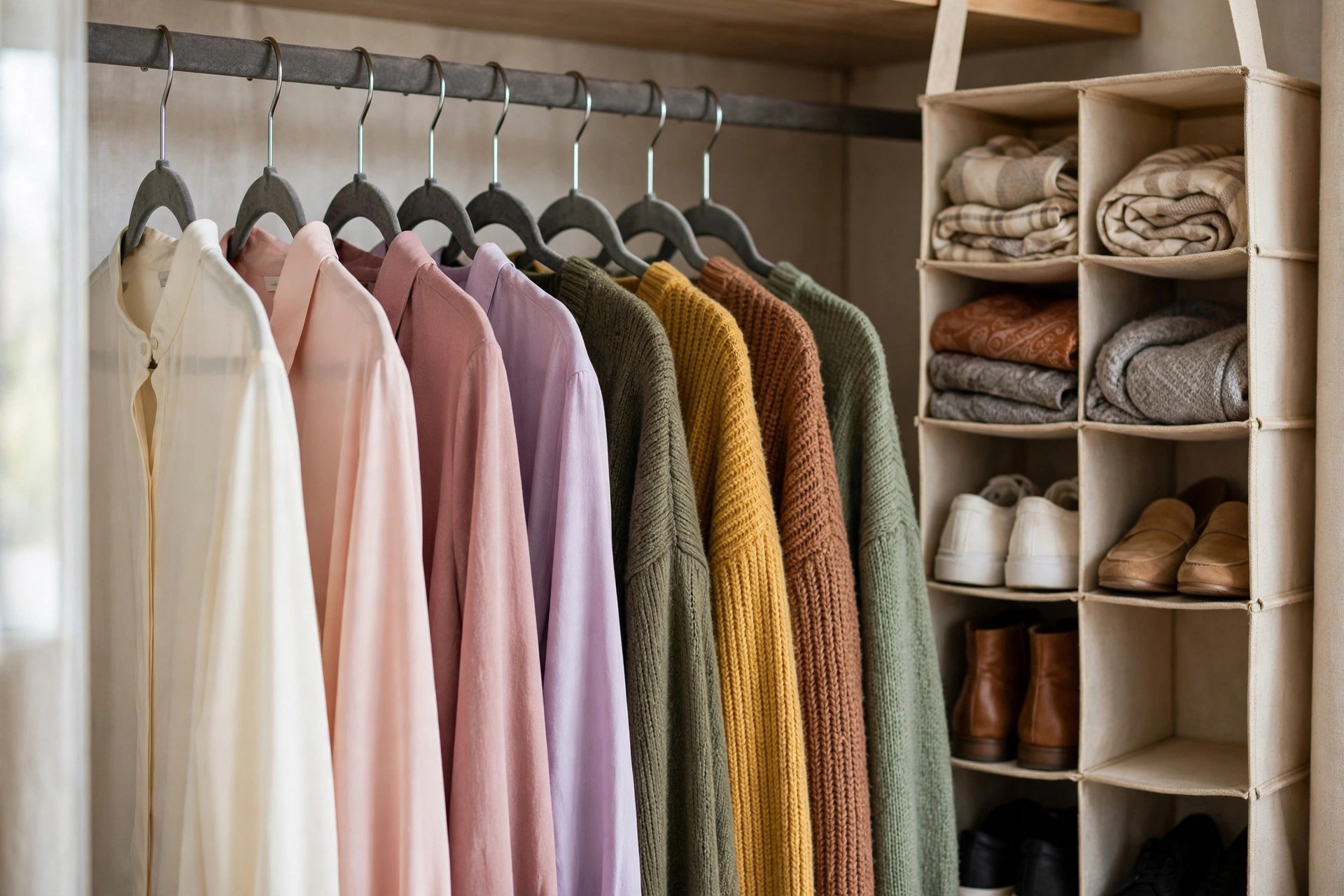
Mixed bulky hangers quietly eat a rod. Slim velvet hangers are about 0.2 inches thick versus roughly 0.5 inches for tubular plastic, so a 48-inch rod that held 40 mixed hangers holds 60 or more. The velvet grip also stops wide-neck tops sliding off. Buy one style, one color: the visual calm is half the "organized" feeling, and matching hangers make gaps and overcrowding obvious at a glance.
4. Build Up: Add Shelves to the Ceiling Line
Most reach-in closets waste the 18–24 inches above the top shelf. Add one more shelf as high as you can reach with a step stool (about 84–86 inches in an 8-foot room) and reserve it for the least-used things: seasonal bins, spare blankets, occasion shoes. Keep a small folding step stool hooked inside the door — if the high shelf is annoying to reach, it will not get used properly.
5. Use Shelf Dividers to Keep Stacks Honest
Folded stacks topple because nothing holds their edges. Clip-on shelf dividers, spaced 10–12 inches apart, turn one long shelf into bays: sweaters here, jeans there, T-shirts in between. Limit stacks to 4–5 items; taller stacks always collapse from the bottom item being pulled. File-folding T-shirts upright in a shallow bin works the same way and lets you see every shirt at once.
6. Give Shoes a Shelf, Not the Floor
Shoes on the closet floor are where clutter starts. A low angled shelf, a tiered rack (about 9 inches per tier), or clear stackable shoe boxes lift pairs into view and make the floor sweepable. Count your pairs first: most small closets fit 8–12 pairs on one 36-inch tiered rack. Store the rest — off-season boots, formal shoes — in labeled boxes on the high shelf from idea 4.
7. Hang a Fabric Organizer for the Small Stuff
A hanging organizer with 6–8 cubbies (each roughly 10 x 10 inches) takes only 6 inches of rod width and holds what drawers usually scatter: scarves, belts, hats, folded leggings, clutches. It is the cheapest "extra dresser" you can buy, and for renters it leaves no holes. Put daily items at eye level, occasional items at the very top and bottom cubbies.
8. Claim the Back of the Door
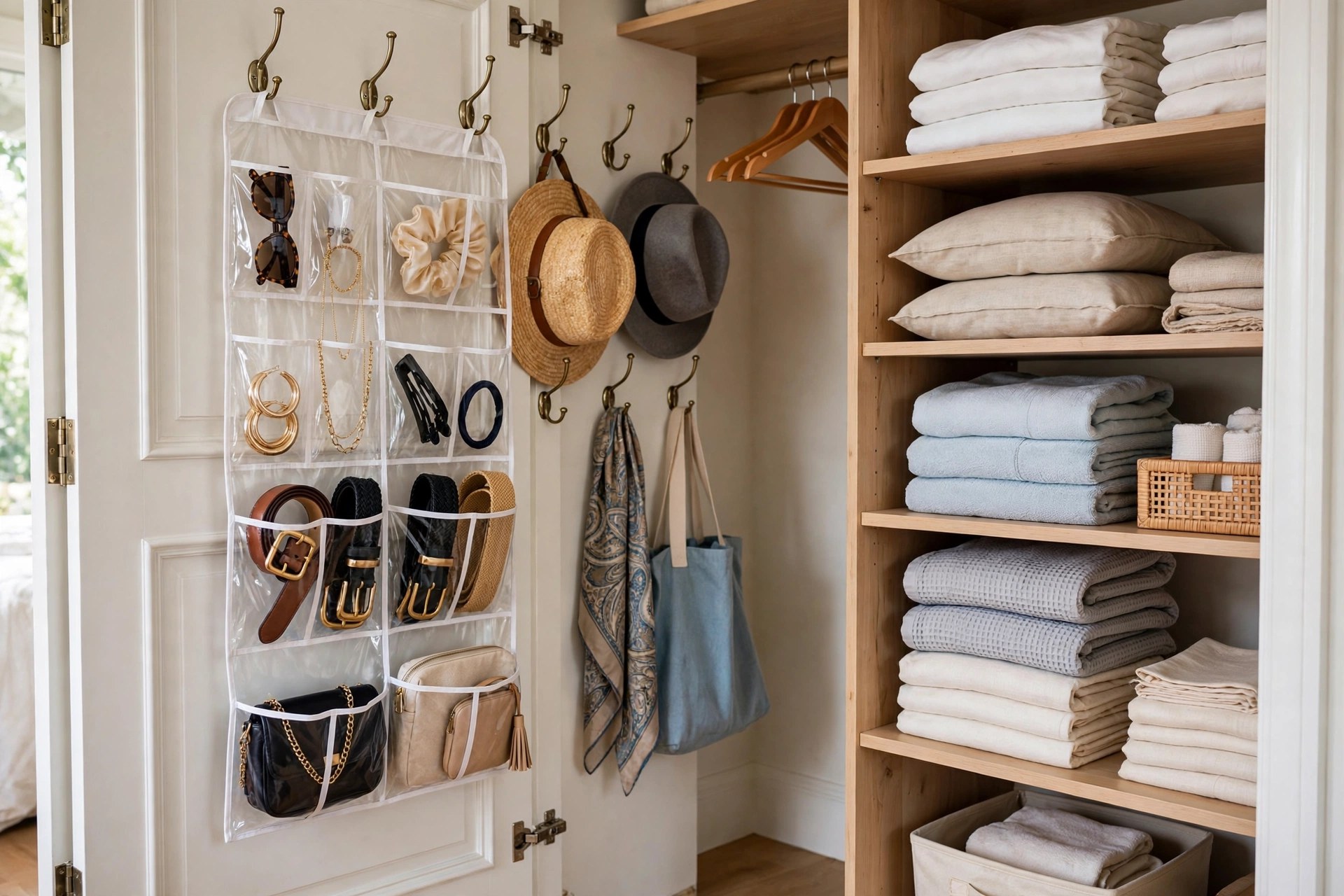
The inside of the closet door is 12–14 square feet of ignored storage. An over-door organizer with clear pockets handles accessories, sunglasses, gloves and small bags; a row of adhesive or over-door hooks at 60 inches holds tomorrow's outfit, a robe and a handbag. If your closet has bifold or sliding doors, use the wall strip beside the rod ends instead — hooks work there too.
9. Sort Bins by Season, and Label Everything
Clear bins for things you grab often, woven or fabric bins for things you want to look calm — and a label on every single one. Labels are not decoration; they are what stops a bin becoming a mystery box within a month. Try the same approach we used for the room outside the closet in our small bedroom storage ideas guide: one category per container, no "miscellaneous" allowed.
10. Add a Small Laundry Basket Inside the Closet
Clothes pile up where they are dropped, and they are dropped where getting dressed happens. A slim hamper (14–16 inches wide) inside the closet catches them at the source and keeps the bedroom floor clear. If width is tight, hang a fabric laundry bag on a door hook instead — same habit, zero floor space.
11. Light It So You Can See the Back Corners
Dark closets get messy because nothing at the back is visible. A battery motion-sensor LED strip under the top shelf (about $10–15) lights the whole interior when the door opens. Warm-white light (2700–3000K) shows true colors, which also means fewer "this looked black inside" surprises. Renters: adhesive strips remove cleanly.
12. Zone the Closet Like the Room Around It
Finally, arrange zones to match how you dress: work clothes at eye level in the center, weekend clothes to one side, sleepwear and gym gear near the dresser drawers. If your bedroom layout itself is fighting you, pair this with our small bedroom layout ideas — a closet system works twice as well when the dresser and bed stop competing for the same wall. And for the finishing touch outside the doors, our bedroom curtain ideas keep the whole room feeling as calm as the closet now does. More inspiration lives under the Bedroom label.
The Standard Dimensions Behind the System
The ideas above work in almost any reach-in because they follow the dimensions closet installers use. If you are moving or adding hardware, these are the numbers to work to. Rod heights: for a full double-hang wall, the top rod sits at 80–82 inches (the carpenter's standard is 81¾) and the lower rod at 40–42 inches (40½ is standard), with about 2 inches of clearance under any shelf above them. Hanging drops: short clothes — shirts, blazers, pants folded over a hanger — need roughly 40 inches of clear drop; dresses and long coats need 60–66 inches, which is why one single-height section always survives the double-hang conversion. Rod position: in a standard 24-inch-deep closet the rod sits about 12 inches off the back wall, so a normal 17-inch hanger hangs straight instead of angling against the wall.
Bins and drawers, sized: whatever bin you buy should be at least 1 inch narrower than the shelf it lives on — a bin you have to wrestle out is one you will stop opening. Shoe-box size, roughly 13 × 8 × 5 inches, is right for accessories and small items; go one size up for sweaters, put a lid on anything stored on the dusty top shelf, and leave the last 2 inches of every bin empty so it never has to be unpacked to be used. If a wide dresser (idea 2) does not fit your layout, the alternative shape is one tall, narrow drawer unit — about 12–16 inches wide, 14–16 deep, and 30–36 tall — slipped into the end of a double-hang section, with at least 2 inches between its top and the hems above so drawers open without catching fabric.
Three small rules that keep the system honest: over-door hooks need 1–2 inches of clearance at the top of the door — measure before you buy the rack, not after. Boots stored on a shelf stay upright with a rolled magazine inside each shaft, so the leather does not fold and crack. And sweaters are always folded, never hung: hangers stretch knit shoulders into points that no iron fully removes. Finally, keep five empty hangers at one end of the rod as an early-warning system — when they are gone, the closet is full again, and something has to leave before anything new comes in.
The Maintenance Rule That Keeps It Working
Adopt the one-in-one-out rule and a 10-minute weekly reset: rehang, refold one stack, return strays. Organization is not the weekend project; it is the small habit after it. Do that, and a 4-foot closet genuinely holds a full wardrobe — with space left over.


Comments
Post a Comment