
12 Small Kitchen Pantry Organization Ideas That End Clutter
The best small kitchen pantry organization ideas are not about buying a cart full of matching jars. They are about one simple test: can you see everything, reach everything, and put everything back in under five seconds? If a can of tomatoes hides behind the pasta, or two half-open bags of rice slump in a corner, the pantry is not too small. It just has no system yet.
Most small pantries fail for three reasons. Vertical space goes to waste, deep shelves swallow things whole, and food lives wherever it landed on grocery day. The 12 ideas below fix all three, in the order that actually works: measure first, contain second, and only then make it pretty. If your counters are part of the problem too, sort those alongside with our guide to small kitchen counter organization ideas so the whole room resets at once.
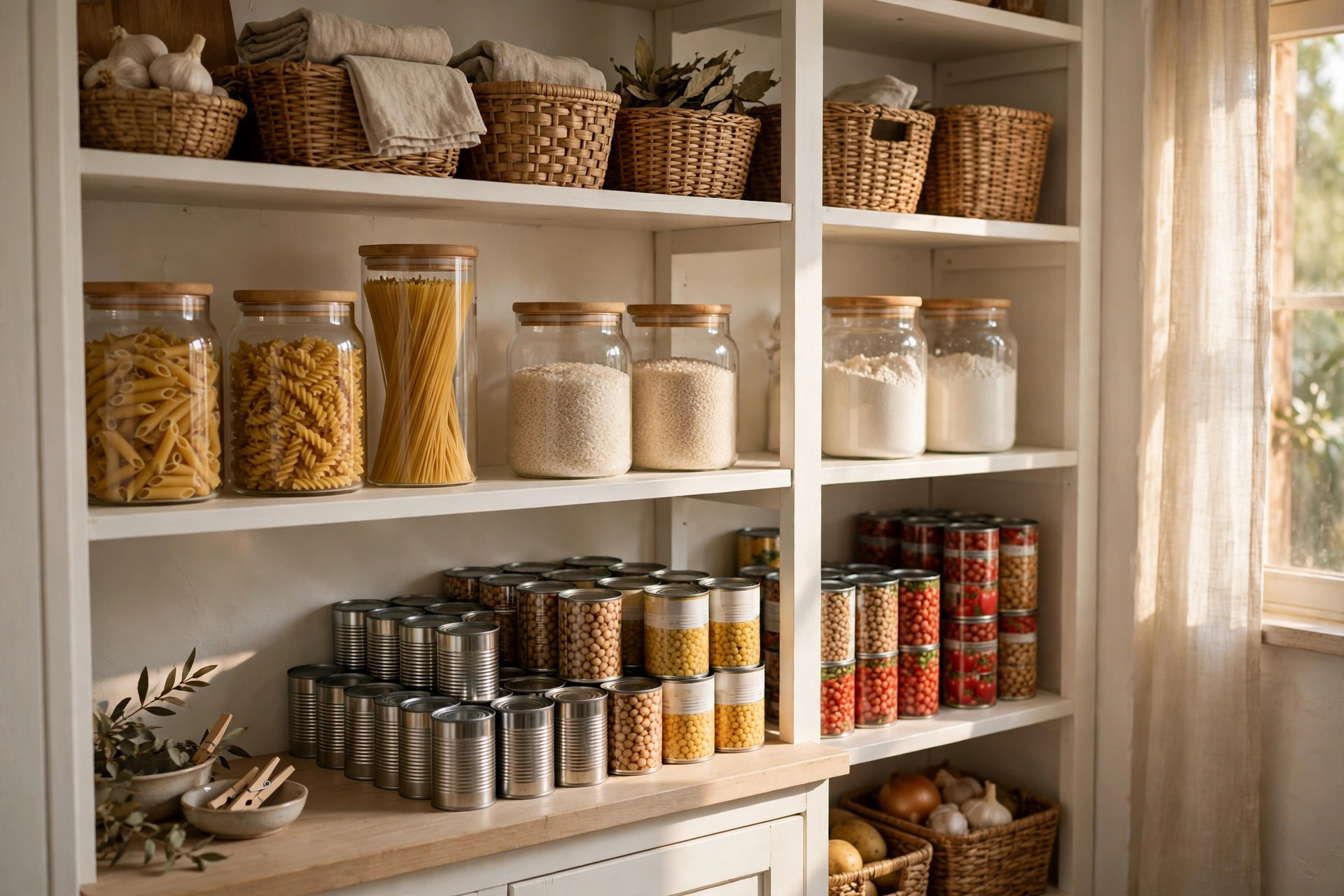
Before You Buy Anything: Empty, Sort, Measure
1. Start with a full reset and a tape measure
Take everything out. Yes, everything. Toss what is expired, donate the unopened food you know you will never cook, and group what is left into piles: breakfast, baking, grains and pasta, cans, snacks, oils and sauces, and backstock duplicates.
Then measure before a single organizer enters your cart. Write down each shelf's width, depth, and the height between shelves. Most small pantry shelves are 12 to 16 inches deep with 10 to 14 inches of vertical clearance, and that clearance decides everything. A container that is half an inch too tall is not storage, it is a return trip. Measure the inside of the door too, and check the gap between the door and the shelves when it closes. You need roughly 2 inches of clearance for a door rack to work without shoving jars every time you shut it.
Contain It: Containers, Risers, and Baskets
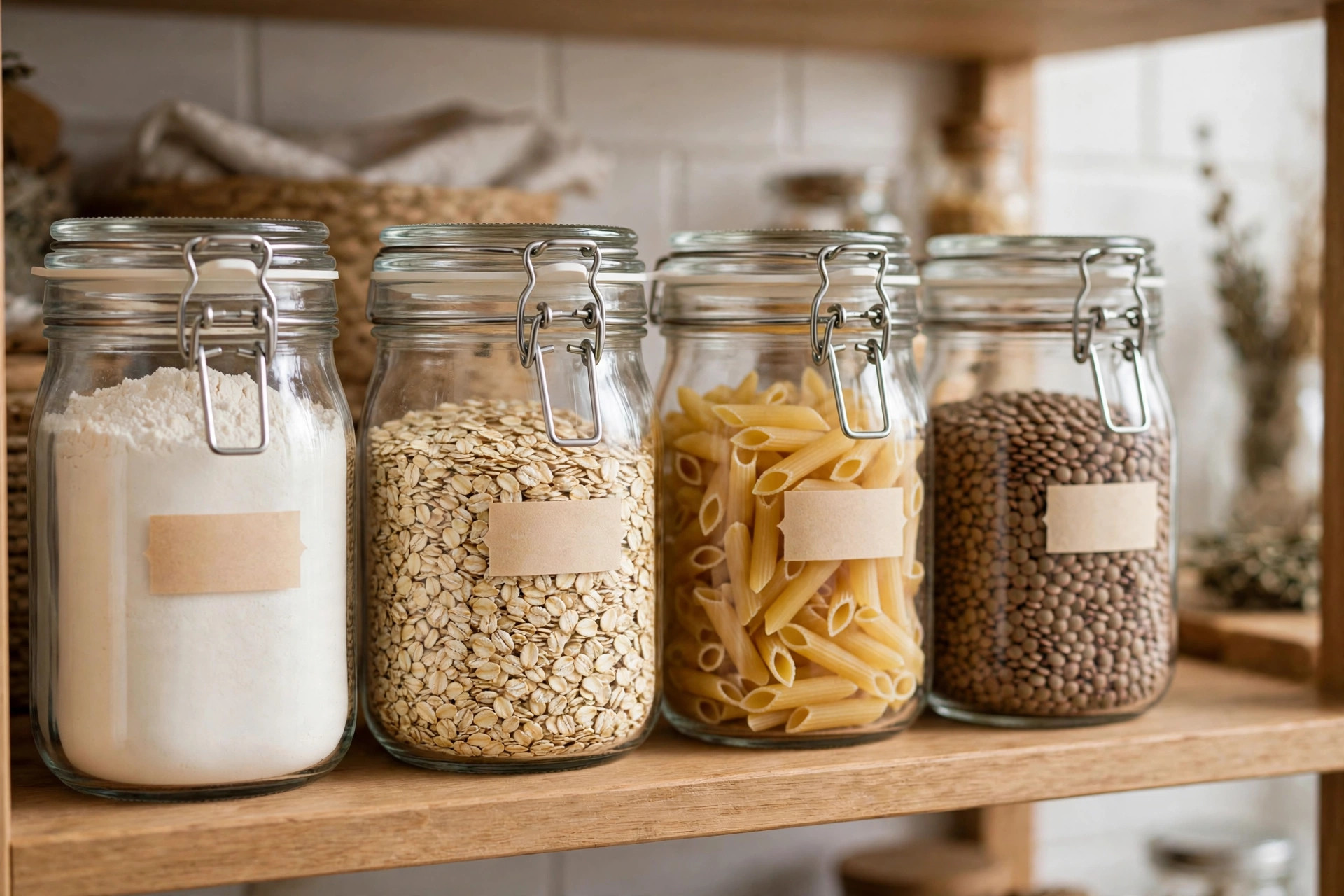
2. Decant the troublemakers into clear containers
Flour, rice, sugar, pasta, oats, and lentils arrive in bags and boxes that slump, tear, and refuse to stack. Decanting just these high-use staples into clear, airtight containers changes the whole shelf. You see exactly what you have and how much is left, so the duplicate-buying stops.
Size them to what they hold. A 3.3-liter (about 14-cup) container swallows a standard 5-pound bag of flour. A 2.5-liter size fits a 4-pound bag of sugar. Long spaghetti needs a tall container around 12 inches high, while a 1.4-liter container handles a 1-pound box of penne perfectly. Small 0.5 to 0.8-liter jars are right for lentils, quinoa, and baking soda. Keep the original cooking instructions and expiry date: snip them off the packet and tape them to the bottom, or write the date on the lid with a dry-erase marker.
3. Double your shelves with risers
Look at the gap above your cans. In most pantries there are 5 to 7 wasted inches of air over every row. A shelf riser, basically a small table for your shelf, splits that tall space into two usable levels. A riser 6 to 8 inches high and 12 to 15 inches wide is the sweet spot: cans and spice jars slide underneath, and shorter jars or packets sit on top.
Expandable risers that stretch from about 13 to 25 inches wide are worth the small extra cost in a pantry, because shelf widths vary and a fixed riser rarely matches all of them. Put risers on your tallest shelves first, where the waste is biggest.
4. Clip on under-shelf baskets for the light stuff
Under-shelf baskets hook over the shelf above and hang down into the air below, creating a bonus row without a single screw. They are not strong enough for cans, but they are perfect for the light, flat, annoying things that never have a home: wraps and foil, tea bags, stock cubes, spice packets, and snack bars. A standard basket is about 12 inches wide and 10 inches deep, and two side by side can clear an entire junk pile off your main shelves.
Fix the Reach: Doors, Turntables, and Deep Shelves
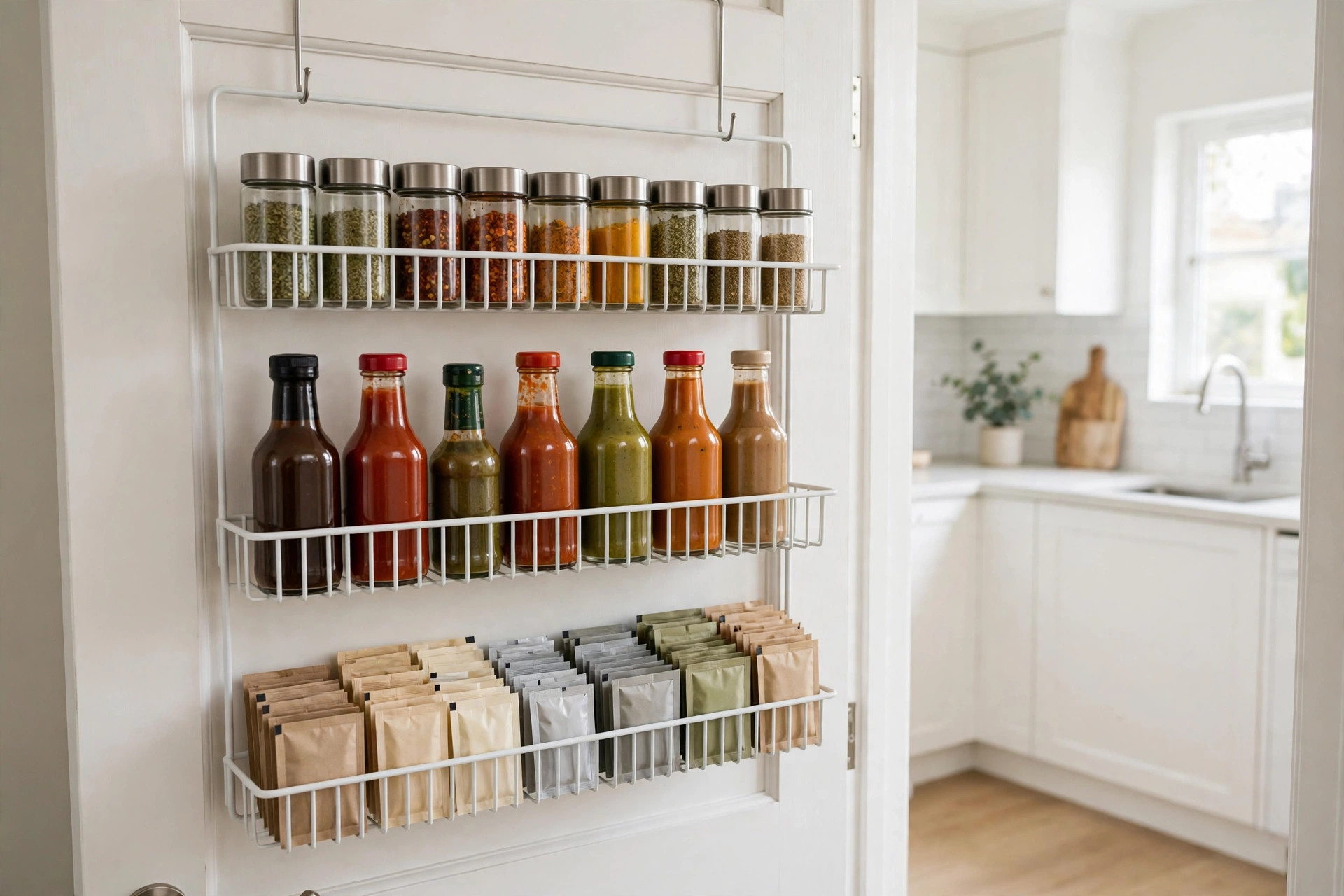
5. Turn the door into a whole extra shelf
The inside of the pantry door is the most underused real estate in a small kitchen. A 4 to 6-tier over-door wire rack, usually 12 to 18 inches wide, holds an entire spice collection plus sauces, wraps, and small packets, all at eye level and all visible at once.
Two rules make it work. First, that 2-inch door clearance from idea 1 is non-negotiable; test it with the rack loaded, not empty. Second, keep the door for small, light items only. Heavy bottles make the door sag and slam. If you rent, choose a rack that hangs on hooks instead of screws, the same principle behind these renter-friendly small kitchen storage ideas that add storage without leaving a single hole.
6. Spin deep corners with a lazy Susan
Anything stored more than one row deep on a 16-inch shelf will eventually be forgotten. A turntable fixes the geometry: instead of reaching past bottles, you spin them to the front. A 10 to 12-inch lazy Susan is right for oils, vinegars, and sauces on a standard shelf. In a deep corner cabinet or a wide pantry shelf, step up to 15 or 18 inches.
Choose one with a raised edge or a non-slip surface, because a smooth turntable plus a tall olive oil bottle plus an enthusiastic spin equals a mess. Keep turntables to one per shelf zone; two side by side waste the corners between them. If your food storage is open shelves rather than a cupboard, the same zoning applies — our small kitchen open shelving ideas keep open shelves looking tidy instead of cluttered.
7. Make deep shelves behave like drawers
For shelves deeper than 14 inches, long clear bins are the honest answer. A bin 13 to 16 inches deep with a handle at the front turns a black-hole shelf into a pull-out drawer: grab the handle, slide the whole category toward you, take what you need, slide it back. Short, stackable bins beat one tall bin every time, because a tall bin just becomes a smaller black hole. The same thinking transforms the drawers themselves: our small kitchen drawer organization ideas zone every drawer and end the jumble.
One bin per category, never mixed. Cans in one, pasta and grains in another, baking in a third. If a category outgrows its bin, that is your signal to use some of it up, not to buy a bigger bin.
Give Everything a Zone
8. Organize by how you cook, not by what things are
Zones are what turn a tidy shelf into a system that survives a busy Tuesday. Group food by the moment you use it:
- Breakfast zone: cereal, oats, nut butter, honey, tea and coffee, on the shelf you can reach half-asleep.
- Baking zone: flour, sugars, cocoa, baking powder, vanilla, chocolate chips, kept together in one bin or shelf section.
- Dinner base zone: rice, pasta, canned tomatoes, beans, broth, and jarred sauces, the backbone of weeknight cooking.
- Snack zone: one bin only, at a height everyone in the house can reach without rearranging anything else.
- Backstock zone: duplicates and bulk buys on the highest or lowest shelf, out of the daily traffic.
Heavy items belong between knee and shoulder height. The top shelf is for light, rarely used things, and the floor is for bulk water, pet food, or a lidded bin, never loose packets.
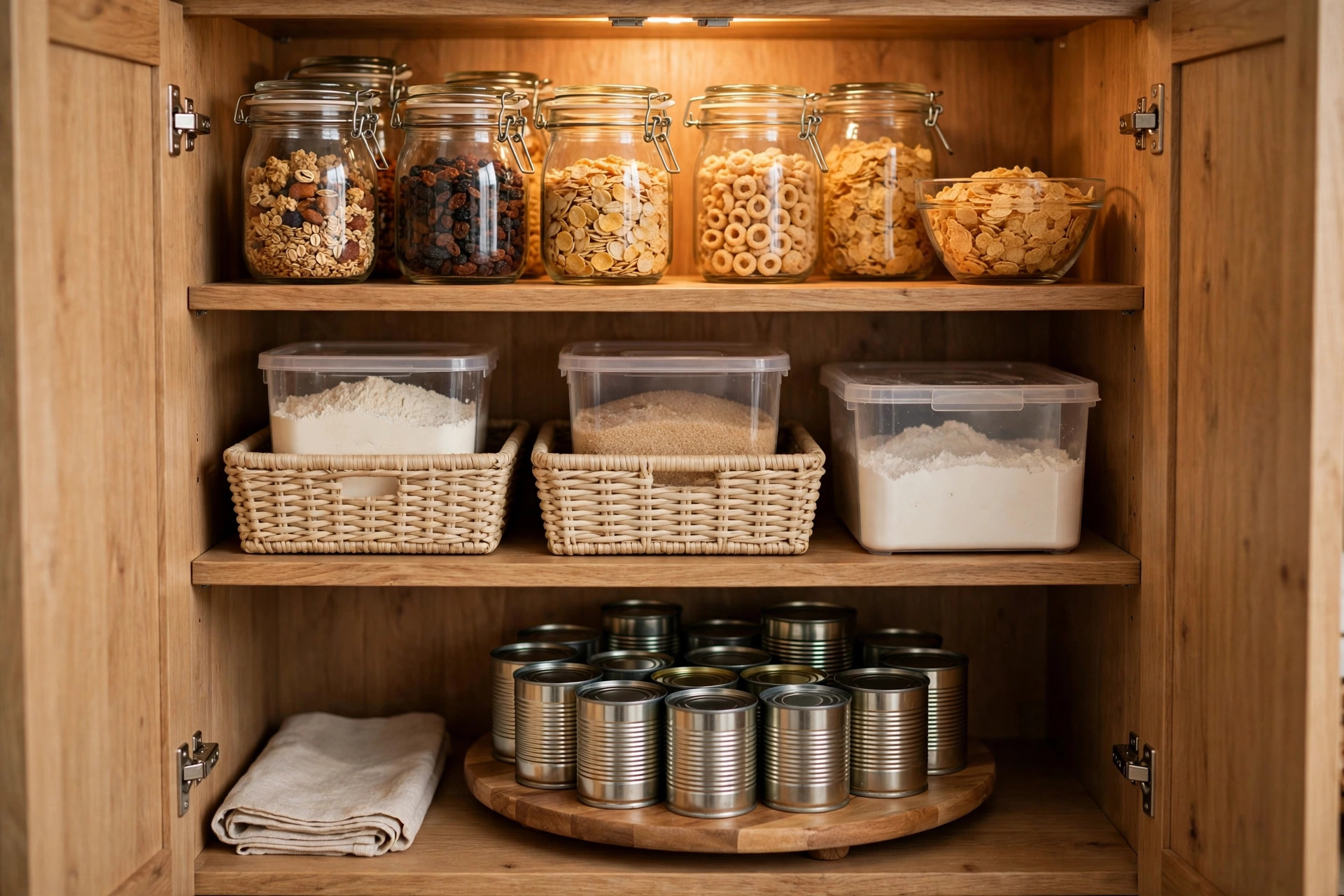
9. Step cans up so every label shows
Cans stored flat on a shelf hide each other; you end up reading only the front row and buying a fourth can of chickpeas. A 3-tier stepped organizer, expandable ones run from about 9 to 16 inches wide, lifts each row roughly 2 inches above the one in front, so every label reads at a glance. It takes ten minutes to set up and quietly ends the duplicate-can problem for good.
10. Label the shelf, not just the jar
Everyone labels containers. Fewer people label the shelf edge, and that is the label that keeps the system alive, because it tells every person in the house where things go back. Small clip-on or adhesive labels on the shelf front, reading Pasta & Rice, Baking, Snacks, take an afternoon to apply and end the where-does-this-go drift that re-clutters a pantry within a month. On containers, add the month and year you filled them under the name; future you will be grateful.
Habits That Keep It Organized
11. Run a use-first basket and a strict rotation
Keep one small basket, about 10 by 7 inches, at the front of a middle shelf labeled in your head as use first. Opened packets, near-date items, and the last two granola bars live there, and you plan one meal a week around clearing it. Behind it, rotate stock the way grocery stores do: new items go to the back, older items move to the front. This first-in, first-out habit, the same one highlighted in this Martha Stewart pantry storage method, is what stops food quietly expiring in the dark. Pair it with a one-in, one-out rule for staples, and a 60-second tidy before you write each grocery list.
No Pantry? Steal One
12. Build a pantry from a cabinet, a cart, or a closet
No dedicated pantry is not a dead end; it just means your pantry has to be assembled. A single 24 to 30-inch-wide kitchen cabinet with risers and bins inside works as a cabinet pantry, and shallow cabinets actually beat deep ones here because nothing can hide. HGTV's roundup of pantries for small kitchens makes the same point: a bank of shallow cabinets near the fridge follows your natural cooking flow better than one deep cupboard.
A slim 3-tier rolling cart, most are about 18 inches wide and 14 inches deep, tucks into the gap beside a fridge and holds daily staples. And do not overlook the hall or linen closet: one shelf there, fitted with two bins, becomes honest backstock storage that frees your kitchen shelves for what you use every day. Keep everyday food in the kitchen and overflow elsewhere, and even a tiny kitchen starts to feel like it has a pantry after all.
Start with the reset and the tape measure this weekend, add containers and one riser next, and let zones and labels finish the job. A small pantry that passes the five-second test, see it, reach it, put it back, will stay organized long after a big one with no system falls apart. For more ideas that work in compact kitchens, browse our full Kitchen & Dining collection.


Comments
Post a Comment