
15 Renter-Friendly Small Kitchen Storage Ideas That Add Real Space
15 Renter-Friendly Small Kitchen Storage Ideas That Add Real Space
Small rental kitchens have two problems at once: not enough storage, and a lease that forbids drilling, painting, and permanent changes. These renter friendly small kitchen storage ideas solve both — every one is no-drill, no-damage, and moves out with you. Each idea names the actual product type to buy, realistic costs, and the square inches it wins back.
If you are styling the dining side too, our warm fall kitchen and dining decor ideas add seasonal warmth without touching the landlord's walls. And if your cabinets are warm wood or mocha, our brown kitchen ideas show how to style around that colour without a remodel.
Renter-Friendly Kitchen Storage With Zero Drilling
The renter's golden rule: if it needs a drill, it needs a replacement. Adhesive hooks, tension rods, over-door and freestanding pieces do the same jobs without a single hole.
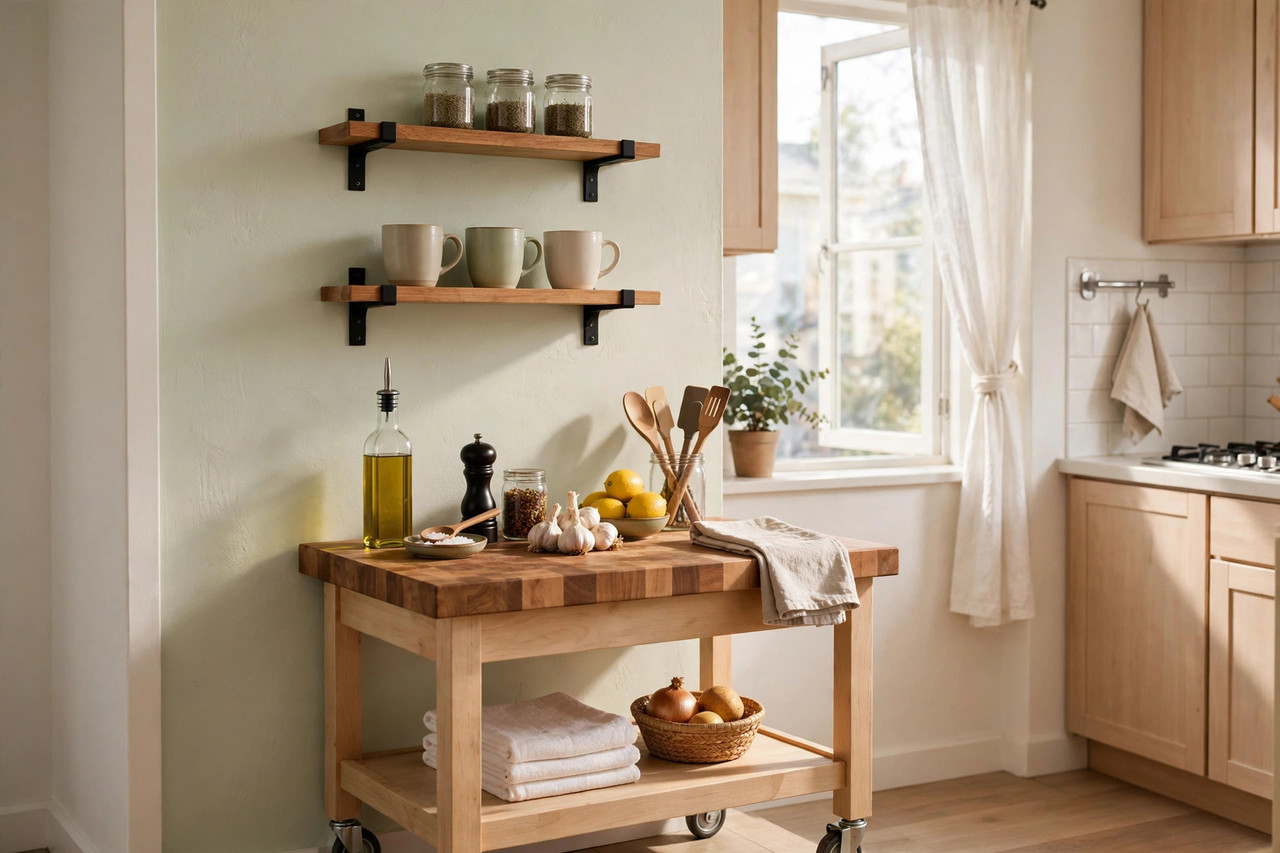
1. Roll in a freestanding kitchen cart as a movable island
A narrow rolling kitchen cart (24–36 inches wide, $60–150) is the single biggest storage win for a small rental kitchen: it adds a work surface, two or three shelves of storage, and it rolls out of the way when you need floor space. Look for one with a butcher-block or stainless top, locking casters, and at least one drawer. Measure your gap first — 6 inches of clearance on each side of its parking spot keeps it from becoming a permanent obstacle. When the lease ends, it rolls straight into the moving truck.
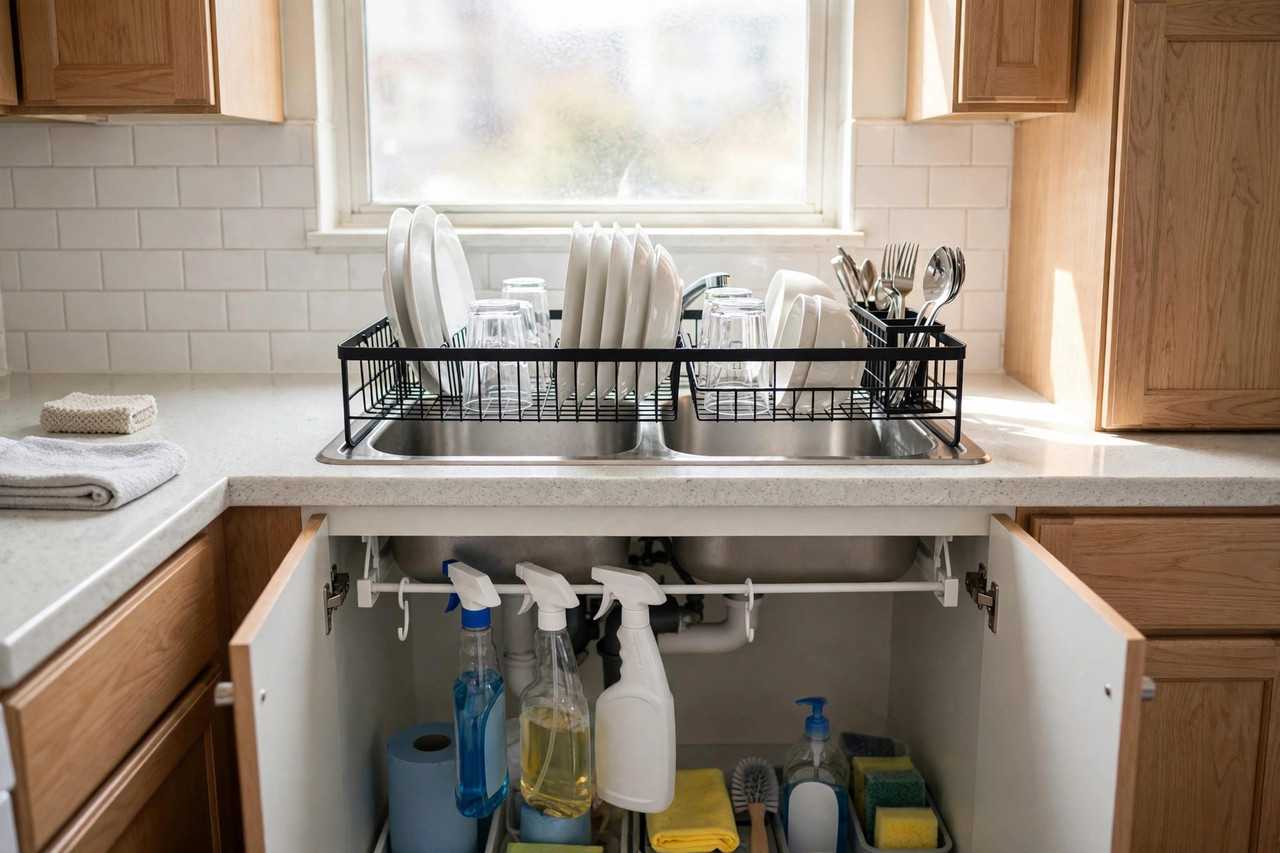
2. Add a no-drill over-the-sink dish rack
Counter space is the scarcest resource in a small kitchen, and a dish drainer hogs 2–3 square feet of it. An over-the-sink roll-up dish drying rack ($20–40, stainless steel, fits sinks 13–20 inches wide) or an over-sink shelf rack ($35–70) moves drying duty into the air above the sink. Roll-up versions double as a trivet and a produce-washing platform, then roll away into a drawer. Measure your sink's outer width before ordering — one inch off and it will not sit flat.
3. Use a tension rod under the sink for spray bottles
The under-sink cabinet is usually a graveyard of bottles lying on their sides. A small tension rod ($8–15, 12–20 inch size) mounted high across the cabinet interior lets spray bottles hang by their triggers, freeing the entire cabinet floor for bins. No screws, no adhesive — tension alone, and it comes out in seconds at move-out. Pair it with a stackable under-sink shelf ($15–30) on the floor below for a two-tier system.
4. Hang an over-the-cabinet-door organizer
Cabinet doors are free wall space. Over-the-door wire baskets ($12–25) hook over any standard cabinet door and hold cutting boards, wraps, foil, and cleaning supplies — the flat, awkward items that eat shelf space. Use felt pads on the hooks ($3 for a sheet) so they never scratch the door finish, which keeps your deposit safe. One organizer per door, max — two makes the door hard to close.
5. Stick up adhesive wall shelves and hooks (the no-drill wall)
Heavy-duty adhesive strips and nano-tape shelves ($15–35 for a set) hold spice jars, small plants, and utensil crocks on any smooth backsplash or wall — each strip holds 3–7 pounds when applied to clean, dry tile or painted drywall. For utensils, an adhesive rail with S-hooks ($12–20) beside the stove keeps spatulas and ladles off the counter. Move-out rule: heat the strip with a hair dryer for 30 seconds before pulling the tab — it releases clean with zero paint damage.
Small Kitchen Cabinet and Pantry Storage Ideas
Rental cabinets are deep, dark, and badly laid out. These ideas fix the inside of the cabinets without changing a single hinge.
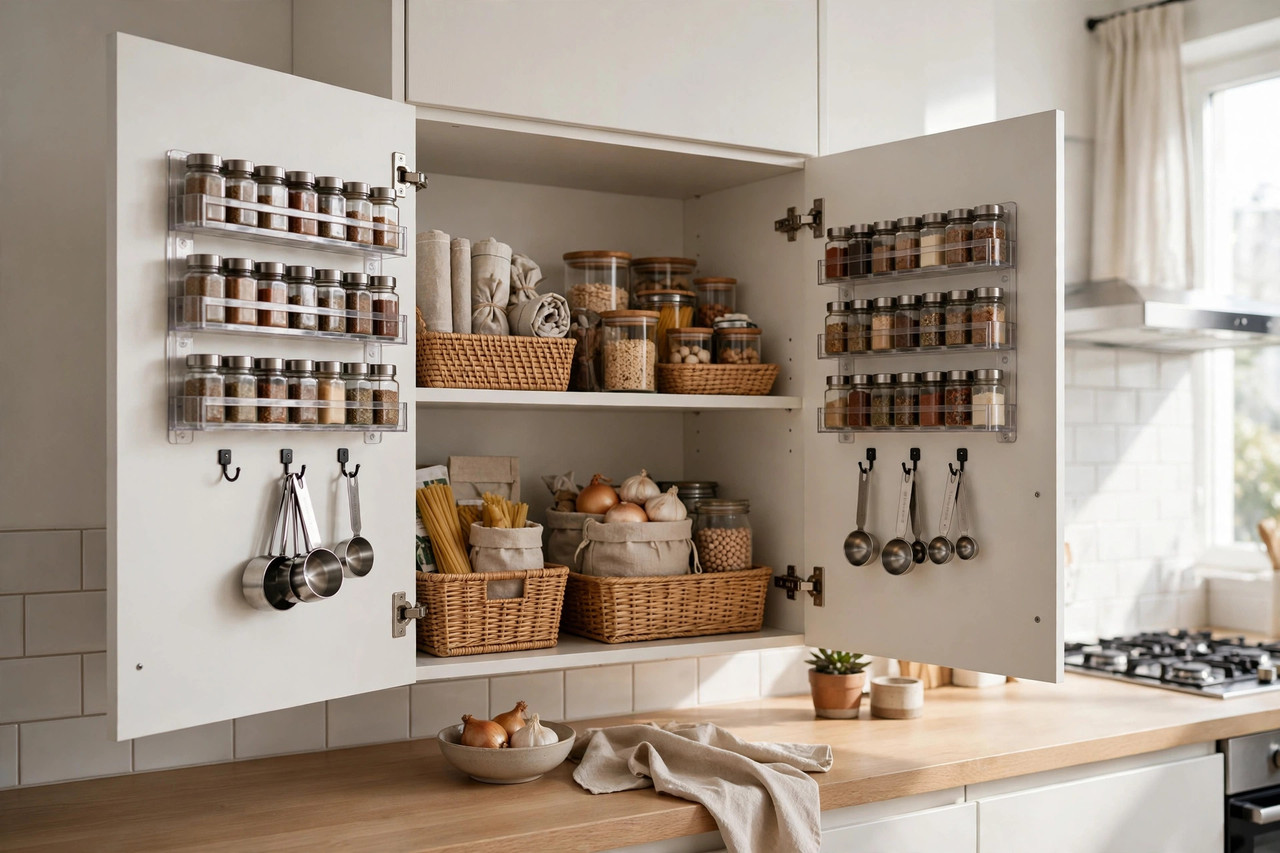
6. Install adhesive spice racks inside cabinet doors
Spices are the classic small-kitchen space thief — 20 jars eating a full shelf. Adhesive or over-door spice racks ($10–25 for a 2- or 3-tier rack) mounted on the inside of a cabinet door hold 12–20 jars in zero shelf space. Standardize on one jar size (4-ounce square jars, $1–2 each) so every slot fits, and label the lids — you will find the cumin in two seconds instead of excavating. Keep the rack on a door you open daily so the spices stay in rotation.
7. Add pull-out cabinet organizers (no-screw versions)
Deep base cabinets swallow pots and pans into an unreachable back zone. Freestanding pull-out cabinet organizers ($25–50 each, no screws — they sit on the cabinet floor) bring the back row to you with a tug. Measure the cabinet interior width and the door opening (organizers need 1–2 inches of clearance to slide) before buying. Two organizers — one for pots, one for pantry — typically reclaim a full shelf's worth of usable space.
8. Use stackable shelf risers inside cabinets
Cabinet shelves are spaced for gallon jugs, which wastes the air above every mug and can. Bamboo or metal shelf risers ($12–25 for a set of two) create a second tier inside the cabinet — mugs below, bowls above — effectively doubling shelf capacity. They are freestanding, so they move out with you. Standard risers add 4–6 inches of clearance; measure your tallest mug first.
9. Corral the pantry with clear stackable bins
Rental "pantries" are usually one deep shelf or a narrow closet. Clear stackable bins ($8–15 each, 6–12 quart) grouped by category — grains, snacks, baking, cans — turn a jumble into a system where everything is visible. Clear matters: opaque bins become junk drawers you cannot see into. Label the front of each bin with the category ($5 for a label maker tape roll). One shelf of six bins holds what used to sprawl across two shelves.
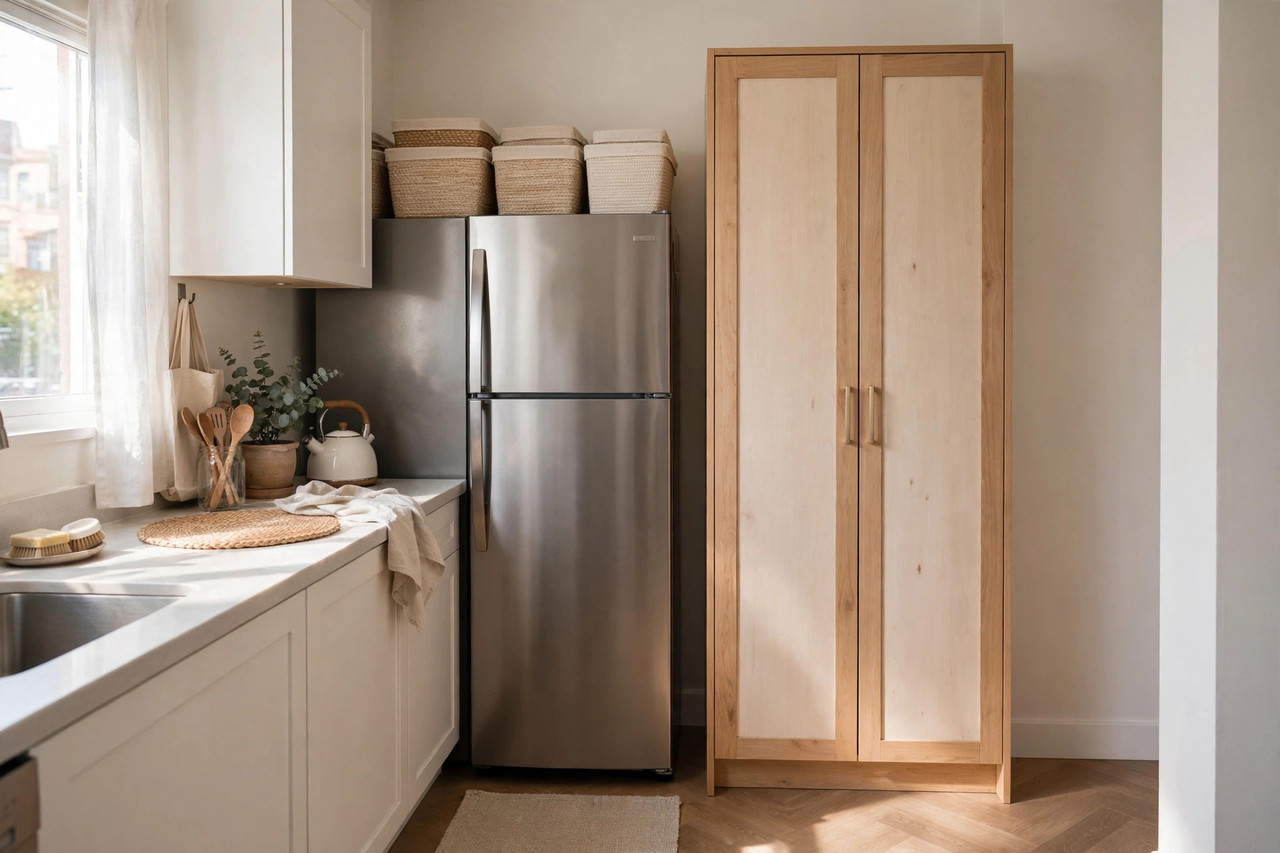
10. Claim the dead space above the fridge and cabinets
The 12–24 inches above the refrigerator and the tops of wall cabinets are storage gold in a small kitchen. Sturdy lidded bins ($10–18 each) up there hold the rarely-used: the turkey roaster, the extra paper towels, the specialty appliances. Use bins with handles so you can pull them down safely, and never store anything heavy above shoulder height. A small folding step stool ($20–35, folds to 2 inches flat) lives in the gap beside the fridge and makes the zone actually usable. And if those cabinets are brown, our brown kitchen ideas are full of ways to make the color look intentional.
Small Kitchen Counter and Corner Storage Wins
Counters are for working, not storing — but in a small kitchen, a few strategic pieces earn their counter space by freeing more than they take.
11. Mount a magnetic knife strip (adhesive, not screwed)
A knife block eats a full square foot of counter. An adhesive magnetic knife strip ($15–30, 12–18 inches) on the backsplash or the side of a cabinet holds 5–8 knives in zero counter space — and keeps blades sharper than rattling around a drawer. Mount it at least 12 inches from the stove's heat zone, and press the adhesive for a full 60 seconds on clean, dry tile. At move-out, the hair-dryer trick from idea 5 removes it clean.
12. Use a tiered corner shelf for the dead corner
Kitchen corners — on the counter or inside cabinets — waste space because nothing reaches the back. A freestanding tiered corner shelf ($18–35, triangular or quarter-round) turns a dead counter corner into three levels for oils, spices, or coffee supplies. Inside corner cabinets, a two-tier lazy susan ($15–30, 10–12 inch diameter) does the same job: spin, grab, done. Measure the corner depth first — most need at least 10 inches square.
13. Hang pots from a freestanding or tension-mounted rack
Pots and pans are the bulkiest items in any kitchen. A freestanding pot rack ($40–90) beside the stove, or a tension-mounted over-sink shelf with S-hooks, gets them out of the cabinets entirely — freeing a full base cabinet for pantry overflow. Hang the daily-use pans (the skillet, the saucepan) at arm's reach and the specialty pieces higher. If you go freestanding, anchor it to the wall with the included anti-tip strap — a loaded pot rack must never wobble.
14. Add a narrow rolling gap cart beside the fridge
The 6–8 inch gap between the fridge and the wall is wasted in almost every rental kitchen. A slim rolling gap cart ($25–45, 6–8 inches wide, 3–4 tiers) slides into that slot and holds cans, bottles, oils, and condiments — roughly 3 cubic feet of storage in space that was literally nothing. Measure the gap at the floor AND at counter height (fridges taper) before ordering. Pull it out like a drawer whenever you cook.
15. Finish with the one-zone-a-week maintenance system
Small kitchens re-clutter fast because every item is visible. The system: one zone per week (under-sink, spice door, pantry bins, fridge-top), 10 minutes, toss expired items and re-home strays. Pair it with the "counter rule" — nothing lives on the counter except what you used today. For serving and styling once the kitchen is organized, our fall charcuterie board ideas put that reclaimed counter space to delicious use.
Quick-Start Budget Guide: Renter Kitchen Storage
- Under $50: tension rod under sink ($10) + adhesive spice rack ($15) + over-cabinet-door organizer ($15) — three dead zones activated.
- $50–150: add a slim gap cart ($35) + over-sink dish rack ($30) + shelf risers ($20) — counters start breathing.
- $150–300: add a rolling kitchen cart ($120) + pull-out cabinet organizers ($60) — the full small-kitchen transformation.
- Move-out cost: $0 in repairs if you used the hair-dryer adhesive trick and felt pads — every product here leaves with you.
Frequently Asked Questions
How can I add storage to a rental kitchen without drilling?
Adhesive hooks, strips, and shelves; tension rods; over-door and over-cabinet organizers; freestanding carts and racks. These four product families cover walls, doors, cabinets, and floors with zero holes — and everything moves out with you.
What is the best storage for a very small kitchen with no pantry?
A rolling kitchen cart (adds a work surface plus shelves) combined with clear stackable bins in one deep cabinet acting as a "pantry zone," plus the above-fridge bins for overflow. That trio typically triples usable storage in a pantry-less rental.
Will adhesive shelves damage my rental walls?
Not if you use them correctly: apply to clean, dry surfaces, respect the weight limit, and remove with gentle heat (hair dryer, 30 seconds) pulling the tab slowly. Damage almost always comes from yanking strips off cold or overloading them — follow the instructions and paint stays intact.
How do I organize a small kitchen on a tight budget?
Start with the under-$50 trio: tension rod under the sink, adhesive spice rack inside a cabinet door, and an over-cabinet-door organizer. Those three cost under $50 total and fix the three most-wasted zones. Add the gap cart next ($25–45) for the biggest single win per dollar after that.
That is the renter's playbook: no drills, no damage, no deposit drama — just fifteen products that turn dead zones into working storage. Start with the under-sink tension rod and the spice-rack door this weekend; by Sunday your counters will have room to actually cook on.


Comments
Post a Comment