
12 Small Home Office Bookshelf Ideas That Keep Your Desk Clear
If you are looking for small home office bookshelf ideas, your desk is probably doing a job it was never meant to do. Books, files, the printer, spare notebooks and a tangle of chargers all end up on the one surface you need for actual work, until the desk feels smaller every week. A bookshelf moves everything that is not today's work off the desk and within arm's reach — and in a small office, the right shelf does it in about two square feet of floor, or none at all.
This guide covers 12 bookshelf ideas sized for small home offices, with real dimensions, honest load limits and prices. It ends with a simple system for deciding what belongs on the shelves, what belongs in closed storage, and what should leave the room — because a bookshelf only keeps a desk clear if it is organised by how often you reach for things.
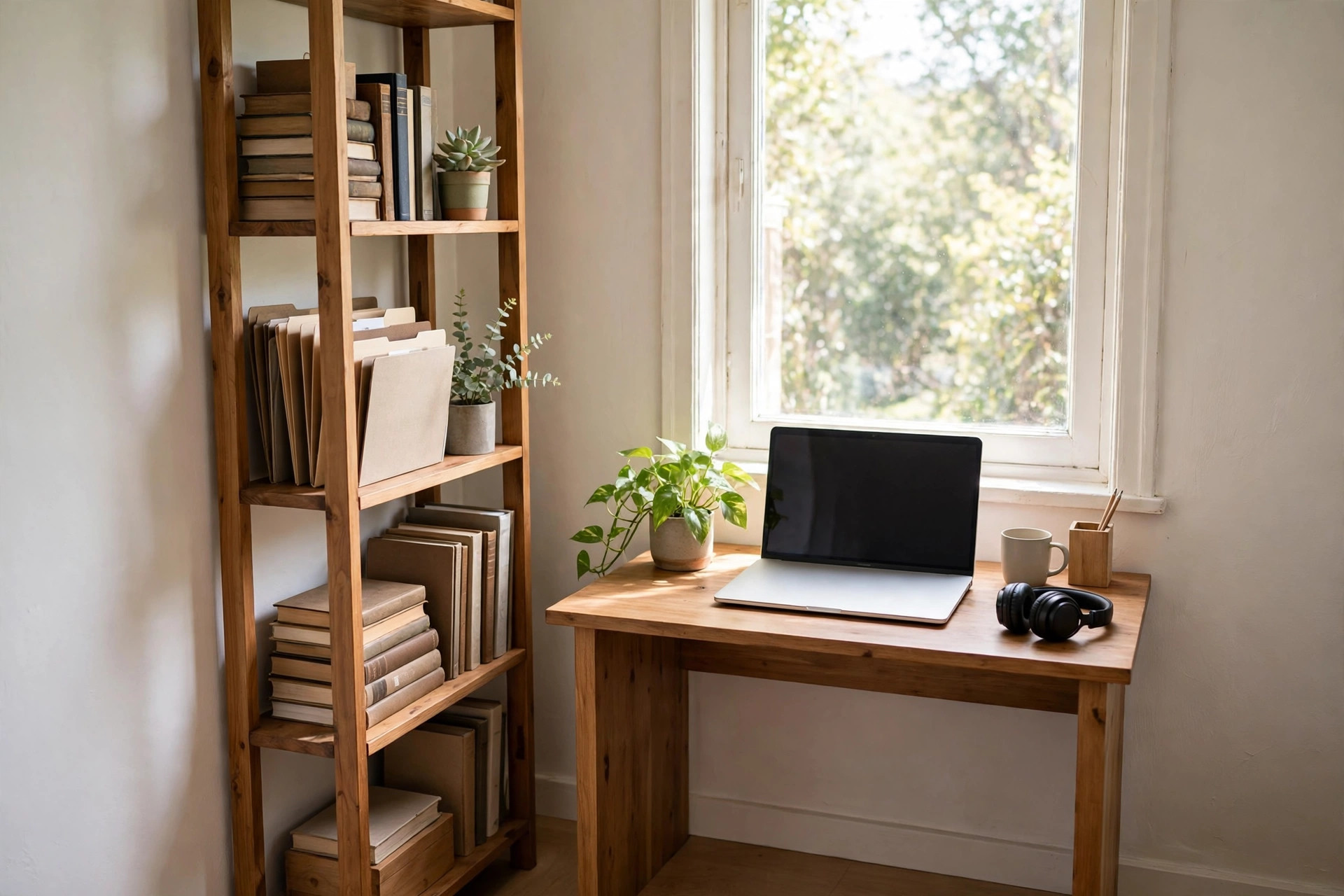
Why a Bookshelf Is the Hardest-Working Piece in a Small Office
A desk gives you one surface. A bookshelf gives you four to six surfaces stacked vertically, in the floor space of a single chair. That vertical stack is what a small office is short of: room for reference books, active files, office supplies and the printer, without any of it touching the desk.
A shelf also changes how the room feels on camera and in person. A styled shelf behind or beside you reads as a professional backdrop, while piles on a desk read as overload. If your shelves will be visible on calls, our guide to bookshelf styling ideas covers the visual rules; this guide focuses on choosing the shelf itself and organising what goes on it.
Measure First: Width, Depth and the Chair Rule
Three numbers decide everything. Width: most small-office shelves are 24 to 32 inches wide; a narrow 16 inch unit fits beside almost any desk. Depth: 10 to 12 inches holds books and files comfortably, and anything deeper wastes floor and swallows small items. Height: tall units, 60 to 72 inches, earn their footprint, but must be anchored to the wall — a loaded tall shelf is top-heavy.
Then apply the chair rule: you need about 36 inches of clear space behind your desk for your chair to move. Measure the shelf's depth against what is left after the chair, not against the empty room. Finally, weigh your books honestly: a shelf of hardbacks can reach 20 to 25 pounds per foot, so check the per-shelf load rating, not just the total.
12 Small Home Office Bookshelf Ideas That Keep Your Desk Clear
1. A Tall, Narrow Bookshelf Beside the Desk
The classic small-office move: a tall narrow shelf, about 24 inches wide and 12 inches deep, standing right beside the desk. Everything you reach for weekly lives here — reference books at standing eye level, active files on the middle shelves, supplies low. Your hand finds things without your chair moving.
Five and six tier versions cost about $60 to $140. Anchor it to the wall even if it feels steady empty; it will not feel steady with 100 pounds of books on it. Keep the heaviest shelf at the bottom.
2. Floating Shelves Above the Desk
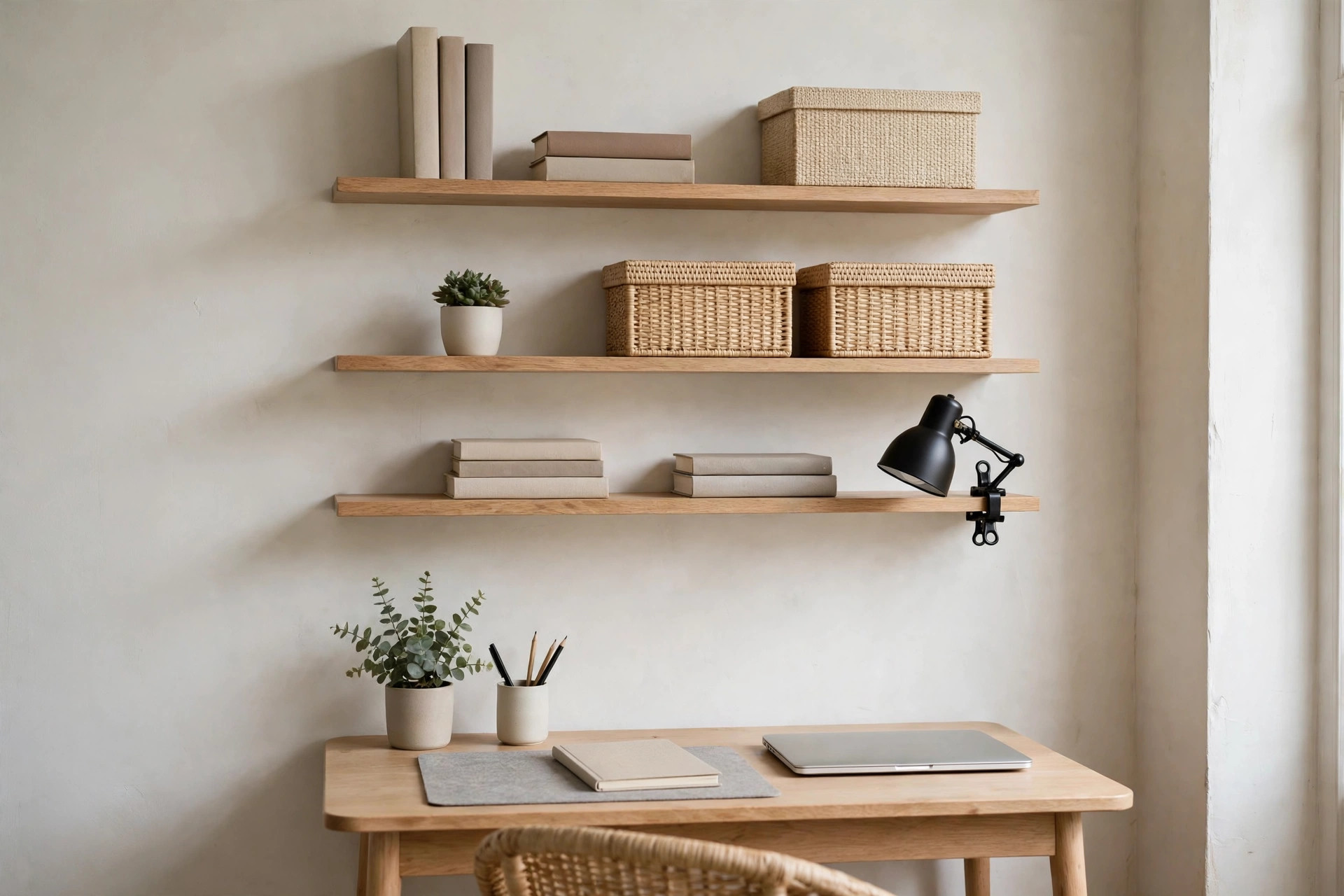
Wall space above a desk is the most wasted storage in any home office. Two floating shelves there hold reference books, a small plant and the boxes for cables and chargers, and your desk surface goes back to being a desk. Keep the lowest shelf at least 20 inches above the desktop so monitors and lamps fit underneath.
Floating shelves must go into studs or rated anchors: a run of books is heavy. Limit each shelf to about 36 inches wide and load to the fixing's rating, typically 20 to 30 pounds into studs. Shelves cost about $20 to $45 each. Pair them with the systems in our small home office desk organizer ideas and the whole worktop stays clear.
3. Modular Cube Shelves With Baskets
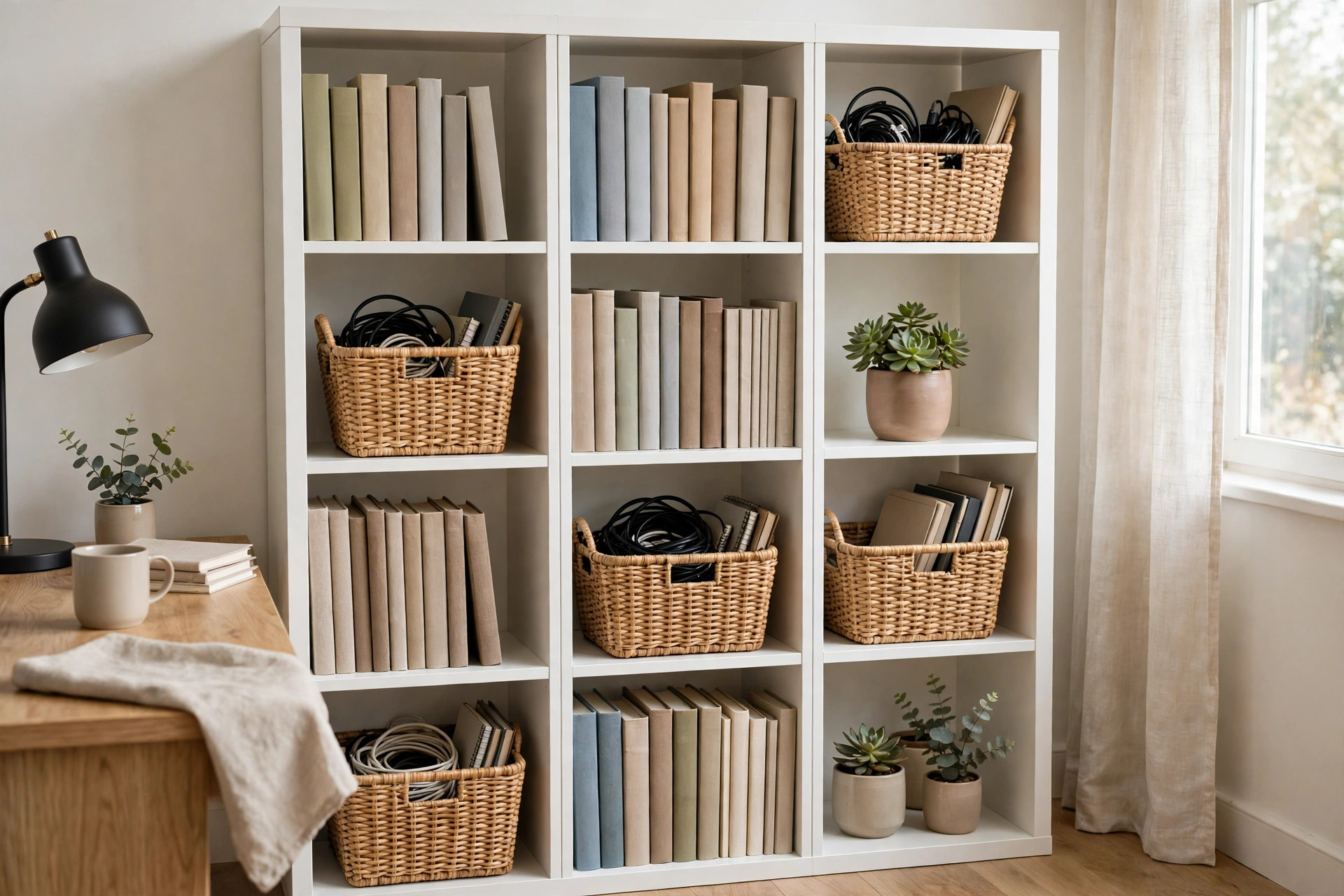
Cube shelves are the flexible option: a 2 by 4 cube unit works standing tall beside a desk or lying low under a window, and the cubes mix open books with fabric baskets that hide the ugly essentials — cables, notebooks, stationery, the router. That mix of open and closed is what keeps a small office looking tidy on a normal day, not just a tidy-up day.
Standard cubes are about 13 inches square, which fits files and most books. Units cost about $50 to $120, baskets $6 to $12 each. Measure your largest file box before buying; cube sizes vary by brand.
4. A Leaning Ladder Shelf in the Corner
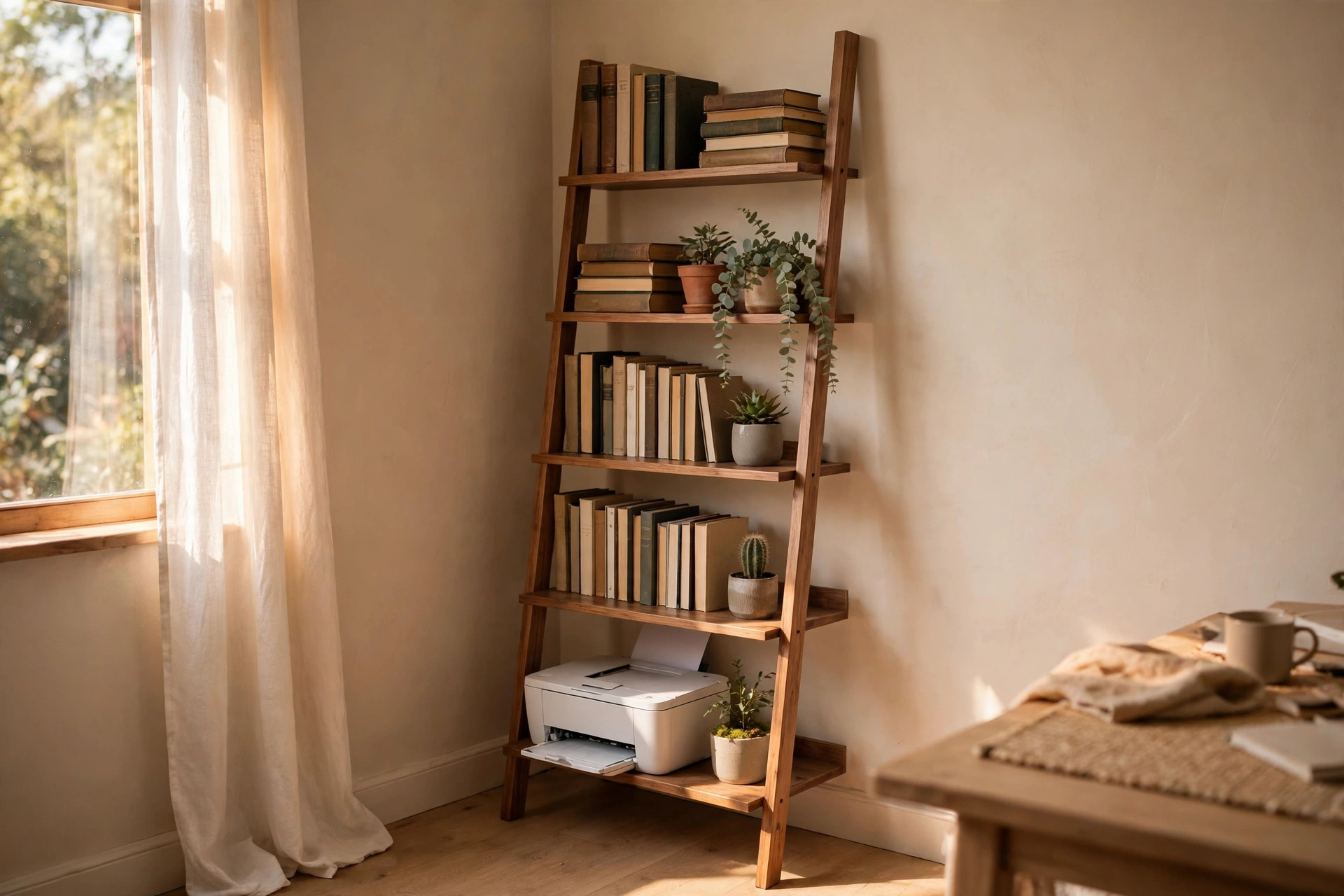
A ladder shelf leans against the wall with deep shelves at the bottom and shallow ones at the top — a shape that suits office corners, where the bottom shelf takes the printer or file boxes and the top shelves take books and a plant. Its open frame keeps a small room feeling light.
Most ladder shelves are 24 to 30 inches wide, with bottom shelves about 14 to 16 inches deep — check your printer's footprint against that depth. Prices run $70 to $160. Use the wall strap provided; leaning shelves are designed to be fixed, not just leaned.
5. A Bookshelf With a Built-In Desk
When floor space is truly gone, combine the two: a shelving unit with a desk surface that folds out or is built into the frame. Books and files live on the shelves full-time, and the desk appears when you work. Wall-mounted versions suit renters who can make good a few screw holes.
Check the desk depth carefully — 20 inches is the minimum for a laptop and notebook together, 24 is comfortable. Units cost about $120 to $300. This is the strongest option for a spare-room corner or a studio flat.
6. A Low Shelf Under the Window
The wall under a window is usually empty because tall furniture blocks the light. A low two-shelf bookcase, under 30 inches high, fits there perfectly and holds more than you expect: two rows of books, file boxes, and the printer, all below the sill where they hide nothing and block nothing.
Low shelves cost about $40 to $90. Keep paper and books a few inches from the glass if your windows get condensation, and never cover a heater with a bookshelf — heat and paper are a bad mix, and blocked heaters make cold rooms.
7. A Corner Bookshelf That Uses the Dead Angle
Office corners collect a plant and good intentions. A corner bookshelf — quarter-round or L-shaped — turns that angle into five shelves of storage. It suits the corner behind a door especially well, where a standard shelf would block the swing.
Corner units are typically 24 inches on each side and cost about $60 to $130. Load the widest, lowest shelf with the heaviest items, and keep the top shelf decorative so the unit never looks top-heavy, visually or literally.
8. A Rolling Low Bookcase
A short bookcase on lockable casters is the flexible worker: it parks beside the desk as storage, rolls out as an extra surface for a project, and tucks under a standing desk or into a cupboard when guests come. In shared rooms where the office must disappear at night, this is the shelf that earns its keep.
Look for casters rated well above the loaded weight and shelves with a back panel or lip, so books do not slide off in motion. Rolling units cost about $60 to $130. For more ways to make a small office flex, see our small home office storage ideas.
9. A Bookshelf Room Divider for a Shared Space
If your office is half of a living room or bedroom, an open-backed bookshelf placed at right angles to the wall draws the boundary: work on one side, life on the other. Open backs keep light flowing both ways and let you reach books from either side.
Dividers must be stable: choose a wide, low unit (about 48 inches high) or anchor a tall one, and load the bottom shelves heavily. Prices run $90 to $220. Style the living-room side with the same rules as any display shelf so it does not look like the back of an office.
10. Wall-Mounted Rail Shelves You Can Rearrange
Rail systems — two vertical tracks screwed to the wall, with brackets and shelves that click in at any height — are the shelf for people whose needs change. Move a shelf up when the file boxes arrive, down when the monitor arm goes in. They also spread load across many fixings, which makes them strong.
A two-rail setup with three shelves costs about $70 to $150. The rails must hit studs or solid wall. This is the system to choose if you expect to grow from one shelf to a full wall over time.
11. A Slim Tower Shelf for a Modest Collection
Not every office needs a library. A slim tower, 16 inches wide with six small shelves, holds a working collection — a dozen reference books, notebooks, a headphone stand, supplies — in less floor space than a waste bin. Tree-style and tiered tower shelves suit this role well.
Towers cost about $35 to $80. Their small shelves hold 5 to 10 books each, so be honest about your collection size; a tower that overflows in a month was the wrong shelf. Keep one shelf empty on purpose for incoming projects.
12. A Secondhand Hutch or Cabinet With Shelves
A used hutch, kitchen cabinet or wardrobe top, repainted, gives shelves plus closed storage for the price of paint. Closed doors hide the printer paper, ink and cable box that make open shelves look messy, while open shelves above hold books and one or two good objects.
Measure before you buy, check the shelf boards for sag, and budget $20 to $40 for paint and new handles. Total cost often lands under $100 for a piece that would cost $250 new. For a wider tour of shelf types, the roundup at Bippk's small office bookshelf ideas shows several of these forms in real rooms.
The Reach System: What Goes Where
Arrange any of these shelves by reach, and the desk stays clear by itself. Daily items — current project file, notebook, charger — belong on the shelf nearest the desk at waist-to-eye height. Weekly items — reference books, supplies — go one shelf further out or higher. Rarely used items — archived files, manuals, spare cables in a labelled box — go highest, lowest or furthest. If something has not been touched in a year, it does not need office space at all; store it elsewhere or let it go.
Mistakes That Make Office Bookshelves Fail
- Buying before measuring the chair space. A shelf that steals chair room gets hated daily and emptied never.
- Ignoring per-shelf load ratings. Books are heavy; a sagging shelf was an overloaded shelf first.
- All open, all visible. Without a few baskets or one closed section, normal office clutter stays on display.
- No anchor on a tall shelf. Loaded tall shelves tip. Anchor first, load second.
- Shelves as a dumping ground. If everything is allowed on the shelf, the desk fills again within a month. The reach system is the rule that prevents it.
The Bottom Line
The best small home office bookshelf ideas share one trait: they take work off the desk and put it within reach, in the space your room can actually spare. Measure the chair space, pick the form that fits your wall and your collection, anchor it properly, and organise it by reach. Your desk goes back to being a place to work — and stays that way.


Comments
Post a Comment